
Casinos That Accept Apple Pay in Australia: Offshore Reality Check 2026
 Available in AU
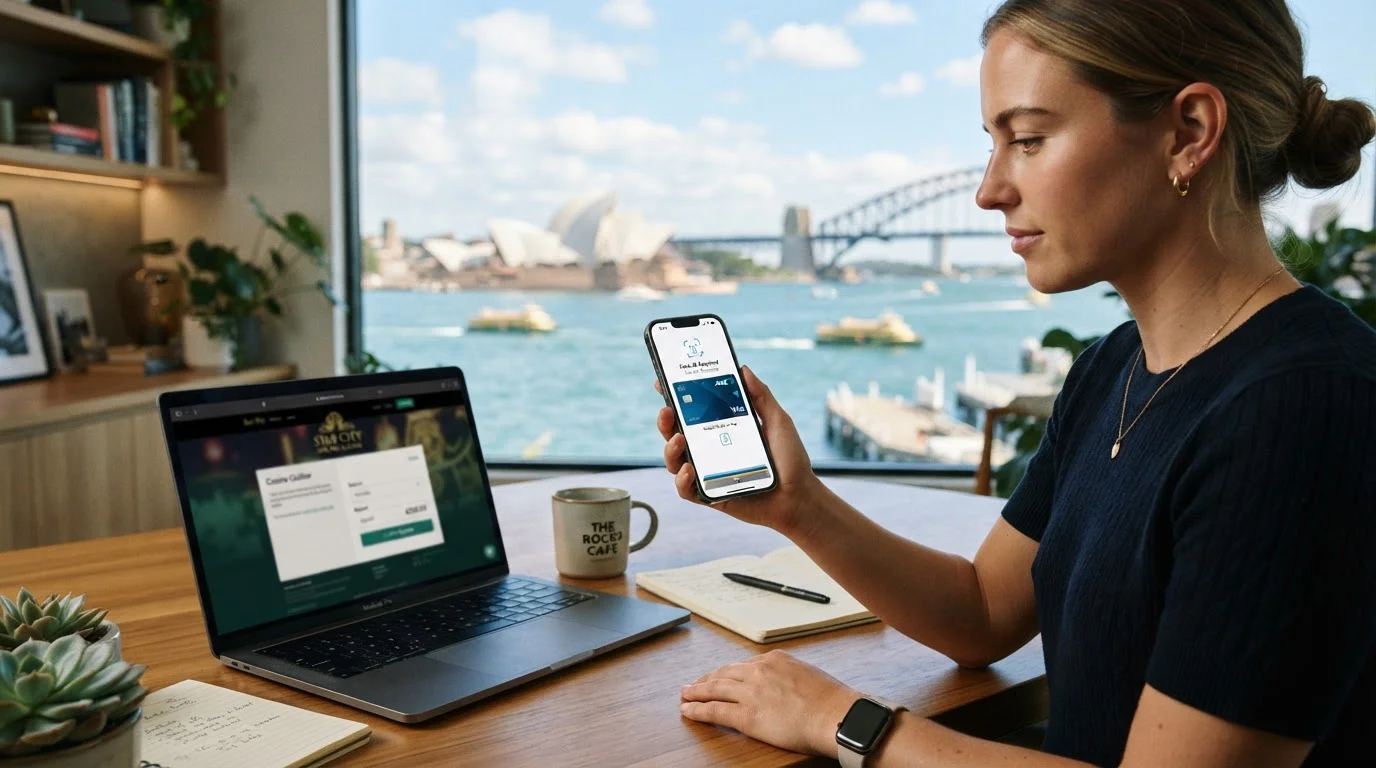
Apple Pay landed in Australian wallets as the biometric shortcut for groceries, transport, and subscriptions. Tap, authenticate with Face ID, done. For offshore casino deposits, it works the same way: instant authorization, no card number typed on a cashier page, funds credited in seconds. The appeal is obvious. The complications less so.
Online casino games—pokies, roulette, blackjack, live dealer tables—are prohibited interactive gambling services under the Interactive Gambling Act 2001. No Australian regulator issues licenses for them. Every casino you can deposit at from Australia operates offshore, predominantly under Curaçao licenses, and sits outside Australian consumer protection. Playing is not an offense for individuals; providing the service to Australians is. That distinction shapes everything below.
This breakdown covers which offshore brands accept Apple Pay for Australian players, how the payment method works for deposits and withdrawals (the speed asymmetry matters), what the 2027 enforcement changes mean for card-linked payments, and what you can verify before handing over money to an entity on the other side of the world with zero local recourse.
Best Apple Pay Casinos for Australian Players in 2026

The brands below accept Apple Pay deposits from Australian players and process in AUD. All are offshore operators—illegal to provide under the IGA, accessible in practice, unregulated by any Australian authority. The order reflects topical relevance: withdrawal caps, payout speed, game breadth, and the regulatory enforcement profile each one carries.
| Casino | License | Min Deposit | Withdrawal Cap (Monthly) | Withdrawal Speed | Key Feature |
|---|---|---|---|---|---|
| SkyCrown | Curaçao | A$30 | A$45,000 | PayID 2-4 hours, cards 3-5 days | Highest withdrawal cap, 6,000+ games |
| Neospin | Comoros AOFA + Tobique No. 0000064 | A$30 | A$45,000 | Crypto instant-48 hours, cards 3-5 days | CoinsPaid crypto infrastructure, sportsbook included |
| RocketPlay | Curaçao GCB | A$10 | Not disclosed | Crypto minutes-hours, cards 3-5 days | Lowest minimum deposit, 30x wagering |
| Hell Spin | Curaçao GLH-OCCHKTW0702282021 | A$20 | Not disclosed | Crypto 12 hours, cards 3-5 days | ACMA-warned (TechOptions Group B.V.), 3,000+ games |
| Playamo | Curaçao OGL/2023/174/0082 | A$10 | Not disclosed | Crypto hours, cards 3-5 days | Dama N.V. network (BitStarz sister brand), launched 2016 |
| Joe Fortune | Curaçao GCB | A$30 | Not disclosed | Crypto under 4 hours, cards 3-5 days | Bodog/Bovada group, RTG platform, AU-exclusive |
| Casinonic | Curaçao OGL/2023/174/0082 + Tobique No. 0000002 | A$20 | A$15,000 | Crypto hours, cards 3-5 days | Lowest withdrawal cap, Dama N.V. enforcement record |
| Fair Go | Curaçao | A$20 (A$10 Bitcoin/Neosurf) | Not disclosed | Crypto standard, cards 3-5 days | RTG-exclusive, 25% instant cashback, longest-running AU brand |
SkyCrown
SkyCrown operates under a Curaçao license and holds the highest monthly withdrawal cap among Australian-accessible offshore brands: A$7,000 daily, A$15,000 weekly, A$45,000 monthly. For players building a bankroll beyond casual stakes, that ceiling matters. The game library runs to 6,000+ titles from multiple providers, covering pokies, 40 live dealer tables, and table games. PayID deposits land instantly; PayID withdrawals process in 2-4 hours, the fastest non-crypto option in the field. Apple Pay deposits work the same way—instant authorization—but withdrawals go back to the linked card and follow the card’s 3-5 business day processing window, not Apple Pay’s biometric speed.
The minimum withdrawal is A$30 (A$100 for bank transfers). Welcome offers vary by promotion; recent packages advertised up to A$8,000 + 400 free spins across staged deposits. The catch is always the wagering requirement—40x or 50x is standard across offshore brands, which means a A$500 bonus needs A$20,000–A$25,000 staked before you can withdraw a cent. Skimming the headline figure without reading the rollover math is how casinos stay profitable. SkyCrown’s AUD-native accounts and broad payment range (PayID, crypto, cards, e-wallets) make it a go-to for Australian players who value withdrawal speed and high caps over “free” bonus packages that tie funds for weeks.
Neospin
Neospin runs under dual offshore licensing: Comoros (AOFA) and Tobique Gaming Commission (E-gaming Licence No. 0000064), with Metlait SRL listed as operator. The 5,000+ game catalogue spans pokies, table games, live dealer, and a sportsbook arm—one account covers both. Crypto deposits and withdrawals route through CoinsPaid infrastructure, which settles Bitcoin, Ethereum, USDT, Litecoin, Dogecoin, XRP, and Bitcoin Cash. Cashout windows run 0-48 hours depending on method: crypto often clears same-day, cards take the standard 3-5 business days.
The monthly withdrawal cap ties SkyCrown at A$45,000, the highest tier available to Australian players at offshore casinos. Minimum deposit for most methods is A$30; the welcome bonus package requires A$45 to trigger. Headline offers advertise up to A$11,000 + 300 free spins across four deposits, with a 300% first-deposit match using promo code NEO1. That 300% sounds generous until you hit the wagering requirement—typically 40x–50x on deposit + bonus, so a A$100 deposit with a A$300 bonus means A$16,000–A$20,000 in total stakes before you can cash out. For players who skip bonuses and deposit to play, Neospin’s crypto speed and high withdrawal cap are the practical draws. The dual-license structure is cosmetic—neither Comoros nor Tobique Gaming Commission carries enforcement weight in Australia, and zero consumer protection applies.
RocketPlay
RocketPlay holds a Curaçao Gaming Control Board license and pairs a 3,000+ game library with a sportsbook in the same account. The platform sources from 80+ providers, covering pokies, live dealer, table games, and sports betting markets. The standout feature is the A$10 minimum deposit, the lowest among top-tier AU-accessible brands. That low barrier appeals to casual players testing waters without committing A$20–A$30 upfront. Apple Pay deposits clear instantly; crypto withdrawals settle in minutes to hours; card withdrawals (including Apple Pay-linked cards) take 3-5 business days.
Welcome bonus structures vary: recent offers advertised up to A$2,000 + 100 free spins (first deposit) or A$10,000 across staged deposits. The wagering requirement runs 30x, lighter than the 40x–50x standard elsewhere. A A$100 deposit with a 150% match (A$150 bonus) means A$7,500 total stakes at 30x vs A$10,000 at 40x. That difference matters over a week of play. The combined casino + sportsbook setup is rare among offshore brands targeting Australia; most split the two into separate sites. RocketPlay’s low minimum, lighter rollover, and dual offering make it a match for players who want flexibility without the A$30 deposit floor and heavy wagering conditions that dominate the market.
Hell Spin
Hell Spin operates under Curaçao license GLH-OCCHKTW0702282021, with TechOptions Group B.V. (also listed as Gaming Services Provider N.V.) named as the parent operator. The Australian Communications and Media Authority issued a formal warning to TechOptions Group B.V. for providing prohibited interactive gambling services to Australian customers, and multiple Hell Spin domains appear on ACMA’s blocked-site register. The casino remains accessible via new domains—standard cat-and-mouse pattern for offshore operators facing Australian enforcement.
The game library runs to 3,000+ titles from 60+ providers, with pokies, live dealer, table games, and jackpots covered. PayID and Apple Pay deposits process instantly; crypto withdrawals clear in as little as 12 hours for verified accounts. Card withdrawals, including those linked to Apple Pay, follow the 3-5 business day standard. Welcome bonuses vary: 150% up to A$450 on the first deposit is a common offer, with multi-tier packages advertising up to A$5,200 or A$10,000 across staged deposits depending on the promotion cycle. The ACMA enforcement profile is worth noting: TechOptions Group B.V.’s formal warning signals regulatory scrutiny, and while playing is not an offense for Australian individuals, depositing at a brand explicitly named in ACMA actions carries reputational risk if you later need to dispute a withdrawal. Hell Spin launched in 2021, a relative newcomer, and the enforcement record is fresh.
Playamo
Playamo launched in 2016 and operates under Curaçao eGaming license OGL/2023/174/0082, issued to Dama N.V. The same parent company runs BitStarz, 7Bit, and Katsubet—sister brands with shared operational infrastructure. Some sources list the current operator as Novatrix SRL, suggesting an entity shift or dual structure common among multi-brand offshore networks. ACMA has blocked multiple Playamo domains, yet the casino remains accessible through mirrors. The 3,500+ game library draws from 40+ providers, spanning pokies, live dealer, table games, and a crypto-focused cashier.
Minimum deposit is A$10, matching RocketPlay for the lowest barrier among major brands. Payment methods include Visa, Mastercard, Apple Pay, Neosurf, MiFinity, and a range of cryptocurrencies (Bitcoin, Ethereum, Litecoin, others). Welcome bonus packages vary: A$1,500 on the first deposit or up to A$4,000–A$10,000 across staged deposits, depending on the current promotion. Crypto and e-wallet withdrawals settle in hours; card withdrawals take 3-5 business days. Playamo’s 2016 launch makes it one of the longer-running offshore brands still accessible to Australian players. The Dama N.V. network reputation leans on BitStarz, a well-known crypto casino with faster dispute resolution than most Curaçao operators. That said, Dama N.V. carries an ACMA enforcement record, and the ACMA-blocked status means the brand is a known target of Australian regulatory actions.
Joe Fortune
Joe Fortune operates under a Curaçao Gaming Control Board license held by Ridley Media N.V. and sits within the Bodog/Bovada group—one of the oldest offshore gambling networks, established long before most current Curaçao operators entered the market. The casino launched in 2016 and exclusively accepts Australian players; other geographies are turned away at registration. The game library runs on RealTime Gaming (RTG) software, supplemented by Rival and Visionary iGaming for live dealer tables. RTG is a love-it-or-leave-it platform: a loyal fanbase values its pokies mechanics, while players accustomed to Pragmatic Play or NetEnt portfolios find RTG’s narrower library limiting.
Apple Pay deposits process instantly. Crypto withdrawals clear in under 4 hours on average, among the fastest in the offshore field. Card withdrawals, including Apple Pay-linked cards, take 3-5 business days. Minimum deposit is A$30. The welcome package advertises up to A$7,500 over five deposits: 150% match on Bitcoin deposits, 100% match on card deposits, with 40x wagering requirements. That Bitcoin bonus premium (150% vs 100%) incentivizes crypto over cards, a common pattern at RTG casinos. Joe Fortune’s AU-exclusive targeting and Bodog/Bovada lineage give it a stronger payout reputation than many Curaçao operators, though “stronger” in the offshore context still means zero Australian consumer protection and limited recourse if a dispute arises. The RTG-only platform is the main filter: players who want Pragmatic Play, NetEnt, or Evolution Gaming live dealer will find the library too narrow.
Casinonic
Casinonic launched in 2019 and operates under dual offshore licensing: Curaçao license OGL/2023/174/0082 (Dama N.V.) and Tobique Gaming Commission Licence No. 0000002 (Novatrix SRL). The dual-license structure is administrative; both are offshore jurisdictions with minimal player protection. Dama N.V., Casinonic’s parent company, carries an ACMA enforcement record: formal warnings issued for providing prohibited interactive gambling services to Australian customers. The 2,000+ game library draws from NetEnt, Pragmatic Play, and other multi-provider sources. Crypto, cards, e-wallets, and Apple Pay are accepted for deposits.
The monthly withdrawal cap is A$15,000, the lowest among top-tier brands compared here. SkyCrown and Neospin cap at A$45,000; most mid-tier operators land around A$30,000. For high-stakes players or anyone building a bankroll past casual levels, Casinonic’s A$15,000 ceiling is a hard limitation. Minimum deposit is A$20. Welcome bonus packages advertise up to A$5,000 or A$10,000 across ten staged deposits, with 50x wagering requirements—the heaviest rollover in the comparison. A A$100 deposit with a 100% bonus (A$100 bonus) at 50x means A$10,000 in total stakes before withdrawal, vs A$8,000 at 40x or A$6,000 at 30x elsewhere. Casinonic’s low withdrawal cap and heavy wagering make it the weakest match for Australian players among the brands listed here. The Dama N.V. enforcement record adds regulatory risk without offsetting features to compensate.
Fair Go
Fair Go launched around 2017 and operates under a Curaçao eGaming license issued to Deckmedia N.V. The casino runs exclusively on RealTime Gaming (RTG) software, with around 280 titles—the smallest library in this comparison. ACMA has blocked multiple Fair Go domains, formally determining the brand provides illegal interactive gambling services. New domains appear when old ones are blocked. The AU-exclusive targeting and long operational history (by offshore standards) give Fair Go a loyal Australian player base, but the RTG-only platform and ACMA-blocked status carry obvious constraints.
Payment methods include POLi, PayID, Neosurf, Bitcoin, bank transfer, Skrill, Neteller, and Apple Pay. Minimum deposit is A$20 (A$10 for Bitcoin or Neosurf). Welcome bonus packages advertise up to A$1,000 across five deposits (100% match each time), with 40x wagering. The standout feature is 25% instant cashback on every lost deposit—rare among offshore casinos, where cashback programs typically require VIP tier progression and exclude bonus funds. That 25% instant return means a A$100 lost deposit credits A$25 back to your account immediately, no rollover. For players who skip bonuses and value loss mitigation over headline welcome packages, Fair Go’s cashback is a practical draw. The RTG-exclusive library is the main filter: 280 games vs 3,000–6,000 elsewhere. If you’re not an RTG fan, Fair Go won’t change your mind.
Which Australian casinos accept Apple Pay for pokies?
Eight offshore brands profiled above accept Apple Pay from Australian players: SkyCrown, Neospin, RocketPlay, Hell Spin, Playamo, Joe Fortune, Casinonic and Fair Go. All process deposits instantly via Face ID or Touch ID. Withdrawals route back to the linked card and take 3–5 business days. None hold an Australian licence.
How Apple Pay Works at Online Casinos
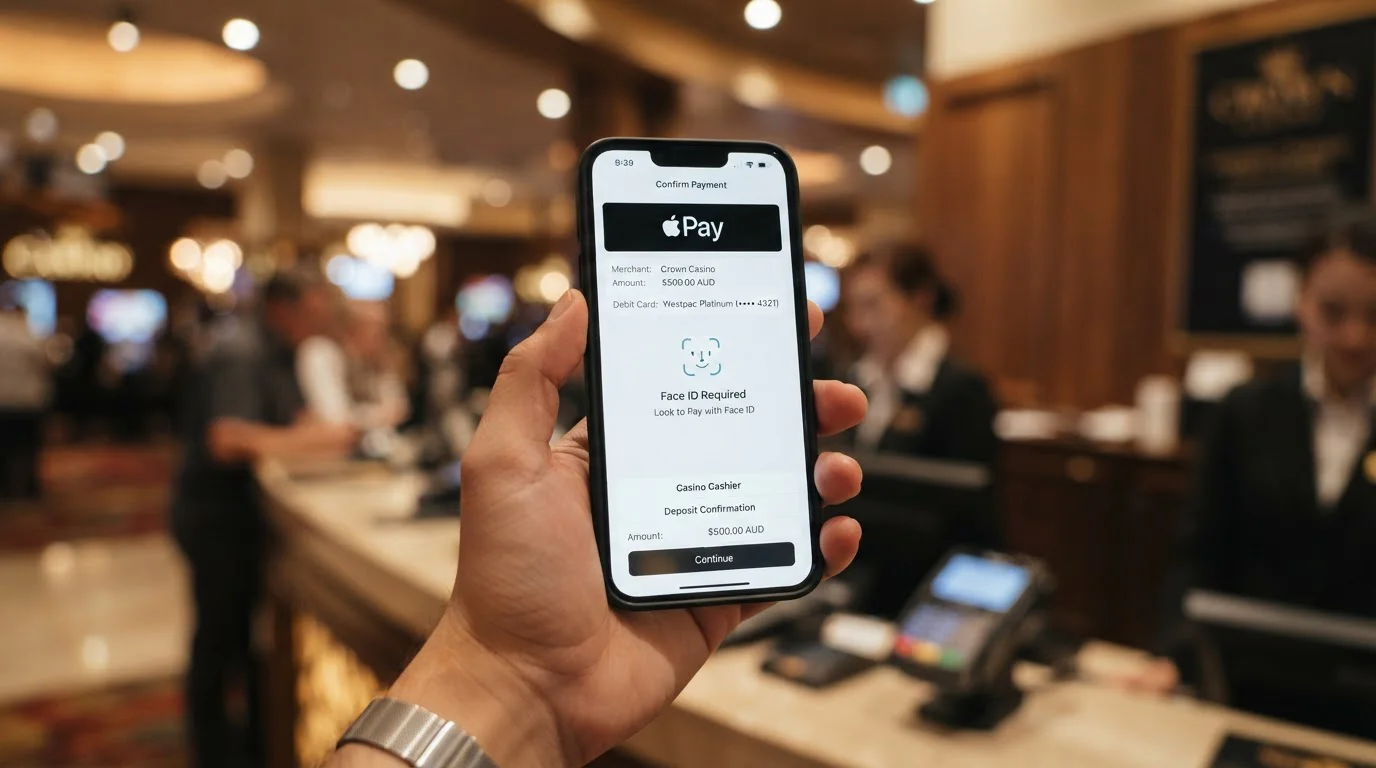
Apple Pay is a biometric bridge to the Visa or Mastercard debit/credit card you’ve linked in your iPhone’s Wallet app. You’re not depositing from an Apple Pay balance; you’re authorizing a card transaction with Face ID instead of typing the 16-digit number and CVV. The casino’s payment processor receives a device-specific token—not your actual card number—so if the casino’s database gets breached, your card details aren’t exposed. That tokenization is Apple Pay’s main security advantage over direct card entry.
Making a Deposit with Apple Pay
On the casino cashier page, select Apple Pay. Enter the deposit amount. Your iPhone or iPad prompts Face ID, Touch ID, or your device passcode. Authenticate. The transaction authorizes in under 10 seconds; funds credit to your casino balance instantly. No card number typed, no CVV, no OTP from your bank. The speed is identical to direct card entry, but the convenience is the draw: one biometric scan instead of fishing out your card and typing details on a mobile browser.
Daily deposit limits vary by your card issuer and bank. Commonwealth Bank, Westpac, ANZ, and NAB all set different caps for international merchant transactions, which is how most offshore casinos are coded. Typical range is A$1,000–A$10,000 daily for Apple Pay-linked cards, but offshore casinos sometimes trigger lower thresholds because they’re classified as “high-risk merchants” by card networks. If a deposit declines and your balance shows sufficient funds, the block is usually at the card issuer level, not Apple Pay itself.
Withdrawing to Apple Pay: The Reality
Here’s the mismatch competitors bury. Apple Pay deposits are instant. Apple Pay withdrawals are not. When you request a withdrawal at an offshore casino, the cashier processes it “back to the same payment method.” For an Apple Pay deposit, that means back to the linked card. The withdrawal becomes a card refund or credit, which travels through the card network—Visa or Mastercard—at their standard processing speed: 3-5 business days.
You’re not receiving an Apple Pay transfer. You’re receiving a card credit. Apple Pay’s biometric speed doesn’t apply to the withdrawal side. That 3-5 day window is on top of the casino’s own “pending” period—typically 24-48 hours while they process KYC, check for bonus abuse, and release the funds to the payment processor. Total time from withdrawal request to money in your account: 4-7 days, sometimes longer. Crypto withdrawals at the same casinos settle in 1-4 hours. PayID withdrawals at brands like SkyCrown clear in 2-4 hours. Apple Pay’s convenience for deposits doesn’t carry over to withdrawals, and that asymmetry is why many Australian players deposit with Apple Pay but switch to crypto or PayID for cashouts.
Daily Limits and Card Issuer Restrictions
Apple Pay inherits the limits and restrictions of the linked card. If your debit card has a A$1,000 daily transaction cap, Apple Pay deposits are capped at A$1,000. If your card issuer blocks transactions to offshore gambling merchants, Apple Pay deposits will fail with the same decline code a direct card entry would trigger. Australia’s credit card ban for online gambling took effect June 11, 2024; debit cards remain permitted, so linking a debit card to Apple Pay bypasses the credit ban.
From January 1, 2027, Australian banks gain authority under the Interactive Gambling Amendment Act 2026 to block payments to illegal gambling services. That blocking mechanism will target the merchant category code and transaction details, not the payment method. Apple Pay deposits to offshore casinos route through the same card rails as direct card deposits, so if a bank blocks gambling transactions to a specific merchant ID, both Apple Pay and direct card entry will fail. How aggressively banks enforce the 2027 provisions remains to be seen; early enforcement will likely target the largest offshore brands first, escalating from there.
How fast are Apple Pay casino withdrawals compared to deposits?
Deposits are instant — under 10 seconds, same as direct card entry. Withdrawals take 3–5 business days because they are processed as card refunds through Visa or Mastercard, not Apple Pay transfers. Crypto clears in 1–4 hours; PayID in 2–4 hours at brands like SkyCrown. That asymmetry pushes players to switch methods for cashouts.
Is Apple Pay safer than entering my card details directly at a casino?
Yes, marginally. Apple Pay uses tokenisation — the casino receives a device-specific token, not your card number. Direct card entry hands over the full number, expiry and CVV. If the operator’s processor is breached, tokenisation hides your card. Both still lean on the same issuer fraud protections, and chargeback success on gambling disputes is limited.
Comparing Withdrawal Speed and Payment Methods

Deposit speed across payment methods is uniform—instant for Apple Pay, PayID, cards, and crypto. The differentiation happens on withdrawals, where processing windows range from under an hour to a week. Below is the applied comparison for Australian players at offshore casinos.
| Method | Deposit Speed | Withdrawal Speed | Fees | Best Use Case |
|---|---|---|---|---|
| Apple Pay | Instant (under 10 seconds) | 3-5 business days (card refund) | None from Apple Pay; card issuer may charge international transaction fees | Convenient deposits; switch to crypto or PayID for withdrawals |
| PayID | Instant (60 seconds) | 2-4 hours (at brands like SkyCrown, Neospin) | None | Fastest non-crypto option for deposits and withdrawals |
| Crypto (Bitcoin, Ethereum) | Instant (on-chain confirmation, typically under 10 minutes) | 1-4 hours average | Blockchain network fees (variable; A$2–A$20 depending on congestion) | Fastest withdrawal method; no card issuer blocks |
| Crypto (USDT TRC-20) | Instant | Under 1 hour (fastest method available) | Low blockchain fees (under A$1 typical) | Speed without Bitcoin volatility |
| E-wallets (Skrill, Neteller) | Instant | 2-12 hours | 1-2.5% withdrawal fees | Faster than cards, but fees cut into winnings |
| Cards (Visa, Mastercard direct) | Instant | 3-5 business days | None from casino; card issuer may charge international fees | Same speed as Apple Pay withdrawals; no advantage over Apple Pay for deposits |
Apple Pay vs PayID vs Crypto: Speed Breakdown
PayID deposits land in 60 seconds, same functional speed as Apple Pay. The difference shows on withdrawals: PayID processes in 2-4 hours at brands like SkyCrown and Neospin, vs 3-5 business days for Apple Pay (which routes through the card network). That 2-4 hour PayID window assumes the casino releases funds promptly after the 24-48 hour pending period; total time from withdrawal request to PayID account credit is typically 1-3 days. Still faster than Apple Pay’s 4-7 day total.
Crypto withdrawals—Bitcoin, Ethereum, Litecoin—settle in 1-4 hours once the casino releases funds. USDT on TRC-20 (Tron network) clears in under an hour, the fastest method available. The trade-off is volatility: Bitcoin’s price can swing 5-10% between deposit and withdrawal, eating into (or occasionally adding to) your bankroll. USDT avoids that volatility; it’s pegged 1:1 to the US dollar. For Australian players prioritizing speed, crypto beats cards and Apple Pay by days. The catch is setting up a crypto wallet and navigating on-chain transactions, which adds friction vs the one-tap convenience of Apple Pay deposits.
Why Most Players Use Apple Pay for Deposits, Not Withdrawals
Apple Pay’s biometric convenience makes deposits frictionless: Face ID, done, funds credited. Withdrawals go back to the linked card and take 3-5 days, negating the speed advantage. Many Australian players deposit with Apple Pay for the convenience, then withdraw via crypto (1-4 hours) or PayID (2-4 hours) to avoid the multi-day card processing lag. That method-switching requires setting up a crypto wallet or linking PayID at the casino, but the time saved on withdrawals—especially for frequent players—justifies the setup effort.
The other driver is the 2027 bank-blocking provisions. Card-linked methods like Apple Pay face disruption risk once banks start filtering transactions to offshore gambling merchants. Crypto withdrawals bypass the banking system entirely; PayID may or may not be targeted depending on how banks implement the blocking mechanism. Switching withdrawal methods now hedges against future payment friction.
Can I withdraw my casino winnings back to Apple Pay, or do I need another method?
You can withdraw to Apple Pay, but the funds are processed as a card refund and take 3-5 business days to reach your account. Many players switch to crypto (1-4 hours) or PayID (2-4 hours) for withdrawals to avoid the multi-day card processing window. Apple Pay is convenient for deposits; for withdrawals, faster methods exist.
Apple Pay Pokies: What Australian Players Need to Know

Pokies—Australian slang for slot machines—dominate offshore casino libraries. The brands listed earlier run 2,000–6,000+ pokies each, sourced from 40–80 providers depending on the operator. Apple Pay works identically for pokies deposits as it does for live dealer or table game deposits: instant authorization, funds credited in seconds, Face ID or Touch ID to authenticate.
Top Pokies Providers at Apple Pay Casinos
Pragmatic Play, NetEnt, Microgaming, Play’n GO, Quickspin, and Yggdrasil supply the bulk of pokies at multi-provider offshore casinos. RealTime Gaming (RTG) dominates Fair Go and Joe Fortune, which run RTG-exclusive platforms. Evolution Gaming supplies live dealer tables, not pokies, but appears at most brands alongside slot providers.
Popular titles across Apple Pay-accepting casinos: Sweet Bonanza and Gates of Olympus (Pragmatic Play), Starburst and Gonzo’s Quest (NetEnt), Book of Dead (Play’n GO), Big Bass Bonanza (Pragmatic Play). RTG’s standout titles include Cash Bandits, Bubble Bubble, and Achilles. RTP (return to player) on these pokies typically runs 94-97%, with high-RTP titles like Starburst (96.09%) and Book of Dead (96.21%) often featured in welcome bonus free spins.
Pokies contribute 100% toward bonus wagering requirements at most offshore casinos. Table games and live dealer contribute 10-20%, sometimes excluded entirely. That’s why welcome bonuses push players toward pokies: a 40x wagering requirement on a A$100 bonus means A$4,000 in total stakes. Playing pokies, you reach that A$4,000 at face value. Playing blackjack at 10% contribution, you’d need A$40,000 in total stakes to clear the same bonus. Casinos structure rollover rules to funnel bonus play into pokies, where the house edge is higher and clearing the requirement faster keeps players engaged.
Mobile Pokies Play via Apple Pay
Apple Pay is mobile-native: it works on iPhone, iPad, and Apple Watch, not on Windows PCs or non-Apple devices. That aligns with how Australian players access offshore casinos. Sixty-eight percent of tested Bitcoin casino transactions in Australia occurred via mobile devices, per research data from payment-method guides. All major offshore casinos listed here run browser-based (instant-play) platforms optimized for mobile. No app download required—Apple and Google restrict real-money gambling apps in Australian app stores, so browser play is the standard.
Depositing via Apple Pay on mobile: open the casino site in Safari or Chrome, navigate to the cashier, select Apple Pay, enter the amount, authenticate with Face ID. Funds credit instantly. Gameplay happens in the same browser window; no app toggle, no separate login. The mobile experience is seamless for deposits. Withdrawals, whether to Apple Pay (card refund) or crypto, still require navigating the cashier and entering withdrawal details, which is clunkier on mobile than desktop but functional.
Legal Status: The Offshore Reality and 2027 Enforcement
Online casino games are prohibited interactive gambling services under the Interactive Gambling Act 2001 (IGA). Pokies, roulette, blackjack, baccarat, live dealer tables—none can be legally provided to Australian residents. No Australian state or territory regulator can issue a license for online casino games. Sports and race wagering (TAB, Sportsbet, etc.) and lotteries hold Australian licenses; casino games do not.
What the Interactive Gambling Act Actually Says
The IGA targets providers, not players. Offering online casino games to Australians is an offense; playing them is not. The Department of Infrastructure states plainly: the law “targets the providers of interactive gambling, not their potential or actual customers.” That distinction is why Australian players can access offshore casinos without criminal liability. The lack of player-side enforcement doesn’t make the casinos legal—it makes playing a regulatory gray zone with zero consumer protection.
Every offshore casino accessible from Australia operates under a foreign license—Curaçao, Malta, Anjouan, Comoros, Tobique—and violates the IGA by accepting Australian customers. ACMA, the federal enforcement body, cannot force an offshore operator to pay a disputed withdrawal. BetStop, Australia’s national self-exclusion register, covers licensed wagering operators only; it does not block offshore casinos. If an offshore casino refuses to return your deposit or pay a withdrawal, ACMA’s position is blunt: “there is little recourse for Australian customers.”
Bank Blocking from January 2027: What It Means for Apple Pay Deposits
The Interactive Gambling Amendment (Gambling Reform) Act 2026 passed August 26, 2026, and enforcement begins January 1, 2027. Key provision: Australian banks must take “reasonably practicable steps” to prevent funds reaching designated illegal gambling services. Payment blocking will target merchant category codes, transaction patterns, and known offshore operator identifiers. Apple Pay deposits route through card networks—Visa and Mastercard—using the same merchant processing as direct card deposits. If a bank blocks transactions to an offshore casino’s merchant ID, both Apple Pay and direct card deposits will fail.
The blocking mechanism is transaction-level, not method-level. Apple Pay itself isn’t banned; transactions to illegal gambling merchants are. In practice, that means offshore casinos will see deposit declines increase for card-linked methods (Apple Pay, Google Pay, direct card entry) once banks implement filtering. Crypto deposits bypass the banking system entirely and aren’t subject to bank-level blocking. PayID—a bank-to-bank transfer system—may or may not be filtered depending on how banks interpret “reasonably practicable steps.” If PayID transactions to offshore casinos are coded as gambling payments, banks could block them alongside card transactions. If they’re coded as generic transfers, they may slip through initial enforcement.
The 2027 provisions give banks authority to block, not a mandate with specific enforcement deadlines. Early enforcement will likely target the largest offshore operators first—brands processing millions in Australian deposits monthly. Smaller operators may face slower rollout. Offshore casinos will respond by switching payment processors, changing merchant IDs, and routing transactions through different jurisdictions, the same cat-and-mouse pattern that’s played out with ACMA domain blocking since 2019. Apple Pay deposits to offshore casinos will become less reliable after January 2027, not impossible overnight.
ACMA Enforcement: Which Casinos Are Already Blocked
ACMA has blocked over 1,700 gambling and affiliate websites since 2019. Specific brands from the comparison above appear in ACMA’s enforcement register:
Hell Spin: Formal warning issued to TechOptions Group B.V. (parent operator) for providing prohibited interactive gambling services to Australian customers. Multiple Hell Spin domains blocked. The casino remains accessible via new domains registered after blocks.
Playamo and Casinonic: Both operate under Dama N.V., which has received ACMA enforcement actions. Numerous Playamo domains blocked. Casinonic domains also subject to blocking. Both casinos remain accessible via mirrors.
Fair Go: ACMA formally determined Fair Go provides illegal interactive gambling services. Multiple domains blocked. Fair Go remains accessible via new domains.
ACMA domain blocking is administrative, not criminal. When a domain is blocked, Australian ISPs must prevent access. Offshore operators register new domains and redirect traffic. Players access the new domain, deposit, play. ACMA blocks the new domain months later. The cycle repeats. That’s why brands blocked in 2022 remain accessible in 2026. Domain blocking slows access; it doesn’t eliminate it. Bank payment blocking, starting January 2027, targets a different choke point—transaction authorization—and may prove more disruptive than domain blocks alone.
What happens to Apple Pay deposits after the January 2027 bank blocking law takes effect?
Apple Pay deposits route through Visa and Mastercard and will face bank-level blocking from January 1, 2027. Deposits to offshore casinos may decline more often as banks implement filters. Crypto bypasses the banking system and is unaffected. Operators will switch processors and merchant IDs to evade blocks, so reliability erodes gradually rather than overnight.
Bonuses at Apple Pay Casinos
Welcome bonuses at offshore casinos follow a fixed pattern: deposit match (100%-300%), free spins, and wagering requirements (30x-50x) that dwarf the headline figure. A A$500 bonus with 40x rollover means A$20,000 in total stakes before you can withdraw a cent. That’s not a “gift”—it’s a retention mechanism that ties your deposit and the bonus to extended play, during which the house edge grinds away at your bankroll.
Most offshore brands offer tiered welcome packages: 100%-150% match on the first deposit, declining percentages on subsequent deposits, with free spins distributed across the stages. RocketPlay advertises up to A$10,000 across staged deposits at 30x wagering. Hell Spin offers 150% up to A$450 on the first deposit. Joe Fortune promotes A$7,500 over five deposits, with Bitcoin deposits receiving 150% match vs 100% for cards. The Bitcoin premium incentivizes crypto over card payments, aligning with the casino’s preference for withdrawal methods that bypass chargeback risk.
Bonus eligibility rarely depends on deposit method. Apple Pay deposits qualify for welcome bonuses the same way direct card or PayID deposits do. The catch is the rollover math. At 40x wagering on deposit + bonus, a A$200 deposit with a A$200 match (100% bonus) means A$16,000 in total stakes. At 96% RTP pokies (the typical range), expected loss over A$16,000 wagered is roughly A$640—more than the combined deposit and bonus. Bonuses make sense for players who were going to wager large amounts regardless; for casual players, skipping the bonus and withdrawing winnings without rollover restrictions is often the better play.
Apple Pay-specific bonus promotions are rare. Most offshore casinos treat Apple Pay as one payment method among many, with no separate bonus track. A few brands promote “mobile wallet bonuses” covering Apple Pay, Google Pay, and similar methods, but these are promotional cycles, not standing offers.
New Apple Pay Casinos in Australia
“New” in the offshore casino context means launched within the past 12-24 months. Neospin (various sources list 2023-2024 launch dates), Hell Spin (2021), and a rotating cast of Dama N.V. and other multi-brand network siblings enter the Australian market annually. New doesn’t mean better. Offshore casinos operate on white-label platforms: the same software, payment processors, and game libraries rebranded under different names. A casino launched in 2024 often shares operational infrastructure with brands from 2018.
The appeal of new casinos is promotional aggression. To build player bases, new brands offer higher deposit matches and free spin counts than established operators. Once a player base forms, bonuses taper to industry norms (100%-150% first deposit, 30x-50x wagering). New casinos also lack operational track records. An established brand like Playamo (2016) or Joe Fortune (2016) has years of public player complaints, dispute logs, and payout history. A brand launched six months ago has minimal transparency. That’s a double-edged sword: less baggage, but also less accountability.
For Australian players considering new Apple Pay-accepting casinos, the verification steps below (ACMA lookup, license register check, domain age audit) matter more than headline bonus figures. A 300% welcome bonus at a casino with no operational history and a Curaçao license registered last quarter is higher-risk than a 100% bonus at a brand that’s processed Australian withdrawals for five years.
Verifying an Apple Pay Casino Before You Deposit
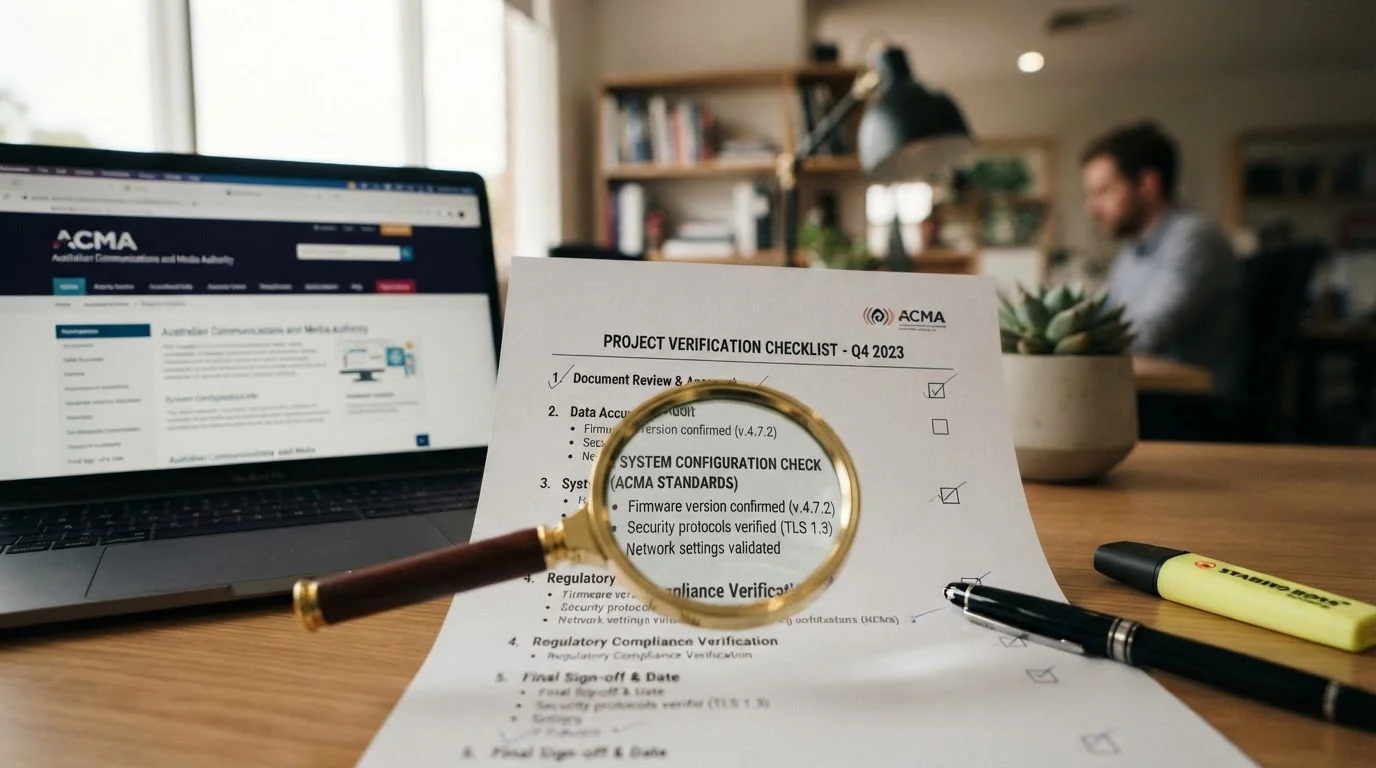
Offshore casinos operate outside Australian law. No ombudsman, no dispute tribunal, no regulatory recourse if they refuse to pay. The verification steps below won’t eliminate risk—depositing at an offshore casino carries inherent risk—but they surface red flags before you hand over money.
The 10-Minute Verification Checklist
1. Search the brand on ACMA’s blocked-site register. Visit the ACMA website and search the casino’s name. If it appears on the blocked list, you know Australian authorities have formally determined it provides illegal services. That doesn’t stop you from accessing it (domains reappear on mirrors), but it confirms regulatory scrutiny. Brands like Hell Spin, Playamo, Casinonic, and Fair Go all have ACMA enforcement records. That history tells you the operator has been targeted; it doesn’t tell you whether they pay withdrawals reliably. Weight it as context, not a pass/fail.
2. Verify the license on the regulator’s actual site, not the casino’s footer. Most offshore casinos display a license badge in the footer—Curaçao eGaming, Tobique Gaming Commission, Comoros AOFA. Visit the regulator’s website (if it exists and maintains a public register) and search the license number. Curaçao eGaming maintains a validator at license.validator.com; Tobique and Comoros do not publish searchable registers. A footer badge without a verifiable license number is cosmetic. If you can’t independently confirm the license, assume it’s decorative.
3. Check the domain registration date. Use a WHOIS lookup tool (whois.com, icann.org) and search the casino’s domain. If the site claims “established 2018” but the domain was registered three months ago, that’s a red flag. Offshore operators rebrand frequently, often migrating players from blocked domains to new ones. A fresh domain doesn’t prove fraud, but it does mean “years of operation” claims are inflated.
4. Read the withdrawal terms before depositing. Navigate to the casino’s Terms and Conditions (usually in the footer), find the Withdrawals section, and note: minimum withdrawal, maximum withdrawal (daily, weekly, monthly), pending period (how long before the casino releases funds to the payment processor), and KYC requirements. If withdrawal caps are vague (“at the casino’s discretion”) or the pending period exceeds 72 hours, that’s friction. Compare the stated terms to player reviews on independent forums (AskGamblers, CasinoMeister, Trustpilot). If reviews consistently report longer processing than the terms state, weight the reviews over the official policy.
5. Test support before depositing. Open the live chat and ask a direct question: “What is the average withdrawal processing time for PayID to an Australian bank account?” or “What documents are required for KYC verification before my first withdrawal?” A support agent who answers clearly in under two minutes signals functional operations. An agent who deflects, gives canned responses, or takes ten minutes to reply signals understaffed or outsourced support. Support quality correlates with dispute resolution speed.
If any of the five checks above surface major red flags (no verifiable license, domain age mismatch, withdrawal terms deliberately vague, support unresponsive), skip the casino. Dozens of offshore brands accept Apple Pay from Australian players; you’re not limited to one.
What should I check before depositing at an Apple Pay casino?
Run a 10-minute checklist. Search the operator on ACMA’s blocked-site register for enforcement history. Verify the licence on the regulator’s actual site, not the footer badge. WHOIS-check the domain age against any “years of operation” claim. Read the withdrawal terms for caps, pending periods and KYC. Test live chat with a direct withdrawal question.
What to Do If an Apple Pay Casino Won’t Pay
Offshore casinos operate outside Australian jurisdiction. ACMA cannot force them to pay a disputed withdrawal. BetStop doesn’t cover them. Your card issuer’s chargeback process has limited success with gambling transactions. The pathways below are what exist; none are reliable.
Complain to the foreign licensor. If the casino holds a Curaçao license, file a complaint with Curaçao eGaming (or the specific sublicensee listed on the license). Curaçao’s dispute resolution process is opaque and rarely sides with players against operators, but formal complaints occasionally push casinos to release funds to avoid license scrutiny. Tobique Gaming Commission and Comoros AOFA have weaker enforcement; complaints filed there often go unanswered. Weight this pathway as a formality, not a solution.
Report to ACMA. ACMA enforces the IGA by blocking domains and issuing warnings to offshore operators. Reporting a casino to ACMA won’t recover your money, but it contributes to enforcement actions. If ACMA receives enough complaints about a specific brand, that brand may face domain blocking or formal warnings to its parent company. The process is slow—months to years—and doesn’t help individual disputes. Use it as a public-interest reporting mechanism, not a dispute resolution tool.
Attempt a chargeback. If you deposited via Apple Pay (which routes through your linked card), you can request a chargeback from your card issuer (Commonwealth Bank, Westpac, ANZ, NAB, etc.). Explain you deposited at an offshore gambling site, the casino refused to process your withdrawal, and you’re disputing the transaction. Success rate is low: gambling transactions are coded as high-risk, and many card issuers deny chargebacks for “buyer’s remorse” scenarios. If you can demonstrate the casino violated its own terms (e.g., refused withdrawal without cause, failed to process KYC in stated timeframes), chargebacks have marginally better odds. Expect the casino to fight the chargeback by providing transaction logs showing you gambled and lost the deposit. If you won and they refused to pay, document everything: screenshots of the balance, withdrawal requests, support chat logs, email correspondence.
Accept the loss. If a Curaçao-licensed offshore casino decides not to pay your withdrawal, you have limited recourse. The casino operates outside Australian law, the foreign licensor rarely enforces player-friendly outcomes, ACMA can’t compel payment, and chargebacks succeed infrequently for gambling disputes. That’s the offshore reality. The brands listed earlier in this guide have operational track records and public complaint histories you can research. A brand with years of player reviews showing consistent payouts is lower-risk than one with no history or a pattern of refused withdrawals. Zero risk doesn’t exist; you’re choosing between higher and lower risk profiles.
If an offshore casino refuses to pay my Apple Pay withdrawal, what can I do?
Complain to the foreign licensor (Curaçao eGaming or equivalent — success rate low). Report to ACMA (won’t recover money but feeds enforcement). Attempt a chargeback through your card issuer, especially if the casino breached its own terms; gambling chargebacks succeed rarely, so document everything. No Australian body can force an offshore operator to pay.
Responsible Gambling Tools and Resources
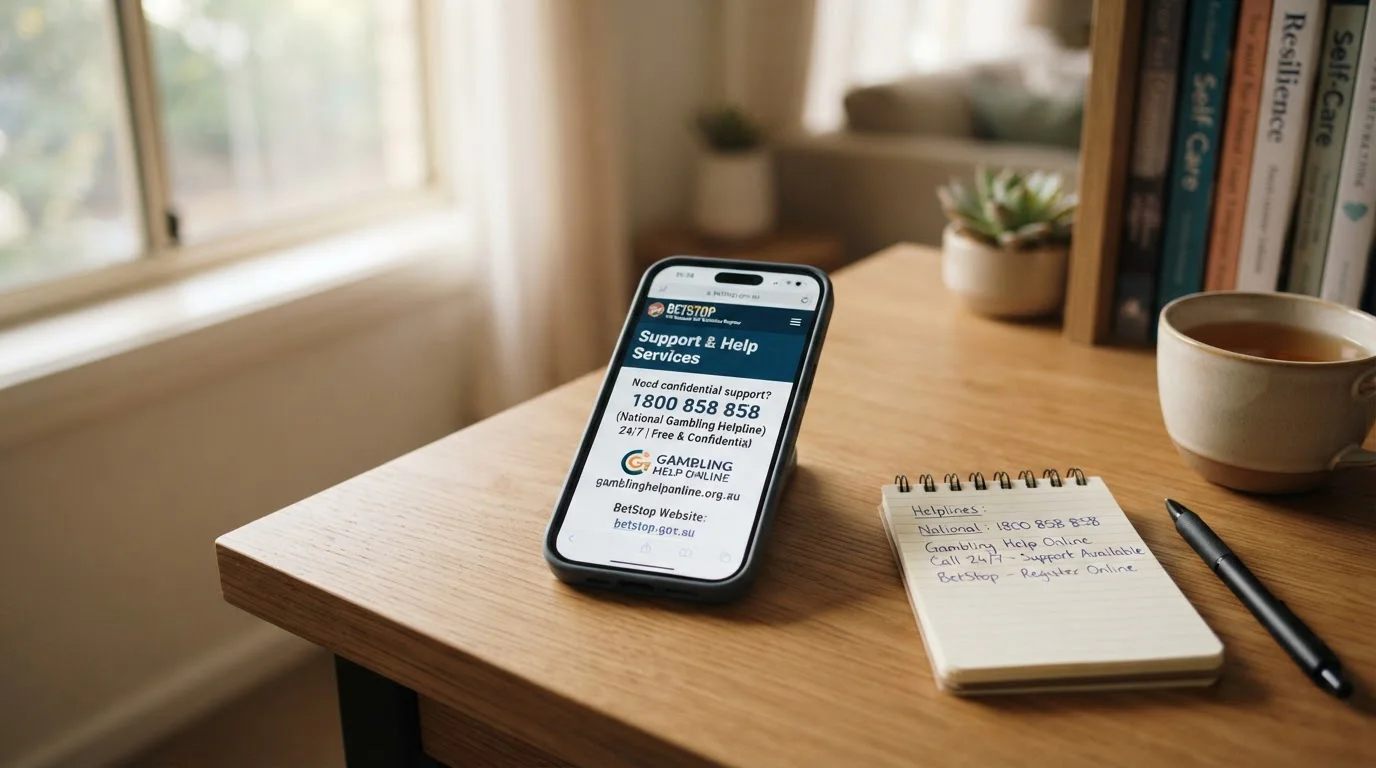
BetStop, Australia’s national self-exclusion register, covers licensed wagering operators—TAB, Sportsbet, Ladbrokes, and other Australian-licensed bookmakers. It does not block offshore casinos. Registering with BetStop prevents you from opening accounts at licensed Australian wagering sites but has zero effect on offshore casino access.
To block offshore casinos, combine device-level software with bank-side controls. Gamban and BetBlocker are third-party apps that filter gambling sites across devices. Both work on iPhone, Android, Windows, and Mac. Installation requires admin access; once active, the software blocks known gambling domains and updates its blocklist regularly. Neither is foolproof—VPNs and new domains evade filters—but they add friction between impulse and deposit.
Bank gambling blocks—available at Commonwealth Bank, Westpac, ANZ, NAB, and most major Australian banks—prevent transactions to merchants coded as gambling operators. Contact your bank’s support line or enable the gambling block through your mobile banking app. The block applies to card transactions, including Apple Pay deposits, at both licensed Australian operators and offshore casinos. It won’t block crypto purchases (which are coded as exchanges, not gambling) or PayID transfers (which route as bank-to-bank transfers). For comprehensive blocking, combine bank gambling blocks with device-level software and BetStop registration.
If gambling is causing harm—financial, relational, or psychological—contact the National Gambling Helpline at 1800 858 858. The service is free, confidential, and operates 24/7. Counsellors provide support, referrals to local services, and strategies for managing gambling behavior. The helpline is independent of gambling operators and government; it’s funded by Australian state and territory governments as a harm-reduction measure.
Offshore casinos are not charities. The house edge on pokies runs 3-6%; the house wins over time. Bonuses with 40x-50x wagering requirements exist to extend play, not deliver value. If you’re depositing more than you planned, chasing losses, or gambling with money earmarked for bills, the entertainment justification has collapsed. Stop, reach out, block access. The offshore casinos listed in this guide will still be there tomorrow; your financial stability won’t wait.
Casino Deposit Methods Australia 2026 — Full Comparison
Content created by the «Payment Methods Online» team