
Casinos That Accept MiFinity in Australia: Ranked by Payout Speed 2026
 Available in AU

MiFinity deposits land in seconds. The operator holds your withdrawal for 12 to 72 hours, processes it, and the e-wallet sees funds in one to four hours if everything clears. That timeline beats cards by days, sits a tier below PayID’s same-morning arrival, and costs you 2.5% to load the wallet if you’re funding with an Australian debit card instead of a SEPA transfer you don’t have.
Fifteen offshore casinos accept MiFinity for Australian players in 2026. Ten have enough public data—license numbers, confirmed minimum deposits, verifiable withdrawal windows—to warrant a breakdown. The rest are listed in affiliate tops with no substance behind the name. This guide ranks the ten with receipts, explains what MiFinity costs in practice, and positions it against Skrill, Neteller, PayID, and crypto so you know where the e-wallet sits when speed and fees matter.
No Australian-licensed online casino exists. The Interactive Gambling Act prohibits local operators from offering casino games to residents, and ACMA does not issue licenses for it. Every site below runs offshore under Curaçao, Malta, or niche-jurisdiction oversight. Playing at them is not illegal for you—offering services to Australians without authorisation is what the law restricts. That distinction matters when enforcement tightens in January 2026.
Best MiFinity Casinos for Australian Players — Ranked by Payout Speed
The table below compares ten offshore operators that accept MiFinity deposits and withdrawals for Australian accounts. Ranked by payout speed where data is verifiable, then by minimum-deposit accessibility where speed data is sparse.
| Operator | License | Min Deposit (MiFinity) | Withdrawal Speed | Distinguishing Feature |
|---|---|---|---|---|
| Rooli | Curaçao eGaming #152125 | A$20 | 0–24 hours | Dama N.V., 6,000+ games, fastest confirmed payout |
| SpinJo | Curaçao | A$30 | Under 24 hours | PayPal acceptance, POLi instant, Skrill <1 day reported |
| Dudespin | Curaçao | A$15 | Within 24 hours typical | 8,300+ games, 300% welcome up to A$3,000 |
| Casea | Offshore (authority unconfirmed) | A$15–20 (estimate) | Standard (24–48h estimate) | 7,000+ pokies, integrated sportsbook |
| Lizaro | Offshore (authority unconfirmed) | A$15 | Standard (24–48h estimate) | 250% up to A$6,000 + 350 FS, crash games |
| Wild Fortune | Offshore (authority unconfirmed) | A$20–30 (estimate) | Standard (24–48h estimate) | 15% VIP cashback, AUD-first, PayID |
| FairCrown | Tobique Gaming Authority | Not specified | Standard (24–48h estimate) | 100+ studios, five-deposit bonus structure |
| Alawin | Offshore (authority unconfirmed) | A$15 | Standard (24–48h estimate) | Low entry threshold, A$50 min withdrawal |
| BigClash | Offshore (authority unconfirmed) | A$15 | Standard (24–48h estimate) | A$50 min withdrawal |
| MonsterWin | Offshore (authority unconfirmed) | A$15 | Standard (24–48h estimate) | A$50 min withdrawal |
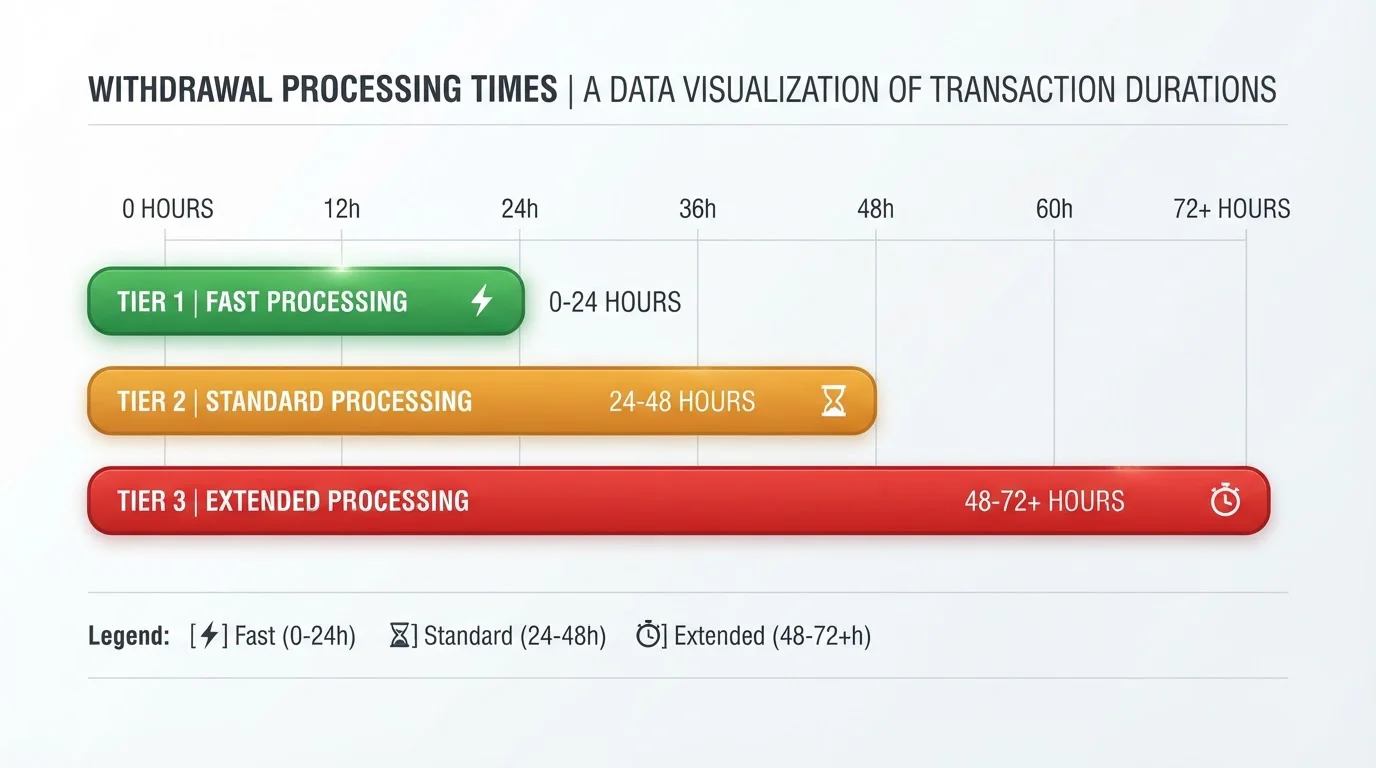
Withdrawal speed is operator-side processing time after your request clears the pending window. Add 12 to 72 hours for that pending hold, which most operators enforce before they approve the cashout. VIP players often bypass the longest queues.
Which casinos accept MiFinity in Australia?
Rooli, SpinJo, Dudespin, Casea, Lizaro, Wild Fortune, FairCrown, Alawin, BigClash, and MonsterWin accept MiFinity deposits and withdrawals for Australian accounts in 2026. All ten support AUD, though some display euro equivalents on international pages. Several others appear in affiliate lists without verifiable domains or license data—those are omitted here until confirmation surfaces.
Rooli Casino
The fastest verified payout among MiFinity-accepting operators targeting Australia. Rooli runs under Dama N.V., a Curaçao operator managing over 40 casino brands, and holds eGaming license number 152125. Founded in 2023 and launched publicly in 2024, the site stocks 6,000+ games from more than 100 providers and processes e-wallet withdrawals in 0 to 24 hours once the initial KYC verification clears.
The welcome package splits across four deposits: 100% up to A$500 plus 200 free spins on the first, then three reload offers that together bring the total to A$4,000 plus 475 free spins. Minimum qualifying deposit is A$20. Payment methods include Visa, Mastercard, Skrill, Neteller, Bitcoin, Tether, Ethereum, MiFinity, Paysafecard, Jeton, and CashtoCode. Bank transfers take three to five days; e-wallets and crypto clear within a day if the operator approves promptly.
Where Rooli stands out: it consistently lands “fastest payout” tags in casino comparison guides, backed by the 0–24-hour e-wallet window stated on its own payment pages. Dama’s multi-brand infrastructure means support and technical systems are mature, not cobbled together for a single-site launch. The game library is large without being overwhelming, and the welcome bonus spreads value across multiple deposits instead of frontloading everything into one.
SpinJo
SpinJo holds a Curaçao license, accepts Australian dollars natively, and offers one feature rare among offshore operators: PayPal. Most Curaçao-licensed sites avoid PayPal due to processing restrictions, so finding it alongside Visa, Mastercard, Skrill, Neteller, Paysafecard, bank transfer, Apple Pay, Bitcoin, and MiFinity makes SpinJo a workable option for players already using PayPal elsewhere.
The first deposit triggers a 100% match up to A$1,000 plus 100 free spins, with a A$30 minimum. The full welcome package extends to A$5,000 plus 300 free spins across multiple deposits, positioning it among the higher-value bonus structures in the AU offshore market. POLi deposits process instantly according to user-submitted reviews, and Skrill withdrawals reportedly clear inside a day once verification is complete.
SpinJo ranks as “Editor’s Pick” on the top MiFinity casino guide for Australia as of late 2026. Its game library includes pokies from Pragmatic Play and Play’n GO, standard for offshore operators, with live dealer tables and jackpot slots filling out the catalogue. The PayPal integration is the practical advantage here—if you already funnel funds through PayPal, SpinJo accepts it without forcing you onto e-wallet or crypto alternatives.
Dudespin
DudeSpin arrived recently—launched in the 2024–2025 window—and leans into the neon bowling aesthetic as brand differentiation. It holds a Curaçao license, accepts AUD, and lists 8,300+ games across pokies, live dealer, and an integrated sportsbook. The welcome bonus is a 300% match up to A$3,000 plus 150 free spins, one of the higher percentage matches in the market even if the absolute ceiling is lower than SpinJo’s A$5,000.
Minimum MiFinity deposit is A$15, confirmed across multiple sources. Payment methods include Visa, Mastercard, MiFinity, vouchers (likely Neosurf or Paysafecard), and several cryptocurrencies. SSL encryption, compliance checks, and continuous monitoring are stated security measures, standard for licensed offshore operators. The VIP programme stacks five tiers with personalised treatment at higher levels, and sports bettors get boosted odds, multi-market slips, and dedicated promotions around major Australian events.
Where Dudespin fits: the A$15 minimum lowers the entry barrier compared to A$20–30 floors elsewhere, the game count is among the highest if you value library size, and the neon theme is loud enough to stand out in a sea of generic green-felt casino designs. Withdrawals process “within 24 hours” according to promotional material, though that phrasing likely means operator approval time, not funds-in-wallet.
Casea
Casea launched in the 2024–2025 window with a sea theme and an integrated sportsbook. The game library tops 7,000 pokies, sourced from over 100 studios. The welcome package is a 250% match up to A$4,500 plus 350 free spins, spread across four deposits. Payment options include POLi, crypto, and MiFinity for AUD accounts.
The offshore license holder is not disclosed in public-facing material; based on market norms, it’s likely Curaçao or Anjouan. Minimum MiFinity deposit is estimated at A$15–20 based on the A$15 floor mentioned for other operators in the same group, but Casea’s own cashier pages were not accessible for direct verification. Withdrawal speed is listed generically as “standard processing,” which translates to 24 to 48 hours operator-side after the pending window closes.
Casea’s angle is the large pokies library paired with live sports betting under one account. If you toggle between pokies sessions and sports markets, the unified wallet saves you from splitting funds across separate sites. The sea theme is cosmetic differentiation—sharks, reefs, deep blue—executed competently without straying into novelty-casino territory.
Lizaro
Lizaro runs a 250% welcome package up to A$6,000 plus 350 free spins, distributed across four deposits. Wagering is set at 35x on deposit plus bonus, 40x on free-spin winnings—middle of the market, neither generous nor punitive. The minimum MiFinity deposit is A$15, matching Dudespin, Alawin, BigClash, and MonsterWin in the low-entry tier.
Game selection spans slots, live casino, crash games, instant games, and full sports betting (pre-match and live). The crash-games inclusion is notable—titles like Aviator and similar high-variance instant-result games have carved a niche among players who find traditional pokies too slow. If you’re in that segment, Lizaro covers it without requiring a separate account at a crash-specific site.
The offshore license authority is not confirmed in reviewed sources. Withdrawal processing follows the standard 24-to-48-hour operator window after pending. SSL encryption, two-factor authentication on the MiFinity wallet itself, and oversight from the UK Financial Conduct Authority and Malta’s MFSA (regulating MiFinity, not Lizaro) provide the payment-security layer, though the casino’s own regulatory oversight remains opaque.
Wild Fortune
Wild Fortune positions itself as AUD-first: native currency, PayID integration, and a VIP cashback programme that reaches 15% at the top tier. Most offshore VIP cashback caps at 10 to 12%, so the 15% is a meaningful edge if you’re in the volume range where VIP tiers activate. The welcome bonus is up to A$3,000 plus 200 free spins, or €5,000 plus 250 spins on European-facing pages.
The pokies library focuses on titles “Australians recognise”—a marketing phrase that translates to stocking Pragmatic Play, Play’n GO, NetEnt, and other studios whose games dominate AU-facing offshore sites. Live dealer tables, jackpot slots, and table games fill out the catalogue. Payment methods include PayID (same-day for deposits, one to three business days for withdrawals), crypto, e-wallets, and cards.
Wild Fortune’s offshore license holder is not specified in public material, and the claim of being “fully licensed” without naming the authority is standard phrasing across unlicensed or low-tier-jurisdiction operators. The 15% VIP cashback is the distinguishing feature here. If you’re cycling through A$10,000+ in monthly turnover and hitting the upper VIP tiers, that extra three to five percentage points over competitors’ cashback rates adds up.
FairCrown
FairCrown holds a Tobique Gaming Authority license—a Canadian First Nation regulator with lower brand recognition than the Malta Gaming Authority or UK Gambling Commission but still a formal licensing body. The platform draws games from 100+ studios, a respectable spread without reaching the 6,000+ or 8,300+ libraries that Rooli and Dudespin tout.
The welcome bonus programme extends across five deposits before weekly promotions take over. Most competitors stop at four deposits, so the extra reload phase gives you another matched chunk if you’re depositing incrementally rather than frontloading. Specific bonus percentages and ceilings are not detailed in the sources reviewed, which limits direct comparison to the A$4,000–6,000 packages elsewhere.
The Tobique license is less common in the Australian offshore market, where Curaçao dominates. That rarity is neither an advantage nor a red flag on its own—Tobique-licensed sites operate under Canadian First Nation authority, and their regulatory standards sit somewhere between Curaçao and Malta in enforcement rigor. Withdrawal processing follows standard timelines: 24 to 48 hours operator-side, plus the pending window most sites enforce.
Alawin
Alawin is one of five operators named in the hubstack.net MiFinity guide for Australia, alongside Dudespin, Lizaro, BigClash, and MonsterWin. It accepts MiFinity deposits from A$15 and withdrawals from A$50. SSL encryption, two-factor authentication (on the MiFinity wallet, not necessarily on the casino account itself), and FCA plus MFSA oversight (again, of MiFinity the payment provider) are cited security features.
The offshore license authority is not confirmed. Domain, parent company, and game-library specifics are absent from available public sources. What is verified: A$15 MiFinity minimum deposit and A$50 minimum withdrawal, both lower than the A$20–30 deposit floors and higher withdrawal minimums at operators targeting higher-roller segments.
Alawin’s profile is thin. If you’re entering at the A$15 floor and withdrawing in A$50–100 increments, it qualifies. Beyond that threshold, operators with disclosed licenses, confirmed game counts, and verified payout windows offer more transparency.
BigClash
BigClash matches Alawin’s A$15 MiFinity deposit minimum and A$50 withdrawal floor. It appears in the same hubstack.net top-five MiFinity casinos for Australia, with no additional detail on license authority, parent company, domain, or game library in reviewed sources.
The absence of a verifiable domain or promotional page beyond affiliate mentions limits substantive evaluation. A$15 minimum deposit positions it in the low-entry tier, and the A$50 withdrawal floor is standard for operators accepting smaller cashouts. If public data surfaces—license number, confirmed payout timelines, game count—it would warrant deeper breakdown. Until then, it’s a name on a list with minimal verified backing.
MonsterWin
MonsterWin rounds out the hubstack.net top-five with the same A$15 deposit and A$50 withdrawal thresholds as Alawin and BigClash. No confirmed license authority, domain, or parent company appears in reviewed sources. The promotional angle and game selection remain unverified.
Like BigClash, MonsterWin sits in the “listed but undetailed” category—affiliate guides name it, but no promotional page, license register entry, or player-review pattern substantiates the profile. It may be a rebrand, a white-label under a larger operator, or a site with minimal marketing reach. The A$15 floor is its documented attribute. Everything else awaits confirmation.
How long do MiFinity withdrawals take at Australian casinos?
MiFinity withdrawals clear in 1–4 hours from the operator’s cashier to your wallet once the casino approves. Approval typically follows a 12–72-hour pending window, which is reversible. End-to-end: 13–76 hours from request to funds in your wallet. Rooli’s 0–24-hour lane is the fastest confirmed; others quote a broader 24–48-hour bracket.
How MiFinity Works at Australian Casinos
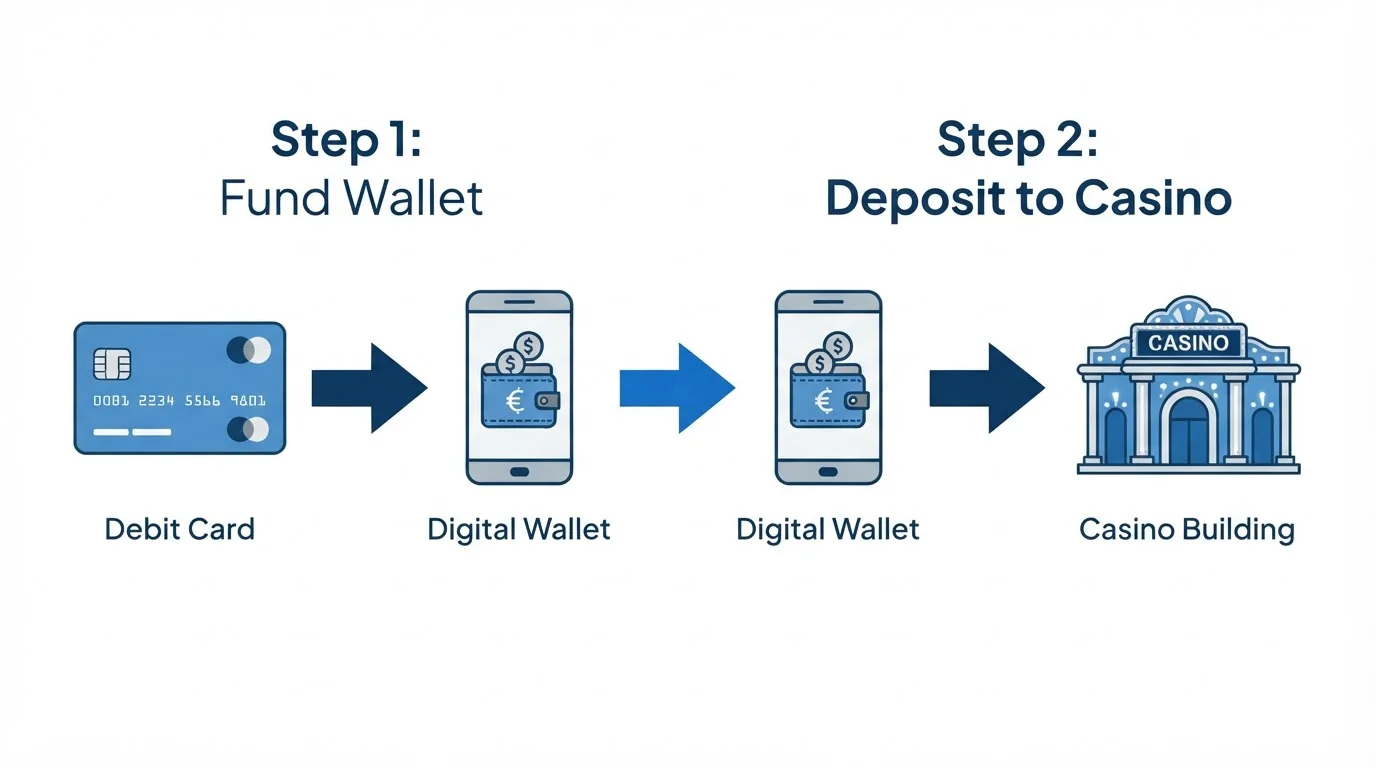
MiFinity is a two-step payment rail. You fund the wallet first, then move money between the wallet and casino cashiers. The separation keeps your bank card or account details off the casino’s servers, which is the privacy pitch. It also introduces a funding fee and a currency-conversion margin that direct PayID or card deposits avoid.
Funding Your MiFinity Wallet
Open a MiFinity account, complete KYC (passport or driver’s license, proof of address, payment-method verification), and load the wallet via debit card, bank transfer, or one of 80+ regional methods MiFinity integrates. For Australian users, the practical options are:
- Non-EEA Visa or Mastercard debit card: 2.5% fee. If your Australian bank issued the card outside the European Economic Area—which it did—you pay 2.5% on every load. A$100 deposited costs you A$102.50.
- Bank transfer (if supported for AU accounts): Free if you can route it as a SEPA transfer, which Australian banks do not offer. International wire transfers may work but carry bank fees on your end, and MiFinity’s fee schedule does not list Australian domestic transfers explicitly. Assume this path is unavailable or expensive unless you’ve verified otherwise.
- Apple Pay or Google Pay with a non-EEA card: 2.5%, same as direct card entry. The digital wallet is a convenience layer; the fee is pegged to the underlying card’s region.
The 2.5% load fee is not optional. You pay it every time you fund the wallet with an Australian debit card. Skrill and Neteller charge similar percentages for card loads; PayID charges nothing because it moves money directly from your bank to the operator without an intermediary wallet. That fee difference is where MiFinity loses ground in a straight cost comparison.
Currency conversion adds another margin. MiFinity applies an FX markup of up to 2.99% on standard currency pairs, up to 3.99% on exotic pairs. AUD is likely a standard pair, so expect the 2.99% markup when you load AUD and the casino cashier operates in euros or another currency. If the casino accepts AUD natively, no conversion happens and you avoid this margin. Most offshore sites targeting Australia accept AUD directly, but check the cashier currency dropdown before assuming.
Making a Casino Deposit
Once the MiFinity wallet holds funds, casino deposits are instant. Log into the offshore casino, navigate to the cashier, select MiFinity, enter the amount, and authorise the transfer in the MiFinity app or browser interface. The casino credits your playable balance in seconds. No deposit fee is charged by the casino—they absorb it, or more accurately, they baked it into their cost structure when they signed the MiFinity merchant agreement.
Minimum deposits range from A$15 to A$30 depending on the operator. Dudespin, Alawin, Lizaro, BigClash, and MonsterWin sit at A$15. Rooli is A$20. SpinJo requires A$30 for the first deposit to trigger the welcome bonus. Higher minimums are rare; A$50 or A$100 floors typically signal VIP-focused operators, not mass-market offshore sites.
Requesting a Withdrawal
Withdraw from the casino cashier back to your MiFinity wallet. The operator processes the request in 1 to 4 hours after approval, which itself follows a 12-to-72-hour pending window. Once funds land in your MiFinity wallet, you can leave them there for future deposits, transfer to another MiFinity-accepting site, or withdraw to your bank card.
Withdrawing from the MiFinity wallet to your bank card costs €1 for Visa (EEA cards) or €1.75 for Mastercard (EEA). Australian cards are non-EEA, so the fee structure may differ—check MiFinity’s live fee page before assuming those euro amounts apply. The withdrawal minimum at most operators is A$50, though some set it at A$20 or A$30.
Can I use MiFinity for both deposits and withdrawals?
Yes. MiFinity supports both directions at every operator that accepts it — deposit from the wallet to the casino, withdraw from the casino back to the wallet. Paysafecard and Neosurf are deposit-only voucher rails. MiFinity is bidirectional, which is why it competes with Skrill and Neteller rather than sitting in the voucher tier.
MiFinity Fees, Limits, and Processing Times
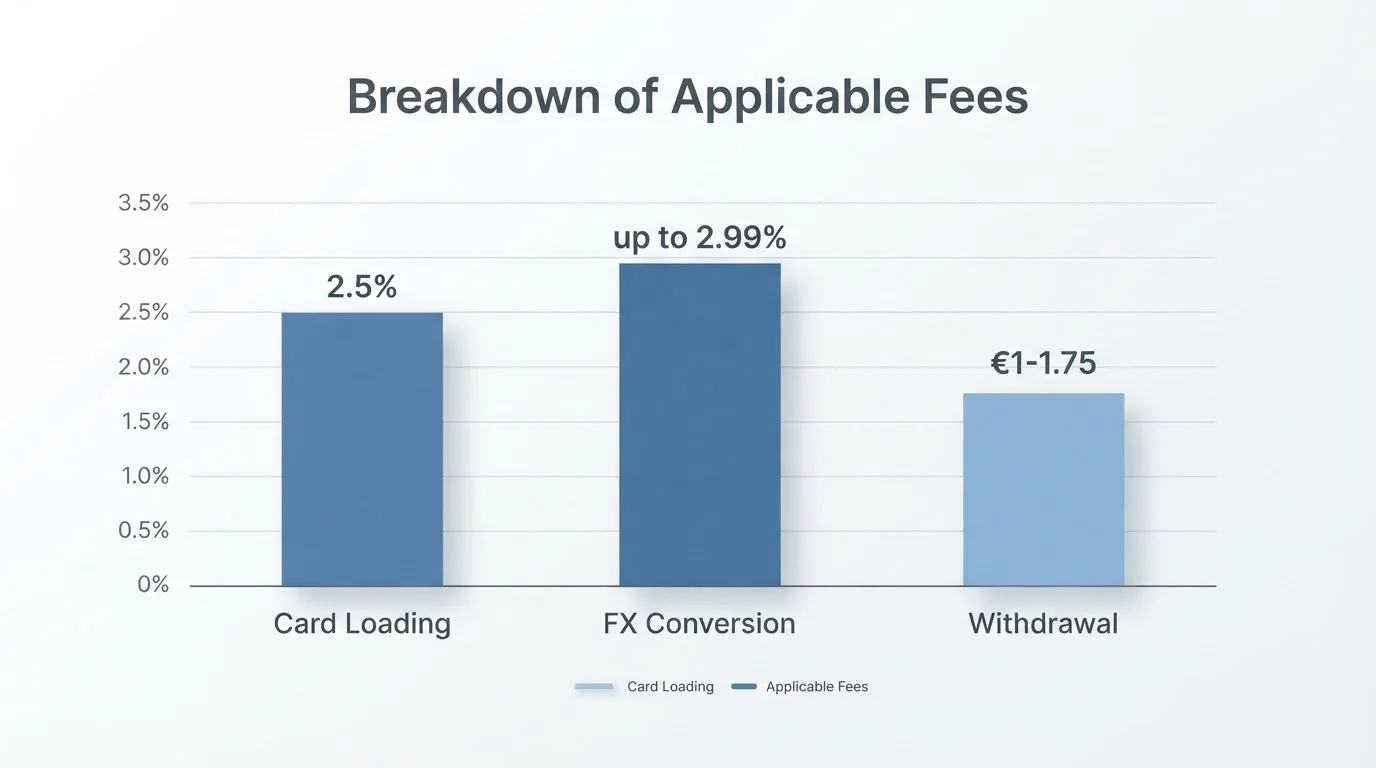
The fee breakdown for Australian users stacks three layers: wallet funding, currency conversion, and wallet withdrawal. Casino-side fees are typically zero because operators absorb merchant costs to keep deposit and withdrawal friction low. The table below consolidates every fee row that matters for an Australian account, plus the timing tier that pairs with it.
| Layer | Line item | Cost / timing (AU relevance) |
|---|---|---|
| Funding | Non-EEA Visa or Mastercard | 2.5% |
| Funding | EEA Visa / Mastercard | 1.8% (not accessible to AU cards) |
| Funding | SEPA bank transfer | Free (not accessible from Australia) |
| Funding | Interac e-Transfer | Free (Canada only) |
| FX conversion | Standard pairs (AUD included) | Up to 2.99% markup |
| FX conversion | Exotic pairs | Up to 3.99% markup |
| Wallet withdrawal | Visa (EEA schedule) | €1 |
| Wallet withdrawal | Mastercard (EEA schedule) | €1.75 |
| Wallet withdrawal | Interac e-Transfer | C$4 |
| Wallet withdrawal | Cryptocurrency | 1.8% |
| Casino side | Deposit fee | Zero (operator-absorbed) |
| Casino side | Withdrawal fee | Zero at most operators |
| Timing | Wallet funding | Instant (debit card), 1–3 business days (bank transfer) |
| Timing | Casino deposit | Instant once wallet is funded |
| Timing | Casino withdrawal approval | 12–72h pending, then 1–4h to MiFinity wallet |
| Timing | Wallet-to-bank withdrawal | 1–3 business days (standard e-wallet timeline) |
Australian players pay 2.5% every time they load the wallet via debit card. There is no workaround unless you have access to a European bank account for SEPA transfers, which you don’t. If the casino operates in AUD, no FX conversion happens; if it runs in euros and you load AUD, expect the 2.99% margin on top of the wholesale exchange rate, disclosed before you confirm. The euro-denominated withdrawal fees likely apply to non-EEA cards as well, though MiFinity’s fee schedule does not break out Australian-specific rows — assume €1 to €1.75 per withdrawal unless you test it and see otherwise. On a A$200 cashout, €1.75 is roughly A$2.80, a negligible amount relative to the withdrawal size.
The 2.5% load fee is the structural cost. If you deposit A$1,000 into your MiFinity wallet, you pay A$25 in fees. If the casino operates in euros and applies the 2.99% FX markup, you lose another ~A$30 in conversion. Withdraw from the wallet to your bank, and you pay €1.75 (~A$2.80). Total cost for a A$1,000 round trip: A$57.80, or 5.78%. That’s higher than PayID (zero fees) and competitive with Skrill or Neteller, which charge similar card-load percentages.
Are there fees for using MiFinity at online casinos?
The casino charges nothing. Fees sit on the MiFinity side: 2.5% to load the wallet via an Australian debit card, up to 2.99% FX conversion when the operator runs in a non-AUD currency, and €1–1.75 to withdraw from wallet to bank. A A$1,000 round trip costs roughly A$55–60 with conversion, A$27–28 without.
What is the minimum deposit for MiFinity at Australian casinos?
A$15 at Dudespin, Alawin, Lizaro, BigClash, and MonsterWin. A$20 at Rooli. A$30 at SpinJo for the first deposit (required to trigger the welcome bonus). Higher minimums are rare. Withdrawal minimums sit at A$50 across most operators, with some accepting A$20–30 cashouts for smaller balances.
MiFinity vs Skrill, Neteller, and PayID for Aussie Players
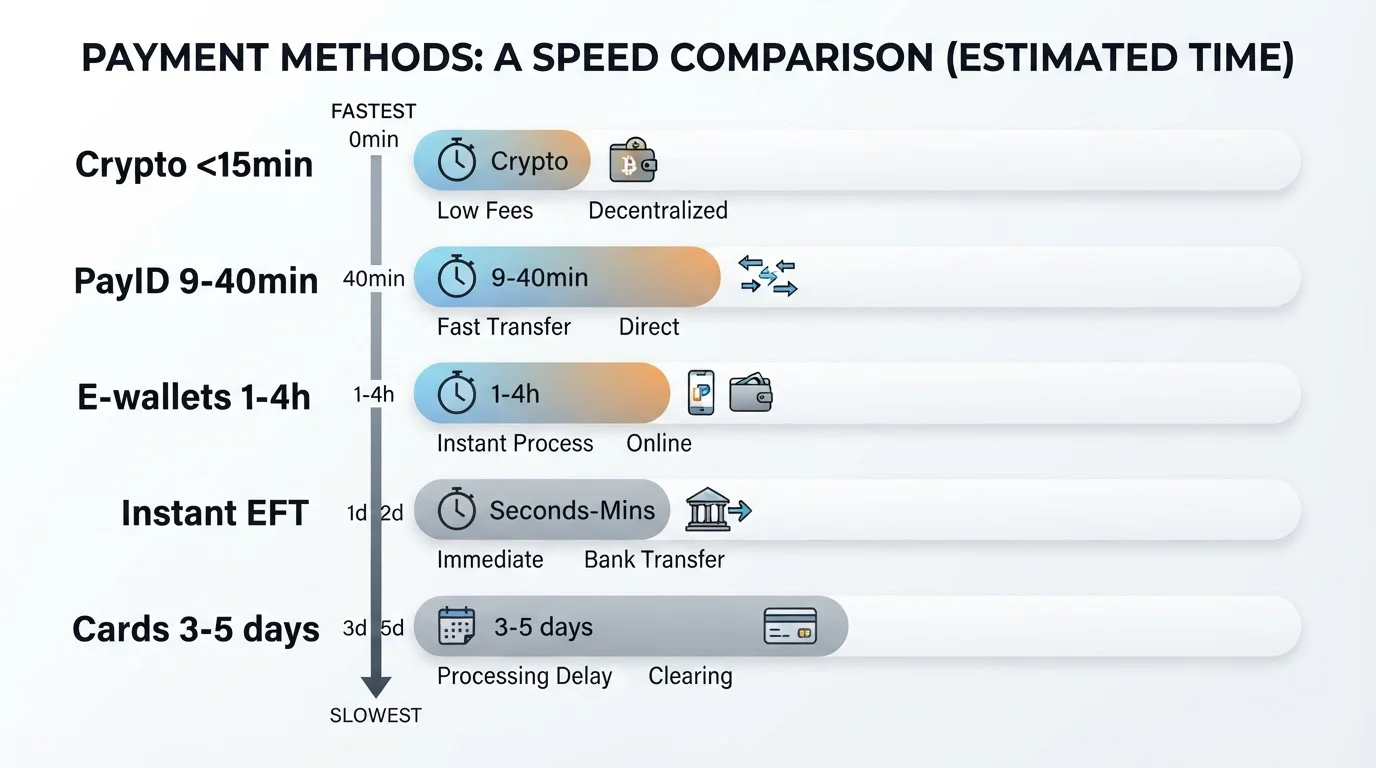
MiFinity sits in the same-day e-wallet tier alongside Skrill and Neteller, one step slower than PayID’s 9-to-40-minute same-morning arrival, and two steps slower than crypto’s sub-15-minute instant transfers. Where it differs from Skrill and Neteller is acceptance—MiFinity integration is narrower, which means fewer offshore operators support it. Where it differs from PayID is the fee structure—PayID is free, MiFinity costs 2.5% to load.
| Payment Method | Acceptance at AU Casinos | Withdrawal Speed | Fees | Best For |
|---|---|---|---|---|
| MiFinity | Moderate (15+ offshore sites) | 1–4 hours (operator-side, after 12–72h pending) | 2.5% card load + up to 2.99% FX + €1–1.75 withdrawal | Players who value e-wallet separation from bank details and already use MiFinity elsewhere |
| Skrill | High (50+ offshore sites) | 1–4 hours (operator-side, after 12–72h pending) | ~2.5% card load + FX margin + withdrawal fee (~1–2%) | Wider acceptance than MiFinity, similar speed |
| Neteller | High (50+ offshore sites) | 1–4 hours (operator-side, after 12–72h pending) | ~2.5% card load + FX margin + withdrawal fee (~1–2%) | Wider acceptance than MiFinity, similar speed |
| PayID | Moderate-high (30+ offshore sites) | 9–40 minutes (same-day, no pending for PayID itself) | Zero fees | Fastest same-day option, free, but exposes your bank details to the operator |
| Crypto (BTC, ETH, USDT) | High (50+ offshore sites) | Under 15 minutes (instant tier, no pending for crypto itself) | Network fees (variable, A$1–10 typical) | Fastest overall, pseudo-anonymous, but requires crypto wallet setup |
MiFinity’s speed advantage over cards (3–5 business days) is real. Its speed disadvantage against PayID (6–8x slower) and crypto (20–40x slower) is also real. The question is whether e-wallet privacy—keeping your bank details one step removed from the casino—justifies the 2.5% load fee and the 1–4 hour delay compared to PayID’s free, 9-to-40-minute direct transfer.
Skrill and Neteller have wider acceptance. If you’re choosing an e-wallet and the operator accepts all three, Skrill or Neteller will work at more offshore sites when you branch out. MiFinity’s edge is regulatory oversight—it holds both FCA (UK) and MFSA (Malta) licenses, which is strong for an e-wallet. Skrill and Neteller hold similar licenses, so that edge is marginal.
PayID is the practical comparison for most Australian players. It’s faster, free, and works at a comparable number of offshore operators. The tradeoff: PayID exposes your bank account details to the casino, while MiFinity keeps them at the wallet layer. If that privacy separation matters to you—maybe you’re wary of sharing banking details with a Curaçao-licensed site—MiFinity’s 2.5% fee and 1–4 hour delay are the cost. If privacy is less of a concern than speed and zero fees, PayID is the stronger choice.
Crypto is faster than all of them. Bitcoin, Ethereum, and Tether withdrawals clear in under 15 minutes once the operator approves, and many offshore casinos process crypto cashouts without the 12–72 hour pending window they enforce on fiat methods. Network fees run A$1–10 depending on congestion, making crypto cheaper than MiFinity’s 2.5% load fee on large deposits. The barrier is setup: you need a crypto wallet, you need to buy crypto on an exchange, and you need to manage private keys. If you’re already in that ecosystem, crypto beats MiFinity on speed and cost. If you’re not, MiFinity is the easier onramp.
How does MiFinity compare to Skrill and Neteller for Australian players?
All three process e-wallet withdrawals in 1–4 hours after operator approval and charge roughly 2.5% to load via Australian debit card. Skrill and Neteller are integrated at 50-plus offshore casinos targeting Australia; MiFinity is at 15-plus. Regulatory footprint is comparable — MiFinity’s FCA and MFSA licences match Skrill and Neteller.
MiFinity Pokies and Casino Games
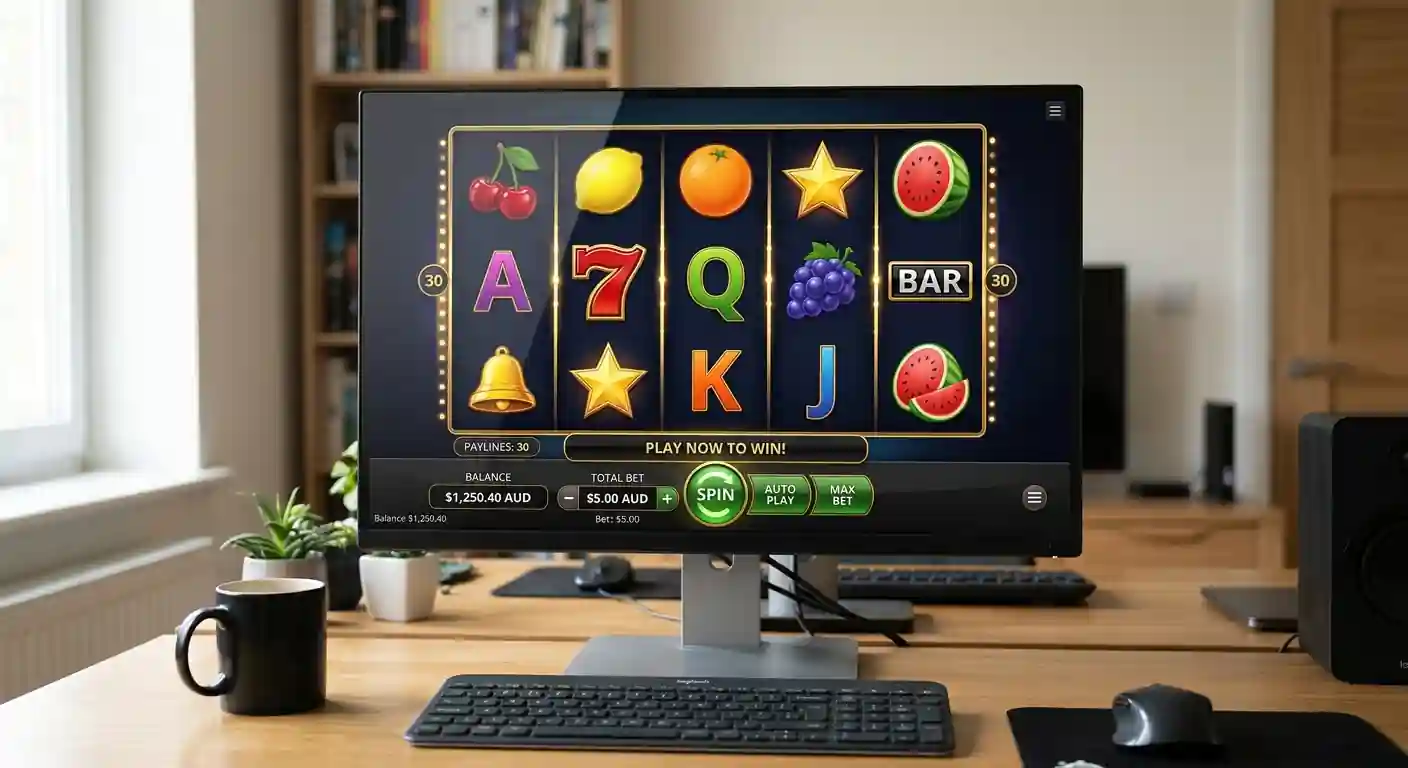
The payment method does not restrict game selection—whatever the casino offers, you can play with MiFinity-funded deposits. Offshore operators targeting Australia stock pokies from Pragmatic Play, Play’n GO, NetEnt, Red Tiger, and Microgaming as baseline. Larger libraries (Rooli’s 6,000+, Dudespin’s 8,300+) add studios like BGaming, Nolimit City, Yggdrasil, and ELK. Live dealer tables come from Evolution Gaming, Ezugi, or Pragmatic Live. Jackpot pokies, table games, video poker, and in some cases crash games (Lizaro) and instant-win titles round out the catalogue.
Pokies dominate. The Australian market uses “pokies” as the dominant term—242 search variants in the cleaned pool reference pokies, 38 reference slots. Offshore operators mirror that language in their AU-facing pages. Game types include video pokies (standard 5×3 or 5×4 grids), Megaways (variable reel sizes, BTG trademark), grouped-symbol payouts (wins form from groups of matching symbols rather than paylines), and progressive jackpots (networked pools that grow until someone hits).
HTML5 browser play is standard. No download is required; you load the casino in Chrome or Safari on desktop or mobile and play directly. AUD denomination is native at operators targeting Australia, meaning you bet in dollars and cents rather than euros converted on the fly. RTP (Return to Player) disclosure varies—some operators publish RTP per game, others do not. Demo mode is typically available before you deposit, letting you test pokies with play-money credits.
MiFinity acceptance does not correlate with game quality. The payment method is a cashier integration, separate from the game-studio contracts the operator signs. A casino with a thin game library can still accept MiFinity; a casino with 10,000+ titles might not. Check the operator’s game count and provider list independently of its payment options.
Bonuses, Free Spins, and MiFinity Eligibility
Most offshore casinos do not exclude MiFinity from welcome bonus eligibility. Deposit via MiFinity, and the bonus triggers the same as it would for a card or PayID deposit. Exclusions typically apply to Skrill and Neteller at European-facing operators, where bonus abuse via e-wallet cycling is common enough that operators blacklist those methods. Australian-facing offshore sites rarely enforce that exclusion because the player base is smaller and bonus-abuse patterns are less established.
Welcome bonuses in the AU offshore market run 100% to 300% on the first deposit, up to A$500–6,000 total across multiple reloads. SpinJo offers up to A$5,000 + 300 free spins. Lizaro offers 250% up to A$6,000 + 350 free spins across four deposits. Dudespin offers 300% up to A$3,000 + 150 free spins. Rooli offers 100% up to A$500 + 200 free spins on the first deposit, scaling to A$4,000 + 475 free spins total.
Wagering requirements sit at 35x to 40x. A 35x requirement on a A$100 deposit and A$100 bonus means you must wager A$7,000 before you can withdraw bonus-derived winnings. Free-spin winnings typically carry a 40x requirement. Maximum bet while the bonus is active is usually A$5–10; exceeding it voids the bonus and any winnings tied to it. Game weighting varies—pokies count 100%, table games count 10–20%, live dealer often counts 0%.
New-casino promotions are rare. MiFinity-specific bonuses—where the operator offers an enhanced match or extra free spins for depositing via MiFinity—do not appear in the reviewed sources. The payment method is eligible for standard bonuses, but it does not unlock exclusive offers the way crypto deposits sometimes do at crypto-focused operators.
Free spins are usually tied to specific pokies. The operator names the eligible titles in the bonus terms—often new releases or games with promotional deals from the studio. You cannot choose which pokie to use the spins on. Winnings from free spins convert to bonus funds and carry the 40x wagering requirement before they become withdrawable cash.
VIP programmes and reload bonuses are ongoing promotions beyond the welcome package. Rooli’s VIP structure, Wild Fortune’s 15% cashback, and Dudespin’s five-tier programme offer cashback, reload matches, and faster withdrawals for high-volume players. MiFinity deposits count toward VIP-tier progression the same as any other payment method.
Legal Status — Can Australians Use MiFinity at Offshore Casinos?

The Interactive Gambling Act 2001 prohibits Australian-based companies from offering online casino games to Australian residents. It does not prohibit Australian residents from playing at offshore-licensed casinos. That asymmetry—illegal to offer, not illegal to play—creates the grey zone where the offshore market operates.
ACMA, the Australian Communications and Media Authority, enforces the IGA by blocking offshore sites, issuing takedown notices, and in some cases working with payment processors to disrupt transactions. ACMA does not prosecute individual players. The law targets operators, not customers. No Australian player has been fined or charged for placing bets at an offshore casino.
The Interactive Gambling Act and Offshore Sites
The IGA was passed in 2001 to restrict interactive gambling services that do not hold an Australian license. Online casino games—pokies, roulette, blackjack, live dealer—are classified as prohibited interactive gambling services. Online sports betting is permitted under state and territory licenses, which is why you can legally bet on the Melbourne Cup through TAB or Sportsbet, but you cannot legally access pokies through a domestically licensed platform.
Offshore operators exploit the jurisdictional gap. They hold licenses from Curaçao, Malta, Anjouan, or niche authorities like Tobique, and they accept Australian players without seeking Australian regulatory approval. ACMA cannot prosecute them because they operate outside Australian jurisdiction. ACMA can block their domains, but operators respond by launching mirror sites or switching domains faster than ACMA can update its block list.
The August 2026 Interactive Gambling Amendment (Gambling Reform) Act strengthened ACMA’s enforcement powers. New measures include expanded site-blocking authority, financial-disruption mechanisms (working with banks and payment processors to refuse transactions), and advertising restrictions aimed at reducing offshore operators’ visibility in Australia. These measures commence 1 January 2026.
What Changed in 2026
The Interactive Gambling Amendment (Gambling Reform) Act 2026, registered as Act No. 72 on 28 August 2026, is the most significant update to the IGA since its passage. Key changes:
- Expanded site blocking: ACMA can now request ISP-level blocks for offshore gambling sites without a court order, streamlining the process that previously required judicial approval for each domain.
- Financial disruption: ACMA can work with Australian banks and payment processors to identify and block transactions to unlicensed offshore operators. This affects credit cards, debit cards, and potentially e-wallet funding if the transaction is flagged at the bank level before it reaches MiFinity.
- Advertising bans: Offshore operators face stricter penalties for advertising to Australian audiences, including via social media, affiliate sites, and search engines. Google and Meta are expected to enforce geo-restrictions more aggressively under the new rules.
- Enforcement start date: 1 January 2026. Until that date, the existing IGA enforcement framework remains in place. After that date, ACMA’s expanded powers activate.
The amendment does not criminalise playing at offshore casinos. The legal asymmetry—illegal to offer, not illegal to play—persists. What changes is ACMA’s ability to make it harder for offshore operators to reach Australian players and harder for Australian banks to process transactions to those operators.
Curaçao-licensed operators face an additional complication. The Curaçao Gaming Control Board reformed its licensing regime in 2024–2025, and the new framework formally restricts licensed operators from accepting players from Australia, the United States, the Netherlands, France, and Curaçao itself. Enforcement is inconsistent—many Curaçao-licensed sites still accept Australian players as of late 2026, either because they hold older licenses grandfathered under the previous regime or because the GCB’s enforcement mechanisms are not yet fully operational. The restriction exists on paper, but the market has not adjusted in practice.
Is it legal for Australians to use MiFinity at offshore casinos?
Using MiFinity to deposit at an offshore casino is not illegal for you as an Australian resident. The IGA prohibits operators from offering the service, not you from using it. ACMA does not prosecute players. The August 2026 amendment strengthens site-blocking and payment-disruption powers but does not criminalise offshore play at the player level.
Do I need to verify my identity to withdraw via MiFinity?
Yes. KYC verification is required before any first withdrawal from an offshore casino, whatever the payment rail. Upload a government-issued ID, a proof of address dated within three months and a screenshot of your MiFinity account showing the name. Review lands in 24–48 hours; further cashouts skip re-verification unless activity is flagged.
Mobile Casinos and the MiFinity App
Every offshore operator listed above runs a mobile-responsive browser site. Load the casino URL in Safari or Chrome on your iPhone or Android device, and the layout adapts to phone width. No app download is required unless the operator offers a dedicated iOS or Android app, which most offshore casinos do not due to Apple App Store and Google Play restrictions on real-money gambling apps without local licenses.
MiFinity offers its own app for iOS and Android. Download it, log in, and manage your wallet from your phone: fund the wallet, send payments to casinos, receive withdrawals, check transaction history, and enable two-factor authentication. The app mirrors the browser interface in functionality. Some users prefer the app for biometric login (Face ID, fingerprint) and push notifications when funds arrive. Others stick to the browser to avoid installing another app.
Mobile gameplay works identically to desktop. Pokies, live dealer, table games, and sports betting all function in the mobile browser. HTML5 ensures the games render correctly on smaller screens without requiring native app code. Touch controls replace mouse clicks; otherwise, the experience is the same. Data usage is moderate—expect 50–100 MB per hour of pokies play, higher if you stream live dealer tables in HD.
MiFinity deposits from the app are instant once the wallet is funded. Open the casino’s mobile site, navigate to the cashier, select MiFinity, and authorize the payment in the MiFinity app when it prompts you. The casino credits your balance in seconds. Withdrawals follow the same flow: request a cashout in the casino’s mobile cashier, and funds land in your MiFinity wallet after the operator’s approval window.
Security, Regulation, and Why MiFinity is Trusted
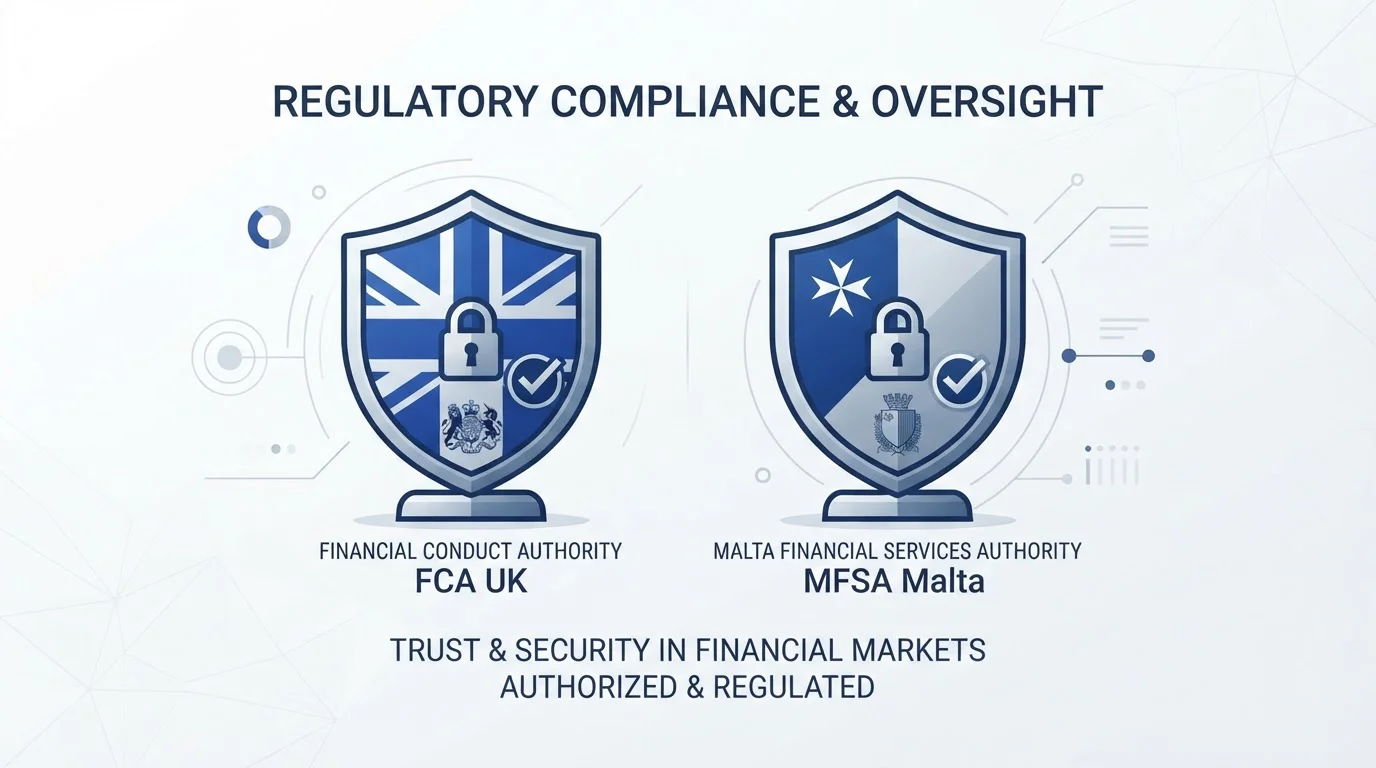
MiFinity Limited holds two licenses: one from the UK Financial Conduct Authority under the Electronic Money Regulations 2011 (registration number 900090) for issuing electronic money, and one from the Malta Financial Services Authority as a financial institution under the Financial Institutions Act 1994 (registration number C64824). Dual FCA and MFSA licensing is strong for an e-wallet—both regulators enforce capital-reserve requirements, anti-money-laundering checks, and customer-fund segregation.
Customer funds are held in segregated accounts, meaning your MiFinity balance is kept separate from the company’s operating capital. If MiFinity Limited were to collapse, your funds would be protected under the segregation rules enforced by the FCA and MFSA. This is not the same as deposit insurance (which covers bank failures up to a statutory limit), but it is more protection than an unregulated e-wallet offers.
SSL/TLS encryption protects transactions between your device and MiFinity’s servers. Two-factor authentication (2FA) is available and recommended—enable it in the MiFinity app or browser settings to require a one-time code from your phone every time you log in or authorise a payment. PCI DSS Level 1 compliance means MiFinity’s payment-processing systems meet the highest standard for handling card data.
The MiFinity card—a physical or virtual Visa debit card linked to your MiFinity wallet—lets you spend your e-wallet balance at any merchant that accepts Visa. Load your wallet from casino withdrawals, then use the card for everyday purchases or ATM withdrawals. The card is optional; you can use MiFinity purely as a casino payment rail without ordering the card. Card fees apply: issuance fee, monthly inactivity fee after 12 months, ATM withdrawal fee. Check MiFinity’s card-fee schedule if you plan to use it beyond casino transfers.
Why MiFinity is trusted by players: FCA and MFSA dual licensing, PCI DSS compliance, and a track record since its UK launch. The e-wallet operates in 21 languages and supports 18 currencies, which speaks to its reach beyond the Australian market. Its integration with 1,200+ gambling sites globally (per promotional material) means it is not a niche product—it has critical mass, even if acceptance at Australian-facing offshore operators is narrower than Skrill or Neteller.
Why it might not matter to you: PayID is faster, free, and works at a comparable number of offshore casinos. Crypto is faster still, cheaper on fees, and accepted more widely. MiFinity’s privacy advantage—keeping your bank details one layer removed from the casino—costs 2.5% to load and adds hours to your withdrawal timeline. That tradeoff makes sense if privacy is your priority. If speed and cost are your priorities, PayID or crypto are stronger choices.
Is MiFinity safe for Australian players?
Yes — MiFinity itself is FCA and MFSA licensed, segregates customer funds and encrypts transactions. The safety question is the casino, not the wallet. MiFinity is a payment rail, not a casino regulator, and it does not vet operators beyond standard merchant checks. Evaluate the casino independently, then decide whether MiFinity is the right rail.
What currencies does MiFinity support for Australian players?
MiFinity supports 18 currencies, AUD included. You can hold AUD in the wallet and transact in AUD wherever the casino accepts it. Non-AUD casinos trigger an FX markup up to 2.99% on standard pairs, disclosed at confirmation. Multi-currency wallets hold up to nine balances — handy across regions, unnecessary if you stick to AU-facing sites.
Casino Deposit Methods Australia 2026 — Full Comparison
Content created by the «Payment Methods Online» team