
Best Casino Payment Methods for Australians: Speed, Fees & the 2027 Reality
 Available in AU

Australian casino players face a payment landscape that split in two a few years back. Deposits clear in seconds; withdrawals take anywhere from four minutes to four days. Credit cards vanished in June 2024. Banking blocks arrive January 2027. The offshore reality is no longer a sidebar — it shapes which rails work and which don’t.
This breakdown covers which payment methods Australian players actually use in 2026, how they compare on speed and cost, and what the January 2027 enforcement shift means for each rail. PayID dominates deposits. Crypto dominates withdrawals. Everything else arranges itself around those two poles.
How Australian Casino Payments Work in 2026
The deposit side looks ordinary enough. PayID lands in under sixty seconds, Apple Pay settles on a fingerprint, cards swipe through when the issuer allows it. Withdrawals are where the asymmetry lives.
Most methods that accept deposits either refuse withdrawals entirely or process them so slowly they might as well. Cards rarely refund. Vouchers never do. Even e-wallets — built for two-way flow — get excluded from withdrawal eligibility at some operators, buried in bonus terms you only notice when the cashier blocks your request.
The Two-Speed Reality: Deposits vs Withdrawals
Forty-two percent of Australian casino players use PayID for deposits. Six seconds to clear, direct from the bank account, no wallet setup. For withdrawals, crypto takes the lead — sub-five-hour benchmark, with the fastest operators clearing Bitcoin in four minutes and USDT on TRC-20 in under ten.
The gap between deposit speed and withdrawal speed is not a technical accident. Deposits move through real-time rails because casinos want friction-free onboarding. Withdrawals move through batched approval queues, manual KYC holds, and weekend processing gaps because slowing the exit is profitable.
Deposit-Only, Two-Way, and Withdrawal-Forced Methods
Not every deposit method supports withdrawals. The table below breaks down which rails work both ways and which force you onto a different method for cashouts.
| Method | Deposits | Withdrawals | Notes |
|---|---|---|---|
| PayID | ✓ | ✓ (via bank transfer) | Deposit instant; withdrawal 1–4 hours fastest operators, 1–3 days average |
| Crypto (Bitcoin, USDT) | ✓ | ✓ | Two-way; withdrawals fastest rail (sub-5 hours) |
| E-wallets (Neteller, Skrill) | ✓ | ✓ | Two-way; bonus exclusion common at some operators |
| Cards (Visa, Mastercard debit) | ✓ | Rare (3–7 days) | Mostly deposit-only; refunds uncommon |
| Vouchers (Neosurf, Paysafecard) | ✓ | ✗ | Deposit-only; alternative method required for cashouts |
| Bank transfer | ✓ | ✓ | Two-way; slowest (deposits 1–3 days, withdrawals 2–7 days) |
| Mobile payments (Apple Pay, Google Pay) | ✓ | ✗ | Deposit-only; card wrappers subject to same restrictions as direct card |
Cards sit in a grey zone. Technically two-way, but most offshore operators route withdrawals to bank transfer instead of pushing a refund back to the card. Refunds take three to seven business days when they happen at all. Treat cards as deposit-only unless the cashier explicitly confirms refund support.
What is the difference between PayID and a regular bank transfer?
PayID deposits settle in under sixty seconds via the New Payments Platform, using your mobile number or email as the address instead of BSB and account number. Regular bank transfers take one to three business days and require full account details. Withdrawals from both methods land via standard bank transfer, not real-time NPP.
Payment Methods Ranked by Speed
Speed divides into two questions: how fast does your deposit hit the casino balance, and how fast does your withdrawal hit your bank account or wallet. The answers split by method.
Fastest Deposits: PayID and Mobile Wallets (<60 Seconds)
PayID clears in under sixty seconds at every operator tested. Apple Pay and Google Pay match that speed when the underlying card clears, which depends on the issuer. Crypto deposits require blockchain confirmation — Bitcoin takes roughly sixty minutes for six confirmations, USDT on TRC-20 clears in under five minutes.
E-wallets (Neteller, Skrill, PayPal when available) post instantly once funded. Cards deposit instantly when accepted, though decline rates run high.
Fastest Withdrawals: Crypto (Sub-5 Hours)
Crypto is the fastest withdrawal rail by a margin wide enough to justify the wallet setup. Bitcoin withdrawals benchmark at sub-five hours across the market; the fastest operators tested in 2026 cleared Bitcoin in four minutes and USDT in under ten. BC.Game processes Bitcoin withdrawals in roughly four minutes on average, measured over twenty cashout requests from August through September 2026.
USDT on the TRC-20 network is cheaper than Bitcoin — fees under one dollar, finality in under five minutes. Ethereum works but carries variable gas fees (two to fifty dollars depending on network congestion). Litecoin sits between Bitcoin and USDT on both cost and speed.
Crypto withdrawals process twenty-four hours a day. No weekend batch delays, no banking-hours hold. That advantage alone explains why sixty percent of Australian players who prioritise speed choose crypto for cashouts even if they deposit via PayID.
The Middle Ground: E-Wallets (24–72 Hours)
E-wallets occupy the middle tier. Neteller and Skrill withdrawals take twenty-four to seventy-two hours on the operator side, then clear instantly to your bank account once the funds reach the e-wallet. Katsubet tested at zero to sixty minutes for Skrill and Neteller withdrawals in September 2026, which puts it at the fast end of the e-wallet distribution.
PayPal, where available, follows a similar timeline. Availability is the catch — fewer than five percent of offshore operators accept PayPal for Australian players, a policy restriction rather than a technical one.
Fastest deposit method for Australian casino players in 2026
PayID is the fastest deposit method for Australian players, clearing in under sixty seconds via the New Payments Platform. Crypto deposits are fast for experienced users but require blockchain confirmation — USDT on TRC-20 clears in under five minutes, Bitcoin in roughly sixty minutes for six confirmations.
The Slow Lane: Bank Transfers and Cards
Standard bank transfers take one to three business days for deposits, two to seven for withdrawals. Some operators charge withdrawal fees up to thirty-five Australian dollars. Cards deposit instantly when accepted but rarely support withdrawals; when they do, refunds take three to seven business days.
Bank transfers make sense for high-limit players who need to move amounts PayID won’t handle in a single transaction. For everyone else, the speed penalty is steep enough to justify switching rails.
PayID — Australia’s Deposit King
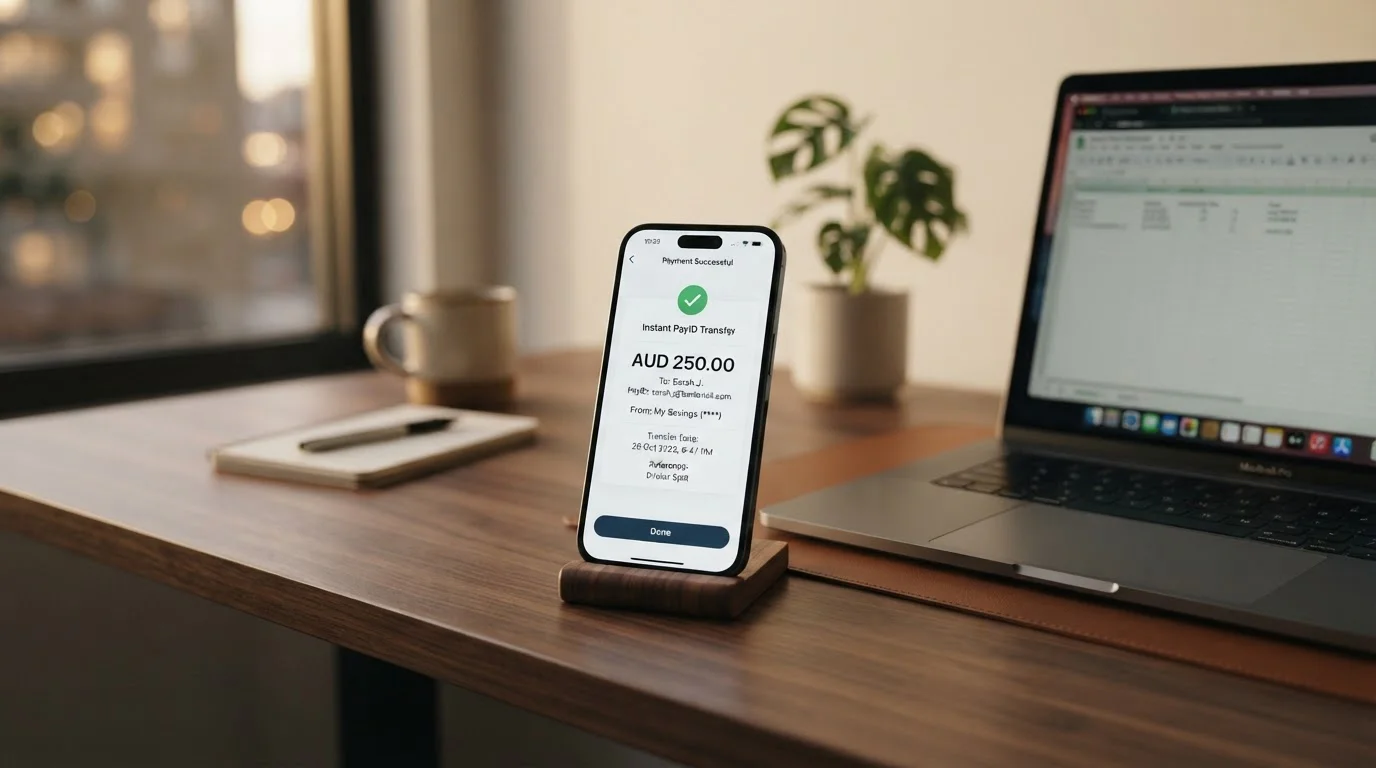
Forty-two percent of Australian casino players use PayID for deposits. That market share did not come from marketing. PayID is faster than cards, simpler than e-wallets, and requires no setup beyond the bank account you already have.
How PayID Works (NPP Real-Time Rail)
PayID is a payment addressing service that sits on top of the New Payments Platform, Australia’s real-time payment infrastructure. Instead of typing a BSB and account number, you send money to a mobile number or email address linked to the recipient’s bank account. The transfer clears in under sixty seconds, twenty-four hours a day.
NPP Australia Limited operates the infrastructure, owned by a consortium of Australian banks. PayID itself is not a payment provider — it is an addressing layer. Your deposit moves directly from your bank account to the casino’s bank account via the NPP rail, no intermediary wallet.
Speed, Limits, and Fees
Deposits settle in under sixty seconds. Tested September 1, 2026: a fifty-dollar PayID deposit credited in six seconds. Minimum deposit typically sits at ten to twenty Australian dollars depending on the operator. No upper limit from the NPP side, but individual operators cap PayID deposits — common ceiling is one thousand dollars per transaction, five thousand per day.
Withdrawals return via standard bank transfer, not real-time NPP outbound. The fastest operators tested in 2026 cleared PayID withdrawals in nineteen minutes on average. Market average: one to three business days. The delay is casino-side processing (document review, approval queue), not the banking rail.
No fees from NPP itself. Some operators charge a withdrawal fee for bank transfers; rare for PayID-specific cashouts.
Why 42% of Aussie Players Use It
PayID solves three friction points at once. No wallet setup. No card decline. No “gambling” line on your statement until the withdrawal lands — the deposit reads as a generic transfer to a business account.
Speed is the visible advantage. The invisible one: PayID works when cards don’t. Australian card issuers block gambling transactions at varying rates depending on the bank and the merchant category code the casino presents. PayID bypasses that entirely. The casino receives a standard bank transfer, indistinguishable from any other NPP payment.
That advantage disappears January 2027.

The January 2027 Problem
New enforcement measures commence January 1, 2026+1. Banks will be required to block payments to prohibited gambling services under the Interactive Gambling Amendment Act passed August 2026. The enforcement mechanism: banks instructed to decline transactions to identified gambling merchants.
PayID deposits to offshore casinos will be targetable under this regime. The transaction flows through an Australian bank — your bank sees the recipient, flags it against a prohibited-merchant list, declines the transfer. Crypto withdrawals are unaffected because blockchain transactions bypass bank rails entirely. E-wallet funding (the step where you load Skrill or Neteller from your card or bank) may face the same blocks.
Which operators end up on the prohibited-merchant list, and how quickly banks implement the blocking, remains an open question as of September 2026. The mechanism is in place; enforcement breadth will show in practice.
Will PayID still work at online casinos after January 2026+1?
PayID deposits to offshore casinos will be targetable under the January 2026+1 banking blocks. Banks will be required to decline transactions to prohibited gambling merchants. Crypto deposits and withdrawals remain unaffected because blockchain transactions bypass Australian bank rails entirely. E-wallet funding from your bank account or card may face similar restrictions.
Cryptocurrency — Fastest Withdrawals, True Anonymity
Crypto runs the withdrawal side of the Australian casino market. Sub-five-hour benchmarks, no weekend delays, no bank linkage. Bitcoin and USDT account for the bulk of crypto casino activity; Ethereum and Litecoin sit further back.
Bitcoin (BTC)
Bitcoin withdrawals benchmark at sub-five hours across the Australian casino market. The fastest operators tested in 2026 cleared Bitcoin in four minutes, measured from cashout request to funds landing in the wallet. BC.Game averaged four-minute Bitcoin withdrawals over twenty requests from August through September 2026.
Network confirmation time: roughly ten minutes per block. Six confirmations is the standard casino threshold, so sixty minutes from blockchain broadcast to finality. The gap between sixty-minute finality and four-minute observed cashout time is operator processing — most crypto-focused casinos auto-approve withdrawals under a certain threshold and broadcast immediately.
Fees run two to ten Australian dollars per transaction as of 2026, depending on network congestion. Bitcoin is not the cheapest crypto rail, but it is the most widely accepted. Every offshore casino that supports crypto accepts Bitcoin.
Anonymity: your wallet address is pseudonymous, not linked to your identity unless you connect it to a KYC-compliant exchange. Deposits require no ID. Withdrawals may trigger casino-side KYC depending on the operator’s policy and the amount, but the blockchain transaction itself carries no personal data.
Bitcoin survives the January 2026+1 banking blocks because the transaction never touches an Australian bank. You send Bitcoin from your wallet to the casino’s wallet; the casino sends Bitcoin from its wallet to yours. No bank sees the flow.
USDT (TRC-20) — Cheapest On-Chain Rail
USDT is a stablecoin pegged one-to-one to the US dollar, issued by Tether Holdings Limited. The TRC-20 version runs on the Tron network. Fees under one dollar per transaction, finality in under five minutes. No volatility — one USDT equals one US dollar, updated continuously.
USDT on TRC-20 is the cheapest crypto option for Australian players. Bitcoin fees run two to ten dollars; USDT fees sit under one dollar. Ethereum gas fees swing between two and fifty dollars depending on congestion. TRC-20 finality (three-second block time) beats Bitcoin’s ten-minute blocks by a wide margin.
The tradeoff: USDT requires a wallet that supports TRC-20 specifically. Sending USDT on the wrong network (ERC-20 instead of TRC-20) can result in permanent loss of funds. Check the casino’s deposit address format and your wallet’s network selection before sending.
USDT combines the speed and cost advantage of Tron with the stability of a fiat peg. No price risk between deposit and withdrawal. Players who want crypto’s speed without Bitcoin’s volatility default to USDT on TRC-20.

Ethereum and Litecoin
Ethereum works at most crypto-accepting casinos. Twelve-second block time, faster finality than Bitcoin. Gas fees are the drawback — variable, two to fifty Australian dollars depending on network activity. Ethereum makes sense for large withdrawals where the fee is a small percentage; for smaller cashouts, USDT on TRC-20 or Litecoin are cheaper.
Litecoin sits between Bitcoin and USDT on both speed and cost. Two-and-a-half-minute block time, fees typically under two dollars. Less widely accepted than Bitcoin but more common than niche altcoins. Litecoin occupies the “fast enough, cheap enough, accepted enough” middle ground.
Why Crypto Survives the 2026+1 Banking Blocks
Blockchain transactions do not route through Australian banks. You send crypto from your wallet to the casino’s wallet; the casino sends crypto from its wallet to yours. No fiat on-ramp, no off-ramp, no Australian bank in the flow. ACMA can block domains, but it cannot block a blockchain transaction.
The enforcement gap: banking blocks target the fiat-to-casino leg. If you fund your casino balance with PayID or a card, the bank sees “payment to prohibited gambling merchant” and declines it. If you send Bitcoin or USDT from your wallet, no bank sees anything.
Funding the wallet in the first place may involve an Australian bank if you buy crypto via a local exchange. That step is separate from the casino transaction. The casino never knows where you sourced the crypto, and the bank (if involved at the purchase stage) sees “payment to cryptocurrency exchange,” not “payment to casino.”
Which payment methods don’t require ID verification?
Crypto deposits need no ID — your wallet address is pseudonymous. Prepaid vouchers like Neosurf and Paysafecard bought with cash also skip ID at purchase. Withdrawals can still trigger KYC at the casino, but the payment rail itself carries no identity. PayID, cards, and e-wallets all demand full KYC.
E-Wallets — The Two-Way Middle Ground
E-wallets sit between the speed of crypto and the familiarity of bank transfers. Neteller and Skrill account for the bulk of e-wallet casino activity in Australia. PayPal works in theory but rarely in practice. EcoPayz, MuchBetter, and niche wallets fill the gaps.
Neteller
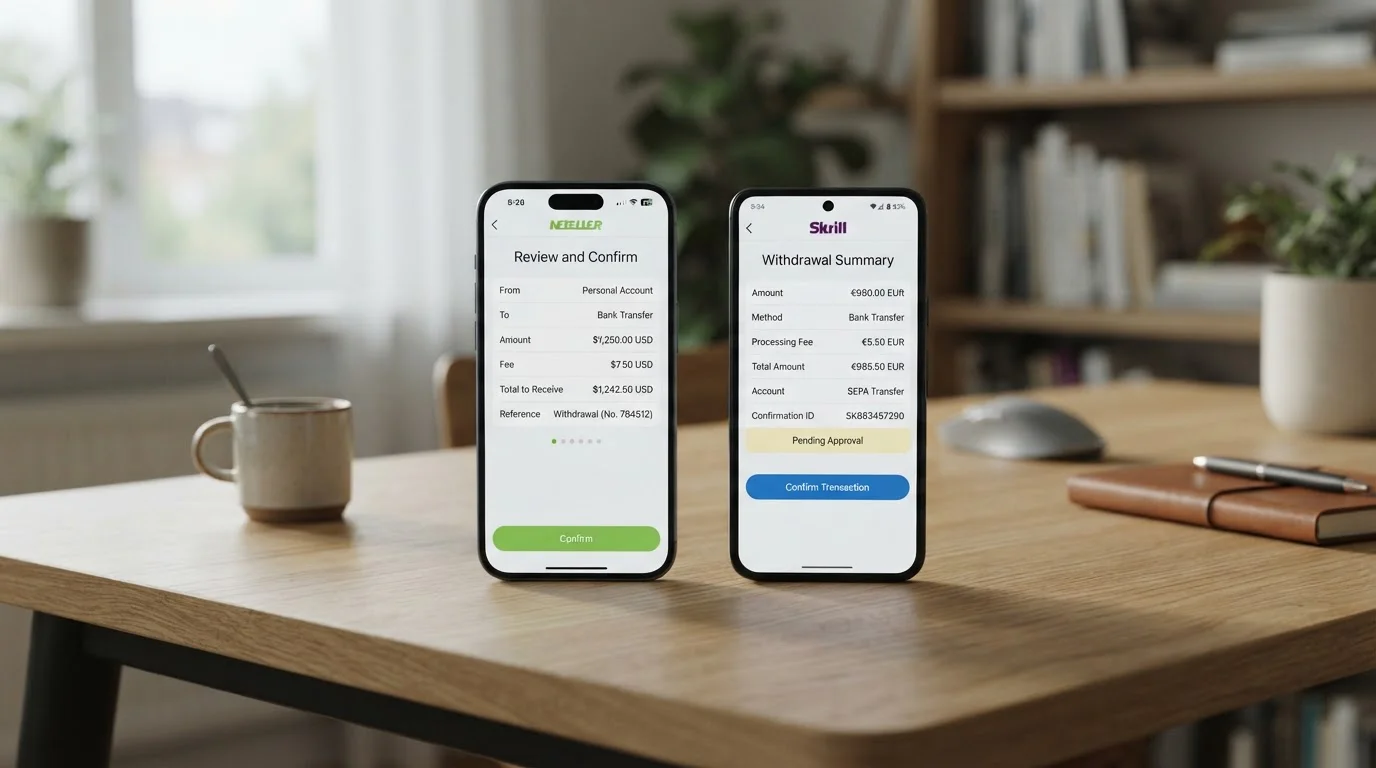
Neteller is an e-wallet owned by Paysafe Group, FCA-regulated in the UK. Roughly 2.5 million active users globally, supports twenty-eight-plus currencies including AUD. Two-way support: deposits instant, withdrawals twenty-four to seventy-two hours operator-side, then instant from Neteller to your bank account.
Katsubet tested at zero to sixty minutes for Neteller withdrawals in September 2026, which puts it at the fast end of the operator distribution. Market average: one to three days from cashout request to funds in your bank account.
Bonus eligibility is the catch. Many offshore casinos exclude e-wallet deposits from welcome bonus qualification. The terms bury this restriction in a clause like “deposits via Skrill, Neteller, and PayPal do not qualify for the welcome bonus.” Check before funding. If the bonus matters, deposit via PayID or card (if accepted) instead.
KYC happens at the Neteller level, not the casino level. You verify your identity with Neteller before your first withdrawal from the e-wallet to your bank. The casino sees “payment from Neteller,” not your bank details. That intermediate privacy layer is Neteller’s main selling point over direct bank transfers.
Fee structure: 2.5% to load Neteller from a debit card, 3.99% currency conversion if your deposit is not in AUD, flat AUD 3.95 to withdraw from Neteller to your Australian bank account, and AUD 5 per month inactivity fee after twelve months dormant. The fees layer up. A hundred-dollar card load costs 2.50 in fees. If the casino balance is in USD, conversion adds another 3.99. Withdrawing to your bank adds 3.95. Fifteen dollars in fees on a hundred-dollar round trip if you hit every layer.
Skrill
Skrill is also owned by Paysafe Group, FCA-regulated, virtually identical to Neteller in function and fee structure. Two-way support, instant deposits, twenty-four to seventy-two hours for withdrawals. Same bonus exclusion problem. Same layered fees: 2.5% card load, 3.99% FX conversion, AUD 3.95 bank withdrawal, AUD 5 monthly inactivity charge after twelve months.
The question every Australian player asks: why does the market have two nearly identical e-wallets from the same parent company? Historical accident. Skrill and Neteller were separate competitors; Paysafe acquired both and kept them running in parallel. Operators that accept one usually accept the other. Pick whichever you funded first.
PayPal — Rare but Requested
PayPal is a household name in Australia, used for e-commerce, subscriptions, person-to-person transfers. PayPal Holdings Inc., publicly traded on NASDAQ. Buyer protection feature: dispute unauthorised transactions, something Skrill and Neteller lack.
Offshore casino acceptance: extremely rare. Fewer than five percent of casinos accepting Australian players support PayPal, based on operator surveys from 2026. The restriction is policy, not technical. PayPal prefers licensed, tightly regulated merchants. Offshore casino = high-risk merchant category. PayPal’s compliance team declines to process transactions for most operators in this space.
When PayPal is available, it works like any other e-wallet. Instant deposits, same-day to three-day withdrawals, intermediate privacy layer. The rarity makes it unreliable as a primary method. If your casino accepts it, consider it a bonus. Do not rely on it.
EcoPayz, MuchBetter, and Niche Wallets
EcoPayz (now branded Payz) is FCA-regulated, functions identically to Skrill and Neteller. MuchBetter is mobile-focused, designed for phone-first users. MiFinity, STICPAY, and a handful of others occupy the niche tier — less common than the big three but accepted at enough operators to be worth mentioning.
Fee structures vary. KYC requirements do not — every e-wallet requires identity verification before your first withdrawal from the wallet to your bank. The advantage over direct bank deposits: the casino sees “payment from EcoPayz,” not your bank account number. The disadvantage: another account to fund, another fee layer, another KYC process.
What are the fees for using e-wallets like Skrill or Neteller at Australian casinos?
Skrill and Neteller charge roughly 2.5% to load from a debit card, 3.99% for currency conversion when the balance is not in AUD, a flat AUD 3.95 to withdraw to an Australian bank, and AUD 5 monthly after twelve dormant months. A hundred-dollar round trip can cost fifteen dollars if every layer fires.
Why do so few Australian casinos accept PayPal?
PayPal restricts transactions with offshore gambling merchants as a policy decision. Fewer than five percent of offshore casinos accepting Australian players support PayPal. The restriction is not technical — PayPal’s compliance team classifies offshore casinos as high-risk and declines to process payments for most operators in this category, regardless of their offshore license status.
Cards and Mobile Payments — Familiar but Restricted
Cards remain the most familiar payment method for new players. Visa and Mastercard debit work at some offshore casinos. Credit cards vanished June 2026-2. Apple Pay and Google Pay wrap your card in biometric convenience but do not bypass the underlying restrictions.
Visa and Mastercard Debit — What Still Works
Visa debit and Mastercard debit are accepted at a shrinking subset of offshore operators. Instant deposit when the issuer allows it. Decline rate high — many Australian card issuers block gambling transactions even for debit cards, flagging the merchant category code and refusing the charge.
Deposit-only at most casinos. Cards technically support refunds, but offshore operators route withdrawals to bank transfer instead of pushing money back to the card. When card refunds happen, they take three to seven business days. Treat cards as deposit-only unless the cashier explicitly confirms refund support.
Minimum deposit typically ten to twenty Australian dollars. No setup beyond the card you already carry. Full KYC — the card name must match the casino account name. Not anonymous.
The Credit Card Ban (June 2026-2)
Credit cards were prohibited for online gambling in Australia effective June 2026-2. The ban reshaped the payment landscape overnight. Debit cards remain legal but acceptance is inconsistent. Issuers treat debit gambling transactions with more scrutiny than they did pre-ban.
The ban targeted credit specifically to limit gambling on borrowed money. Debit cards draw from your existing balance, so the harm-reduction logic does not apply. In practice, many issuers extended their gambling blocks to debit as well, either as a blanket policy or because the MCC code flags “gambling” without distinguishing credit from debit.
Apple Pay and Google Pay — Card Wrappers, Not Bypasses
Apple Pay and Google Pay are payment wrappers, not independent rails. Apple Pay pulls from a Visa or Mastercard debit stored in your Apple Wallet. Google Pay pulls from a Visa or Mastercard stored in Google Pay. The underlying transaction is a card deposit. Biometric authentication (Face ID, Touch ID, fingerprint) is a convenience layer on top.
Instant deposit, same speed as the underlying card. Deposit-only — withdrawals return to the card or an alternative method, not to Apple Pay or Google Pay directly. Subject to the same issuer restrictions as direct card deposits. If your bank blocks gambling transactions, Apple Pay will not bypass that block. The bank sees the same MCC code whether you type the card number or authenticate with your face.
Apple Pay requires an Apple device (iPhone, iPad, Apple Watch, Mac). Google Pay requires Android. Both are phone-convenient but offer no advantage over typing the card number beyond biometric speed. Neither preserves anonymity — the card links to your identity, triggers full KYC at the casino.
January 2026+1 banking blocks apply equally to mobile payments. The underlying rail is still a card transaction routed through an Australian bank. The bank will flag it the same way it flags a direct card deposit to a prohibited merchant.
Prepaid Vouchers — Cash In, No Link Out
Prepaid vouchers address one specific use case: depositing without linking a bank account or card. Neosurf dominates the Australian voucher market. Paysafecard exists but is less common.
Neosurf — The Australian Standard
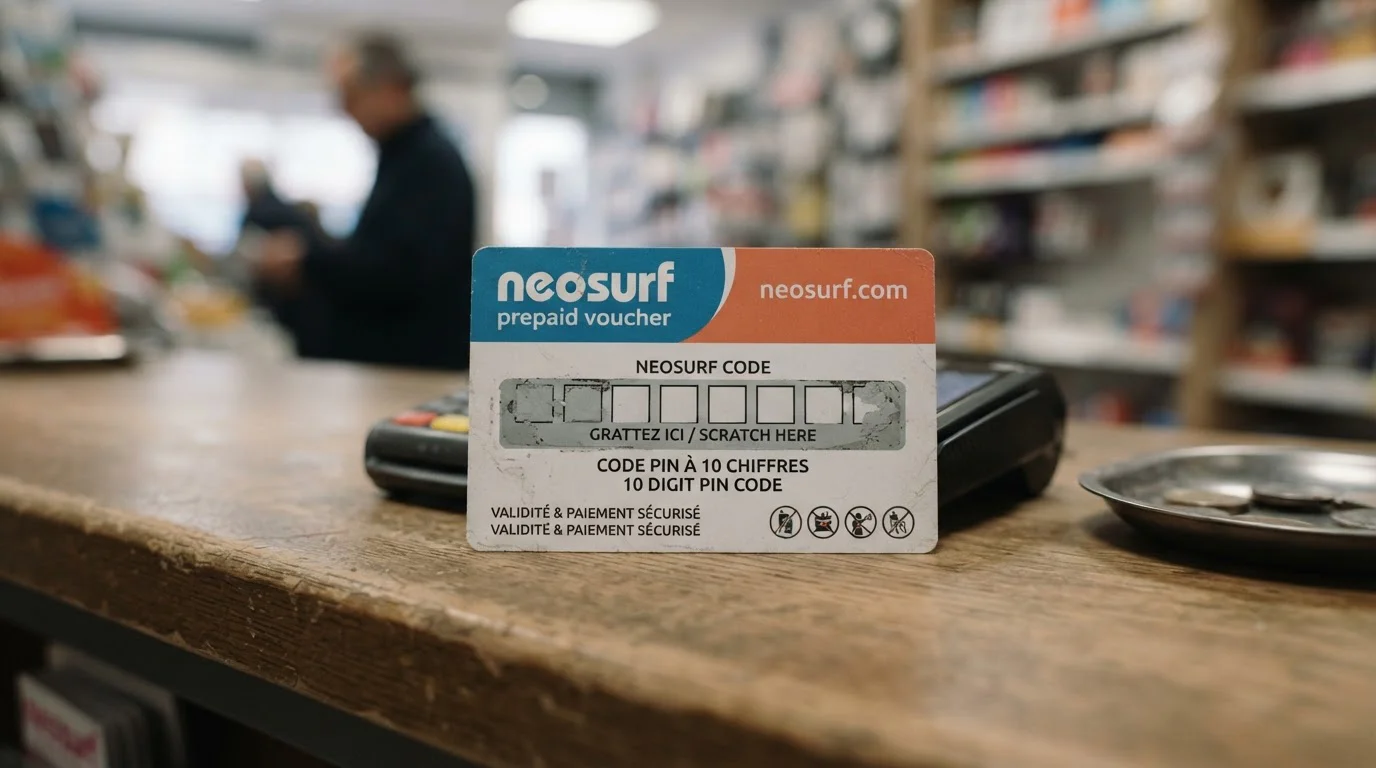
Neosurf is a prepaid voucher system founded in 2004, French company, operates in Australia via a retail distribution network. Purchase a voucher for cash or EFTPOS at a retailer — 7-Eleven, Caltex service stations, newsagents. Reveal the ten-digit PIN, enter it at the casino cashier, deposit lands instantly.
Daily limit: one thousand Australian dollars per voucher. AUD-denominated, no currency conversion. Instant deposit. Deposit-only — vouchers cannot receive withdrawals. You nominate a different method (PayID, bank transfer, e-wallet, crypto) for cashouts.
No bank linkage. No card. No ID required at purchase if you pay cash. The voucher itself is a bearer instrument — whoever holds the PIN can spend it. That anonymity is Neosurf’s primary selling point. No “gambling” line on a bank statement because there is no bank transaction. The cash leaves your wallet at the service station, the PIN enters the casino, no intermediary sees both sides.
Neosurf is available at thousands of retail locations across Australia. Ubiquity makes it more practical than Paysafecard, which has sparser distribution.
Paysafecard — European Import
Paysafecard is owned by Paysafe Group (same parent as Neteller and Skrill). Sixteen-digit PIN. European origin, EUR-denominated. Accepted at some Australian-facing casinos with AUD conversion at the cashier. Purchase at selected retailers; less common in Australia than Neosurf.
Deposit-only, same as Neosurf. Cash purchase preserves anonymity. The EUR denomination means a small FX conversion margin when depositing in AUD. Paysafecard functions identically to Neosurf in practice; the only difference is availability. If your nearest retailer stocks Paysafecard, it works. If they stock Neosurf instead, use that.
Bank Transfers and Niche Methods
Standard bank transfers are the slowest deposit method and among the slowest withdrawal methods. A handful of niche e-wallets and regional methods fill gaps in specific use cases.
Standard Bank Transfer — Slow but Unlimited
Standard bank-to-bank wire transfer. Not PayID — this is the legacy method where you enter the casino’s BSB, account number, and reference code manually, then wait one to three business days for the deposit to clear. Withdrawals take two to seven business days.
Highest limits. Most operators set no maximum on bank transfer deposits, or cap them at ten thousand dollars or higher per transaction. PayID typically caps at one thousand per transaction. If you need to move five thousand dollars in one go, bank transfer handles it; PayID requires multiple transactions.
Fees vary by operator. Some charge nothing. Others charge up to thirty-five Australian dollars per withdrawal. Check the cashier before requesting a cashout.
Full KYC. The casino sees your bank account details, you see theirs. No intermediate privacy layer. Slowest speed of any two-way method. Bank transfers make sense only when limits force you off faster rails or when you specifically prefer the audit trail of a bank statement line.
POLi (Decommissioned September 2026-3)
POLi was an Australian bank-transfer facilitator, decommissioned September 2026-3. Some older casino pages still list it. Do not use it — the service no longer operates.
Revolut, Klarna, Trustly — Available but Rare
Revolut, Klarna, and Trustly appear in some casino cashiers but are uncommon in the Australian market. The table below summarises niche method availability.
| Method | Availability in AU | Notes |
|---|---|---|
| Revolut | Rare | E-wallet, available at select operators |
| Klarna | Rare | Pay-later service, seldom supports gambling |
| Trustly | Rare | Bank-transfer facilitator, more common in EU |
| Interac | Not AU-focused | Canadian bank-transfer method |
| iDEAL | Not AU-focused | Dutch bank-transfer method |
| AstroPay | Rare | Prepaid card, sporadic AU acceptance |
| CashtoCode | Rare | Cash-to-voucher, limited AU retail presence |
| Volt | Rare | Open-banking payment, emerging in AU |
| ACH | Not AU | US bank-transfer method |
| eCheck | Not AU | US electronic cheque |
| UPI | Not AU | Indian instant-payment method |
These methods exist in the technical sense but are not reliable primary options for Australian players. If your preferred casino supports one and you already use it, fine. Do not open an account with a niche provider specifically for casino deposits — stick to PayID, crypto, or established e-wallets.
The Legal Reality — IGA, ACMA, and the 2026+1 Enforcement Shift
Every offshore casino accepting Australian players operates outside Australian jurisdiction. No locally licensed online casino operators exist. The payment methods covered in this breakdown all connect to operators licensed in Curaçao, Malta, Kahnawake, Anjouan, or other offshore jurisdictions.
What the IGA Actually Prohibits
The Interactive Gambling Act 2001 prohibits Australian-based entities from providing online casino services to Australian residents. The law targets operators, not players. Accessing offshore sites is not criminalised for individuals. You will not be fined or prosecuted for depositing at an offshore casino. The operators face penalties if they target Australian players while operating from within Australia, which is why every operator in this space operates offshore.
The IGA does not create a whitelist of approved operators. It creates a blanket prohibition: online casino services may not be provided to Australians by Australian companies. Offshore operators do not fall under Australian jurisdiction, so the IGA does not directly regulate them. ACMA enforces the IGA by blocking offshore domains and, starting January 2026+1, by requiring banks to block payments.
ACMA’s 1,700+ Blocked Domains
The Australian Communications and Media Authority has blocked over 1,700 offshore gambling and affiliate websites as of September 2026. ACMA directs internet service providers to refuse DNS resolution for listed domains. The blocks are reactive, not preventive — ACMA identifies a site, issues a blocking directive, ISPs implement it. Operators respond by launching new domains. The cycle repeats.
Domain blocking slows access but does not stop it. Players use VPNs, mirror domains, or direct-IP access. ACMA acknowledges this in public statements but continues domain blocking as a deterrent rather than an absolute barrier.
The January 2026+1 Banking Blocks
New enforcement measures commence January 1, 2026+1. The Interactive Gambling Amendment (Gambling Reform) Act 2026, passed August 2026, requires banks to block payments to prohibited gambling services. Enforcement shifts from domain blocking to financial flow disruption.
The mechanism: ACMA compiles a prohibited-merchant list. Banks cross-reference transaction recipients against that list. When you attempt to send money to a flagged merchant, the bank declines the transaction. PayID deposits, card deposits, bank transfers to offshore casinos — all targetable under this regime.
Crypto deposits are unaffected. A blockchain transaction never touches an Australian bank. You send Bitcoin or USDT from your wallet to the casino’s wallet; no bank sees the flow. E-wallet funding (the step where you load Skrill or Neteller from your card or bank account) may face restrictions if the e-wallet itself is flagged, though that scenario is less clear as of September 2026.
Which specific operators end up on the prohibited-merchant list, and how quickly banks implement blocking, will determine the practical impact. The legal framework is in place. Enforcement breadth remains to be seen.

Are online casino payments legal in Australia?
Online casino services are prohibited under the Interactive Gambling Act 2001. The law targets operators, not players — accessing offshore sites is not criminalised for individuals. All offshore casinos accepting Australians operate outside local jurisdiction. Banking blocks from January 2026+1 force Australian banks to decline gambling payments, but they do not penalise the player.
How to Choose Your Payment Method
Speed, anonymity, bonus eligibility, fees — pick the priority and the method follows.
If Speed Matters Most
PayID for deposits (under sixty seconds). Crypto for withdrawals (sub-five hours, fastest operators two to sixty minutes). USDT on TRC-20 is faster and cheaper than Bitcoin if you already have a compatible wallet. E-wallets (Neteller, Skrill) sit in the middle tier at twenty-four to seventy-two hours for withdrawals.
Skip cards and bank transfers. Cards are slow to withdraw (three to seven days when refunds are supported). Bank transfers take two to seven days for withdrawals. Neither delivers the speed advantage that defines the top tier.
If Anonymity Matters Most
Crypto (Bitcoin, USDT) or prepaid vouchers (Neosurf, Paysafecard). Crypto deposits require no ID at the payment level; casino KYC may apply at withdrawal depending on operator policy and amount. Vouchers purchased with cash require no ID at purchase; withdrawal via an alternative method (bank transfer, e-wallet) will trigger KYC at that stage.
Avoid PayID, cards, e-wallets, and bank transfers. All link directly to your identity. PayID and bank transfers tie to your bank account. Cards tie to your name and billing address. E-wallets require KYC before your first withdrawal from the wallet to your bank.
If Bonus Eligibility Matters Most
Check the casino’s bonus terms before depositing. Many operators exclude e-wallet deposits (Skrill, Neteller, PayPal) from welcome bonus qualification. Cards and PayID typically qualify, but card acceptance is inconsistent. Crypto deposits usually qualify but verify in the terms.
The exclusion clause typically reads: “Deposits made via Skrill, Neteller, PayPal, and other e-wallets do not qualify for the welcome bonus.” If the bonus matters and your preferred method is excluded, fund via PayID or card instead. Withdraw via e-wallet or crypto later if speed matters.
If You Want to Minimize Fees
USDT on TRC-20 is the lowest-fee option. Under one dollar per transaction, no FX conversion if the casino balance is in USDT. Bitcoin costs two to ten dollars per transaction. E-wallets layer fees: 2.5% card load, 3.99% FX, AUD 3.95 bank withdrawal, AUD 5 monthly inactivity. A hundred-dollar round trip through Skrill or Neteller can cost fifteen dollars.
PayID has no fees from the NPP side; some operators charge withdrawal fees for bank transfers. Cards have no direct fees but high decline rates. Vouchers have no transaction fees but often carry a small retail markup at purchase.
Crypto avoids FX fees if you play in crypto directly. Depositing Bitcoin and playing in BTC eliminates currency conversion entirely. Depositing Bitcoin, converting to AUD at the casino, then converting back to Bitcoin at withdrawal hits you with two FX margins. Play in the currency you deposit to minimize conversion costs.
KYC, Verification, and First-Withdrawal Delays
Every offshore casino requires identity verification before your first withdrawal. The timing varies. Some operators request documents upfront at registration. Others wait until you request a cashout. Either way, the verification requirement is universal — no offshore operator pays out without confirming your identity.
What KYC Involves
Document upload: government-issued photo ID (passport, driver’s license), proof of address (utility bill, bank statement dated within three months), and sometimes a selfie holding your ID or a photo of the card you deposited with (front only, middle digits masked). The casino’s compliance team reviews the documents, typically within twenty-four to forty-eight hours.
Rejection reasons: blurry photo, expired document, name mismatch between the ID and the casino account, address on the proof-of-address document does not match the address you entered at registration. Resubmit clear, current documents with matching details.
How Payment Method Choice Affects KYC
Bank-linked methods (PayID, cards, bank transfer) trigger heavier verification. The casino sees your bank account details or card name and cross-checks them against your account name. A mismatch flags the account for additional review or outright blocks the withdrawal.
Crypto and e-wallets provide an intermediate privacy layer. The casino sees “payment from Neteller” or “payment from Bitcoin wallet address,” not your bank account number. KYC still happens — you still upload ID — but the payment method itself does not expose your bank details to the casino until withdrawal.
Prepaid vouchers (Neosurf, Paysafecard) carry no identity data at deposit. The PIN is a bearer instrument. Withdrawal forces you onto a different method (bank transfer, e-wallet), and that method triggers KYC.
First-Withdrawal Delays
First cashout always takes longer than subsequent ones. Document review adds one to forty-eight hours. Some operators batch-process withdrawals — if you request a cashout on Friday evening, the approval queue may not run until Monday morning. Add document review time on top of that, and a first withdrawal that should take twenty-four hours stretches to three or four days.
Speed up the process: upload ID documents immediately after registration, before your first deposit. Some casinos let you pre-verify. When you later request a withdrawal, the documents are already on file, and the approval runs faster.
Account Verification Beyond Documents
Operators occasionally request additional verification steps: a phone call to confirm your mobile number, an email confirmation link, a video call with the compliance team (rare, typically reserved for high-value withdrawals or flagged accounts), or proof-of-funds documentation (bank statement showing the source of deposited funds, required under anti-money-laundering rules for large deposits).
Crypto deposits over a certain threshold (varies by operator, often five thousand dollars or equivalent) may trigger enhanced verification even though crypto itself is pseudonymous. The casino’s license requires them to verify large transactions regardless of payment method.
Ongoing Verification Requirements
Some operators re-verify annually. Others re-verify when you change your registered address, update your payment method, or request a withdrawal significantly larger than your deposit history. A player who deposits fifty dollars a week for six months, then suddenly requests a five-thousand-dollar withdrawal, will face additional scrutiny — the casino flags it as unusual activity and requests source-of-funds documentation.
Operator Examples and Where Methods Work
Payment method acceptance varies by operator. The table below shows which methods work at widely-discussed Australian-facing casinos as of September 2026.
| Operator | PayID | Crypto | Neteller/Skrill | Cards | Neosurf | Withdrawal Speed (Tested) |
|---|---|---|---|---|---|---|
| BC.Game | ✗ | ✓ | ✗ | ✗ | ✗ | ~4 min (Bitcoin) |
| Katsubet | ✓ | ✓ | ✓ | ✓ | ✓ | 0–60 min (e-wallets), 19 min avg (PayID) |
| Neospin | ✓ | ✓ | ✓ | ✓ | ✓ | Sub-15 min (PayID) |
| Offshore operator average | ✓ | ✓ | ✓ | Variable | ✓ | 1–3 days (fiat), sub-5 hours (crypto) |
BC.Game is crypto-only, accepts over one hundred cryptocurrencies, processes Bitcoin withdrawals in roughly four minutes on average. No fiat rails. Three-hundred-percent welcome bonus up to twenty thousand Australian dollars. Curaçao license.
Katsubet accepts the full range of methods — PayID, crypto, e-wallets, cards, Neosurf. E-wallet withdrawals tested at zero to sixty minutes, PayID at nineteen minutes average. Malta Gaming Authority license.
Neospin similarly accepts the full range. PayID withdrawals tested at sub-fifteen minutes. Curaçao license.
The operator examples illustrate method breadth. Crypto-focused operators (BC.Game) deliver the fastest withdrawals but accept no fiat. Full-spectrum operators (Katsubet, Neospin) accept fiat and crypto but process fiat withdrawals more slowly than crypto-only operators process crypto.
Choose the operator based on which payment method you prefer. If you deposit and withdraw in crypto, crypto-only operators are fastest. If you deposit via PayID and withdraw via e-wallet, pick an operator that accepts both and check their tested withdrawal speeds.
Common Mistakes and How to Avoid Them
Depositing with a Method the Operator Does Not Support for Withdrawals
Cards and vouchers are deposit-only at most casinos. Depositing via Neosurf, then realising at withdrawal that you need to nominate a different method, forces you to set up PayID, an e-wallet, or crypto on the spot. Set up your withdrawal method before your first deposit. Test a small withdrawal immediately after your first deposit to confirm the method works.
Ignoring Bonus Terms and Losing Welcome Offers
E-wallet deposits are excluded from welcome bonuses at many operators. Depositing a hundred dollars via Skrill, then finding the bonus did not credit, leaves you with no recourse. Check the bonus terms before depositing. If e-wallets are excluded and the bonus matters, deposit via PayID or card.
Skipping Document Upload Until Withdrawal
Every first withdrawal waits for document review. Uploading ID only when you request a cashout adds one to forty-eight hours to the wait. Upload documents immediately after registration to pre-clear verification.
Sending Crypto on the Wrong Network
USDT exists on multiple networks: TRC-20 (Tron), ERC-20 (Ethereum), and others. Sending USDT on ERC-20 to a TRC-20 deposit address results in permanent loss of funds. The transaction completes on-chain but never reaches the destination because the networks are incompatible. Check the casino’s deposit address network and your wallet’s network selection before sending.
Using a VPN Without Understanding the Risks
Operators often prohibit VPN use in their terms. Playing from an IP address that does not match your registered country can flag your account for review and block withdrawals. Some operators allow VPNs, others do not. Check the terms. If VPN use is prohibited and you played through one, expect verification delays or account suspension.
Funding an E-Wallet with a Credit Card
Australia’s credit card gambling ban applies at the source. Funding Skrill or Neteller with a credit card, then depositing to a casino from the e-wallet, still involves gambling on credit. Some card issuers block the Skrill/Neteller load transaction for this reason. Fund e-wallets with debit cards or bank transfers to stay compliant.
Responsible Gambling and Payment Controls
Set deposit limits before playing. Most Australian banks let you cap transaction amounts per day or per merchant category via their app. BetStop is Australia’s national self-exclusion register; registering blocks you from licensed Australian operators but does not cover offshore sites.
Crypto and vouchers bypass bank-level controls because the bank does not see “gambling” in the transaction. If deposit limits matter to your approach, fund via PayID or cards where your bank sees the category and enforces the cap you set.

Time-of-day restrictions, cooling-off periods, and session reminders live at the operator level, not the payment level. Check the casino’s responsible gambling tools in account settings. Payment method choice affects what your bank sees, not what the casino offers.
Casino Deposit Methods Australia 2026 — Full Comparison
Content created by the «Payment Methods Online» team