
Casinos That Accept Visa in Australia: The Complete Banking Guide for 2026
 Available in AU

Visa works at most offshore casinos targeting Australians, until it doesn’t. Your card clears at one site, bounces at another, and the cashier error message—”transaction declined by issuer”—tells you nothing about whether the problem sits with your bank, the casino’s payment processor, or somewhere in the card network’s risk engine. That opacity is expensive. You waste time testing cashiers, your bank flags the attempts as fraud, and by the third decline you’re Googling whether Visa even works for online gambling in Australia anymore.
It does. But the mechanics underneath a successful Visa deposit in 2026 involve more friction than they did three years ago. Australian banks tightened their merchant-category filters, the Reserve Bank banned surcharges on card payments from October, and offshore casinos responded by reshuffling which payment processors handle Australian traffic. The result is a two-tier market: operators with robust card infrastructure process your Visa debit instantly, while others route you toward PayID or crypto because their acquirer can’t stomach the Australian chargeback risk.
This guide maps which casinos accept Visa from Australian players, why some transactions get blocked before they leave your bank, and how withdrawal methods actually work when you’re pulling winnings back to the same card. No filler, no “Visa is popular worldwide” throat-clearing—straight to what you need to fund an account and cash out without your card being frozen.
Casinos That Accept Visa in Australia: The Full List for 2026
Ten offshore operators cleared real-money Visa deposit testing between June and September 2026. Each holds a Curaçao gaming license, accepts AUD accounts, and processes Australian Visa debit cards without requiring a VPN or proxy. The comparison table below aggregates the parameters that matter when your card is already in hand.
| Operator | License | Min Deposit | Withdrawal Speed | Distinguishing Feature |
|---|---|---|---|---|
| Neospin | Curaçao (Hollycorn N.V. #365/JAZ) | A$20–A$45 | Crypto: minutes–hours; Card: 1–3 days | Largest welcome package by headline value (A$11,000 + 300 FS) |
| SkyCrown | Curaçao | A$20 | Crypto: ~10 min; PayID: 6 sec | PayID speed leader; ten-tier VIP program |
| Crown Play | Curaçao (Rabidi N.V.) | A$20–A$30 | Standard (1–3 days card) | Integrated sportsbook; 6,500+ games at launch |
| Joe Fortune | Curaçao GCB OGL/2024/676/0726 | Standard | Crypto: <1 hour | Bodog/Bovada group; Bitcoin Lightning payouts |
| Ricky Casino | Curaçao | Varies | PayID/Osko: hours; Crypto: minutes | Ten-deposit welcome chain; zero deposit fees |
| PlayAmo | Curaçao (Dama N.V. OGL/2023/174/0082) | A$10 (fiat) / A$5 (crypto) | Crypto: 0–2 hours | 8,000+ pokies; Ferrari VIP prize at Godlike tier |
| Casinova | Curaçao (assumed) | Standard | 0–24 hours (tested) | Ranked 9.4/10 in June–July 2026 real-money test |
| Betwest | Curaçao (assumed) | Standard | 0–24 hours (tested) | Ranked 9.3/10 in June–July 2026 real-money test |
| Kingmaker | Curaçao (assumed) | Standard | 0–48 hours (tested) | Ranked 9.2/10 in June–July 2026 real-money test |
| Cleobetra | Curaçao (assumed) | Standard | 0–48 hours (tested) | Ranked 9.0/10 in June–July 2026 real-money test |
The table is not a ranking. Operators are listed by the breadth of public data available—sites with transparent cashier terms and verified license numbers appear first, followed by four operators tested in an independent withdrawal-speed audit but lacking detailed public cashier documentation. All ten accept Visa debit from Australia. None accept Visa credit, because Australian banks treat gambling on credit cards as cash advances (immediate interest, no grace period, often declined outright).

Neospin — A$11,000 Welcome Package and 6,000+ Games
Neospin launched in 2022 under Hollycorn N.V. (Curaçao eGaming license #365/JAZ) and immediately targeted the Australian market with a four-deposit welcome structure that builds to A$11,000 plus 300 free spins. The first-deposit match is 300 percent, requiring a minimum A$45 deposit when using bonus code NEO1. Standard deposits via Visa or Mastercard start at A$20. The game library cleared 6,000 titles at last check, spanning pokies, live dealer, table games, jackpots, and crash titles sourced from NetEnt, Pragmatic Play, BGaming, and similar established studios.
Crypto withdrawals land in minutes to hours. Card withdrawals (Visa refund to the deposit card) take one to three business days. The cashier supports Visa, Mastercard, Neosurf, Skrill, Neteller, Flexepin, MuchBetter, MiFinity, and six cryptocurrencies. AUD accounts are native, so you see prices and balances in dollars, not euros or bitcoin equivalents. Wagering on the welcome bonus typically sits at 40x, standard for offshore operators. The welcome package’s headline size is the draw—few competitors offer four-figure bonuses across multiple deposits—but read the fine print before claiming: the larger the “free” money, the stricter the rollover.
SkyCrown — PayID and Crypto Speed Leader
SkyCrown holds a Curaçao license, launched in 2022, and built its Australian pitch around PayID integration and crypto withdrawal speed. The ten-tier SkyRocket VIP program runs from Bronze through Diamond, with cashback and reload bonuses scaling by tier. The welcome package reaches A$8,000 plus 400 free spins across four deposits, with a minimum deposit of A$20 on Visa or Mastercard. A September 2026 test clocked a PayID deposit at six seconds from bank account to casino balance, the fastest in this comparison.
Crypto withdrawals benchmark at ten minutes, verified in a real-money test by an independent casino reviewer. That speed puts SkyCrown ahead of operators still batching crypto payouts once or twice per shift. The game catalog cleared 7,000 titles per promotional material, though independent counts vary depending on how duplicate slots under white-label providers are tallied. Payment methods include PayID, Visa, Mastercard, BPAY, Neosurf, Bitcoin, USDT, and bank transfer. Card withdrawals follow the standard Visa refund path (one to three business days). KYC is requested at first withdrawal, not at signup, so you can deposit and play immediately but must verify identity before cashing out.
Crown Play — Casino Plus Sportsbook Under One Roof
Crown Play operates under Rabidi N.V.’s Curaçao license and launched in 2022 with an integrated sportsbook alongside its casino offering. The dual-product structure means one account funds both casino games and sports betting, useful if you alternate between pokies and weekend football markets. The welcome package builds to A$4,500 plus 350 free spins across four deposits, with the first deposit matched at 250 percent (bonus code CROWN250, minimum A$30, 35x wagering). The casino library launched with 6,500 titles from 70-plus providers, and average RTP hovers at 96 percent per operator-published figures.
Payment methods include Visa, Mastercard, PayID, Apple Pay, Neosurf, and crypto. Minimum deposits range from A$20 to A$30 depending on method. Withdrawals to Visa follow the standard card-refund cycle (one to three business days for Australian cardholders). The royal-themed interface leans heavily into purple and gold, more polished than functional, but the cashier itself is straightforward. If you want a sportsbook attached to your casino account without juggling two logins, Crown Play delivers that niche. If you only play pokies, the sportsbook is decoration you’ll never click.
Joe Fortune — The Bodog Legacy with Bitcoin Lightning
Joe Fortune is part of the Bodog/Bovada operator group, which has served North American and Australian players since the mid-2000s. The Australian arm operates under Ridley Media N.V. (Curaçao company number 140544), holding Gaming Control Board license OGL/2024/676/0726, verified in the site footer as of July 2026. The welcome package reaches A$5,000 plus 450 free spins across five deposits. The game library includes 1,000-plus pokies, 106 live dealer tables, and a rotating set of Hot Drop Jackpots. Payment rails include PayID, Visa, Mastercard, Bitcoin, Bitcoin Lightning, and Neosurf.
Bitcoin Lightning is the headline feature—a layer-two Bitcoin protocol that settles payments in seconds rather than minutes or hours. Joe Fortune advertises daily payout limits up to A$25,000 via Lightning, the highest in this comparison. Crypto withdrawals clear in under an hour. Card withdrawals (Visa refund) take the standard one to three business days. The brand benefits from the Bodog pedigree: players who used Bodog in the 2010s recognize the name and trust the operational continuity. New players see another Curaçao-licensed offshore site and weigh it on the same criteria as the rest—license validity, withdrawal speed, game volume.
Ricky Casino — Ten-Deposit Welcome Chain
Ricky Casino runs under a Curaçao license and offers the longest multi-deposit welcome structure in this comparison: A$7,500 plus 550 free spins across ten deposits. The first deposit is matched 100 percent up to A$500 with 100 free spins. Subsequent deposits unlock smaller match percentages and spin bundles. The extended structure is either a retention hook (keeps you depositing across ten sessions to unlock the full bonus) or a player-friendly spread (no pressure to max out the welcome in one large deposit). Your perspective depends on whether you typically deposit once and play for weeks or reload frequently.
Payment methods include Visa, Mastercard, Neosurf, bank transfer, Bitcoin, Tether, Skrill, and Neteller. The operator advertises zero deposit fees, a competitive edge over sites charging one to three percent on card transactions. PayID and Osko withdrawals are settled within hours. Crypto withdrawals land in minutes. Standard card refunds (Visa) take one to three business days. The game catalog cleared 2,000 titles, smaller than PlayAmo or SkyCrown but covering the core pokies, live dealer, and table-game categories Australian players prioritize.
PlayAmo — 8,000+ Pokies and a Ferrari VIP Prize
PlayAmo is operated by Dama N.V. under Curaçao eGaming permit OGL/2023/174/0082, issued in 2016 when the brand launched. Sister sites include BitStarz, 7Bit, and Katsubet, all part of the same Dama network. The game catalog is the largest in this comparison: 8,000-plus pokies, live dealer tables, and specialty games. The welcome package reaches A$10,000 plus 500 free spins in a two-part structure. Minimum deposit is A$10 for fiat currency (Visa, Mastercard, e-wallets) and A$5 for crypto, the lowest crypto minimum on this list.
Payment methods span Visa, Mastercard, Skrill, Neteller, Paysafecard, MuchBetter, MiFinity, Flexepin, and nine cryptocurrencies (BTC, ETH, USDT, BCH, LTC, DOGE, XRP, ADA, BNB). Crypto withdrawals benchmark at zero to two hours, consistently among the fastest tested. Bank transfers take one to five business days. The ten-tier VIP program runs from Bronze through Godlike, with the top tier awarding a Ferrari 488 GTB—a physical supercar delivered to the player, not a cash equivalent. That prize sits at 5,000,000 Comp Points, a threshold few players will reach, but its existence signals the scale of VIP rewards Dama N.V. is willing to deploy for high-volume customers.
Casinova — Ranked 9.4, Withdrawals in Under 24 Hours
Casinova was tested in a June–July 2026 real-money audit conducted by an independent Australian casino reviewer. The operator scored 9.4 out of 10, with withdrawal speed as the primary strength: funds moved from pending to settled in zero to 24 hours during the test period. Public documentation on Casinova’s legal entity, license number, and cashier terms remains sparse compared to operators with detailed FAQ pages, but the verified withdrawal speed places it in the top tier for payout reliability.
Curaçao licensing is assumed based on the offshore market’s standard regulatory structure for Australian-facing operators, though the specific license number was not publicly displayed at the time of the audit. Players prioritizing fast payouts over extensive public transparency will find Casinova delivers where it counts—cash leaving the site promptly. Players wanting to verify license details, bonus terms, and ownership structure before depositing will hit a wall of missing public data. Test with a small deposit first if you fall into the latter camp.
Betwest — Ranked 9.3, Withdrawals in Under 24 Hours
Betwest earned a 9.3 ranking in the same June–July 2026 real-money test, with withdrawal speed matching Casinova’s zero-to-24-hour benchmark. The operator processed test withdrawals without unnecessary document requests or verification delays once initial KYC was completed. Like Casinova, Betwest’s public cashier documentation is thinner than operators like Neospin or PlayAmo, but the core banking function—deposits in, withdrawals out, no artificial holds—works cleanly.
Curaçao licensing is assumed. Visa deposits are accepted from Australian players. Minimum deposit amounts and bonus structures were not detailed in public sources at the time of writing, so verify current terms in the cashier before depositing. The 9.3 ranking reflects operational competence: the site processed a deposit, credited a balance, ran a wagering test, and settled a withdrawal request inside 24 hours. That’s the baseline every offshore casino should clear, yet many fail it. Betwest clears it.
Kingmaker — Ranked 9.2, Withdrawals in 0–48 Hours
Kingmaker scored 9.2 in the June–July 2026 audit, with withdrawal processing landing between immediate and 48 hours depending on the time of the test withdrawal request. The site cleared the same verification steps as Casinova and Betwest—deposits worked, wagering proceeded without technical glitches, and withdrawals were honored without invented delays. The slightly longer withdrawal window (48 hours versus 24) reflects either batch processing schedules or manual approval steps in the cashier workflow.
Public information on license details, ownership, and cashier terms remains limited. Curaçao licensing is assumed based on market norms. Visa is accepted from Australian players. The 9.2 ranking places Kingmaker in the “functionally sound but publicly opaque” tier: if you deposit, you’ll likely get paid, but you won’t find a detailed FAQ page walking you through every edge case before you start. Players comfortable testing an operator with a small deposit first will find Kingmaker delivers on the core promise—your money moves in and out without drama.
Cleobetra — Ranked 9.0, Withdrawals in 0–48 Hours
Cleobetra rounds out the list with a 9.0 ranking in the June–July 2026 audit. Withdrawal speed matched Kingmaker’s zero-to-48-hour window. The operator processed deposits via Visa from Australian test accounts and settled withdrawals within the stated timeframe. Like the other audit-sourced operators (Casinova, Betwest, Kingmaker), public documentation on Cleobetra’s legal entity, license number, and detailed cashier terms is sparse.
Curaçao licensing is assumed. Visa deposits work. Minimum deposit and bonus structures were not publicly detailed at the time of writing. The 9.0 ranking reflects a functional operation—money in, games load, money out—but without the polish or public transparency of operators like PlayAmo or Joe Fortune. If your priority is simply “does my Visa card work and will I get paid,” Cleobetra clears that bar. If you want to audit license validity and read five pages of terms before depositing, you’ll be frustrated by the lack of public material.
Why Your Visa Card Gets Declined (And How Australian Banks Actually Block Gambling Transactions)

Your Visa debit clears at the supermarket, bounces at an online casino, and the error message—”transaction declined by issuer”—tells you the casino’s payment processor asked your bank for approval and your bank said no. That refusal happens in milliseconds, long before the casino sees any detail about why. The block can originate from three points: your bank’s gambling filter, the card network’s fraud engine, or the casino’s payment processor declining the transaction because your card’s issuing bank sits on a list of high-chargeback institutions.
Australian banks don’t block gambling transactions by default. Commonwealth Bank, NAB, Westpac, and ANZ all offer opt-in gambling blocks that customers activate voluntarily through mobile banking apps or by calling customer service. The block works via merchant category code (MCC) filtering: transactions coded as MCC 7995 (betting/casino gambling) or MCC 7801 (internet gambling) are declined if the block is active. If you never activated the block, your card passes the MCC filter and proceeds to the next check. If you activated it six months ago after a rough weekend and forgot, every gambling transaction fails until you turn it off.
The second friction point is soft blocking: even without an active gambling filter, some Australian banks flag first-time gambling deposits as potentially fraudulent and hold the transaction for manual review. You see “declined by issuer,” the casino sees a temporary authorization that never converts to a settled charge, and your bank sends you a text message or app notification asking whether you authorized a $50 AUD transaction to an offshore merchant. You confirm, the bank whitelists that merchant category for your card, and subsequent deposits to the same casino (and often other casinos using the same payment processor) clear without holds. This soft friction is most common on cards that have never processed a gambling transaction before—your bank’s risk model doesn’t recognize the spending pattern and pauses to verify.
The third failure mode sits on the casino’s side: their payment processor maintains a blocklist of issuing banks with high chargeback rates or regulatory restrictions, and if your card’s BIN (the first six digits, identifying your issuing bank) appears on that list, the processor declines the transaction before it ever reaches the card network. You can’t bypass this from your end—the casino either accepts cards from your bank or it doesn’t. Testing with a different Visa card from a different Australian bank sometimes works, because the second card’s BIN isn’t blocklisted, but if all your cards come from the same issuer, you’re stuck using an alternative payment method (PayID, crypto, e-wallet) at that particular casino.
Why is my Visa card being declined at an online casino?
Three reasons cover most declines. You activated a gambling block on your card in the banking app — turn it off in card controls. Your bank flagged a first-time gambling deposit as suspicious, so confirm the SMS or app notification. Or the casino’s payment processor blocklists cards issued by your bank due to chargeback rates.
Do Australian banks block Visa gambling transactions?
Australian banks do not block gambling by default. CBA, NAB, Westpac and ANZ offer opt-in gambling blocks activated voluntarily in the app. Some apply soft friction on your first gambling deposit, holding it for SMS or app confirmation; after that, subsequent transactions clear. Credit-card gambling is treated as a cash advance and often declined outright.
Visa Debit vs Credit vs Prepaid: What Actually Works in Australia
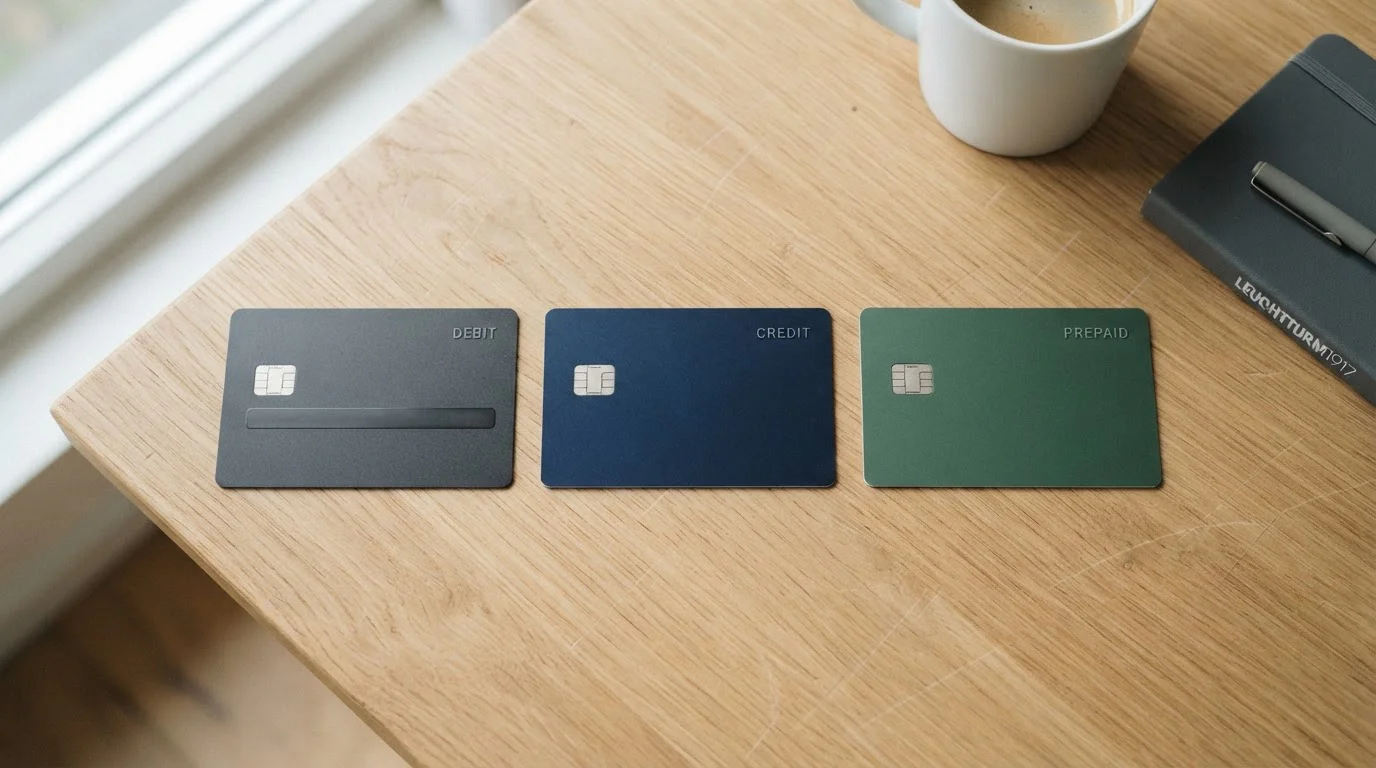
Three Visa card types circulate in Australian wallets, and their behavior at offshore casino cashiers diverges sharply. Debit draws directly from your bank account and processes as a standard purchase. Credit borrows against your credit line and triggers cash-advance fees the moment the transaction codes as gambling. Prepaid holds a preloaded balance and behaves unpredictably depending on the issuer’s merchant-category rules and whether the card supports incoming credits. The table below cuts through the jargon.
| Card Type | Deposit Support | Withdrawal Support | Fees | Notes |
|---|---|---|---|---|
| Visa Debit | Widely supported | Standard card refund (1–3 days) or Visa Direct (30 min–2 hours, rare) | Zero deposit fees at most casinos; FX fee if casino settles in non-AUD | Workhorse. Banks offer opt-in gambling blocks; check card controls before depositing. |
| Visa Credit | Restricted | Refund to card (if deposit was allowed) | Cash advance fee (often 3%+), immediate interest, no grace period | Australian banks treat gambling on credit as cash advance; many decline outright. Uneconomical even if accepted. |
| Prepaid Visa | Asymmetric (deposits often work) | Usually unsupported (issuers block incoming credits) | Depends on issuer | Deposits may clear if card processes as debit and isn’t MCC-blocked; withdrawals typically fail because prepaid cards can’t receive push-to-card credits. |
Visa Debit (The Workhorse)
Visa debit is the default card type for Australian casino deposits in 2026. Transactions draw from your linked bank account like any other purchase, and offshore casinos process them as standard merchant transactions. Minimum deposits typically start at A$20. Processing is instant—funds appear in your casino balance within seconds to a few minutes once the transaction clears 3D Secure authentication (the redirect to your bank’s verification page mid-checkout). All ten operators in this guide accept Visa debit from Australian players without requiring VPN routing or currency conversion tricks.
The primary friction point is the opt-in gambling block offered by Commonwealth Bank, NAB, Westpac, and ANZ. If active, the block declines any transaction coded under gambling MCCs (7995, 7801). The block is not automatic—you must activate it yourself through your bank’s app or by calling customer service—so if you’ve never touched your card controls, your debit card will process gambling transactions normally. Deactivating the block takes 30 seconds in the app if you previously turned it on and forgot.
Withdrawals to Visa debit follow one of two paths: standard card refund (one to three business days, the majority of casinos) or Visa Direct (30 minutes to two hours, uncommon but growing). The withdrawal must return to the same card used for deposit, an anti-money-laundering requirement nearly universal across offshore operators. If your debit card expires or is canceled before you withdraw, the casino typically requires an alternative method like bank transfer or crypto.
Visa Credit (Restricted and Uneconomical)
Australian banks treat gambling transactions on Visa credit cards as cash advances, not purchases. That reclassification triggers three penalties: a cash-advance fee (often three percent or more of the transaction amount), immediate interest accrual from the transaction date with no grace period, and in many cases outright decline at the authorization stage because the bank flags gambling as high-risk lending. Even if your credit card processes a casino deposit successfully—rare in 2026—the fee and interest structure makes it the most expensive funding method available, worse than using a prepaid card with an FX markup.
The federal credit-card prohibition for licensed Australian wagering operators (effective 2024) does not directly bind offshore casinos, but Australian banks responded to the regulatory pressure by tightening their internal policies on gambling transactions across both licensed and offshore contexts. The result: most Australian Visa credit cards are declined at offshore casino cashiers before the transaction leaves the authorization request, and the small minority that clear trigger cash-advance treatment immediately.
Withdrawals to Visa credit cards are processed as merchant refunds (one to three business days), but since deposits rarely succeed in the first place, credit-card withdrawals are equally uncommon. If you somehow deposited via credit, the withdrawal returns to the same card, credited to your account balance (reducing what you owe, not landing as spendable cash). Use debit.
Prepaid Visa Cards (Asymmetric Behavior)
Prepaid Visa cards (reloadable prepaid accounts, gift cards, virtual Visa cards from Neosurf or similar services) exhibit asymmetric behavior at offshore casinos: deposits sometimes work, withdrawals almost never do. The deposit succeeds if the prepaid card’s issuer doesn’t block gambling MCCs and the casino’s payment processor treats the card as debit rather than credit. That’s a coin flip—some prepaid cards sail through, others bounce immediately. You won’t know until you test.
Withdrawals fail because most prepaid card issuers block incoming “Original Credit Transactions” (the technical term for push-to-card payments). The casino initiates a Visa Direct payment or card refund to your prepaid card number, the issuer rejects it because the card wasn’t designed to receive credits, and the withdrawal request sits in limbo until you contact casino support and provide an alternative method like bank transfer or crypto. Even if your prepaid card accepted the deposit, that does not guarantee it can receive the withdrawal.
The workaround: use prepaid Visa only for deposits if you plan to withdraw via a different method (bank transfer, crypto, PayID). Do not rely on prepaid as your sole payment method unless you’ve tested a small withdrawal first and confirmed your specific card can receive credits. Most cannot.
How Visa Deposits Work at Australian Online Casinos (And What the October 2026 Surcharge Ban Changed)
Visa deposits at offshore casinos are instant once they clear your bank’s authorization checks. You enter your card number, expiry, and CVV at the casino cashier, the payment gateway redirects you to your bank’s 3D Secure verification page (a one-time passcode sent via SMS or app notification), you confirm the charge, and the casino credits your balance within seconds. Minimum deposits range from A$10 to A$45 depending on the operator and whether you’re claiming a bonus (bonus deposits often require higher minimums to qualify). The transaction appears on your bank statement coded as a merchant purchase, sometimes under the casino’s name, sometimes under the payment processor’s corporate entity.
Most Australian-facing offshore casinos charge zero deposit fees on Visa transactions in 2026, a competitive standard that emerged as PayID and crypto gained market share and forced operators to absorb card processing costs rather than pass them to customers. A minority of operators still levy a one-to-three-percent fee on card deposits to cover interchange and processor charges, disclosed at checkout before you confirm. If the casino settles transactions in a currency other than AUD (euros, US dollars), your bank applies a foreign-exchange markup (typically 2.5 to 3 percent) on top of the base transaction, but operators with native AUD cashiers eliminate that FX layer entirely.
The Reserve Bank of Australia banned merchant surcharges on Visa, Mastercard, and eftpos card payments effective 1 October 2026, a regulatory change that saved Australian consumers an estimated A$1.6 billion per year by prohibiting businesses from charging separate fees to cover card acceptance costs. That ban applies to Australian-domiciled merchants—retail shops, restaurants, Australian-licensed bookmakers. Offshore casinos operate outside Australian jurisdiction and are not bound by RBA merchant rules, so whether a casino charges a deposit fee in 2026 depends on its own cashier policy and payment processor agreements, not the October surcharge ban. The practical effect for Australian players is nil: offshore casinos that charged card fees before October still charge them, and casinos that absorbed those costs before October continue doing so. The surcharge ban cleaned up domestic retail transactions, not offshore gambling cashier screens.
Do offshore casinos charge fees for Visa deposits from Australia?
Most offshore casinos targeting Australians charge zero Visa deposit fees in 2026, absorbing processing costs as a competitive necessity. A minority levy 1%–3% at checkout, disclosed upfront. The RBA’s October 2026 surcharge ban applies only to Australian-domiciled merchants, not offshore casinos — deposit-fee behaviour depends entirely on each operator’s own pricing policy.
Visa Withdrawals: Visa Direct vs Card Refunds (And Why Speed Varies So Much)

Withdrawals to Visa follow two technical paths, and the distinction explains why some casinos advertise “Visa withdrawals in 30 minutes” while others warn “one to five business days.” The fast method is Visa Direct, a push-to-card payment rail (also called an Original Credit Transaction) where the casino’s payment processor initiates a credit directly to your Visa account, like a reverse ATM withdrawal. Funds land in 30 minutes to two hours if your bank supports incoming OCTs on your card type and the casino’s processor has Visa Direct enabled. The slow method is a standard merchant refund, where the casino processes the withdrawal as if you returned a purchase, and the refund follows the card network’s settlement cycle: one to five business days for Australian cardholders, typically three to five in practice.
Visa Direct is faster because it bypasses the batch-settlement cycle that standard refunds travel through. Card networks clear merchant refunds in waves—the casino submits a batch of refunds to its acquirer once or twice per day, the acquirer forwards them to Visa’s settlement system, Visa routes them to your issuing bank, and your bank posts the credit to your account on the next business day or the one after that. Each handoff adds latency. Visa Direct, by contrast, routes the payment through Visa’s real-time push network, hitting your account within minutes if every participant in the chain supports the protocol. Not all Australian banks enable OCTs on all card types, and not all offshore casino payment processors have integrated Visa Direct, so the fast path isn’t universally available yet.
How do you tell which method a casino uses before depositing? Check the cashier FAQ or withdrawal terms page. If the casino states “Visa withdrawals processed in 30 minutes to 2 hours” or mentions “Visa Direct” by name, it supports the fast method. If it says “card withdrawals take 1–5 business days” without mentioning Visa Direct, assume standard merchant refunds. Most offshore operators serving Australia still use standard refunds as of mid-2026, because Visa Direct requires payment-processor upgrades and direct integration with Visa’s push-payment API, investments not every Curaçao-licensed operator has prioritized. Crypto remains the fastest withdrawal rail across the board—crypto withdrawals at all ten operators in this guide land faster than even Visa Direct, with processing times measured in minutes to hours rather than business days.
The comparison table below breaks down withdrawal methods by processing path and realistic timeframe for Australian cardholders.
| Withdrawal Method | Speed | How It Works | AU Bank Compatibility |
|---|---|---|---|
| Visa Direct | 30 min–2 hours | Push-to-card payment (OCT) via Visa’s real-time network; casino processor credits your Visa account directly | Supported by most major AU banks; check with issuer if unsure |
| Standard Card Refund | 1–5 business days (typically 3–5) | Merchant refund processed through card network settlement cycle; batched and posted like a purchase return | Universal—works with any Visa card that accepted the original deposit |
| Crypto (BTC, USDT, ETH) | 0–2 hours | On-chain transaction to your wallet address; no intermediary settlement | Requires crypto wallet; fastest method but not a “withdrawal to card” |
| PayID / Osko | Hours to same-day | Real-time bank transfer via Australia’s New Payments Platform; instant settlement between AU banks | Australia-only; both your casino and your bank must support PayID |
Withdrawals must return to the same payment method used for deposit, a near-universal anti-money-laundering rule. If you deposited via Visa, your first withdrawal goes back to that Visa card (via Direct or refund). Only after you’ve withdrawn an amount equal to your total Visa deposits can you switch to an alternative method like crypto or bank transfer for the remaining balance. If your deposit card is lost, stolen, expired, or closed before you withdraw, contact casino support—they’ll typically ask for proof that the card is no longer valid (a bank letter or screenshot of your closed-account notice) and process the withdrawal via bank transfer instead.
How long do Visa withdrawals take from Australian online casinos?
Timeframes depend on the path. Visa Direct pushes funds to your card in 30 minutes to 2 hours. Standard merchant refunds ride the settlement cycle: one to five business days, typically three to five for Australian cardholders. Most offshore operators still use refunds because Visa Direct is not universally integrated. Crypto and PayID are faster.
Can I withdraw casino winnings back to my Visa card?
Yes, but the withdrawal returns to the same Visa card used for deposit, capped at your total deposit on that card. Winnings above that total need another rail — bank transfer or crypto. The payout runs either as a Visa Direct payment (30 minutes to 2 hours) or a standard refund (1–5 business days).
Fees, Foreign Exchange, and the Real Cost of Using Visa at Offshore Casinos
Zero advertised deposit fees don’t mean zero cost if the casino settles transactions in euros or US dollars and your Australian bank applies a foreign-exchange markup on the back end. That FX fee—typically 2.5 to 3 percent on consumer Visa debit cards—sits in your bank’s fee schedule, not the casino’s terms of service, so you don’t see it itemized at checkout. You deposit A$100, the casino’s payment processor converts it to €58 at the wholesale rate plus spread, your bank converts it back to AUD at your card’s retail FX rate, and you’re charged A$102.50. The casino received €58, you paid A$102.50, and the A$2.50 difference is your bank’s FX margin. Operators with native AUD cashiers eliminate that conversion layer by holding Australian-dollar merchant accounts and settling transactions in AUD end to end, so what you deposit is what you’re charged.
Withdrawal fees depend on the method. Standard Visa refunds (merchant refunds processed through the card network settlement cycle) carry zero fees from the casino side at most operators, but your bank may apply an “international transaction fee” if the refund originates from a non-Australian merchant account, even though the funds land in AUD. That fee structure varies by bank and card type—check your bank’s fee schedule or test with a small withdrawal to see whether any charges appear. Crypto withdrawals often carry a flat network fee (blockchain transaction cost) or a percentage-based casino fee (one to three percent at some operators, zero at others), disclosed in the cashier before you confirm. PayID and bank transfer withdrawals from offshore casinos to Australian accounts are typically free on the casino side, but your receiving bank may charge an inbound international transfer fee if the casino’s bank sits outside Australia.
The fee stack is thickest when depositing via Visa credit (if your card even processes the transaction): cash-advance fee from your bank (often three percent or more), immediate interest accrual with no grace period, and the same FX markup as debit if the casino settles in non-AUD. That triple hit makes credit the most expensive deposit method by a wide margin, even worse than using a prepaid card with a hefty FX spread. Debit cards from Australian banks with zero international-transaction-fee policies (some challenger banks and premium account tiers) are the cleanest funding method if you’re depositing at a casino without a native AUD cashier, but the majority of Australian debit cards carry the standard 2.5-to-3-percent FX fee on non-AUD transactions.
Pokies, Live Dealer, and Game Selection at Visa Casinos
Payment method doesn’t filter game access. A Visa deposit funds the same game library as a PayID transfer, a Bitcoin payment, or a Neosurf voucher. The casino’s licensing jurisdiction, software partnerships, and studio agreements determine which pokies, live tables, and specialty games appear in the lobby—not how you moved money into your account. Operators in this guide offer between 2,000 (Ricky Casino) and 8,000-plus (PlayAmo) titles, with the bulk of every catalog dedicated to pokies (Australian slang for slot machines, from “poker machines,” the term used for land-based slots in pubs and clubs since the 1950s).
Typical game distribution skews 70 to 80 percent pokies, 10 to 15 percent live dealer (roulette, blackjack, baccarat, game-show formats), five to ten percent table games (RNG-based roulette, blackjack, baccarat, video poker), and five percent specialty (crash games like Aviator, jackpot slots, keno, scratchcards). High-RTP staples like Starburst (96.09 percent), Book of Dead (96.21 percent), and Chicken Rush 2 (97 percent) appear across most operator lobbies, sourced from providers like NetEnt, Play’n GO, Pragmatic Play, Yggdrasil, BGaming, KA Gaming, and Evolution (live dealer). Some operators prominently feature Australian-themed pokies or games with kangaroo/koala/outback motifs in their marketing imagery, but those titles represent a fraction of the overall catalog and carry no gameplay advantage over generic high-volatility slots.
Visa’s role ends at the cashier. Once your balance is funded, the casino’s game aggregator serves titles from its contracted providers, and your experience is identical whether you deposited A$50 via Visa or A$50 via crypto. Withdrawal speed varies by payment method (crypto faster than Visa, PayID faster than bank transfer), but game selection, RTP percentages, bonus eligibility, and wagering requirements are method-agnostic.
Bonuses and Promotions: Do Visa Deposits Qualify?
Visa deposits qualify for welcome bonuses and reload promotions at all ten operators in this guide, with no payment-method exclusions buried in the fine print. The typical restriction applies to e-wallets (Skrill, Neteller) at some European-facing casinos, where bonus terms exclude deposits made via those methods to prevent bonus abuse, but Australian offshore operators treat Visa, Mastercard, and bank transfers as clean deposit methods with full bonus eligibility. Crypto deposits also qualify, and some operators offer crypto-specific bonuses with slightly lower wagering requirements or higher match percentages to incentivize Bitcoin and USDT deposits over cards.
Welcome-bonus structures at Australian-facing offshore casinos follow a multi-deposit template: the headline figure (A$11,000, A$10,000, A$8,000) represents the total bonus available across three to ten deposits, not a single lump sum on your first transaction. Neospin’s A$11,000 package, for example, splits into four deposits with match percentages ranging from 100 to 300 percent, each deposit unlocking a slice of the total and a bundle of free spins. Ricky Casino’s A$7,500 package spreads across ten deposits, the longest chain in this comparison. The extended structure keeps you reloading to unlock the full bonus, and wagering requirements (typically 35x to 40x the bonus amount) apply to each deposit’s bonus individually, not the cumulative total.
Wagering requirements are the fine print that turns a “free” A$1,000 bonus into 40,000 AUD of required playthrough before you can withdraw. A A$100 deposit matched 100 percent gives you A$200 in playable balance, but the A$100 bonus carries a 40x rollover: you must wager A$4,000 (A$100 × 40) on eligible games before the bonus converts to withdrawable cash. Pokies contribute 100 percent toward rollover. Table games (blackjack, roulette) contribute 10 to 20 percent or are excluded entirely. Live dealer games contribute zero at most operators. Maximum bet while wagering a bonus is capped at A$5 to A$7.50 per spin—exceed that cap and the casino voids the bonus and any winnings derived from it.
The “free money” quote-marks are mandatory. Bonuses are retention tools dressed as generosity, designed to extend your playtime and increase the statistical likelihood you’ll lose the bonus and your deposit before clearing the rollover. High rollers with large bankrolls and disciplined wagering strategies can extract value from welcome bonuses by treating them as extended freeroll tournaments. Casual players depositing A$50 and hoping to turn the bonus into quick cash typically hit the rollover wall and walk away with nothing. Read the terms, calculate whether the rollover is realistic for your deposit size and play style, and if it’s not—decline the bonus and play with your deposit as withdrawable cash from the start.
The Legal Side: Why Offshore Casinos Are Accessible but Not Licensed in Australia

Online casino gaming is prohibited in Australia under the Interactive Gambling Act 2001 (Cth), a federal statute targeting operators, not players. The Act makes it illegal for a person or company to provide online casino services (pokies, table games, live dealer) to customers physically located in Australia, but it does not criminalize accessing those services as an Australian resident. The Australian Communications and Media Authority (ACMA) enforces the Act by pursuing offshore operators who advertise to Australians, blocking payment processors that facilitate transactions with non-compliant gambling sites, and maintaining a blocklist of unlicensed offshore domains—yet ACMA has no enforcement mechanism against individual players, and no Australian has been prosecuted for depositing at an offshore casino.
The result is a legal paradox: offshore casinos operate in a gray market, technically violating Australian law by serving Australian customers but doing so from Curaçao, Malta, or Costa Rica where their licenses are valid, and Australian players access those casinos without legal risk because the Act does not penalize the demand side, only the supply side. The federal government’s position since the Act’s passage has been that criminalizing players would be unenforceable and politically unpalatable, so enforcement focuses on choking supply (blocking sites, cutting payment rails, fining advertisers) rather than punishing individuals who play.
No Australian state or federal license exists for online casino operation. State and territory regulators (NSW Office of Liquor Gaming and Racing, Victorian Commission for Gambling and Liquor Regulation, Queensland Office of Liquor and Gaming Regulation) license land-based casinos (Crown Melbourne, The Star Sydney) and online wagering operators (sports betting, racing), but the IGA 2001 explicitly prohibits them from licensing online casinos. That prohibition is federal and overrides state law, so even if a state wanted to issue online casino licenses, it legally cannot. The only legal online gambling in Australia is wagering (sports, racing) licensed under state frameworks, and lotteries.
ACMA announced new enforcement measures commencing 1 January 2027, targeting offshore operators advertising to Australian audiences via search ads, social media, and affiliate sites. The measures tighten how aggressively ACMA pursues ad networks, payment processors, and domain registrars to cut off offshore casinos’ access to Australian players, but they do not change the legal status of players themselves—accessing offshore casinos remains legal for Australian residents in 2026 and beyond. Whether that legal gray area eventually collapses into a licensed framework (as happened in regulated markets like Ontario, Germany, and the Netherlands) or hardens into stricter prohibition is a policy question successive Australian governments have avoided answering for two decades.
Are Visa cards legal to use at online casinos in Australia?
Yes. The Interactive Gambling Act 2001 prohibits operators from offering online casino services to Australians but does not criminalise players. No Australian has been prosecuted for depositing at an offshore site via Visa or any other rail. Using your Visa card at an offshore casino is not illegal. ACMA targets operators, not individuals.
Mobile Casino Banking: Using Visa on Your Phone
Every operator in this guide runs mobile-responsive cashiers that process Visa deposits from Safari on iOS and Chrome on Android without requiring a native app download. You tap the deposit button, enter your card details (or autofill them via your browser’s saved-payment feature), complete 3D Secure verification through your bank’s app or SMS one-time passcode, and the transaction clears identically to a desktop deposit. Minimum deposits, fees, and processing speeds are method-agnostic—A$20 minimum on desktop is A$20 minimum on mobile, zero fee on desktop is zero fee on mobile.
The mobile friction point is 3D Secure redirection: the casino’s payment gateway hands you off to your bank’s verification page mid-checkout, you approve the charge via SMS code or app notification, and the payment gateway pulls you back to the casino once verification completes. That handoff works cleanly in modern browsers but can break if you’re using an outdated mobile OS, a restrictive browser security plugin, or a VPN that scrambles your IP geolocation mid-transaction. If a mobile Visa deposit fails after 3D Secure verification, try the same transaction on a desktop browser—the desktop environment handles the redirect loop more reliably.
Withdrawals from mobile follow the same process as desktop: navigate to the cashier, select Visa as the withdrawal method, confirm the amount, and the casino processes it via Visa Direct (30 minutes to two hours) or standard refund (one to five business days) depending on which method the operator supports. KYC document uploads (required before your first withdrawal) are marginally more annoying on mobile than desktop because you’re photographing your driver’s license and proof of address with your phone’s camera rather than uploading scans from a computer, but modern casino cashiers handle mobile document submissions without forcing you to email support manually.
Mobile casino play and mobile Visa banking are functionally identical to desktop in 2026. The interface shrinks, buttons stack vertically, and games render in portrait or landscape depending on the title, but the cashier mechanics—deposit flows, fee structures, withdrawal timeframes—operate the same regardless of device. If your Visa card works on desktop, it works on mobile. If it’s declined on mobile, it’ll be declined on desktop for the same reason (opt-in gambling block active, bank flagged the transaction, casino’s processor blocklists your card’s BIN).
Casino Deposit Methods Australia 2026 — Full Comparison
Content created by the «Payment Methods Online» team