
Casinos Accepting Mastercard in Australia 2026: Debit vs. Credit, Withdrawal Rails & Offshore Reality
 Available in AU

There are no legal online casinos in Australia. None. The Interactive Gambling Act killed that prospect in 2001, the Northern Territory Racing Commission licenses sports betting but not pokies, and ACMA enforcement in 2026 means any site claiming an Australian casino licence is either lying or confused. What Australians do have is a grey-market menu of offshore operators—Curaçao licensees, mostly—that accept Mastercard deposits, run in AUD, and pay out if you win. Debit Mastercards work broadly at these sites. Credit Mastercards hit bank blocks more often than not, thanks to the June 2024 wagering credit ban and the issuer-level merchant-category policies that followed. Withdrawals back to your card take anywhere from thirty minutes to five business days depending on which payment rail the casino uses, and if you deposit A$100 at a USD-processing operator, you’ll see A$103 leave your account after the foreign-exchange roundtrip.
This breakdown covers eight offshore casinos where Mastercard deposits from Australian players clear reliably as of 2026, explains why debit works when credit doesn’t, walks through the Mastercard Send vs. standard-refund withdrawal distinction, shows the actual FX cost with worked numbers, and flags the 3D Secure and bank-block gotchas that kill deposits before they reach the casino. No fluff, no twenty-site lists where half the names are rebrands. Concrete operators, technical rails, honest context.
Offshore Casinos Accepting Mastercard in Australia: The 2026 Landscape
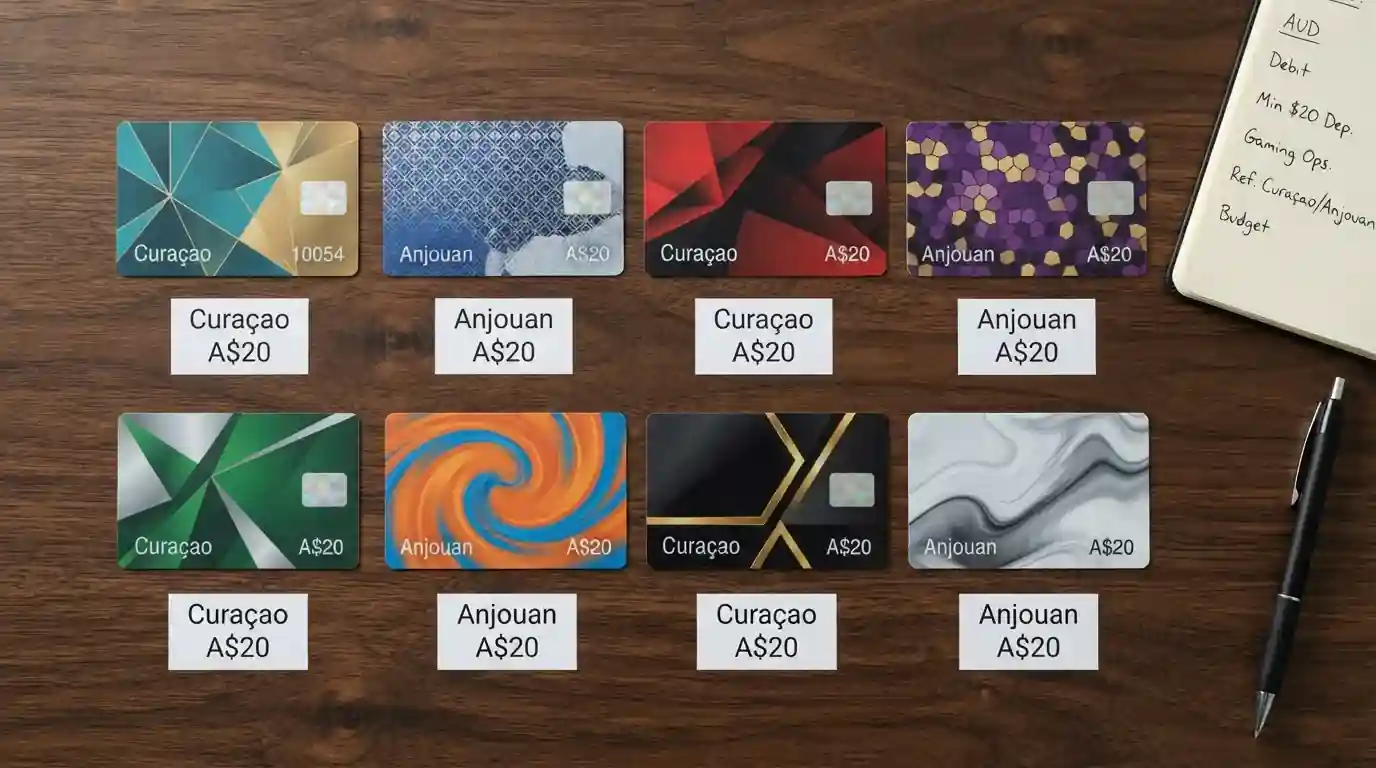
Eight operators accept Mastercard debit deposits from Australians with reasonable reliability as of 2026. They’re all offshore—licensed in Curaçao, Anjouan, or under Caribbean permits—and they all run afoul of the IGA’s prohibition on offering interactive gambling services to people in Australia. The prohibition applies to the operators, not to you: it’s not illegal for an Australian to use these sites, though ACMA does block domains at the ISP level when it catches them. SkyCrown copped a formal warning in 2022 and now operates through mirrors. BitStarz has been under the same enforcement pressure since 2014 and keeps working anyway.
The table below compares the eight on Mastercard-relevant axes: licence jurisdiction, minimum Mastercard deposit, which withdrawal rail they use, whether they process in AUD (avoids FX fees), and game count. All eight accept Mastercard debit. Credit Mastercards face bank-level blocks at most major Australian issuers post-June 2024, which we’ll unpack in the next section.
| Operator | Licence | Min Deposit (Mastercard) | Withdrawal Rail | AUD Support | Game Count |
|---|---|---|---|---|---|
| SkyCrown | Curaçao CGA OGL/2023/176/0095 | A$20 | Standard refund (1–3 days) | Yes | 7,000+ |
| BitStarz | Curaçao CGA OGL/2024/165/0185 | A$20 | Standard refund (1–5 days) | Yes | 4,800+ |
| Fair Go | Curaçao eGaming 5536/JAZ | A$20 | Standard refund (3–5 days) | Yes | 280 (RTG-only) |
| Joe Fortune | Curaçao (number not public) | A$20 | Standard refund (assumed 1–5 days) | Yes | 500+ |
| Roo Casino | Curaçao (number not public) | A$20 | Standard refund (3–5 days) | Yes | 1,500+ |
| Ignition | Curaçao/Caribbean | A$30 | Standard refund (assumed 3–5 days) | Yes | 350+ (casino + poker) |
| Red Dog | Anjouan Gaming Authority | A$10–20 | Standard refund (3–5 days) | Yes | 1,300+ (RTG-only) |
| PlayCroco | Curaçao (number not public) | A$20 | Standard refund (3–5 days) | Yes | ~300 (RTG-only) |
None of these operators support Mastercard Send—the push-payment rail that delivers withdrawals in thirty minutes to two hours—as of the latest cashier checks in 2026. They all fall back to the standard merchant-refund process, which means your withdrawal appears as a transaction reversal on your Mastercard statement and clears in one to five business days depending on your issuing bank. Crypto withdrawals (Bitcoin, Ethereum, USDT) clear faster—ten minutes to two hours once the casino approves the request—if you’re after speed and willing to hold a wallet.
All eight process deposits and account balances in AUD, so you avoid foreign-transaction fees on the way in and the way out. That’s not universal among offshore casinos serving Australians—plenty still run USD or EUR merchant accounts and slug you with a 2–3.5% FX clip on every transaction. The worked cost of that clip is in the AUD Processing section below.
The row order reflects size and provider diversity: SkyCrown and BitStarz lead with the largest multi-provider catalogs, Joe Fortune and Roo sit in the middle with solid variety, Ignition brings the poker network that none of the others have, and Fair Go, Red Dog, and PlayCroco sit together as RTG-exclusive specialists.
Which offshore casinos accept Mastercard debit from Australians?
The eight in the table above. SkyCrown, BitStarz, Joe Fortune, Roo and Ignition run multi-provider platforms; Fair Go, Red Dog and PlayCroco stay RTG-exclusive with tighter catalogues. All hold AUD accounts and accept Mastercard debit. None are Australian-licensed and all are prohibited under the IGA — ACMA blocks their domains when enforcement rotates through.
Eight Casinos Where Your Mastercard Works—Ranked by Reliability
Each breakdown below gives you the operator’s legal entity, licence details, what distinguishes it from the others, and the practical specifics that matter if you’re depositing with a Mastercard: minimum amounts, withdrawal timing, AUD support, game library size. These aren’t advertorial blurbs—we’re surfacing the ownership structures, the regulatory permits, and the operational differences that affect your banking experience.
SkyCrown Casino
SkyCrown operates under Hollycorn N.V., a Curaçao-registered company (number 144359) holding Curaçao Gaming Authority licence OGL/2023/176/0095. The platform went live targeting Australian players with a 7,000-game catalog pulled from dozens of providers, a ten-tier VIP program, and PayID integration for instant AUD banking alongside the usual card and crypto options. ACMA issued a formal warning in 2022 after finding that SkyCrown provided prohibited interactive gambling services to Australian customers, and ISP-level domain blocks followed. Access runs through mirrors as of 2026—the main .com address is unreliable on major Australian ISPs.
The cashier accepts Mastercard debit with a A$20 minimum, and deposits credit instantly once 3D Secure authentication clears. Withdrawals to Mastercard use the standard merchant-refund rail, not Mastercard Send, so you’re looking at one to three business days for the funds to land back on your card. Crypto withdrawals (Bitcoin, Ethereum, USDT) clear faster if you’re set up for it—typically within a couple of hours once KYC verification is done. The welcome package scales across four deposits up to A$8,000 plus 400 free spins, and the VIP structure includes cashback tiers that activate once you’ve run enough volume through the platform. For an offshore operator, the game library is the largest in this comparison set—7,000 titles vs. 1,300 to 4,800 at the others—which either appeals if you like variety or dilutes quality depending on your tolerance for filler slots.
BitStarz
BitStarz has been operating since 2014 under Gareton B.V., a Curaçao entity (registration 160656) holding Curaçao Gaming Authority licence OGL/2024/165/0185. That’s eleven years of continuous operation as of 2026, the longest track record in this list, and the brand built its reputation in the crypto-casino space before fiat rails became standard at offshore sites. The platform runs a dual fiat/crypto model: you can deposit and withdraw in AUD via Mastercard or Neosurf, or you can go full Bitcoin and claim the BTC-denominated bonuses (up to 5 BTC across four deposits instead of the A$2,000 fiat equivalent). The game library sits at 4,800+ titles sourced from over fifty providers—Pragmatic Play, BGaming, NetEnt, Microgaming, and a long tail of smaller studios.
Mastercard debit deposits work with a A$20 minimum (some operator documentation still shows €20, but AUD accounts are supported and the effective floor for Australians is twenty dollars). The 3D Secure flow is straightforward—biometric or SMS code depending on your bank—and funds appear in your account balance within seconds if the authentication succeeds. Withdrawals back to Mastercard take one to five business days via the standard refund process. Crypto withdrawals move faster: ten minutes to an hour for Bitcoin once the casino releases the transaction, which typically happens within a few hours of your withdrawal request if your account is already verified. BitStarz requires KYC at the withdrawal stage, not at signup, so you’ll need to upload ID and proof of address before your first cashout clears.
The distinguishing feature here is the operating history. Most offshore casinos serving Australians in 2026 launched between 2017 and 2020. BitStarz predates that wave by years, weathered multiple ACMA enforcement actions, and still processes Australian deposits without the domain instability that plagues newer operators. That continuity doesn’t make it legal—it’s still a prohibited service under the IGA—but it does make it predictable.
Fair Go Casino
Fair Go launched in 2017 as an RTG-exclusive platform aimed squarely at Australian players, complete with a koala mascot and branding built around the “fair go” idiom. The operator holds a Curaçao eGaming licence—reported as 5536/JAZ in some sources and 8048/JAZ in others, likely a relicensing event or registry-display inconsistency, but confirmed as a single Curaçao jurisdiction either way. The game catalog sits at around 280 titles, all from RealTime Gaming: pokies with RTG’s signature progressive jackpots, a handful of table games, and no live dealer section. If you’re after a multi-provider smorgasbord, Fair Go isn’t it. If you want a focused RTG library without the distraction of 5,000 filler slots, it’s the purist option in this list.
Deposits via Mastercard debit start at A$20, and the platform processes in AUD so there’s no foreign-exchange fee on the transaction. The 3D Secure authentication flow works the same as the others—your bank prompts for biometric or SMS confirmation, and if it clears, your balance updates instantly. Withdrawals to Mastercard follow the standard merchant-refund rail and take three to five business days to land. Crypto withdrawals (Bitcoin, Ethereum) move faster—typically within 24 hours once your account is verified. The welcome package runs up to A$1,000 across five deposits, though some affiliate promotions cite higher figures (up to A$10,000); the variance likely reflects different bonus tiers or time-limited offers, so check the operator’s current terms before depositing.
Fair Go’s appeal is deliberate narrowness. The 280-game catalog is smaller than every other operator in this breakdown by an order of magnitude, but that’s by design: RTG specialists who know the studio’s volatility models and bonus mechanics prefer a tight library they can navigate quickly over a 7,000-title catalog where 6,000 entries are white-label reskins. The koala branding and AUD-first positioning make it clear who the target is—Australian punters who want pokies, not European players who want live baccarat.
Joe Fortune Casino
Joe Fortune runs on a Curaçao licence (specific registry number not published in the operator’s public-facing documentation, standard for mid-tier offshore casinos) and targets Australian players with a multi-provider catalog sourced from Pragmatic Play, BGaming, Betsoft, and RTG. The game library sits at 500-plus titles—some promotional materials claim over 1,000 pokies, but that figure likely includes every variant and reskin as a separate count. The platform supports AUD accounts, accepts Mastercard debit deposits with a A$20 minimum, and offers an entry point as low as A$10 if you use MatchPay (an alternative deposit method that aggregates multiple payment rails).
The cashier flow for Mastercard is standard: you enter your card details, go through 3D Secure authentication with your bank, and if it clears, the deposit lands in your balance within seconds. Withdrawals to Mastercard aren’t explicitly detailed in the operator’s published timing charts, but the standard offshore refund rail applies—assume one to five business days for the funds to reach your card. Crypto withdrawals are faster, typically within 24 hours once KYC verification is complete. The welcome bonus scales up to A$5,000 plus 450 free spins across five deposits, with a notable split: crypto deposits receive a 150% match, while card deposits get 100%. That premium incentivizes Bitcoin or Ethereum funding if you’re comfortable managing a wallet.
Joe Fortune distinguishes itself with MatchPay integration (low-stakes entry at A$10, useful for testing the platform before committing larger amounts) and the crypto-bonus premium. The game library is mid-size—larger than the RTG-only specialists (Fair Go at 280, PlayCroco at ~300) but smaller than the aggregator giants (SkyCrown at 7,000+, BitStarz at 4,800+). The operator has a lower public profile than BitStarz or SkyCrown—no ACMA warning documentation surfaced in the 2026 enforcement records we reviewed—which either means lighter enforcement scrutiny or simply less visibility in the regulatory cycle.
Roo Casino
Roo Casino operates on a Curaçao licence (specific registry number not prominently disclosed, consistent with mid-tier offshore operators) and positions itself with kangaroo branding and AUD-first banking to appeal to Australian players. The game catalog spans 1,500-plus titles from multiple providers, sitting between the RTG specialists (280–300 games) and the mega-aggregators (4,800–7,000). The platform integrates PayID for instant AUD banking—deposit and withdrawal within fifteen minutes when the rail is working smoothly—and accepts Mastercard debit with a A$20 minimum.
Mastercard deposits credit instantly once 3D Secure clears. Withdrawals back to your card use the standard merchant-refund process and take three to five business days. Crypto withdrawals and PayID transfers move faster if you’re set up for either. The welcome package delivers up to A$4,000 plus 200 free spins across three deposits, with a Wheel of Luck spin thrown in as a gamification hook. The distinguishing feature is PayID integration: alongside SkyCrown, Roo is one of the few offshore casinos serving Australians that supports the NPP (New Payments Platform) rail for real-time AUD deposits and withdrawals. If you want to move Australian dollars in and out without touching crypto or waiting for card refunds, PayID is the fastest domestic option, and Roo’s cashier handles it cleanly.
ACMA has applied domain blocks to Roo Casino—the main .com address is unreliable on Australian ISPs as of 2026, and access runs through mirrors. The operator has been processing Australian deposits long enough to show up consistently in affiliate traffic, but the legal status is the same as the rest of this list: prohibited under the IGA, no Australian licence, enforcement risk on the operator’s side, access friction for players via domain blocks.
Ignition Casino
Ignition operates under a Curaçao or Caribbean offshore licence (sources cite “international Curaçao/Caribbean jurisdiction” without a specific registry number) and runs a hybrid poker network plus casino platform. That’s the key differentiator: every other operator in this list is casino-only or casino-primary. Ignition integrates a poker network with cash games, sit-and-gos, and multi-table tournaments alongside the 350-plus casino titles. If you want to play Hold’em or Omaha between pokie sessions, Ignition is the only option in this comparison set that offers both under one account.
The casino game library is the smallest in this list outside the RTG purists—350 titles vs. 1,500–7,000 at the multi-provider aggregators—but the poker network compensates. Mastercard debit deposits work with a minimum in the A$20–30 range (sources vary; the higher figure aligns with typical poker-room minimums). The 3D Secure flow is standard, deposits credit instantly, and withdrawals to Mastercard follow the one-to-five-day refund timeline common across offshore operators. Crypto withdrawals move faster—24 to 48 hours from request to wallet delivery once your account is verified.
The welcome bonus sits at 100% up to A$1,500, lower than the A$4,000–A$12,000 packages at casino-only competitors, but poker-focused players prioritize rakeback and tournament overlays over deposit matches anyway. Ignition’s positioning is niche: it appeals to the crossover audience that wants both poker and pokies in one account rather than maintaining separate balances at a poker room and a casino. The trade-off is a smaller casino catalog and less aggressive casino bonusing. The operator has maintained stable access for Australian players through 2026 without the high-visibility ACMA enforcement actions that hit SkyCrown or BitStarz, though the same IGA prohibition applies.
Red Dog Casino
Red Dog holds an Anjouan Gaming Authority licence, which makes it an outlier in this list—every other operator runs on Curaçao or Caribbean permits. Anjouan is a Comoros Islands jurisdiction in the Indian Ocean, an offshore licensing regime with lower visibility than Curaçao but still a regulatory framework requiring fair-play audits and dispute processes. The platform is RTG-exclusive like Fair Go and PlayCroco, but Red Dog’s catalog is larger: 1,300-plus games, all from RealTime Gaming, vs. 280 at Fair Go and ~300 at PlayCroco. That makes Red Dog the RTG heavyweight in this comparison set—if you want RTG’s progressive jackpots and volatility models without the multi-provider dilution, this is the biggest library available.
Mastercard debit deposits start at A$10 to A$20 depending on which source you check (the lower figure appears in some operator documentation, the higher one is more common in practice). The cashier processes in AUD, so no FX fees on the transaction. Deposits credit instantly after 3D Secure authentication, and withdrawals back to Mastercard take three to five business days via the standard refund rail. Crypto withdrawals are faster—Bitcoin and Litecoin clear within hours once the casino releases the transaction. Red Dog’s published policy states they charge no deposit fees on Mastercard, Visa, Bitcoin, Litecoin, or Flexepin; third-party payment-processor fees may still apply on the bank or gateway side, but the operator doesn’t add a surcharge.
The welcome bonus is the most aggressive in this list: 225% match up to A$8,000–A$12,250 (figures vary across affiliate sources, likely reflecting different promotional tiers). That’s a higher match percentage than the typical 100–200% at other operators, which either signals a competitive acquisition push or flags aggressive wagering requirements in the fine print—check the terms before assuming it’s free money. Red Dog’s Anjouan licence and lower enforcement profile give it less ACMA visibility than the Curaçao majors, but the same IGA prohibition applies, and the operator is just as illegal to offer in Australia as the rest.
PlayCroco Casino
PlayCroco launched in 2019 or 2020 (sources report both years, likely a soft-launch/full-marketing split) as an RTG-exclusive platform with crocodile theming aimed at Australian players. The operator holds a Curaçao licence (specific registry number not publicly disclosed) and runs a catalog of roughly 300 RTG games—the smallest library in this breakdown but comparable to Fair Go’s 280. The platform accepts Mastercard debit with a A$20 minimum for card deposits, but also integrates Apple Pay and Google Pay, which is rare among RTG-only casinos. If your Mastercard is tokenized in your phone’s wallet, you can deposit via Apple Pay or Google Pay and the transaction mirrors your underlying card type—debit works, credit hits the same bank blocks.
Deposits credit instantly once 3D Secure clears. Withdrawals to Mastercard follow the three-to-five-day standard refund process. Crypto and e-wallet methods (Bitcoin, eZeeWallet) move faster. The welcome package runs 200% up to A$5,000 or A$6,000 (promotional variance across affiliate sites), plus a A$50 free bonus and a A$10 no-deposit free chip. That no-deposit chip is a trial-friendly entry point—you can test the platform’s pokies and cashier flow before committing your own funds, though the wagering requirements on the chip are typically steep enough that cashing out is unlikely.
PlayCroco is the youngest operator in this list, which cuts both ways: less operating history means less proof of reliability under payment-processing stress, but it also means a cleaner technical stack without the legacy-gateway baggage that older operators carry. The Apple Pay and Google Pay integration is the standout feature—most RTG-exclusive casinos serving Australians still run card-entry-only cashiers, and PlayCroco’s tokenized-wallet support makes mobile deposits smoother. The downside is the smallest catalog: 300 RTG games is enough if you’re an RTG loyalist, but it’s narrow compared to the 1,300–7,000-title libraries elsewhere in this list.
Debit vs. Credit Mastercard: Why the Distinction Matters in Australia
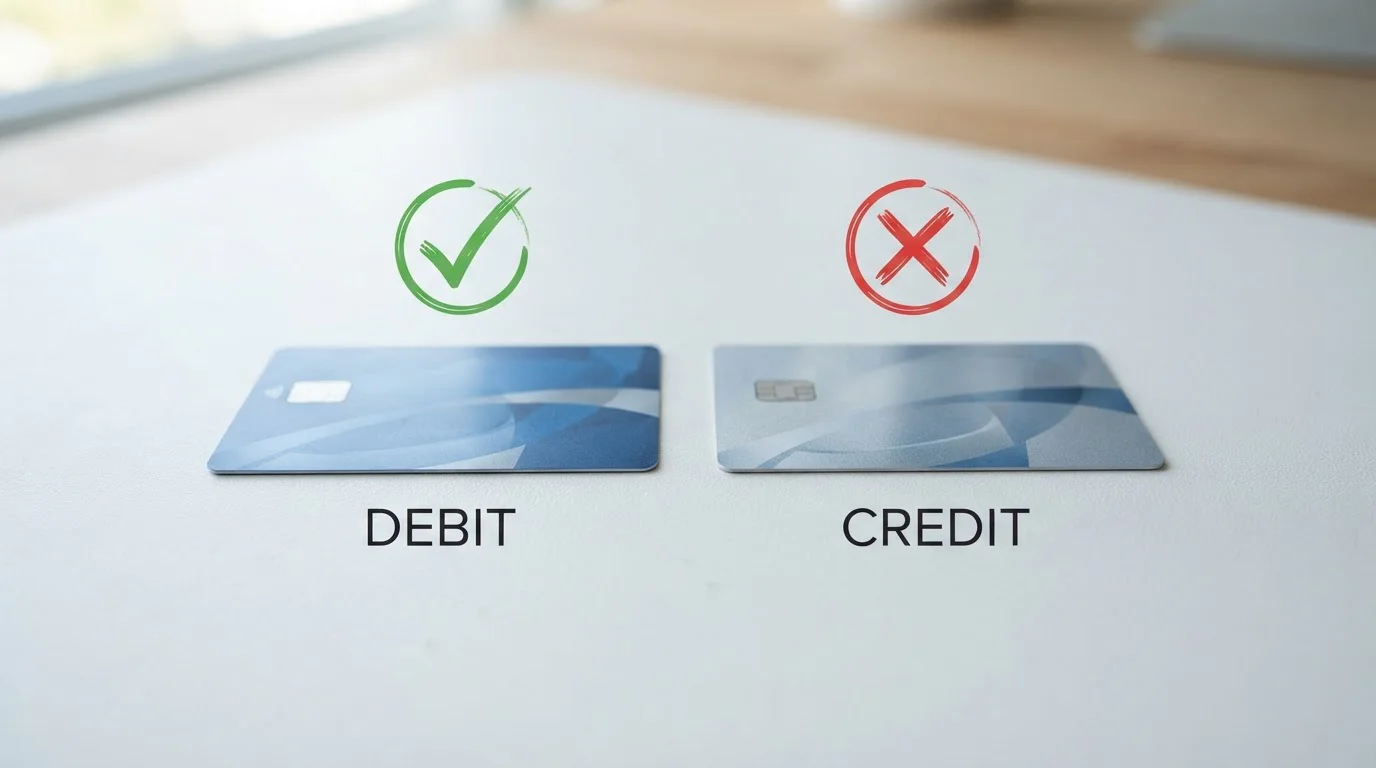
Debit Mastercards work at all eight operators above. Credit Mastercards hit bank-level blocks at most major Australian issuers as of 2026, and when a credit deposit does clear, it’s usually because your bank hasn’t caught up with the merchant-category code (MCC 7995, gambling) yet or the casino’s payment gateway is routing the transaction through a descriptor that doesn’t trigger the block. The distinction isn’t academic—it’s the difference between a deposit that clears in ten seconds and one that bounces before it reaches the casino.
The confusion around credit Mastercards stems from the June 2024 credit-card ban, which amended the Interactive Gambling Act to prohibit credit cards, credit-linked products, and cryptocurrency at Australian-licensed wagering operators. That ban applies to licensed Australian services—sports betting and racing operators regulated by state and territory commissions. It does not apply to offshore casinos, which are prohibited from offering services to Australians under the original IGA but sit outside the credit-ban amendment’s scope because they’re not licensed Australian operators in the first place. The federal law doesn’t stop you from using a credit Mastercard at an offshore casino. Your bank does.
Commonwealth Bank, NAB, Westpac, and ANZ all apply MCC 7995 blocks to credit Mastercard transactions post-June 2024 as discretionary policy, separate from the IGA amendment. The banks frame it as harm minimization—credit cards for gambling extend debt to fund losses—and it aligns with the government’s broader messaging even though the legal mandate only covers licensed operators. The result is that most credit Mastercard deposits to offshore casinos fail at the issuer level before the transaction reaches the payment gateway. Some smaller banks and credit unions haven’t implemented MCC blocks as aggressively, so credit deposits occasionally clear, but the majority of Australian credit Mastercards are blocked for gambling as of 2026.
Debit Mastercards dodge the block because the funds come from your existing deposit account, not a credit line. There’s no debt extension, so the harm-minimization rationale doesn’t apply, and banks generally allow MCC 7995 transactions on debit cards. That’s not universal—some banks apply transaction limits or decline thresholds even for debit—but debit Mastercard acceptance at offshore casinos is broadly reliable as of 2026, while credit acceptance is the exception.
Prepaid Mastercards are a third product type. Acceptance varies by operator: some cashiers accept prepaid cards for deposits, many decline them due to KYC and AML concerns (prepaid cards are harder to tie to a verified cardholder identity). Withdrawal to a prepaid Mastercard is even less reliable—operators often block prepaid cards at the withdrawal stage because of fraud risk and the card’s lifecycle uncertainty (prepaid cards expire, get discarded, or change ownership, and the casino can’t guarantee the withdrawal reaches the original depositor). If you’re using a prepaid Mastercard, expect deposit acceptance to be hit-or-miss and withdrawal support to be rare.
Tokenized Mastercards—Apple Pay and Google Pay, where your phone holds a virtual card number linked to your physical Mastercard—mirror the underlying card type. If your Apple Pay is linked to a Mastercard debit, it behaves like a direct debit-card entry at the casino cashier and usually works. If it’s linked to a Mastercard credit, it hits the same issuer-level MCC blocks. PlayCroco and a few others support Apple Pay and Google Pay explicitly; most offshore casinos still require direct card-number entry and don’t integrate wallet tokens.
The picture across the four Mastercard product types Australian issuers put in circulation is uneven enough to warrant a compact grid—what actually clears at the eight offshore cashiers above, where the bank kills the transaction, and whether the withdrawal leg even works.
| Card Type | Deposit Acceptance (8 ops) | Bank MCC 7995 Block Rate | Refund Withdrawal Support | 3DS Version Typical |
|---|---|---|---|---|
| Mastercard Debit | 8 of 8 accept | Low (rare issuer discretion) | 1–5 day merchant refund clears | 3DS2 frictionless |
| Mastercard Credit | 0–2 of 8 clear in practice | High (CBA, NAB, Westpac, ANZ decline) | Often refused as gambling credit | 3DS2 challenge |
| Mastercard Prepaid | 3–4 of 8 accept, KYC-flagged | Bypassed but AML-flagged | Rarely supported at withdrawal | Legacy 3DS1 common |
| Apple Pay / Google Pay (Debit) | 1 explicit (PlayCroco) | Low (mirrors debit rate) | 1–5 day refund identical to debit | 3DS2 biometric challenge |
The order is deliberate: the further you get from a bank-issued debit card in your own name, the more the offshore cashier and your issuer conspire to bounce the transaction.
Can I use my Mastercard credit card at Australian online casinos?
Not reliably. The June 2024 credit-card ban covers Australian-licensed wagering operators, not offshore casinos — but CBA, NAB, Westpac and ANZ apply MCC 7995 blocks to credit-card gambling as policy anyway. Most credit Mastercards decline at the issuer level. Debit Mastercards clear because the harm-minimisation rationale does not touch funds already in a deposit account.
How Mastercard Deposits Work: 3D Secure, Bank Blocks, and What to Check First
Mastercard deposits at offshore casinos run through a payment gateway that handles tokenization, fraud checks, and 3D Secure authentication before the funds reach your casino balance. The flow is: you enter your card number, expiry, and CVC at the cashier; the gateway initiates a 3D Secure challenge; your bank prompts for authentication (biometric, SMS code, or frictionless approval based on a risk score); if the authentication succeeds, the transaction clears and your balance updates within seconds. If any step fails—your bank declines the transaction, the 3D Secure pop-up doesn’t load, the gateway flags the merchant as high-risk—the deposit bounces and you’re back at the cashier with an error message and no clear explanation of what went wrong.
The two most common failure points are bank-level blocks and 3D Secure friction. Bank blocks happen when your issuer applies an MCC 7995 decline rule (common on credit Mastercards, rare on debit), flags the transaction as suspicious (large deposit, first-time merchant, foreign currency if the casino isn’t processing in AUD), or enforces a transaction limit (some banks cap online gambling deposits at A$1,000 or A$2,000 per transaction). There’s no universal block list—each bank sets its own rules—but if your Mastercard deposit to an offshore casino fails and your account balance hasn’t moved, the decline happened at the issuer level before the transaction reached the gateway.
3D Secure friction is the other failure mode. 3D Secure (branded as “Mastercard Identity Check”) is the authentication layer that asks for a biometric scan, SMS code, or app confirmation during the deposit. The current standard is 3DS2 (EMV 3D Secure 2.0), which supports frictionless authentication: low-risk transactions pass through without prompting the user, based on behavioral and device signals that the issuing bank evaluates in real time. The older standard, 3DS1, always requires a pop-up or redirect to complete authentication, and that pop-up is where deposits die—browser pop-up blockers kill the window before it loads, users close it by accident, or the redirect times out and the transaction fails without a retry option.
Australian banks issue predominantly 3DS2-capable Mastercard debit cards as of 2026. The offshore casinos in this list integrate 3DS2 gateways to varying degrees: newer operators (PlayCroco, launched 2019–2020) run modern gateways with full 3DS2 support, while older operators (BitStarz, since 2014) may still route some transactions through legacy 3DS1 processors depending on which payment gateway handles the transaction. If your Mastercard deposit fails with a message like “authentication incomplete” or “3D Secure error,” the failure likely happened at the 3DS stage—either the pop-up didn’t load (3DS1 gateway, pop-up blocker active) or your bank declined the authentication challenge (3DS2 gateway, risk score too high).
Before depositing with a Mastercard at an offshore casino, check: (1) Is your card debit or credit? Credit hits blocks; debit works. (2) Have you deposited at this operator before? First-time transactions trigger stricter fraud checks. (3) Is your browser allowing pop-ups from the casino domain? 3DS1 gateways need the pop-up to load. (4) Is your bank’s mobile app or SMS working? 3DS2 may send an in-app push notification or SMS code. (5) Are you depositing in AUD? If the casino processes in USD or EUR, your bank may decline the foreign-currency transaction or apply an FX fee and a higher fraud threshold.

Why was my Mastercard deposit declined at an online casino?
Bank-level block or 3D Secure failure. Credit Mastercards hit MCC 7995 blocks from the big four banks. On debit, check whether the bank flagged it as suspicious, whether the 3DS pop-up loaded (older 3DS1 gateways get killed by pop-up blockers), whether you completed the biometric challenge, and whether the amount tripped a per-transaction cap.
What is 3D Secure and why does my Mastercard transaction need authentication?
3D Secure (Mastercard Identity Check) verifies you own the card during an online transaction. The gateway triggers a challenge, your bank prompts for biometrics, an SMS code or an app confirmation. 3DS2 approves low-risk transactions frictionlessly; the older 3DS1 always needs a pop-up, which is where legitimate deposits die when browsers block the window.
Mastercard Withdrawals: Speed, Rails, and the Mastercard Send Difference
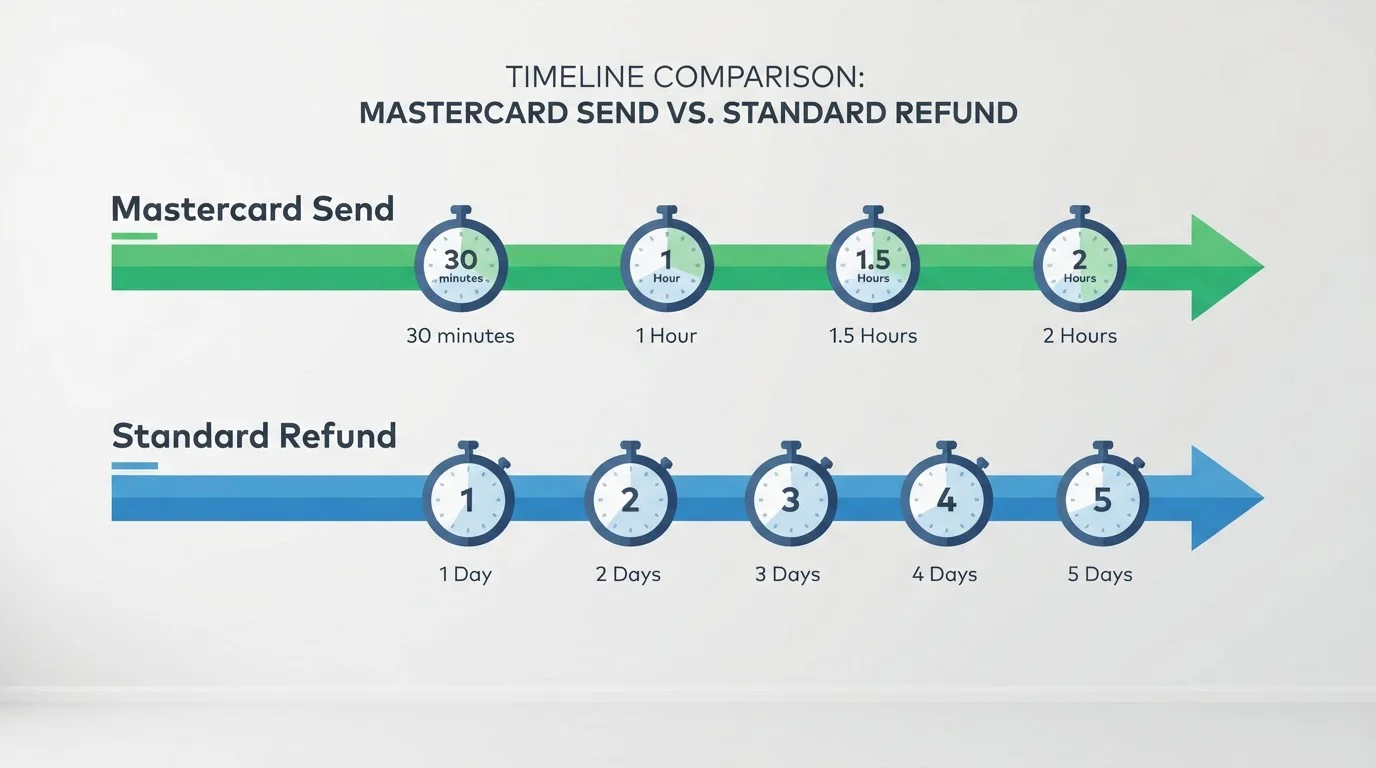
Withdrawals from offshore casinos back to your Mastercard take anywhere from thirty minutes to five business days depending on which payment rail the casino uses and whether your card is debit or credit. The fast option is Mastercard Send, a push-payment product where the casino initiates a direct credit to your card account in real time and the funds land within thirty minutes to two hours. The slow option is the standard merchant refund, where the withdrawal appears as a transaction reversal on your Mastercard statement and clears in one to five business days depending on your issuing bank’s processing schedule. None of the eight casinos in this breakdown support Mastercard Send as of 2026—they all use the standard refund rail—so you’re looking at a multi-day wait for Mastercard withdrawals regardless of which operator you’re cashing out from.
Mastercard Send is a push-payment rail, not a refund. The casino (or its payment processor) sends funds directly to your card account using Mastercard’s real-time settlement network, and the transaction is distinct from the original deposit—it shows as a new credit on your statement, not a reversal of a previous charge. Casinos that support Mastercard Send can deliver withdrawals in thirty minutes to two hours once they approve your request, assuming your issuing bank supports incoming Mastercard Send credits (most Australian banks do as of 2026, but some smaller credit unions don’t). The catch is that Mastercard Send requires gateway integration and higher payment-processing fees for the casino, so offshore operators serving Australians have been slow to adopt it. As of the cashier checks we ran in 2026, none of the eight operators above offer Mastercard Send withdrawals—they all fall back to the standard refund process.
Standard merchant refunds work like this: you request a withdrawal at the casino cashier, the casino processes it (anywhere from instant approval to 48-hour pending depending on their internal checks), the payment processor initiates a refund to the original deposit transaction, and your issuing bank clears the refund in one to five business days. The withdrawal shows as a transaction reversal on your Mastercard statement—if you deposited A$100 and you’re withdrawing A$150, the statement may show the original A$100 charge disappearing and a separate A$150 credit landing, or it may show a net A$50 credit depending on how your bank displays refunds. The timing is slower than Mastercard Send because the refund has to route through the card network’s standard clearing cycle, and your bank processes refunds on a batch schedule (usually once per business day).
Debit Mastercards are more reliable for withdrawals than credit Mastercards. Some Australian credit-card issuers block incoming gambling credits as policy—separate from the deposit-side MCC 7995 blocks—on the theory that credits to a credit card reduce the outstanding balance and could be used to launder funds or evade lending limits. If your Mastercard is a credit card and a withdrawal request from an offshore casino fails, that’s the likely reason. Debit Mastercards don’t face that restriction because the withdrawal simply credits your deposit account. If you deposited with a credit Mastercard before the June 2024 bank blocks took effect and now you’re trying to withdraw, consider switching to a debit Mastercard for the withdrawal or using crypto instead—Bitcoin and Ethereum withdrawals from offshore casinos clear in ten minutes to two hours once the casino releases the transaction, faster than either Mastercard rail.
Prepaid Mastercards are unreliable for withdrawals. Many offshore casinos decline prepaid cards at the withdrawal stage due to fraud risk (prepaid cards are harder to verify, they expire, and there’s no guarantee the card is still active when the casino tries to push the withdrawal). If you deposited with a prepaid Mastercard, the casino may force you to withdraw via a different method—usually Bitcoin or a bank transfer—which adds KYC friction (you’ll need to verify a wallet address or a bank account that wasn’t used for the deposit).
How long do Mastercard withdrawals take at offshore casinos?
One to five business days on the standard merchant-refund rail, which is what all eight casinos here use. The casino approves within instant-to-48 hours, the processor pushes a refund to your card, and your bank clears it in the batch cycle. Median at the big four Australian banks: around three days.
What is Mastercard Send and does it make withdrawals faster?
Mastercard Send is a push-payment product that pushes real-time credits directly to your card, bypassing the refund process. Withdrawals land in 30 minutes to 2 hours instead of one to five business days. Gateway integration is pricier for the operator, so none of the eight casinos in this breakdown offer it in 2026.
AUD Processing vs. Foreign Currency: The Hidden FX Cost
All eight casinos in this breakdown process deposits and account balances in AUD, so you avoid foreign-transaction fees when you deposit or withdraw with a Mastercard. That’s not universal. Plenty of offshore casinos serving Australians still run USD or EUR merchant accounts, and when you deposit A$100 at a USD-processing casino with an Australian Mastercard, here’s what actually happens: the casino charges $67 USD (or whatever the AUD-to-USD spot rate gives them); your Australian bank sees a foreign-currency transaction, applies its FX conversion to turn the $67 USD back into AUD, adds a foreign-transaction fee (typically 2–3.5% of the transaction value), and debits your account. You deposited A$100 to play, but your statement shows A$103 to A$104 gone, and the A$3–4 difference is the roundtrip FX cost—conversion on the way out, conversion on the way in, and the bank’s margin on both legs.
Work through a concrete example. You’re depositing A$100 at an offshore casino that processes in USD. The AUD-to-USD spot rate today is 0.67 (one Australian dollar buys 67 US cents). The casino’s payment gateway charges your Mastercard $67 USD. Your bank—let’s say Commonwealth Bank—receives a $67 USD authorization, converts it at the prevailing rate (which for retail FX at Australian banks is typically the spot rate plus a 0.5–1% spread), and adds the foreign-transaction fee listed in your card’s terms (2.5% for most CBA consumer Mastercards as of 2026). The math: $67 USD at 0.67 becomes A$100 at spot, the bank’s FX spread adds another A$0.75 to A$1.50, and the 2.5% foreign-transaction fee adds A$2.50 to A$2.60. Total debit: A$103 to A$104. When you withdraw your winnings, the same FX friction applies in reverse—if you’re cashing out A$200, the casino pays you $134 USD, your bank converts it back to AUD with the same spread and fee, and you receive A$196 to A$197 in your account. Roundtrip cost on a A$100 deposit / A$200 withdrawal cycle: A$6 to A$8 in FX drag.
Casinos that process in AUD avoid this entirely. Your Mastercard is charged A$100, your bank sees a domestic-currency transaction with no conversion, no foreign-transaction fee applies, and your account is debited exactly A$100. Withdrawals work the same way: the casino refunds A$200 to your Mastercard, your bank credits A$200, no FX friction. The operators in this breakdown—SkyCrown, BitStarz, Fair Go, Joe Fortune, Roo, Ignition, Red Dog, PlayCroco—all hold AUD merchant accounts and process Mastercard transactions in Australian dollars, which is why they show up in the table with “AUD Support: Yes.” That’s a meaningful cost difference if you’re depositing and withdrawing regularly: A$500 in deposits over a month at a USD-processing casino costs you A$15 to A$20 in FX fees; at an AUD-processing casino, it costs you zero.

If you’re choosing between two offshore casinos and one processes in AUD and the other in USD, the AUD option is cheaper by default unless the USD casino offers a significantly better bonus or game selection that offsets the FX drag. Check the cashier before depositing: if the deposit page shows amounts in USD, EUR, or any currency other than AUD, you’re paying FX fees on every transaction even if the casino’s marketing claims it “accepts Australians.”
Do I pay foreign transaction fees when depositing with Mastercard at offshore casinos?
Only if the casino processes in a foreign currency. All eight operators here settle in AUD, so a A$100 deposit is charged as A$100 with no conversion. A USD-processing casino charges around $67 USD, your bank converts and adds a 2%–3.5% foreign-transaction fee, and the round trip clips A$6–A$8 off a A$100/A$200 cycle.
Pokies, Live Dealer, and Game Variety with Mastercard
Game variety at the eight Mastercard-accepting casinos ranges from 280 RTG-exclusive pokies at Fair Go to 7,000-plus titles across dozens of providers at SkyCrown. The multi-provider platforms—SkyCrown, BitStarz, Joe Fortune, Roo, Ignition—pull games from Pragmatic Play, BGaming, Betsoft, NetEnt, Microgaming, and a long tail of smaller studios, which gives you access to the current crop of high-RTP slots (Sugar Rush, Gates of Olympus, Sweet Bonanza, The Dog House Megaways) alongside table games, live dealer, and video poker. The RTG specialists—Fair Go, Red Dog, PlayCroco—stick to RealTime Gaming’s catalog exclusively, which means progressive jackpots like Megasaur and Spirit of the Inca, classic RTG volatility models, and no live dealer section.
Live dealer is available at SkyCrown, BitStarz, Joe Fortune, and Roo via providers like Evolution, Ezugi, and Pragmatic Play Live. The RTG-only casinos (Fair Go, Red Dog, PlayCroco) don’t offer live dealer because RTG doesn’t produce live-streamed table games—RTG’s catalog is RNG pokies and virtual table games only. Ignition has live dealer blackjack and roulette but emphasizes its poker network over the live casino. If live baccarat or Lightning Roulette is a priority, SkyCrown and BitStarz are the strongest options in this list; if RTG’s progressive jackpots and high-variance slots are your preference, Fair Go, Red Dog, and PlayCroco deliver the deepest RTG libraries.
Pokies dominate every catalog. Even the smallest library (Fair Go at 280 games) dedicates 250-plus titles to slots, with table games and video poker as supplementary options. The mega-aggregators (SkyCrown at 7,000+, BitStarz at 4,800+) include hundreds of branded and licensed slots, Megaways variants, grouped-symbol wins, and every volatility tier from low (base-game grinders) to extreme (bonus-buy slots with 50,000x max wins). The RTG catalogs are narrower but deeper in specific niches: RTG’s Real Series progressives link across operators, so the Megasaur jackpot you see at Fair Go is the same pool feeding Red Dog and PlayCroco.
Your Mastercard works the same regardless of which game you’re playing—deposit A$20, play pokies or live blackjack or video poker, and withdraw via the same Mastercard refund process. Game selection is independent of payment method. The only payment-related consideration is bonus eligibility: some casinos exclude live dealer or table games from bonus wagering, so if you’re claiming a Mastercard deposit bonus, check the terms to see which games count toward the playthrough requirement.
Bonuses, Free Spins, and Minimum Deposits with Mastercard
Welcome bonuses at Mastercard-accepting offshore casinos range from 100% match up to A$1,500 (Ignition) to 225% match up to A$12,250 (Red Dog). Most operators scale the bonus across three to five deposits: you claim a match on your first deposit, a smaller match on the second, and so on until you’ve worked through the package. Free spins are bundled with most welcome offers—SkyCrown includes 400 free spins across four deposits, BitStarz adds 180 spins, Fair Go includes 100 spins, and PlayCroco throws in a A$10 no-deposit free chip before you’ve funded the account.
Mastercard deposits qualify for bonuses at all eight casinos, but bonus terms vary by payment method at some operators. Joe Fortune offers a 150% match for crypto deposits vs. 100% for Mastercard, incentivizing Bitcoin or Ethereum funding. Most other operators treat Mastercard and crypto equally for bonus purposes. Check the fine print: wagering requirements range from 30x to 50x (you need to wager thirty to fifty times the bonus amount before you can withdraw winnings), and some bonuses exclude certain games from the playthrough (live dealer and table games often don’t count, or count at reduced rates like 10–20%).
Minimum deposits with Mastercard sit at A$20 for most operators in this list (SkyCrown, BitStarz, Fair Go, Joe Fortune, Roo, PlayCroco). Ignition is slightly higher at A$30. Red Dog goes as low as A$10 in some sources, though A$20 is more common in practice. Crypto minimums are generally lower—A$10 for Bitcoin or Ethereum at most of these casinos—if you want a smaller entry point. The minimum to *activate* a welcome bonus is usually the same as the general minimum deposit (A$20), but some bonuses set higher thresholds (e.g., “deposit A$50 or more to claim the 200% match”).
Reload bonuses and ongoing promotions vary by operator. SkyCrown runs a ten-tier VIP program with cashback that scales as you climb the levels. BitStarz offers weekly reload bonuses and tournaments. Fair Go, Red Dog, and PlayCroco lean into RTG’s random jackpot promotions and daily/weekly bonus codes. Roo includes a Wheel of Luck spin as part of the welcome package. Ignition focuses on poker promotions (rakeback, tournament overlays) more than casino reload bonuses. If you’re depositing with Mastercard regularly, check each casino’s promotions page—reload bonuses on Mastercard deposits can add 50–100% to your balance once or twice a month if you time the codes.
What is the minimum deposit with Mastercard at Australian-friendly casinos?
A$20 at most of the eight — SkyCrown, BitStarz, Fair Go, Joe Fortune, Roo and PlayCroco all set that floor. Ignition sits at A$30. Red Dog advertises A$10 in some materials but A$20 is common in practice. Crypto minimums drop to around A$10. Some welcome bonuses set higher entry thresholds.
The Legal Reality: No Australian Casino Licences, ACMA Enforcement, and What It Means for You
Online casino gaming—pokies, table games, live dealer—is a prohibited interactive gambling service in Australia under the Interactive Gambling Act 2001. The prohibition applies to *operators*, not *players*. It is illegal for a company to offer online casino services to people physically located in Australia. It is not illegal for an Australian to use those services. The IGA criminalizes the supply, not the consumption, which is why ACMA enforcement targets offshore operators (domain blocks, formal warnings, financial-services pressure) rather than individual Australians who deposit at Curaçao-licensed casinos.
No Australian state or territory issues online casino licences. The Northern Territory Racing Commission issues online wagering licences for sports betting and racing, but not for casino gaming. Victoria, New South Wales, Queensland, and the other states license land-based casinos (Crown Melbourne, The Star Sydney, Treasury Brisbane, SkyCity Adelaide), but none of those licences extend to online pokies or table games. When an offshore casino’s marketing claims it’s “licensed and legal in Australia,” that’s either a lie (no such licence exists) or confusion (they hold a Curaçao or Malta licence, which permits *them* to operate internationally but does not make them legal under Australian law).
ACMA enforces the IGA through domain blocking and financial-services disruption. When ACMA identifies an offshore casino serving Australians, it can issue a formal warning to the operator, apply for court orders to block the casino’s domains at the ISP level (Telstra, Optus, TPG all comply with ACMA blocking notices), and pressure payment processors to cut off the casino’s banking rails. SkyCrown received an ACMA warning in 2022 and now operates through mirror domains because the main .com address is blocked on Australian ISPs. BitStarz has been under similar enforcement pressure since 2014 and works around it the same way. The other operators in this list—Fair Go, Joe Fortune, Roo, Ignition, Red Dog, PlayCroco—have lower ACMA visibility as of 2026, either because they’re newer, smaller, or fly under the enforcement radar, but the same IGA prohibition applies to all of them.
The legal risk sits on the operator’s side, not yours. ACMA has never prosecuted an individual Australian for depositing at an offshore casino. The penalty provisions in the IGA target companies that provide prohibited services, not customers who use them. That doesn’t mean using offshore casinos is “legal”—it means enforcement is asymmetric, aimed at supply rather than demand. The practical risk for you is access (domain blocks, which you work around with mirrors or VPNs) and consumer protection (if an offshore casino refuses to pay your winnings, you have no Australian legal recourse—your only option is the dispute process under the casino’s Curaçao or Anjouan licence, which is slower and less enforceable than an Australian court order).

Curaçao and Anjouan licences are offshore gaming permits issued by jurisdictions that regulate remote gambling. Curaçao Gaming Authority (CGA) and Curaçao eGaming are the two licensing bodies in Curaçao, each issuing licences to operators that pass technical audits, hold segregated player funds, and commit to dispute resolution. Anjouan Gaming Authority (Comoros Islands) operates similarly. These licences are not recognized by Australian law—holding a Curaçao licence doesn’t make an operator legal in Australia under the IGA—but they do impose some regulatory framework on the operator: fair RNG audits, financial reporting, and a dispute mechanism if you have a withdrawal issue. The enforcement strength of offshore licences is weaker than Australian state gambling regulators, but it’s better than operating with no licence at all.
Are Mastercard deposits at offshore casinos safe and secure?
Technically safe, legally grey, and zero Australian consumer protection. Deposits use 3D Secure, gateway encryption and tokenisation, the same layers as any online card payment. The legal risk is separate: offshore casinos are prohibited under the IGA, ACMA blocks their domains, and if the operator refuses to pay, no Australian court will enforce your claim.
Mastercard Alternatives: When Your Card Won’t Work
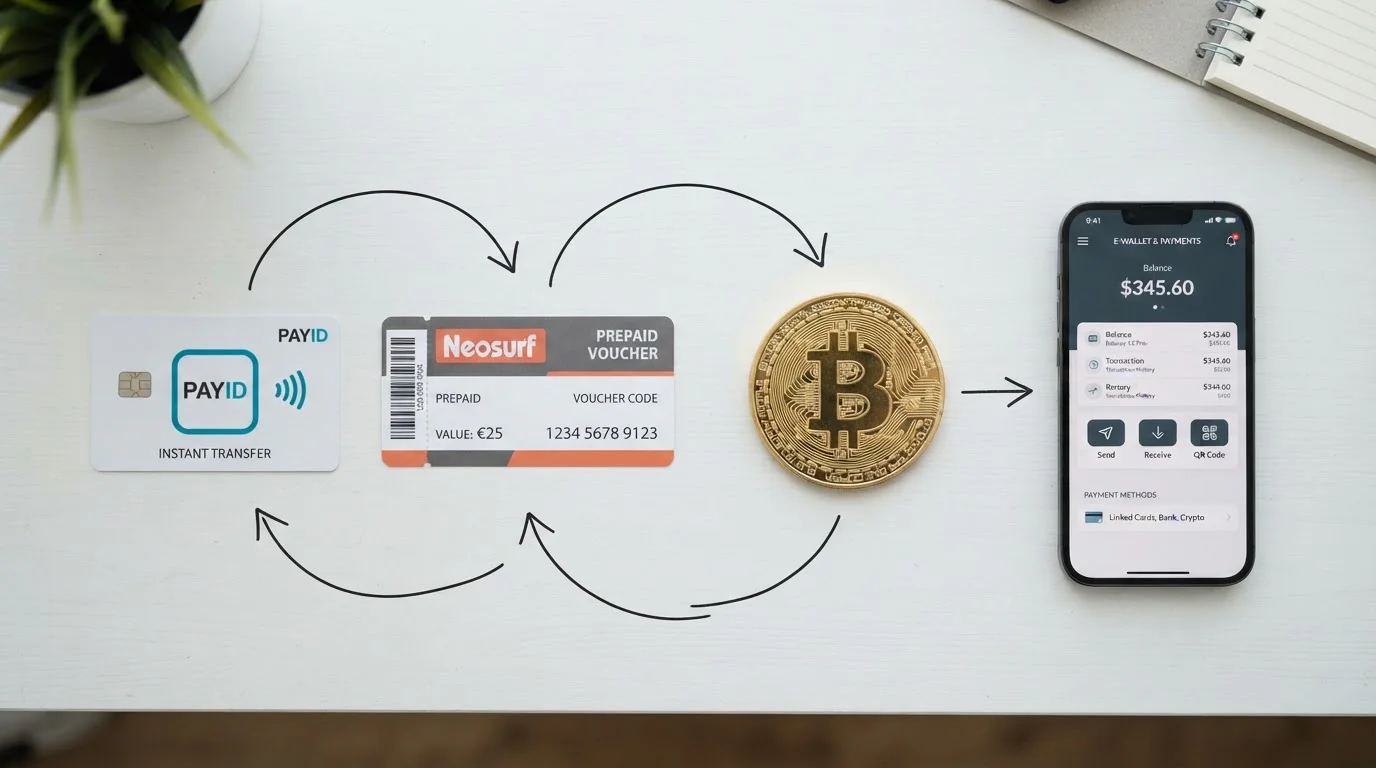
If your Mastercard deposit fails—credit card blocked by your bank, 3D Secure pop-up won’t load, foreign-transaction fee you’re not willing to pay—four alternatives work at most offshore casinos serving Australians: PayID for instant AUD banking, Neosurf for voucher deposits, crypto for the fastest withdrawals, and e-wallets like eZeeWallet for a middle ground between cards and crypto.
PayID is the fastest domestic option. It’s the real-name addressing layer on Australia’s New Payments Platform (NPP), and casinos that integrate it can accept deposits and pay withdrawals in real time over the domestic banking rails. SkyCrown and Roo both support PayID. You deposit A$100 from your Australian bank account via PayID, the casino receives it within seconds, and when you withdraw, the funds land in your account in under fifteen minutes if the casino’s NPP integration is working cleanly. No FX fees, no card decline risk, no multi-day refund wait. The catch: PayID adoption among offshore casinos is still limited—only a handful of the Curaçao licensees serving Australians have integrated the NPP rail as of 2026.
Neosurf is a prepaid voucher you buy at newsagents, petrol stations, and convenience stores across Australia. You purchase a voucher for a fixed AUD amount (A$10, A$50, A$100, or custom denominations up to A$500 at some retailers), receive a 10-digit code, and enter that code at the casino cashier to fund your balance. No card details, no bank transaction, no 3D Secure friction. The downside: Neosurf is deposit-only—you can’t withdraw to a Neosurf voucher, so you’ll need a separate method (Mastercard refund, crypto, bank transfer) to cash out. All eight casinos in this breakdown accept Neosurf deposits, and minimums are usually lower than Mastercard (A$10 vs. A$20).
Crypto—Bitcoin, Ethereum, USDT—is the fastest withdrawal method at offshore casinos and bypasses all the card-network friction. You deposit via a wallet address, the casino credits your balance once the blockchain confirms (10–30 minutes for Bitcoin, under 10 minutes for Ethereum or USDT on fast chains), and when you withdraw, the funds land in your wallet in 10 minutes to 2 hours once the casino releases the transaction. No bank involvement, no FX fees if you hold AUD-pegged stablecoins, no MCC blocks. The catch: you need to set up and manage a crypto wallet, understand gas fees and network congestion, and handle the tax implications (ATO treats crypto gambling wins as assessable income). If you’re depositing and withdrawing regularly, crypto is faster and cheaper than Mastercard refunds, but the learning curve is steeper.
eZeeWallet and similar e-wallets (Jeton, MuchBetter) sit between cards and crypto. You fund the e-wallet via bank transfer or card, then use the e-wallet balance to deposit at the casino. Withdrawals land in your e-wallet instantly or within hours, and you transfer the e-wallet balance back to your bank account separately. E-wallets add an extra step but bypass some of the bank-block risk—your bank sees a transfer to eZeeWallet, not a direct gambling transaction—and withdrawals are faster than Mastercard refunds. PlayCroco accepts eZeeWallet explicitly; the others support it variably. Minimums are often lower (A$10 for eZeeWallet vs. A$20 for Mastercard).
Can I use Apple Pay or Google Pay (linked to Mastercard) at offshore casinos?
Yes, if the operator supports wallet tokens and the underlying Apple Pay or Google Pay card is a Mastercard debit. PlayCroco accepts both; most others still need direct card entry. Tokenised cards mirror the underlying product — debit clears, credit hits the same MCC 7995 blocks. Face ID or Touch ID handles the 3DS challenge.
Casino Deposit Methods Australia 2026 — Full Comparison
Content created by the «Payment Methods Online» team