
E-Wallet Pokies Australia 2026: Which Sites Accept Them and What They Actually Cost
 Available in AU

The offshore pokies market runs on PayID and crypto now. Walk through any AU-facing casino cashier in 2026 and you’ll see instant bank transfers front and centre, Bitcoin a click away, and e-wallets—if they appear at all—buried three rows down next to prepaid vouchers and bank wires.
That wasn’t always the case. Skrill and Neteller used to anchor the international gambling payments stack, back when cards worked everywhere and PayPal hadn’t yet walked away from offshore operators. Then Australia’s credit card ban landed in June 2024, the New Payments Platform made real-time bank transfers trivial, and the old e-wallet model—sign up for another account, fund it from your card, cops a currency conversion fee coming and going—stopped making sense for a market that could move AUD instantly without an intermediary.
E-wallets still work. They’re just no longer the default. This guide identifies which offshore pokies sites accept which e-wallet brands for Australian players, what they cost in practice, and why you might pick one over PayID or crypto despite the narrower acceptance and higher fees. No affiliate spin, no “convenient and secure” filler—just the applied map of what actually functions in 2026 and what it costs you to use it.
E-Wallets for Australian Pokies: What Works in 2026
An e-wallet is a stored-value account you fund from your bank or card, then use to deposit at casinos without sharing your underlying payment details every time. Think of it as a buffer: you move money from your bank into the e-wallet once, then the e-wallet talks to the casino, and when you withdraw the casino sends funds back to the e-wallet. From there you pull the money back to your Australian bank account whenever you want.
Five e-wallet brands have measurable presence at offshore operators targeting Australians in 2026: Skrill, Neteller, ecoPayz (rebranded Payz in 2022 but still recognized under both names), MiFinity, and eZeeWallet. PayPal—the one name most people know—is largely absent, and that absence tells you something important about how offshore gambling payments actually work.
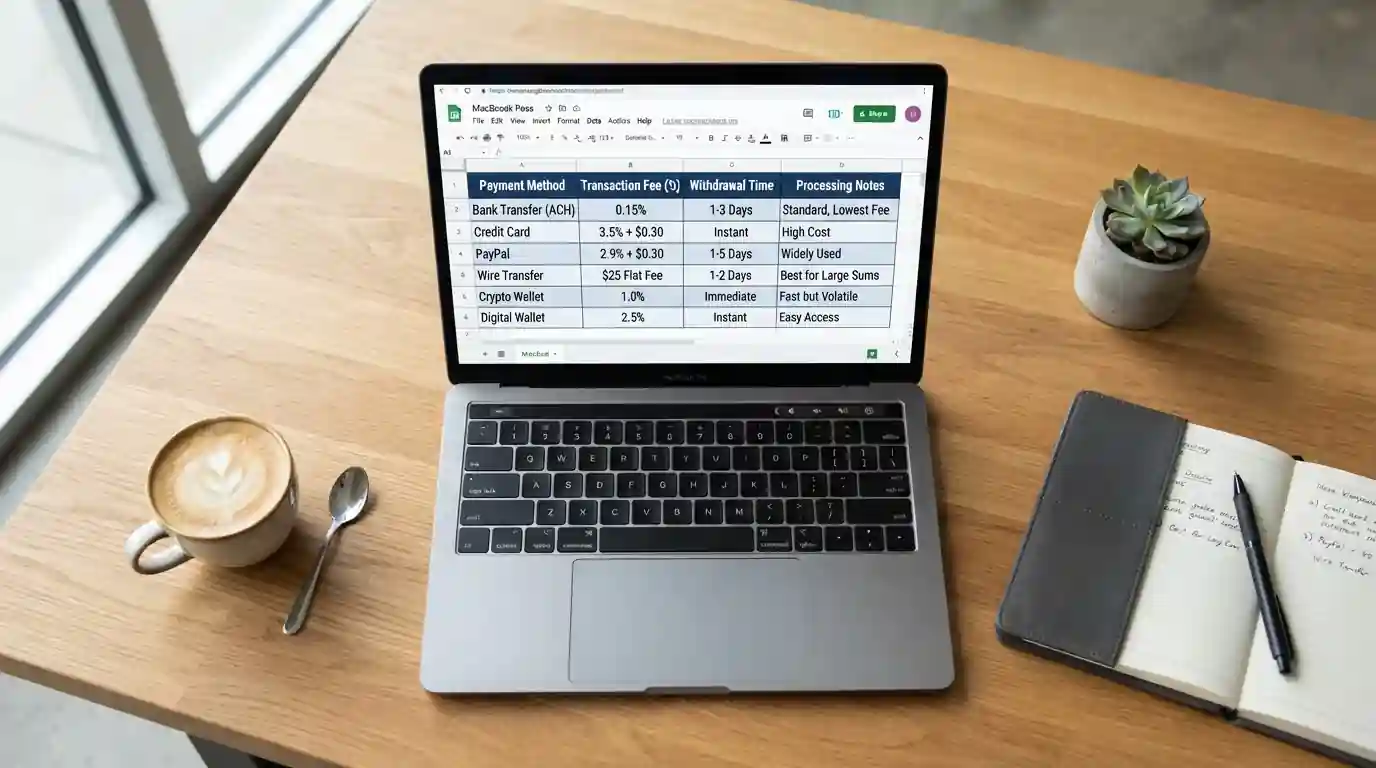
| E-Wallet | Deposit Speed | Withdrawal Speed | E-Wallet-to-Bank Fee | FCA Regulated | AUD Native Account | Confirmed AU Operators |
|---|---|---|---|---|---|---|
| Skrill | Instant | 0–24 hours | 5.5% | Yes | No (USD/EUR base) | Boomerang-bet, Neon54, Koru Casino |
| Neteller | Instant | 0–24 hours | 3.99% | Yes | No (USD/EUR base) | Boomerang-bet, Neon54, Koru Casino |
| ecoPayz (Payz) | Instant | 0–24 hours | 1–3% | Yes | Optional AUD | Boomerang-bet, selective |
| MiFinity | Instant | 0–24 hours | ~2–3% | Yes (FCA+MFSA) | Unclear | Wild Tokyo, Boomerang-bet, Koru, widespread |
| eZeeWallet | Instant | 0–24 hours | 1.5% | Yes | Yes (AUD native) | Wild Tokyo, growing acceptance |
| PayPal | N/A | N/A | N/A | Yes | Yes | Largely unavailable |
Skrill
Skrill is the older half of the Paysafe Group e-wallet duo, founded in 2001 as Moneybookers and rebranded a decade later. It’s FCA-regulated in the UK, holds client funds in segregated accounts, and operates in 120-plus countries including Australia. Deposits at casinos land instantly. Withdrawals from the casino back to your Skrill account clear in under 24 hours once the operator approves the payout.
The catch is the round-trip cost. Moving money from Skrill to your Australian bank account costs 5.5 percent, and if your Skrill account runs on a USD or EUR base currency—most do—you’ll pay an additional 1.5 to 3.99 percent foreign exchange spread when AUD enters or leaves the wallet. Add those layers together and a withdrawal that looked like 500 AUD at the casino becomes 450-something by the time it lands in your CommBank account. Skrill’s main appeal is familiarity and the Paysafe brand, but the fee structure makes it the most expensive option on this list unless you’re cycling funds back into another casino without touching your bank account in between.
Confirmed acceptance: Boomerang-bet lists it explicitly alongside Neteller. Neon54 supports it. Koru Casino’s cashier shows it. Elsewhere—sparse.
Neteller
Neteller is Skrill’s sister brand under the same Paysafe roof, launched in 1999 and carrying the same FCA authorization. The mechanics are identical: instant casino deposits, sub-24-hour withdrawals, segregated client funds, two-factor authentication. The difference is the fee: 3.99 percent to pull money from Neteller back to your bank account, a meaningful 1.5-point drop from Skrill’s 5.5.
Neteller also offers the Net+ Mastercard, which lets you spend directly from your Neteller balance without withdrawing to your bank first. That’s useful if you’re planning to keep some funds in the e-wallet ecosystem rather than cashing out every time. For Australians cycling between offshore operators, Neteller’s lower exit fee makes it the more rational pick over Skrill, assuming both are listed at your target site. The FX margin still applies if your account is USD- or EUR-denominated, so you’re still paying for the convenience of not using a local rail.
Where it works: same three confirmed operators as Skrill—Boomerang-bet, Neon54, Koru. Katsubet (per independent testing in late 2026) clears Neteller withdrawals in under 60 minutes, faster than PayID’s typical 1–6 hour operator processing window. That speed advantage is the only concrete reason to bother with an e-wallet over Australia’s domestic instant bank transfer standard.
ecoPayz (Payz)
PSI-Pay Ltd operates this one out of the UK under FCA regulation. The rebrand from ecoPayz to Payz rolled out in 2022, so depending on which casino cashier you’re looking at you’ll see one name or the other—they’re the same service. ecoPayz offers optional AUD-denominated accounts, which eliminates the foreign exchange spread that eats into Skrill and Neteller transactions. Withdrawal fees run 1 to 3 percent depending on your account tier, landing somewhere between eZeeWallet’s 1.5 and Neteller’s 3.99.
The ecoCard Mastercard works like Neteller’s Net+, giving you a way to spend the balance without a bank withdrawal. Two-factor authentication and KYC verification follow the same pattern as the Paysafe brands. The main weakness is acceptance: ecoPayz shows up at Boomerang-bet in the research, but its footprint at other AU-facing operators is thinner than MiFinity or eZeeWallet. That makes it a viable option if your casino lists it, but not something you can count on finding everywhere.
The AUD account option is the selling point. If you can fund it directly in Australian dollars and the casino processes in AUD, you’ve cut one conversion step out of the loop. Check the fine print—some operators force a USD intermediary even when both your bank and your e-wallet speak AUD, and at that point you’ve gained nothing.
MiFinity
MiFinity runs under dual regulation: UK FCA and Malta MFSA. It’s a newer player than the Paysafe brands, but it carved out a niche as the go-to PayPal alternative after PayPal tightened its gambling policies in 2023 and 2024. Deposits instant, withdrawals typically under 24 hours, MiFinity-to-bank fees around 2 to 3 percent—lower than Skrill, roughly in line with Neteller. MiFinity also sells eVouchers, which are prepaid gambling tokens you can buy and redeem at participating operators without linking a bank account directly.
MiFinity’s real advantage is acceptance. Wild Tokyo lists it. Boomerang-bet lists it. Koru Casino lists it. The research turned up MiFinity at more AU-facing operators than any other e-wallet except possibly eZeeWallet. If you’re shopping for an e-wallet specifically because your preferred casino doesn’t support PayID or you want a layer of separation between your bank statement and your gambling transactions, MiFinity is the brand with the widest operator coverage in 2026.
The dual FCA-MFSA licensing adds a veneer of regulatory credibility that matters when you’re parking funds in an intermediary account. Whether MiFinity offers native AUD accounts isn’t clear from public documentation—assume USD base unless the signup flow explicitly says otherwise, which means you’re still eating an FX margin on the round trip.
eZeeWallet
emerchantpay Ltd operates eZeeWallet out of the UK under FCA regulation. It was purpose-built for gambling transactions, so there’s no pretense of being a general-purpose digital wallet like PayPal or even Skrill. You’re not paying bills with it or sending money to mates. You fund it, you deposit at casinos, you withdraw back to eZeeWallet, you pull to your bank. That narrow focus keeps the fee structure tight: 1.5 percent to move money from eZeeWallet back to your Australian bank account, the lowest exit cost on this list.
eZeeWallet offers native AUD accounts. That’s the key. Fund it in AUD, deposit in AUD, withdraw in AUD, bank transfer in AUD. No currency conversion unless the casino itself forces one, which some offshore operators do regardless of what payment method you use. When the stars align—AUD all the way through—you’re only paying that 1.5 percent on the way out, not the 3 to 9 percent round-trip cost you’d see with Skrill or Neteller.
The downside is acceptance. eZeeWallet works at Wild Tokyo and a handful of others, but it doesn’t have the market penetration of MiFinity or the legacy footprint of the Paysafe brands. No physical card option either, so if you were planning to keep a balance in the wallet for non-casino spending, this isn’t the tool. It’s a specialist product for a specific use case: you want the lowest fee to cycle casino funds in AUD without touching PayID or crypto. That’s what eZeeWallet does.
PayPal (Why It’s Missing)
PayPal is the 800-pound gorilla of digital wallets. Over 400 million active accounts globally, ASIC-authorized in Australia, native AUD support, zero foreign exchange nonsense, instant deposits where accepted, typically 3 to 4 percent withdrawal fees, and brand recognition so high that half the population would rather click the PayPal button than type their card number into a form.
None of that matters if the casino doesn’t list it. PayPal withdrew from the offshore gambling market between 2023 and 2024, tightening its acceptable-use policies to exclude operators that don’t meet its licensing and compliance standards. The Interactive Gambling Act 2001 makes it illegal for operators to provide online casino services to Australian residents, which means every real-money pokies site an Aussie can access is offshore and unlicensed under Australian law. PayPal looked at that landscape and decided it wasn’t worth the regulatory heat. Some Curaçao and Malta-licensed operators with strict compliance frameworks can still process PayPal—a few turn up in casino payment guides for other markets—but none of the major AU-facing offshore brands tested for this article listed PayPal in their cashiers.
What replaces it? For instant deposits with household-name recognition, PayID. For e-wallet users who specifically want a non-bank intermediary, MiFinity or eZeeWallet. For players who don’t care about brand names and just want the lowest fees, crypto or PayID with zero intermediary cost. PayPal’s absence isn’t a gap—the market filled it before PayPal even left.
Which e-wallets work for online pokies in Australia in 2026?
Skrill, Neteller, MiFinity, eZeeWallet and ecoPayz are the main options. PayPal is largely unavailable to offshore casinos serving Australians because of policy restrictions the company added in 2023–2024. Apple Pay and Google Pay show up at some operators as wallet-linked card rails rather than standalone e-wallets. Skrill and Neteller acceptance still varies site by site.
Why is PayPal not available at most Australian pokies sites?
PayPal tightened its policies against offshore gambling in 2023–2024, citing Interactive Gambling Act compliance concerns. Most AU-facing operators are offshore and do not meet PayPal’s licensing requirements, so their applications are rejected or their existing merchant accounts closed. Players who prefer a wallet intermediary have moved to Skrill, Neteller, MiFinity, or PayID instead.
Offshore Pokies Sites That Accept E-Wallets
Six operators with verified e-wallet support came through the research in 2026. These are offshore brands operating under Curaçao, Malta, or less common licenses—none are Australian-licensed because no Australian license for online pokies exists. The Interactive Gambling Act 2001 prohibits domestic provision of online casino services, so everything accessible to Australians runs outside local jurisdiction.
| Operator | License | Accepted E-Wallets | Min Deposit (AUD) | Withdrawal Speed | Distinguishing Feature |
|---|---|---|---|---|---|
| Wild Tokyo | Antillephone 8048/JAZ2020-074 | MiFinity, eZeeWallet | 10 | 24–48 hours | Longest-operating (2021), stable AU presence |
| Boomerang-bet | Curaçao/Anjouan (conflicting) | Skrill, Neteller, MiFinity, Jeton | 30 | Under 3 hours (claimed) | Widest e-wallet acceptance, 5,000+ games |
| Winshark | Curaçao eGaming | E-wallet + crypto | — | 0–2 hours | 8,000+ games, fastest withdrawal claims |
| Neon54 | Comoros (AOFA) | Skrill, Neteller, Apple Pay, Google Pay | 45 | Minutes to hours (crypto) | 17 currencies, launched 2021 |
| Koru Casino | Tobique Gaming Commission | Skrill, Neteller, MiFinity | 30 | Unspecified | Largest welcome bonus (22,500 AUD) |
| Neospin | Comoros (AOFA) | Unconfirmed | 45 | Minutes to hours (crypto) | Sister brand to Neon54 |
Wild Tokyo
GBL Solutions N.V. operates Wild Tokyo under a Curaçao sublicense issued by Antillephone—number 8048/JAZ2020-074, if you’re the type who checks these things. Launched in 2021, which makes it the longest-running brand on this list. The site targets Australians, Canadians, and Europeans with an AUD-native cashier, over 3,000 pokies and live dealer games from Pragmatic Play, Evolution, NetEnt, and similar studio rosters. SSL encryption is 256-bit. Minimum deposit sits at 10 AUD, minimum withdrawal at 20 AUD, maximum withdrawal capped at 500 AUD per transaction and 15,000 AUD per month.
MiFinity and eZeeWallet are confirmed in the cashier. Skrill and Neteller support couldn’t be verified in primary sources, so assume they’re not available unless you see them listed when you open an account. PayID and crypto both work, which hedges the e-wallet-only user problem—if your target e-wallet isn’t listed you’ve still got instant bank transfer or Bitcoin as fallbacks. Withdrawal processing takes 24 to 48 hours, slower than Winshark’s 0–2 hour claim but within industry norms.
The welcome bonus runs 210 percent up to 2,000 AUD plus 250 free spins, with 50x wagering requirements. That’s a high rollover—most operators sit between 30x and 40x—so read the terms before you chase it. Wild Tokyo also runs a five-tier VIP programme with weekly cashback between 5 and 20 percent depending on your level. For players prioritizing track record over launch hype, three years of continuous operation counts for something in a market where operators fold or rebrand constantly.
Boomerang-bet
Boomerang-bet launched in August 2023 under either Hollycorn N.V. or Rabidi N.V.—the licensing disclosures conflict depending on which affiliate source you read. Some pages cite Curaçao eGaming license 8048/JAZ via Hollycorn, others point to an Anjouan Gaming Control license via Casolinia Group. Casino Guru flagged the Rabidi N.V. variant of “Boomerang Casino” in June 2026 as having “no valid gambling licence,” which muddies the water further. Treat the licensing situation as ambiguous until you verify it yourself through the operator’s own imprint or terms.
What’s not ambiguous: Boomerang-bet lists more e-wallets than anyone else in this comparison. Skrill, Neteller, MiFinity, and Jeton all show up in the cashier. That makes it the go-to operator if your preferred e-wallet is one of the Paysafe brands and you can’t find it elsewhere. The site also offers a sportsbook alongside the casino, 5,000-plus games from 150-plus providers, and PayID plus crypto for non-e-wallet users. Minimum deposit is 30 AUD. Withdrawal processing claims to land under three hours, though independent verification of that claim is pending.
The welcome package scales up to 4,000 AUD plus 300 free spins across multiple deposits. Live chat support runs 24/7. The game library—5,000 titles—exceeds the typical 2,500 to 3,500 you’ll find at most AU-facing operators, which matters if variety is part of your decision matrix. The license question is the red flag. Until the operator clears up whether it’s Curaçao or Anjouan and whether the Rabidi connection carries licensing validity, approach with more caution than you would Wild Tokyo or Neon54.
Winshark
Winshark launched in 2024 under a Curaçao eGaming license. The specific sublicense number isn’t public, and the operator entity behind the brand isn’t disclosed in available sources. The cashier accepts e-wallets and crypto; which specific e-wallet brands beyond the generic “e-wallet” label couldn’t be confirmed from the research, so check the live cashier if Winshark is on your shortlist.
The headline number is the game library: 8,000-plus titles, which is unusually large for a site that’s been live less than a year. Pragmatic Play, Play’n GO, Microgaming, Evolution, and others supply the catalogue. The welcome package spreads across three deposits up to 10,000 AUD plus 500 free spins. AUD support is native. The claimed withdrawal speed—0 to 2 hours for e-wallets and crypto—is the fastest on this list if accurate, but no independent payout tests surfaced in the research to verify that claim. Card withdrawals take the standard 1 to 3 business days.
Winshark’s main appeal is the combination of a massive game selection and fast stated payout times, which positions it for players who value library depth and don’t want to wait a day or two for withdrawals. The lack of transparent operator-entity disclosure and the absence of independent payout verification are the counterweights. New operators can be perfectly legitimate, but they don’t have the operating history to fall back on when something goes sideways.
Neon54
Metlait SRL operates Neon54 under a Comoros gaming license issued by the AOFA. Alternative sources cite Curaçao licensing, so verify which jurisdiction actually backs your account before you deposit. Launched in 2021, same vintage as Wild Tokyo. The site supports 17 currencies including AUD, BTC, ETH, and USDT, which gives it more multi-currency flexibility than most operators on this list.
Skrill, Neteller, Apple Pay, and Google Pay all show up in the cashier. That’s broader digital-wallet coverage than Wild Tokyo or Winshark, and it includes the Paysafe brands that are harder to find elsewhere. Minimum deposit for the welcome bonus is 45 AUD—higher than the 10 to 30 AUD minimums at other operators, which filters out casual depositors. Standard deposits start at 20 AUD. The welcome bonus spreads up to 1,000 AUD plus 200 free spins across three deposits.
Card withdrawals take 1 to 3 business days. Crypto withdrawals clear in minutes to hours, the usual advantage Bitcoin has over fiat rails. Neon54’s game library covers pokies, live casino, table games, poker, and bingo, so it’s a broader-entertainment play than a pokies-only site. The 17-currency support matters if you’re moving between markets or holding balances in crypto, but for an Australian player depositing and withdrawing in AUD it’s a feature you’ll never use. The Skrill and Neteller acceptance is the practical draw.
Koru Casino
Koru operates under a Tobique Gaming Commission license, which is a Canadian First Nations-based regulatory authority with lower international recognition than Curaçao, Malta, or UK jurisdictions. The operator entity isn’t named in public sources. The site claims a 10,000-plus game library, which if accurate puts it in the upper bracket alongside Winshark. Skrill, Neteller, and MiFinity are all confirmed in the cashier. Crypto options include BTC, ETH, USDT, and XRP. Cards work too—Visa and Mastercard both listed.
The welcome bonus is the largest in this comparison: up to 22,500 AUD plus 350 free spins. Minimum deposit is 30 AUD. Wagering requirements sit at 50x, which is steep—only Wild Tokyo’s 50x matches it, and most operators run 30x to 40x. Daily cashback is offered, though the percentages and tiers aren’t detailed in the sources. The Tobique license is non-traditional. It’s not fake—Tobique is a real gaming authority—but it doesn’t carry the same regulatory weight as an MGA or even a Curaçao license in player perception. That matters less if you’re focused on e-wallet acceptance and bonus size, but it’s context worth noting.
Koru’s cashier covers more e-wallet brands than most AU-facing operators. If your shortlist is Skrill, Neteller, or MiFinity and you’re looking for the biggest welcome package, this is the operator that ticks both boxes. The license and the high wagering requirements are the trade-offs.
Neospin
Neospin runs under the same Metlait SRL operator as Neon54, carrying a Comoros AOFA license. It’s positioned as the sister brand, which usually means a shared back-end, overlapping game library, and similar bonus structures. The research didn’t confirm explicit e-wallet support at Neospin the way it did for Neon54, so treat e-wallet availability as unverified until you see the live cashier.
Minimum deposit for the welcome bonus is 45 AUD, matching Neon54’s threshold. Crypto payouts clear in minutes to hours. Card and bank withdrawals take 1 to 3 business days. The pokies library is the primary focus, with less emphasis on live casino or table games compared to Neon54’s broader catalogue. If you’re already comfortable with Neon54 and you’re looking for a second operator under the same management umbrella, Neospin is the logical pick. Otherwise, Neon54’s confirmed Skrill and Neteller acceptance makes it the safer bet for e-wallet users.
How E-Wallet Deposits and Withdrawals Work

E-wallet transactions run in three steps: fund the e-wallet from your bank, move money between the e-wallet and the casino, and pull funds back from the e-wallet to your bank when you’re done. Each step has its own processing time, fee structure, and verification requirements. Understanding the mechanics keeps you from discovering surprise costs halfway through a withdrawal.
Step-by-Step Deposit Guide
First, open an account with your chosen e-wallet. Skrill, Neteller, ecoPayz, MiFinity, and eZeeWallet all follow the same pattern: provide your email, create a password, verify your email address, and complete basic identity checks. You’ll need a government-issued ID—passport or driver’s license—and proof of address, typically a utility bill or bank statement dated within the last three months. Two-factor authentication is mandatory across all five providers. Set it up during onboarding.
Once your e-wallet account is verified, fund it. Log into the e-wallet, navigate to the deposit or add funds section, and select your funding method. Most Australian users fund via bank transfer or debit card. Credit cards were banned for online gambling in Australia in June 2024, so if your card is rejected that’s why. Bank transfers take 1 to 3 business days to clear, debit cards process instantly but may incur a small fee from the e-wallet provider—check the fee schedule before you confirm.
When funds hit your e-wallet balance, log into your casino account. Navigate to the cashier or banking section, select your e-wallet as the deposit method, enter the amount you want to deposit, and confirm. You’ll be redirected to the e-wallet provider’s secure login page. Enter your e-wallet credentials, authorize the transaction, and the funds will appear in your casino balance within seconds. Minimum deposit varies by operator—10 AUD at Wild Tokyo, 30 AUD at Boomerang-bet and Koru, 45 AUD at Neon54 if you’re claiming the welcome bonus.
Deposits via e-wallet are free at the casino end. The casino absorbs the processing fee. The cost you pay is on the way out, when you move money from the e-wallet back to your Australian bank account.
Step-by-Step Withdrawal Guide
Win something, build a balance, decide to cash out. Navigate to the casino’s withdrawal section in the cashier. Select your e-wallet as the withdrawal method—most operators require you to withdraw via the same method you deposited with, an anti-money-laundering policy. Enter the withdrawal amount, confirm, and the operator processes the request.
Processing times vary. Wild Tokyo states 24 to 48 hours. Boomerang-bet claims under 3 hours. Winshark says 0 to 2 hours for e-wallets and crypto. Neon54 and Koru don’t publish specific timelines, but expect anywhere from a few hours to a full business day. Once the operator approves and sends the payout, funds land in your e-wallet balance. That’s stage two complete: money is out of the casino, sitting in your e-wallet.
Stage three is pulling the money from your e-wallet to your Australian bank account. Log into the e-wallet, navigate to the withdrawal or transfer section, select bank transfer as the destination, enter your BSB and account number, specify the amount, and confirm. This is where the e-wallet provider charges its fee. Skrill takes 5.5 percent. Neteller takes 3.99 percent. ecoPayz takes 1 to 3 percent depending on your account tier. MiFinity takes roughly 2 to 3 percent. eZeeWallet takes 1.5 percent. Those percentages come off the top before the money leaves the e-wallet.
If your e-wallet account runs on a USD or EUR base currency and you’re transferring to an AUD bank account, you’ll also pay a foreign exchange spread—typically 1.5 to 3.99 percent depending on the provider’s rate. Add the withdrawal fee and the FX margin together and you’re looking at a total exit cost between 3 and 9 percent of your withdrawal amount. eZeeWallet and ecoPayz with AUD native accounts avoid the FX hit, leaving only the 1.5 to 3 percent withdrawal fee.
Bank transfers from the e-wallet to your account usually clear in 1 to 3 business days. Faster than a traditional international wire, slower than PayID’s instant settlement. Factor that timing into your liquidity planning.
Verification Requirements (KYC)
Every e-wallet provider and every offshore operator enforces Know Your Customer checks before your first withdrawal. It’s an anti-money-laundering requirement, not optional. The casino will ask for a government-issued ID, proof of address, and sometimes a photo of the card or bank account you used to fund your e-wallet. The e-wallet provider will ask for the same documents when you open the account and again when you make your first withdrawal to your bank.
Upload clear scans or photos. Blurry images, cropped documents, or screenshots of PDFs get rejected and add days to your approval timeline. Most operators process verification within 24 to 72 hours. Some—especially newer brands—take longer. Until verification clears, your withdrawal stays pending. Plan for this if you’re cashing out for the first time: submit your documents early, ideally right after you open the account, so the approval is done before you need to pull funds.
Two-factor authentication protects your e-wallet login. Enable it. Use an authenticator app, not SMS if the provider offers the choice—SMS interception is a known attack vector. If you lose access to your 2FA device, the account recovery process can take a week or more, during which your balance is locked.
What are the fees for using e-wallets at Australian pokies sites?
Casino deposits are typically free — the operator absorbs the processing fee. Withdrawing from an e-wallet back to your AU bank costs 1.5%–5.5% depending on the provider (Skrill 5.5%, Neteller 3.99%, eZeeWallet 1.5%). Add 1.5%–3.99% for currency conversion if your wallet’s base currency is USD or EUR rather than AUD.
Do e-wallet deposits qualify for casino bonuses?
Usually yes, but some operators exclude e-wallets — Skrill and Neteller in particular — from bonus eligibility because bonus abusers used to cycle welcome offers across sites with those rails. Always check the specific promotion terms before depositing. MiFinity, eZeeWallet and ecoPayz are less commonly excluded, but each operator sets its own list.
E-Wallets vs PayID vs Crypto: Speed and Cost Comparison
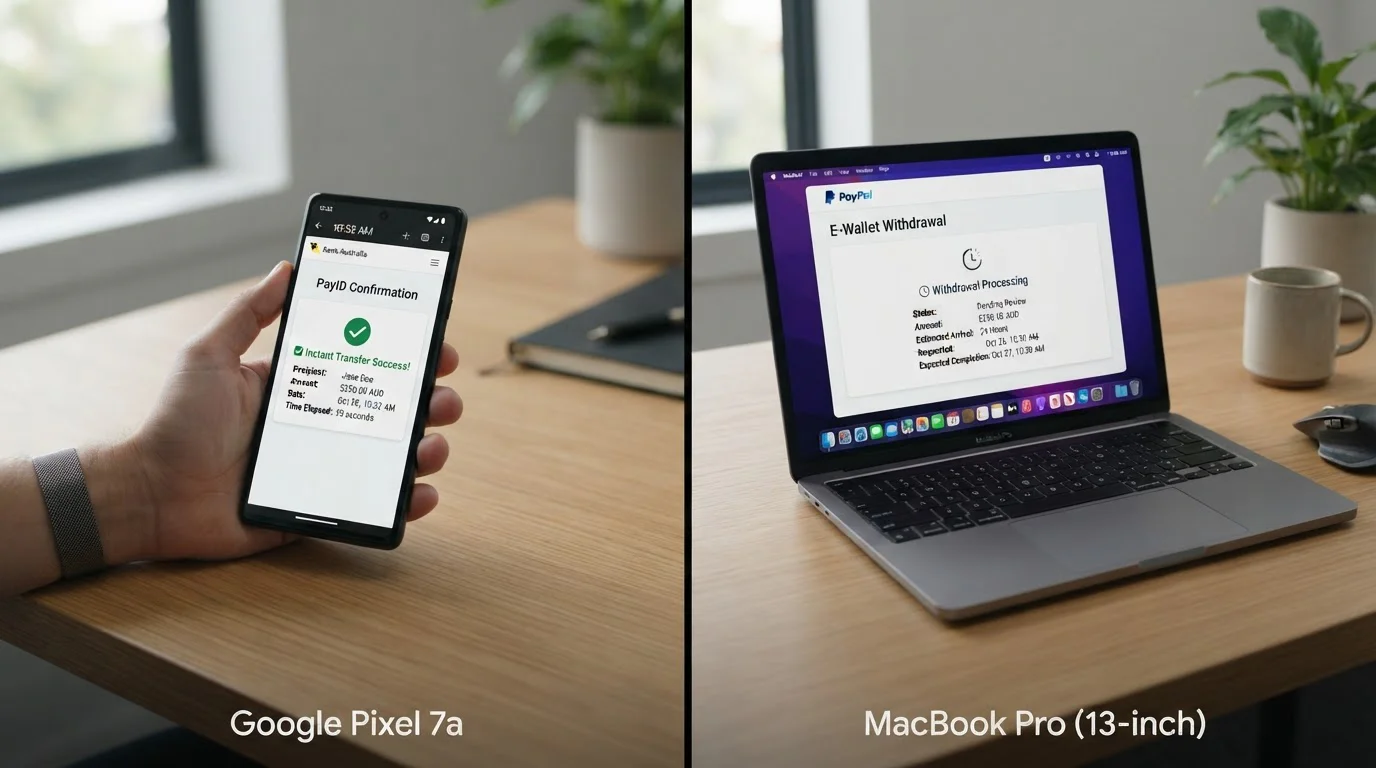
Three payment rails dominate the Australian offshore pokies market in 2026: PayID, cryptocurrency, and e-wallets. Each has a different cost structure, speed profile, and acceptance footprint. Understanding where each one wins and loses keeps you from paying more or waiting longer than you need to.
| Payment Method | Deposit Speed | Withdrawal Speed | Total Round-Trip Fees | AUD Handling | Market Share (%) | Best For |
|---|---|---|---|---|---|---|
| PayID | Instant (under 60 seconds) | 1–6 hours | 0% | Native AUD, no conversion | 42 | Zero-cost speed, bank integration |
| Cryptocurrency | Instant (10–60 min blockchain confirm) | Under 1 hour (typically 5–30 min) | Network fee only ($1–$20) | Market rate conversion, price volatility | 25 | Fastest payouts, pseudo-anonymity |
| E-Wallets | Instant | 2–24 hours | 3–9% (withdrawal fee + FX spread) | Varies (AUD native for eZeeWallet/Payz) | <15 | Account separation, legacy operator support |
| Credit Cards | N/A (banned June 2024) | N/A | N/A | N/A | 0 | Not available |
PayID (The Australian Standard)
PayID is not an e-wallet. It’s a real-time bank transfer system built on Australia’s New Payments Platform, which launched in 2018 and connects all the major retail banks. You link your bank account to a PayID identifier—usually your mobile number or email address—and transactions settle instantly without sharing your BSB or account number every time.
Deposits via PayID land in your casino balance in under 60 seconds. Withdrawals take 1 to 6 hours for the operator to process, then settle instantly once the casino sends the payout. No intermediary. No third-party account. No fees—PayID transfers are free because they’re direct bank-to-bank movements on the NPP rail. No foreign exchange spread because you’re moving AUD the entire way. Available 24/7 including weekends and public holidays.
PayID captured 42 percent of the Australian casino deposit market by 2026, according to industry estimates. That’s not a plurality—that’s dominance. Credit cards are banned, e-wallets cost 3 to 9 percent round-trip, crypto requires a separate wallet and exposes you to price volatility, and PayID just works for free in real time. The New Payments Platform was purpose-built to kill the old correspondent banking delays, and it succeeded.
E-wallets used to offer a speed advantage over bank transfers. They don’t anymore. PayID is as fast as an e-wallet deposit and faster than an e-wallet withdrawal, with zero cost instead of a 1.5 to 5.5 percent exit fee. The only reason to use an e-wallet over PayID is if you specifically want account separation—keeping gambling transactions off your primary bank statement—or if the operator doesn’t support PayID, which is increasingly rare at AU-facing sites in 2026.
Cryptocurrency (Fastest Option)
Bitcoin, Ethereum, USDT, Litecoin, Ripple—crypto deposits work the same way across currencies. You send coins from your wallet to the casino’s deposit address, wait for blockchain confirmation (10 to 60 minutes depending on network congestion and which coin you’re using), and the funds appear in your casino balance. Withdrawals reverse the flow: the operator sends coins to your wallet address, confirmation takes anywhere from a few minutes to an hour, and you’ve got your payout. Total time from withdrawal request to coins in your wallet: under an hour in most cases, often 5 to 30 minutes.
Crypto is the fastest way to get money out of an offshore casino in 2026. Faster than PayID’s 1 to 6 hour operator processing window, far faster than e-wallets’ 2 to 24 hour timelines. The cost is the network fee—Bitcoin charges 1 to 10 AUD depending on congestion, Ethereum charges 2 to 20 AUD, USDT on the Tron network charges around 1 AUD. The operator usually absorbs the fee or passes it through transparently.
The trade-off is price volatility. Deposit 500 AUD worth of Bitcoin, hit a losing streak, cash out 200 AUD worth of Bitcoin a week later, and if Bitcoin dropped 10 percent in the interim you’re actually pulling 180 AUD back to your exchange account. USDT is a stablecoin pegged to the US dollar, which eliminates most of the volatility risk but introduces a small USD-to-AUD conversion spread when you sell the USDT back for Australian dollars on your exchange.
Crypto also requires you to manage a separate wallet and understand blockchain mechanics well enough not to send funds to the wrong address or forget your private key. For players already comfortable with crypto, it’s the fastest and cheapest option after PayID. For everyone else, the learning curve and volatility risk make it a secondary choice.
Crypto’s 25 percent market share in Australian online pokies reflects its niche: fast payouts for users who already hold coins or who prioritize speed over simplicity. That’s a meaningful slice, but it’s half PayID’s penetration and won’t grow much further unless Bitcoin’s price stabilizes or operators start eating the volatility risk for users.
Why E-Wallets Still Matter
E-wallets hold less than 15 percent of the Australian pokies payment market in 2026, down from a much larger share before PayID and crypto matured. So why do they still exist in casino cashiers?
Account separation. Some players don’t want gambling transactions appearing on their primary bank statement, whether for household budgeting reasons, privacy, or avoiding questions from a partner who shares the account. An e-wallet creates a buffer: your bank sees a transfer to Skrill or eZeeWallet, the casino never touches your bank directly, and the only gambling transaction visible in your bank history is the e-wallet funding. That separation costs you 3 to 9 percent in round-trip fees, but for users who value it the fee is the price of privacy.
Legacy operator support. Older offshore casinos that haven’t updated their payment stacks still run e-wallets as a primary method. If you’re playing at a site that launched before PayID became ubiquitous or that targets multiple international markets where PayID doesn’t exist, e-wallets may be the only non-crypto option. That’s becoming rarer—most AU-facing operators prioritize PayID integration now—but it’s not extinct.
Bonus eligibility. Some operators exclude PayID or crypto from welcome bonus eligibility but allow e-wallet deposits to qualify. It’s not universal, and the exclusions often hit Skrill and Neteller specifically, but if a bonus is worth chasing and the terms require an e-wallet deposit, that’s a reason to use one.
Multi-currency flexibility. If you’re moving between markets or holding balances in multiple currencies, e-wallets let you park funds in USD or EUR and convert only when you’re ready to cash out. That’s irrelevant for Australian players who deposit and withdraw in AUD exclusively, but it’s a use case for frequent travelers or players who gamble across jurisdictions.
The structural reason e-wallets lost ground is simple: PayID does everything an e-wallet does—instant deposits, fast withdrawals, account security—at zero cost and with no signup friction. E-wallets are still useful at the margins, but they’re no longer the default.
Is PayID faster than e-wallets for pokies withdrawals?
Yes. PayID withdrawals clear in 1–6 hours with zero fees; e-wallets take 2–24 hours and clip 1.5%–5.5% on wallet-to-bank transfers. PayID also stays in AUD end-to-end, dodging the 1.5%–3.99% FX spread that hits e-wallets with USD or EUR base currencies. E-wallets only win when an operator excludes PayID from a specific promotion.
Which e-wallet has the lowest fees for Australian players?
eZeeWallet has the lowest wallet-to-bank withdrawal fee at 1.5%. ecoPayz sits at 1%–3% depending on account tier. MiFinity lands around 2%–3%. Neteller charges 3.99% and Skrill is the most expensive at 5.5%. Native AUD accounts at each provider avoid FX conversion costs, which can add another 1.5%–3.99% on top.
Bonuses and E-Wallet Deposits
Welcome bonuses at offshore casinos usually follow the same pattern: deposit a certain amount, the casino matches it by a percentage up to a cap, and you receive free spins or a bonus credit on top of your deposit. The catch is the wagering requirement—you need to turn over the bonus amount a specified number of times (typically 30x to 50x) before you can withdraw winnings derived from the bonus.
E-wallet deposits often qualify for these bonuses, but not always. Skrill and Neteller are the most commonly excluded payment methods. Operators exclude them because e-wallets make it easy to move funds between casinos, and bonus abusers used to cycle welcome offers across multiple sites by depositing via Skrill, claiming the bonus, meeting the minimum wagering, and withdrawing to Skrill to start the process again elsewhere. Operators responded by excluding Skrill and Neteller from bonus eligibility or adding stricter terms—higher wagering, lower max bet during bonus play, capped withdrawals.
If you’re depositing specifically to claim a bonus, check the payment method exclusions in the terms and conditions before you fund your account. Wild Tokyo, Boomerang-bet, Neon54, and Koru all publish bonus terms; read the section on qualifying deposits. If Skrill and Neteller are excluded, you can still deposit with them and play without the bonus, or you can switch to MiFinity, eZeeWallet, or PayID if those are listed as qualifying methods.
MiFinity and eZeeWallet are less commonly excluded because they’re newer and haven’t been burned into operators’ exclusion policies the way Skrill and Neteller have. That doesn’t make them universally eligible—always check—but the odds are better. PayID and bank transfers almost never face exclusions because they’re viewed as lower-risk deposit methods with less cross-casino movement.
Some operators offer e-wallet-specific bonuses, usually smaller packages with lower wagering requirements. If the main welcome bonus excludes your preferred e-wallet but a secondary offer allows it, compare the two: a 100 percent match up to 500 AUD with 30x wagering may be more valuable than a 200 percent match up to 1,000 AUD with 50x wagering and a Skrill exclusion that forces you to use a different method.
The bonus question matters most on your first deposit. Reload bonuses and VIP cashback programs are less likely to exclude e-wallets because they target existing players who’ve already completed verification and established a deposit pattern. If you’re planning to stick with one operator long-term, the payment method exclusions on the welcome bonus become less relevant after the first transaction.
Legal Status: Using E-Wallets for Pokies in Australia
Australia has no legal domestic online pokies. That’s not ambiguous or subject to interpretation. The Interactive Gambling Act 2001 makes it an offence to provide online casino services—which includes pokies, blackjack, roulette, and other casino games—to anyone physically located in Australia. The law targets providers, not players. You won’t be prosecuted for opening an account at an offshore casino, but the operator is breaking Australian law by accepting your custom.
Interactive Gambling Act 2001
The IGA has been federal law for over two decades. It carved out exemptions for online sports betting and horse racing, which is why you can legally bet on the AFL or the Melbourne Cup through Australian-licensed bookmakers like Sportsbet or TAB. But casino games—anything where you’re playing against the house rather than betting on a sporting outcome—are prohibited. No Australian regulator issues licenses for online pokies. None have ever been issued. None are planned.
Every real-money pokies site accessible to Australians in 2026 operates under an offshore license: Curaçao, Malta, Kahnawake, Anjouan, Comoros, or less common jurisdictions. Those licenses are real and issued by real regulatory bodies, but they carry zero legal weight in Australia. An operator with a Curaçao license is just as illegal under Australian law as an operator with no license at all.
Using an e-wallet to fund your account doesn’t change that status. PayPal, Skrill, Neteller, MiFinity, eZeeWallet—all are legitimate payment services regulated in their home jurisdictions (UK FCA, Malta MFSA). But routing your transaction through a regulated intermediary doesn’t make the underlying gambling transaction legal. The payment method is legal. The casino service is not. That distinction matters when operators or e-wallet providers face enforcement action, but it doesn’t insulate you from the reality that you’re gambling on an illegal service.
2026 Reforms and Enforcement
The Interactive Gambling Amendment (Gambling Reform) Act 2026—officially numbered No. 72, 2026 and registered in August 2026—introduces enhanced enforcement measures that take effect from 1 January 2027. The amendments target two weak points in the IGA’s original framework: financial transaction blocking and internet service provider cooperation.
Financial transaction blocking empowers the Australian Communications and Media Authority (ACMA) to direct banks and payment processors to refuse transactions with unlicensed offshore gambling operators. This isn’t hypothetical—similar measures work in other jurisdictions where the regulator can cut operators off from the local payment infrastructure. For e-wallet providers, the question becomes whether ACMA can compel them to block transactions to blacklisted operators, and whether the e-wallet companies will comply even if Australian law can’t directly reach a UK-registered entity.
ISP-level domain blocking has been running since 2019. Over 1,750 offshore gambling sites have been blocked at the DNS level as of 2026, which means typing the URL into your browser returns an ACMA block page instead of the casino. VPNs bypass this easily, which is why the blocking has been more symbolic than effective. The 2026 amendments expand the blocklist criteria and streamline the process for adding new domains, but they don’t introduce technology that defeats VPN circumvention.
The practical impact on players is unclear. Financial blocking could make it harder to move AUD into offshore operators if Australian banks start declining transactions to known gambling payment processors. E-wallet providers could become a workaround—fund your e-wallet from your bank before ACMA’s list updates, then deposit from the e-wallet to the casino—or they could become a target if ACMA pressures the providers directly. As of 2026 none of the major e-wallet brands have announced changes to their Australian operations in response to the 2026 amendments.
What It Means for Players
The law says you’re accessing an illegal service. Enforcement targets operators, not individual punters. No Australian player has been prosecuted for opening an offshore casino account or making a deposit. The risk to you is financial, not criminal: if an operator folds, gets blocked, or has its payment rails cut off, your balance could vanish with no recourse through Australian courts. Offshore licenses don’t give you standing to sue in an Australian jurisdiction.
E-wallet providers operate under their home-country regulations. Skrill, Neteller, ecoPayz, and MiFinity are UK FCA-licensed; eZeeWallet is FCA-licensed via emerchantpay. Australian law doesn’t regulate them directly. The Payments System Modernisation reforms—passed in March 2026 as Tranche 1 of a broader framework—introduce new rules for stored-value facilities (SVFs) operating in Australia. E-wallets with more than 200 million AUD in aggregate balances will need to register with APRA and meet prudential standards. Whether that affects gambling-focused e-wallets depends on how large their Australian user base is and whether APRA decides to enforce the SVF framework aggressively.
For now, using an e-wallet doesn’t make your pokies play legal, but it doesn’t make it more illegal either. The IGA prohibition applies regardless of payment method. E-wallets add a layer of separation between your bank and the casino, which may matter for privacy or budgeting but offers no legal shield. If the Australian government decides to crack down on payment intermediaries as part of the 2027 enforcement measures, e-wallets could become harder to use for gambling transactions. Until then, they function the same as any other payment method: technically illegal under the IGA, practically accessible, and unenforced at the player level.
Are online pokies legal in Australia if I use an e-wallet?
No. The Interactive Gambling Act 2001 prohibits all online casino services for Australian residents, whatever the payment rail. Using an e-wallet doesn’t change the legal status — every real-money online pokies site accessed by Australians is an offshore operator sitting outside local law. The e-wallet stays legal; the underlying casino service does not.
Choosing the Right E-Wallet for Your Needs
Five e-wallets, six operators, three cost tiers, two regulatory regimes. If you’ve made it this far you understand the mechanics, the fees, and the legal context. The question left is which specific e-wallet fits your specific use case, assuming you’ve already decided an e-wallet makes sense over PayID or crypto.
Lowest Fees (eZeeWallet)
If exit cost is your primary concern, eZeeWallet wins. 1.5 percent to move money from the wallet to your Australian bank account, native AUD accounts that eliminate foreign exchange spreads, and FCA regulation via emerchantpay for baseline credibility. The catch is acceptance: eZeeWallet isn’t listed at as many operators as MiFinity, and it has no physical card or retail spending utility. You’re opening it solely to move casino funds. That’s fine if Wild Tokyo or another eZeeWallet-supporting operator is already on your shortlist. If you’re still shopping for a casino, check whether your target site lists eZeeWallet before you commit.
Total round-trip cost with eZeeWallet, assuming AUD all the way through: 1.5 percent withdrawal fee, zero conversion. Deposit 1,000 AUD, withdraw 1,000 AUD back to your bank, you’ll receive 985 AUD. Compare that to Skrill’s 5.5 percent withdrawal fee plus a 2 to 3 percent FX spread, where the same 1,000 AUD withdrawal becomes 920 to 930 AUD after fees. The difference adds up over multiple transactions.
Widest Acceptance (MiFinity)
If you’re not locked into a specific operator yet and you want the e-wallet that works at the most AU-facing casinos, MiFinity is the safe bet. Wild Tokyo lists it. Boomerang-bet lists it. Koru Casino lists it. The research found MiFinity at more operators than any other e-wallet except possibly eZeeWallet, and MiFinity’s dual FCA-MFSA regulation gives it more perceived legitimacy than single-jurisdiction providers.
Withdrawal fees run around 2 to 3 percent, landing between eZeeWallet’s 1.5 and Neteller’s 3.99. That’s reasonable if not the cheapest. MiFinity also offers eVouchers, which are prepaid gambling tokens you can buy without linking a bank account—useful if you’re trying to limit your gambling spend by purchasing a fixed voucher amount rather than keeping an open-ended funding method.
Whether MiFinity offers native AUD accounts isn’t confirmed from public sources. Assume a USD base currency and plan for a 1.5 to 2 percent FX spread on top of the withdrawal fee unless the signup flow explicitly says otherwise. Even with the FX hit, MiFinity’s total round-trip cost stays under 5 percent, cheaper than Skrill and roughly tied with Neteller.
Established Brands (Skrill / Neteller)
If brand recognition and a long operating history matter more to you than cost, the Paysafe brands are the default. Skrill and Neteller have been moving gambling funds since 1999 and 2001 respectively. They’re FCA-regulated, they hold client funds in segregated accounts, they’ve survived regulatory scrutiny in multiple jurisdictions, and they’ve been processing high-volume gambling transactions for over two decades without collapsing or losing licenses.
The trade-off is the fee structure. Neteller’s 3.99 percent withdrawal cost and Skrill’s 5.5 percent cost are the highest on this list. Add the FX spread if your account runs on USD or EUR and you’re paying 5 to 9 percent round-trip. That’s viable if you’re cycling funds between multiple casinos without withdrawing to your bank after every session—the intermediary cost only hits once per bank withdrawal, not per casino transaction. If you’re depositing, playing, and cashing out to your bank every time, the fees eat into your returns more than eZeeWallet or MiFinity would.
Neteller’s Net+ card and ecoPayz’s ecoCard let you spend directly from your wallet balance, which adds utility if you’re using the e-wallet for non-gambling transactions. That’s a feature eZeeWallet lacks entirely. Skrill and Neteller are also the most commonly excluded from casino bonuses, so check the terms before you deposit.
Skrill and Neteller work at Boomerang-bet, Neon54, and Koru. They don’t work everywhere, but where they do work they’ve been processing transactions reliably longer than most offshore casinos have been in business. The premium you pay in fees buys you brand stability and a proven track record. Whether that’s worth 2 to 4 percentage points more than MiFinity or eZeeWallet depends on how much you value incumbency over cost.
The decision matrix collapses to three variables: cost, acceptance, and trust. Rank those three in order of importance to you and the right e-wallet becomes obvious. Lowest cost: eZeeWallet. Widest acceptance: MiFinity. Longest track record: Neteller. Pick the variable that matters most and ignore the others.
Or don’t use an e-wallet at all. PayID costs zero, processes in under 6 hours, and works at every major AU-facing operator in 2026. Crypto costs 1 to 20 AUD in network fees and clears in under an hour. E-wallets made sense when bank transfers took three days and crypto was niche. That world is gone. E-wallets survive at the margins—account separation, legacy operator support, bonus eligibility edge cases—but for most Australian players in 2026, the honest answer is you don’t need one.
Casino Deposit Methods Australia 2026 — Full Comparison
Content created by the «Payment Methods Online» team