
Bitcoin Cash Casinos Australia: Where BCH Actually Works in 2026
 Available in AU

Bitcoin Cash sits in the shadow of its more famous sibling, but for casino banking it has a practical edge most players overlook. Lower fees, faster confirmation, larger block capacity — advantages that matter when you’re moving money in and out rather than holding for a decade. The question is where BCH actually works for Australian players, because “supports 150+ cryptos” doesn’t tell you whether Bitcoin Cash is a first-class option or an afterthought buried in a dropdown menu.
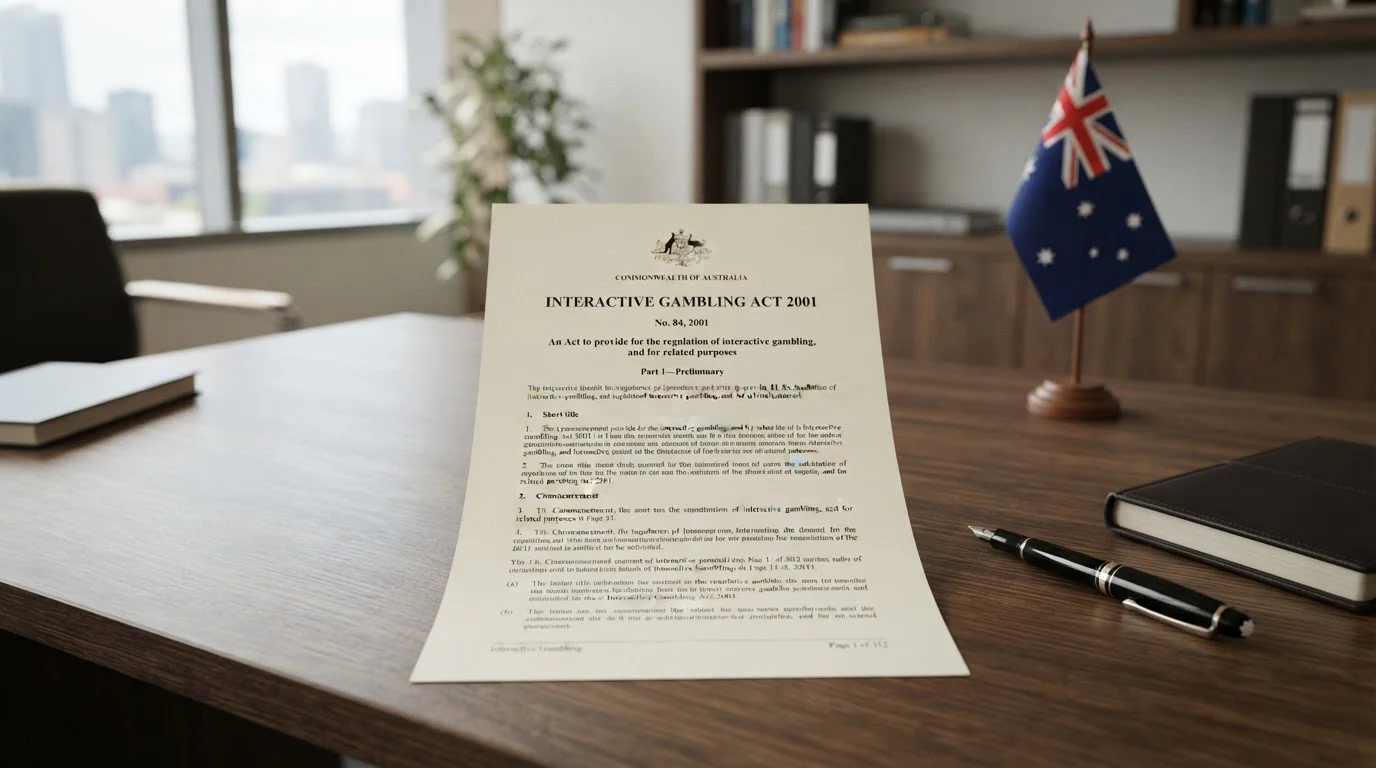
This guide cuts through the generic crypto casino lists to surface which offshore operators accept BCH for Australian players in 2026, what the deposit and withdrawal conditions look like in practice, and why every option sits outside Australian jurisdiction. No Australian state, territory or Commonwealth regulator issues a license for online casino operations. The Interactive Gambling Act 2001 prohibits providing online casino services to Australian residents, so every BCH casino an Australian player can reach is based offshore — Curaçao, Anjouan, Malta, or operating without a license at all.
That legal reality shapes everything else: how disputes get resolved (they don’t, mostly), what happens if an operator closes (your balance goes with it), and why “no KYC” marketing often evaporates the moment you try to withdraw a decent win. What follows is a substantive breakdown of eight offshore platforms that accept Bitcoin Cash, an honest comparison of BCH versus Bitcoin for casino use, and the practical steps to deposit and cash out without losing funds to the wrong network or a typo in the wallet address.
Bitcoin Cash Casinos for Australian Players: The Offshore Reality in 2026
Every Bitcoin Cash casino accessible to Australian players in 2026 operates offshore. The Interactive Gambling Act 2001 prohibits anyone from providing online casino games — pokies, table games, live dealer — to a person physically in Australia. No state or territory issues a license for it. The Australian Communications and Media Authority enforces this by blocking domains and pressuring payment processors, which is why traditional fiat deposits to offshore casinos increasingly fail at the bank level.
Crypto bypassed that enforcement. A Bitcoin Cash transfer from your wallet to a Curaçao operator’s deposit address doesn’t route through an Australian bank, doesn’t trigger a gambling transaction flag, and settles on-chain in minutes regardless of what ACMA blocks. The Corporations Amendment (Digital Assets Framework) Bill 2025, passed on 1 April 2026, tightened regulation on crypto exchanges and custody providers — they now need an Australian Financial Services Licence from AUSTRAC — but it didn’t touch casino operators. They remain prohibited to provide services to Australians, and they remain outside Australian jurisdiction when you play anyway.
What does “offshore” mean in practice? An operator licensed in Curaçao or Anjouan holds a gaming permit from those jurisdictions, not from Australia. If a dispute arises — a withheld withdrawal, a bonus reversed, an account closed with funds inside — there is no Australian regulator to escalate to, no ACMA oversight, no statutory compensation scheme. Some operators name an adjudicator in their terms; most don’t. Curaçao’s eGaming license provides minimal player protection and no local recourse for Australians. Anjouan is lighter still. A Costa Rica company registration, which some operators use, is not a gaming license at all.
The enforcement reality tilts toward providers, not players. Playing at an offshore casino from Australia is not criminalized under the IGA 2001. Providing the service is. ACMA blocks sites, sends cease-and-desist notices to operators, and works with financial institutions to decline transactions. Players are not fined for accessing offshore casinos, but they also have no legal protection when things go wrong. That asymmetry defines the offshore market: access is easy, recourse is not.
Are Bitcoin Cash casinos legal in Australia in 2026?
Providing online casino services to Australian residents is illegal under the Interactive Gambling Act 2001. No Australian license exists. Playing at an offshore casino is not criminalised—enforcement targets providers, not players—but every Bitcoin Cash casino you can reach from Australia sits outside Australian law, ACMA oversight, and local consumer protection.
Bitcoin Cash vs Bitcoin: Why BCH Matters for Casino Banking
Bitcoin Cash forked from Bitcoin in August 2017 over a scaling dispute. Bitcoin kept its 1MB block size and layered the Lightning Network on top for faster payments. Bitcoin Cash went the other direction: 32MB blocks, more transactions per block, cheaper fees on the base layer. For holding value long-term, Bitcoin’s brand and liquidity dominate. For moving money in and out of a casino cashier several times a week, Bitcoin Cash has the better fundamentals.
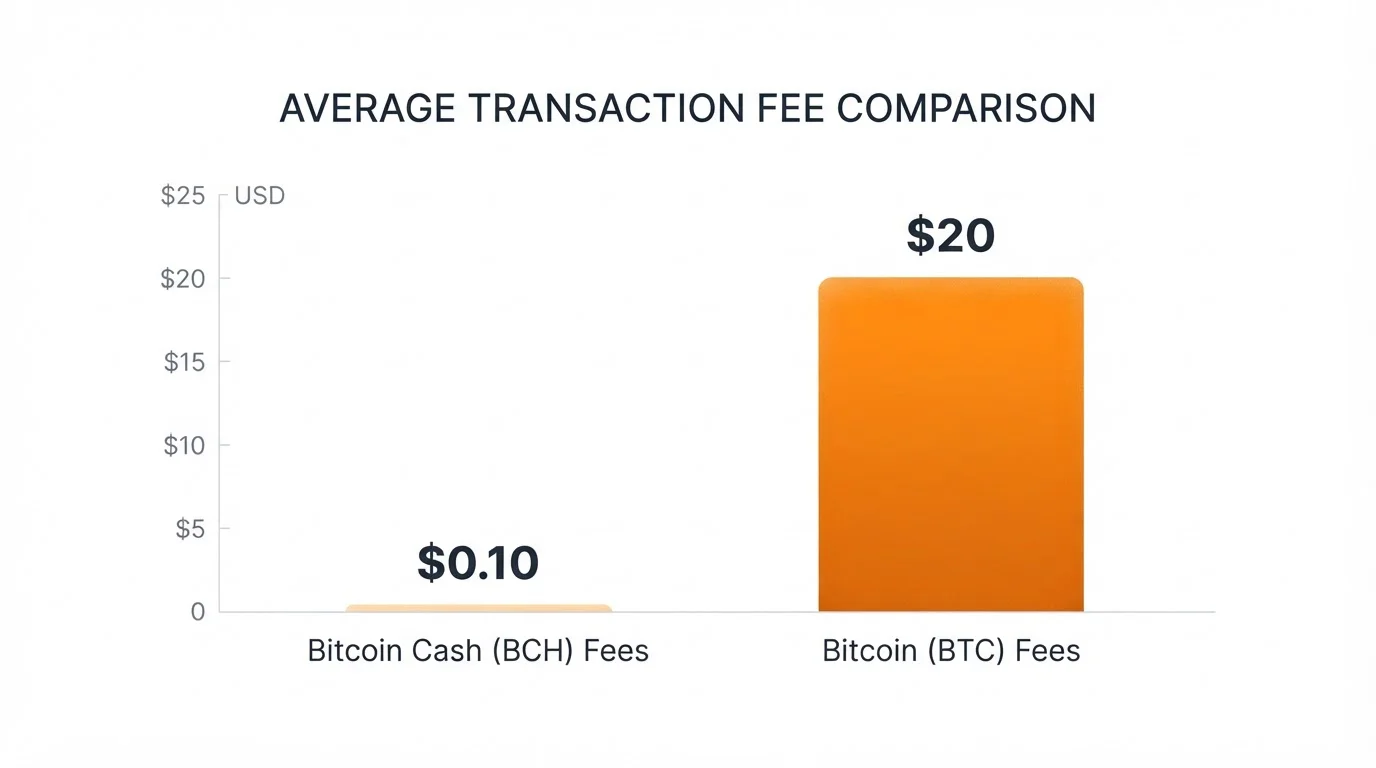
Transaction fees tell the story. A Bitcoin Cash transfer costs between one cent and ten cents regardless of network activity, because the larger block size absorbs demand without congestion. Bitcoin fees fluctuate wildly — a dollar or two during quiet periods, five to twenty dollars when the mempool fills, and spikes above fifty dollars have hit during bull runs. If you’re depositing two hundred dollars to try a few spins, a twenty-dollar Bitcoin fee is a ten percent haircut before you’ve placed a bet. Bitcoin Cash keeps that overhead under a fraction of a percent.
Confirmation speed follows the same pattern. Both networks target a ten-minute block time, but Bitcoin Cash’s larger blocks mean your transaction is more likely to make it into the next block even if you pay the minimum fee. Bitcoin’s smaller blocks create a fee market: pay more to jump the queue, or wait through multiple blocks if you cheaped out. Casinos typically require one to three confirmations before crediting a deposit. With Bitcoin Cash that’s ten to thirty minutes. With Bitcoin during congestion it can stretch past an hour, and your deposit sits in limbo while you watch the game you wanted to play.
The practical differences line up cleanly when you put them side by side.
| Factor | Bitcoin Cash (BCH) | Bitcoin (BTC) |
|---|---|---|
| Typical transaction fee | $0.01–0.10 | $1–5 (up to $20–50 in congestion) |
| Block size | 32MB | 1MB (plus Lightning layer) |
| Confirmation for casino credit | 10–30 minutes | 10–60+ minutes in congestion |
| Fee behaviour under load | Stays low | Spikes with demand |
| Best-fit role | Frequent deposits and withdrawals | Long-term store of value |
The “peer-to-peer electronic cash” label fits Bitcoin Cash better in casino use. Bitcoin positioned itself as digital gold and optimized for security over throughput. Bitcoin Cash prioritized everyday payments and kept the original vision of on-chain scaling. For a casino deposit there’s no philosophical debate — you want the transfer to land quickly and cheaply, and Bitcoin Cash delivers both more reliably than Bitcoin does. That doesn’t make BCH a better investment or a superior long-term hold. It makes it a more practical casino payment rail, which is the job it needs to do here.
How does Bitcoin Cash compare to Bitcoin for casino deposits?
Bitcoin Cash costs $0.01-0.10 per transaction and confirms in ten minutes regardless of load, because its 32MB blocks absorb demand without congestion. Bitcoin fees range from $1-5 during quiet periods to $20-50 during bull runs, and confirmation stretches past an hour when the mempool fills. For frequent casino traffic, BCH is the more practical rail.
What are the fees for depositing and withdrawing Bitcoin Cash at casinos?
The BCH network charges $0.01-0.10 per on-chain transaction. Most crypto casinos add nothing on top—you pay only the network cost. Cloudbet publishes its fees openly; others absorb them. Withdrawal minimums usually sit around $20-50 to cover the network fee and block dust payouts. Operator queues run from under five minutes to several hours.
Top Bitcoin Cash Casinos Accepting Australian Players
The table below compares eight offshore casinos that accept Bitcoin Cash for Australian players. Confirmed BCH support means the operator explicitly lists Bitcoin Cash in its cashier or on its payment methods page. Broader crypto support means the operator claims to accept “dozens” or “150+ cryptos” but Bitcoin Cash acceptance was not verified in publicly available sources as of 2026.
| Casino | License | BCH Withdrawal Time | Welcome Bonus | Game Count | BCH-Specific Feature |
|---|---|---|---|---|---|
| BC.Game | Curaçao | ~4 minutes | 300-360% up to $20,000 | 8,500+ | 165 cryptos including BCH; BCD token economy |
| mBit Casino | Curaçao | <10 minutes | 110% up to 1.5 BTC | 7,500+ | Explicit BCH support since 2014; RTP transparency |
| Stake.com | Curaçao | Instant | $200 | 3,000+ | BCH among 20+ cryptos; dual AUD/crypto mode |
| Cloudbet | Curaçao | <3 minutes (90%) | Up to $2,500 | 5,000+ | Dedicated BCH casino page; IBAS adjudicator |
| 7Bit Casino | Curaçao | <10 minutes | 100% up to A$400 / 5 BTC | 10,000+ | Crypto + AUD banking; to verify BCH |
| Wild.io | Anjouan | <10 minutes | 20% cashback + 270 FS | 9,000+ | No-KYC focus; 12+ cryptos, BCH unverified |
| FortuneJack | Curaçao | Instant | Up to 6 BTC + 250 FS | 3,120+ | Operating since 2014; BCH in altcoins list |
| Betpanda | None | Minutes (Lightning) | 100% up to 1 BTC | 5,000-6,000 | True no-KYC; no license; BCH unverified |
Row order reflects topical relevance to Bitcoin Cash acceptance: confirmed BCH operators first, broader crypto platforms second, unverified last. Withdrawal times are operator queue estimates from public reviews and operator claims, not blockchain settlement (which adds ten minutes once a transaction is broadcast).
Which casinos accept Bitcoin Cash for Australian players?
BC.Game, mBit Casino, Stake.com and Cloudbet explicitly list Bitcoin Cash (BCH) in their supported cryptocurrencies as of 2026. 7Bit Casino, Wild.io, FortuneJack and Betpanda support multiple cryptocurrencies but BCH acceptance requires direct cashier verification. All eight operators accept Australian players but operate offshore under Curaçao, Anjouan or no gaming license.
BC.Game: 165 Cryptos Including BCH, 4-Minute Withdrawals
BC.Game runs one of the broadest crypto cashiers in the industry — 165 cryptocurrencies across 30 blockchain networks, with Bitcoin Cash explicitly supported. The platform launched in 2017 and operates under a Curaçao eGaming license issued to BlockDance B.V. It pairs an 8,500-game casino with a full sportsbook and 50+ provably fair in-house titles (Crash, Plinko, Dice, Mines, Limbo, Keno, Hi-Lo). The welcome package scales from 300% to 360% across four deposits, capped at $20,000 total. Game studios include Pragmatic Play, Evolution, Hacksaw Gaming and NoLimit City.
What sets BC.Game apart is its token economy. The BCD token functions as a loyalty currency: players earn it through wagering, stake it in VaultPro at 10% annual yield, and burn it for cashback. Withdrawals average four minutes from approval to on-chain broadcast according to multiple sources, which is faster than most operators manage. The casino runs risk-based KYC — deposits and play require no identity documents, but withdrawals above a certain threshold or flagged transactions trigger a verification request. The platform accepts Australian players explicitly and denominates balances in crypto (BTC, BCH, ETH, mBTC, etc.) or converts to a fiat-equivalent display.
mBit Casino: Pure Crypto Since 2014, Explicit BCH Support
mBit Casino is one of the oldest crypto-only casinos still operating, launched in 2014 and run by Dama N.V. under a Curaçao license. It supports seven cryptocurrencies with Bitcoin Cash explicitly listed: BTC, BCH, ETH, USDT, LTC, DOGE, XRP. The 7,500-game library draws from 40+ providers, and every slot displays its RTP percentage on the thumbnail — a transparency feature rare in the industry. Players can sort the catalog by RTP, which surfaces the highest-paying games without digging through help files.
The welcome bonus runs 110% up to 1.5 BTC on the first deposit, with additional bonuses on deposits two through four. Wagering requirements sit at 40x the bonus amount, typical for crypto casinos. The loyalty program tiers up through eight VIP levels, offering cashback on losses (5-20% depending on tier), weekly deposit match bonuses, spins on a prize wheel, and level-up bonuses. Withdrawals process in under ten minutes according to operator claims and Trustpilot feedback. The casino charges no fees on deposits or withdrawals — you pay only the blockchain network cost, which for Bitcoin Cash runs under ten cents.
mBit operates pure crypto accounts. Balances display in the deposited currency (if you deposit BCH, your balance shows in BCH). There is no fiat conversion layer. KYC is risk-based: most players withdraw without verification, but large wins or red-flag patterns trigger a document request. The casino has operated continuously for over a decade, which counts as stability in an industry where operators fold or rebrand regularly. For Australian players specifically seeking Bitcoin Cash support with a long operational history, mBit is the most established name on the list.
Stake.com: 20+ Cryptos with BCH, Dual Fiat/Crypto Mode
Stake.com launched in 2017 and grew into one of the highest-profile crypto casino brands through sponsorships of UFC, Everton FC and Alfa Romeo F1. It operates under a Curaçao license issued to Medium Rare N.V. and runs both a 3,000-game casino and a full sportsbook with live betting. Bitcoin Cash sits among 20+ supported cryptocurrencies, and the platform also accepts fiat (AUD, CAD, INR, USD, EUR) via card and bank transfer. Players choose at registration whether to run a crypto account or a fiat account; the two modes are separate.
The welcome bonus is a flat $200 with relatively light wagering requirements compared to percentage-match offers elsewhere. The VIP club tiers through multiple levels, unlocking cashback, reload bonuses, and higher withdrawal limits. Provably fair games are a core feature — the platform uses blockchain-based RNG for slots and table games that players can verify. Withdrawals are instant for crypto once approved, with no stated maximum limits after account verification. The casino processes KYC at signup for fiat accounts and on a risk basis for crypto accounts.
Stake’s mainstream visibility is a double-edged feature. The sponsorships signal financial stability and brand investment, but the operator is still offshore, still Curaçao-licensed, and still outside Australian consumer protection frameworks. For players who want the option to switch between AUD and crypto depending on exchange rates or banking friction, Stake’s dual-mode cashier is the most flexible setup on this list. For pure Bitcoin Cash use, it’s one of several confirmed-support operators without a standout BCH-specific feature.
Cloudbet: Dedicated BCH Casino Page, 3-Minute Payouts
Cloudbet has operated since 2013, making it one of the longest-running Bitcoin-era casinos still active. It holds a Curaçao license issued to Halcyon Super Holdings B.V. and runs a 5,000-game casino alongside a sportsbook with esports coverage. What makes Cloudbet notable for Bitcoin Cash users is its dedicated BCH landing page at cloudbet.com/lp-bitcoin-cash-casino, which explicitly markets the platform as a “Bitcoin Cash casino and sportsbook.” That level of BCH-specific messaging is rare; most operators bury it in a “supported coins” list.
The casino supports 30+ cryptocurrencies and runs live dealer tables from Evolution Gaming, poker rooms, and a deep slots catalog from studios including Pragmatic Play, Hacksaw, and NetEnt. Withdrawals clear in under three minutes for 90% of transactions according to the operator’s published metrics — among the fastest in the industry. Cloudbet imposes no withdrawal ceiling after full KYC, which sets it apart from operators that cap payouts at $10,000 or $50,000 per week regardless of account status.
Another unusual feature: Cloudbet’s terms name an independent adjudicator (IBAS, the Independent Betting Adjudication Service) whose decisions are binding on the casino. Most offshore operators have no such clause. If a dispute reaches IBAS and they rule in the player’s favour, Cloudbet is contractually obliged to comply. That doesn’t make Cloudbet’s Curaçao license equivalent to a UKGC or MGA license, but it’s a layer of accountability rare among operators targeting Australian players. The welcome offer runs up to $2,500 in cash rewards with a no-wagering structure — the bonus converts to withdrawable cash as you play, rather than locking behind a 40x rollover.
7Bit Casino: 10,000+ Games, Crypto + AUD Banking
7Bit Casino launched in 2014 under Dama N.V. and operates on a Curaçao license. It claims one of the largest game libraries in the offshore space — 10,000+ titles from 70+ providers, including Pragmatic Play, Evolution, NoLimit City, and Hacksaw Gaming. The platform accepts both cryptocurrency and fiat Australian dollars, with separate deposit rails: crypto goes straight to a blockchain wallet, AUD deposits route through cards or bank transfer. Players choose their account currency at signup.
The welcome package scales across four deposits: 100% up to A$400 plus 100 free spins for fiat accounts, or up to 5 BTC plus 250 free spins for crypto accounts. The crypto bonus structure is more generous in nominal terms but carries the same 40x wagering requirement. Crypto withdrawals process in under ten minutes according to operator claims; fiat withdrawals take one to three business days. The casino runs risk-based KYC — most small to mid-sized withdrawals go through without documents, but large wins trigger verification.
Bitcoin Cash acceptance at 7Bit was not explicitly confirmed in publicly available cashier screenshots or payment method listings reviewed for this guide. The operator lists “multiple cryptocurrencies” and supports BTC, ETH, LTC, USDT at minimum, but whether BCH is in that mix requires logging in to check the live cashier. The platform has operated for a decade, which signals stability, and Dama N.V. runs several other casino brands with similar infrastructure. For Australian players, 7Bit’s main draw is the sheer volume of games and the option to switch between crypto and AUD depending on what’s convenient at the time.
Wild.io: No-KYC Focus, 9,000+ Games
Wild.io launched in 2022 under Stack Gaming Ltd. and holds an Anjouan gaming license, which is lighter regulatory oversight than Curaçao. The platform markets itself as a no-KYC crypto casino, meaning deposits and play require no identity documents and most withdrawals process without verification. That claim holds up to a point — small to mid-sized withdrawals generally go through clean, but large wins or red-flag transactions can still trigger a KYC request despite the marketing.
The casino carries 9,000+ games including slots, live dealer tables from Evolution, and provably fair in-house titles. It supports 12+ cryptocurrencies according to operator claims, but Bitcoin Cash was not explicitly listed in the payment methods reviewed for this guide. The welcome bonus is structured as 20% cashback plus 270 free spins rather than a traditional deposit match, which appeals to players who prefer a safety net over a front-loaded bonus. Withdrawals process in under ten minutes on average.
Wild.io is one of the newer brands on this list, which cuts both ways. It launched in the post-2020 wave of crypto casinos and brought a mobile-first design and streamlined cashier. It also has a shorter operational history than mBit, Cloudbet or 7Bit, so there’s less public track record to assess reliability. The Anjouan license provides even less player protection than Curaçao. For players who prioritize privacy and want to avoid upfront KYC, Wild.io is built around that use case — but that same privacy focus means less recourse if a dispute arises.
FortuneJack: Since 2014, Mission-Based Bonus Structure
FortuneJack launched in 2014, making it one of the early crypto casino adopters still operating in 2026. It runs under a Curaçao license issued to Nexus Group Enterprises Casinos N.V. and offers a 3,120-game catalog from providers including Pragmatic Play, Hacksaw Gaming, Betsoft, and Evolution. The platform supports both fiat AUD and crypto accounts, with players choosing their mode at registration. Crypto options include BTC, ETH, LTC, USDT, USDC, and a “long tail of altcoins” according to operator descriptions, but explicit Bitcoin Cash inclusion was not confirmed in reviewed sources.
What sets FortuneJack apart is its mission-based welcome bonus structure. Instead of a flat deposit match, the bonus unlocks across stages as players complete wagering milestones. The total package reaches up to 6 BTC plus 250 free spins across four deposits, but it pays out progressively rather than all at once. That structure reduces the risk of a bonus forfeiture if you don’t hit the full wagering requirement, but it also means the advertised “6 BTC” is a ceiling most players won’t reach.
FortuneJack runs an active Discord community with regular rewards drops, which is unusual among offshore casinos. Withdrawals are instant once approved. The casino applies risk-based KYC — play and deposits require no documents, but withdrawals can trigger verification depending on amount and account history. For Australian players, FortuneJack’s decade of continuous operation signals reliability, and the dual fiat/crypto mode offers flexibility. Bitcoin Cash support remains unverified here and would need a live cashier check to confirm.
Betpanda: True No-KYC, No Gaming License
Betpanda operates under Star Bright Media S.R.L., a Costa Rica company registration. It holds no gaming license. That legal structure puts it at the riskiest end of the offshore spectrum — no regulator oversees its operations, no license body reviews complaints, and the Costa Rica registration provides no player protections. The trade-off is true no-KYC operation: Betpanda does not require identity verification at any withdrawal amount according to its marketing, and public reviews confirm that small to mid-sized payouts clear without documents.
The platform carries 5,000 to 6,000 games from 40+ providers, including Pragmatic Play, BGaming, Play’n GO, NoLimit City, Hacksaw Gaming, and Evolution live dealer. It supports Bitcoin Lightning for ultra-fast payouts (seconds instead of minutes), and the welcome bonus is a 100% match up to 1 BTC with 40x wagering. VIP tiers unlock 5% daily rakeback at higher levels. Bitcoin Cash acceptance was not confirmed in reviewed payment method listings — the operator lists “multiple cryptocurrencies” but does not specify which beyond BTC and Lightning.
Betpanda’s lack of a gaming license is a red flag that outweighs its privacy benefits for most players. If a dispute arises — a withheld withdrawal, a bonus reversed, an account closed with funds inside — there is no regulatory body to escalate to and no independent adjudicator clause in the terms. The no-KYC feature appeals to privacy-focused users, but it also makes Betpanda the highest-risk operator on this list. For Australian players specifically seeking Bitcoin Cash support, Betpanda’s BCH acceptance would need direct verification, and even if confirmed, the lack of regulatory oversight makes it a last-resort option rather than a top pick.
How to Deposit and Withdraw Bitcoin Cash at Australian Crypto Casinos
Depositing Bitcoin Cash at an offshore casino requires a BCH wallet, the casino’s deposit address, and attention to network selection. Withdrawing requires the same wallet, patience through the operator’s approval queue, and an understanding that “instant crypto withdrawal” usually means instant blockchain broadcast, not instant operator approval. Most mistakes happen at the network-selection step or by sending BCH to a BTC address (or vice versa), both of which result in lost funds that no support team can recover.
Setting Up a BCH Wallet
You need a Bitcoin Cash wallet before you can deposit. Exchanges like Coinbase or Binance hold BCH in a custodial wallet, meaning they control the private keys and you access funds through their platform. That works for buying and holding, but for casino deposits you need to control the wallet yourself — specifically, you need the ability to send BCH to an arbitrary address the casino generates. The exchange wallets do support that, but self-custody wallets give you more control and eliminate the middleman.
Recommended wallets for Australian players depositing to casinos: Exodus (desktop and mobile, intuitive interface, built-in exchange if you need to swap BTC to BCH), Bitcoin.com Wallet (mobile, specifically designed for Bitcoin Cash, strong BCH community support), and Coinomi (mobile, supports 125+ cryptos including BCH, good for players using multiple coins). All three are non-custodial — you hold the private keys, and losing your seed phrase means losing access permanently. Write the 12- or 24-word seed phrase on paper, store it offline, and never share it with anyone. A casino support agent asking for your seed phrase is a scammer, not support.
Download the wallet from the official site or the Apple App Store / Google Play Store. During setup, the wallet generates your seed phrase. Write it down exactly as shown, in order, and store it somewhere safe. The wallet will then generate a Bitcoin Cash receiving address — a string starting with “bitcoincash:” or a legacy address starting with “1” or “3”. You’ll use this address to receive BCH from an exchange after you buy it, and you’ll generate a new one each time you withdraw from a casino.
Making Your First BCH Deposit
Log into the casino and navigate to the deposit page. Select Bitcoin Cash (BCH) from the list of supported cryptocurrencies. The casino generates a deposit address — a long alphanumeric string unique to your account and this specific deposit. Copy the address exactly or scan the QR code with your wallet app. Do not type the address manually; one wrong character sends funds to the wrong wallet, and blockchain transactions are irreversible.
Before you send, verify the network. Bitcoin Cash and Bitcoin use different blockchains. Sending BCH to a BTC address (or BTC to a BCH address) results in lost funds. Most wallet apps separate the two — you choose “Bitcoin Cash” or “BCH” from a dropdown, not “Bitcoin” or “BTC”. If you’re using an exchange to send (buying BCH on Coinbase and sending directly to the casino), the exchange will ask which network to use. Pick “Bitcoin Cash” or “BCH”. If the exchange shows “Bitcoin” or “BTC”, stop — you’re on the wrong network.
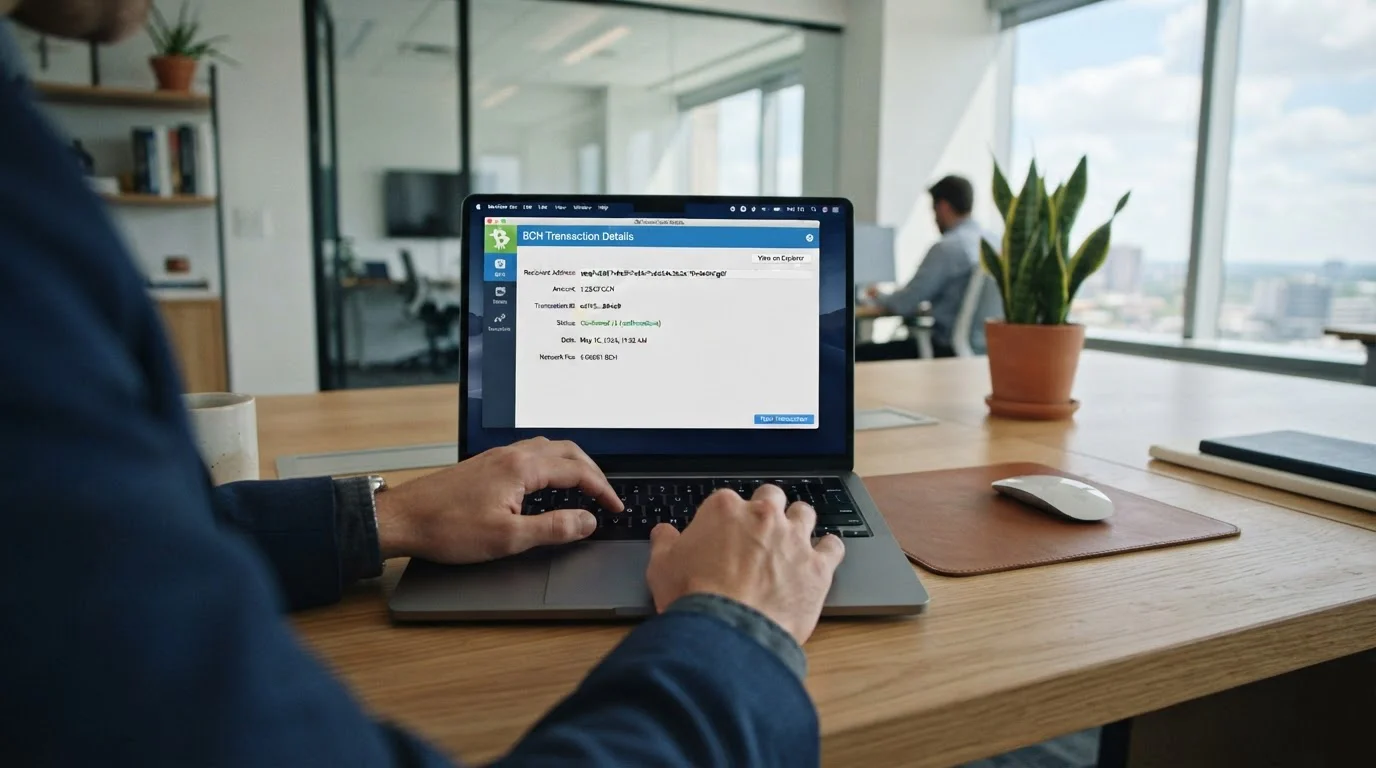
Send a small test deposit first if this is your first time. Transfer $20 or $50 worth of BCH to the casino address. Wait for the transaction to confirm (one confirmation takes about ten minutes, the casino credits your account after one to three confirmations depending on their policy). Once the test deposit lands in your casino balance, send the rest. The Bitcoin Cash network fee is usually under ten cents, so the cost of a test transaction is negligible compared to the risk of losing hundreds to a wrong-network send.
The casino’s deposit page will update once the transaction is broadcast to the blockchain. You can track the transaction by pasting the transaction ID (TxID) into a Bitcoin Cash block explorer like blockchair.com or explorer.bitcoin.com. One confirmation means the transaction is in a block. Three confirmations mean it’s buried under two more blocks, and most casinos credit your account at that point. Total time from send to credited balance: ten to thirty minutes in normal conditions.
Withdrawing BCH Winnings
Log into your casino account and navigate to the withdrawal page. Select Bitcoin Cash as the withdrawal method. Enter the amount you want to withdraw in BCH or your account currency (if the casino denominates balances in AUD or USD equivalent, it will convert at the current exchange rate). Enter your Bitcoin Cash wallet address — the receiving address from your Exodus, Bitcoin.com Wallet or Coinomi app. Double-check the address. Paste it, don’t type it. One wrong character sends your withdrawal to the wrong wallet, and you will not get it back.
The casino queues your withdrawal for approval. This is where “instant crypto withdrawal” marketing meets reality. The blockchain settles a BCH transaction in ten minutes once it’s broadcast, but most casinos manually review withdrawals before broadcasting them. Fast operators (BC.Game, Cloudbet, mBit) approve within minutes. Slow operators can take several hours or a full business day. The approval queue is operator policy, not a blockchain limitation.
Some operators trigger KYC at the first withdrawal. If your account is flagged — large win, first withdrawal above a threshold, random compliance check — the casino will ask for identity documents (passport or driver’s license) and proof of address (utility bill or bank statement). Upload clear photos or scans. The casino’s compliance team reviews them, which can take 24 to 72 hours. Once approved, your withdrawal processes. If you ignore the KYC request, your withdrawal stays pending indefinitely. “No KYC” marketing usually means no KYC at deposit or play, not no KYC ever.
Once the casino approves and broadcasts your withdrawal, the transaction hits the blockchain and you can track it in a BCH block explorer. One confirmation takes about ten minutes. After three confirmations (thirty minutes), the funds are effectively settled and spendable from your wallet. Some wallets display the balance after one confirmation but mark it as “unconfirmed” until more blocks are mined. Total withdrawal time: operator approval queue (minutes to hours depending on the casino) plus blockchain settlement (ten to thirty minutes).
How long do BCH withdrawals take at crypto casinos?
Operator approval queues run from under five minutes (BC.Game, Cloudbet, mBit) to a full business day at slower operators. Once approved, the Bitcoin Cash blockchain settles in ten minutes for one confirmation, thirty minutes for three. Most casinos credit after one to three confirmations. “Instant” marketing refers to blockchain speed, not the approval stage.
Mobile BCH Casino Play
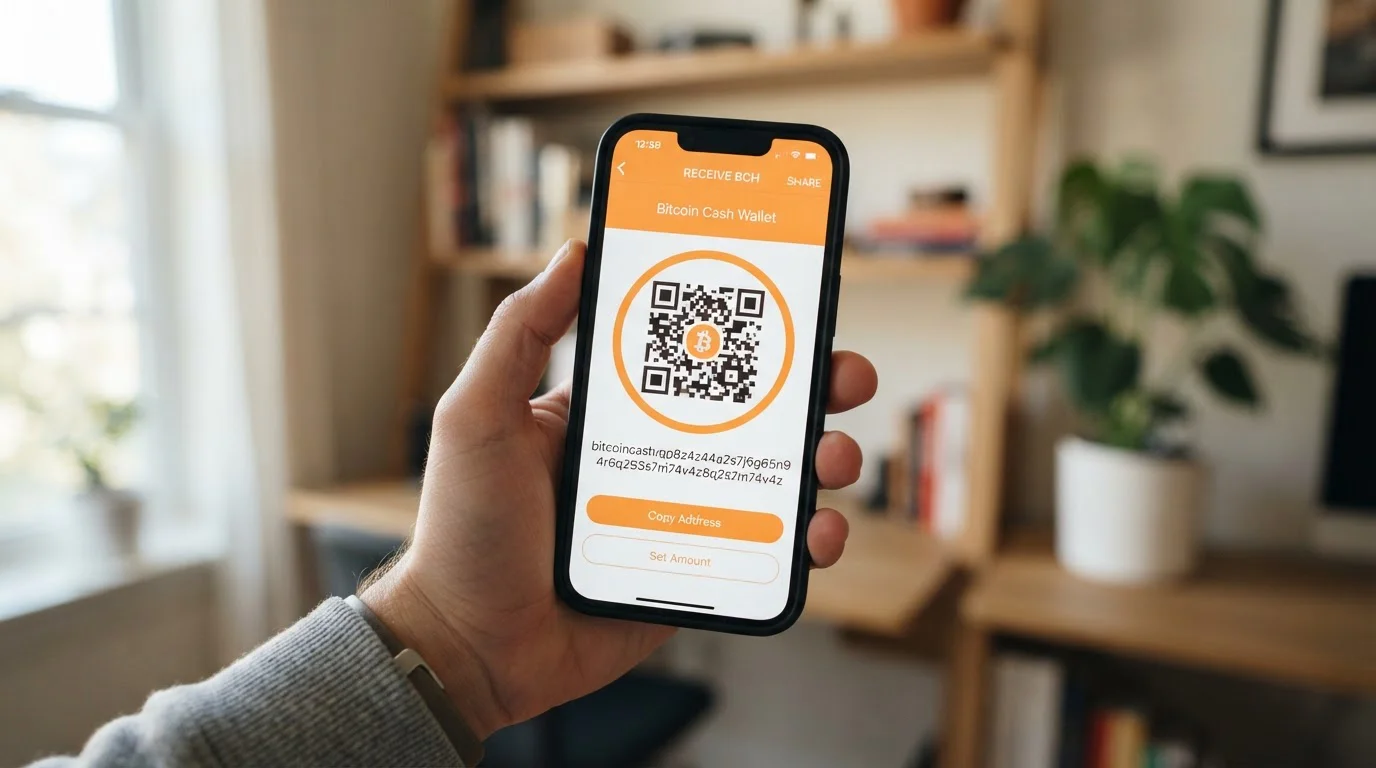
Every casino listed in this guide runs in a mobile browser. None requires a standalone app download. Open Safari, Chrome or Firefox on your phone, navigate to the casino’s URL, log in, and the interface adapts to the screen size. Deposits and withdrawals work identically on mobile — copy the deposit address from the casino, switch to your BCH wallet app, paste the address, and send. Withdrawals reverse the flow: copy your wallet’s receiving address, switch to the casino site, paste it into the withdrawal form.
Bitcoin.com Wallet and Coinomi are mobile-first BCH wallets that integrate smoothly with mobile browser casinos. Exodus has both desktop and mobile versions, and the mobile app includes a QR scanner for reading casino deposit addresses directly from the screen. For players who primarily gamble on a phone, the workflow is cleaner with a mobile wallet and a mobile browser than trying to coordinate between desktop and phone.
Can I play at Bitcoin Cash casinos on my mobile phone?
Yes. Every casino in this guide runs in mobile browsers (Safari, Chrome, Firefox) without an app download. Log in through your phone and the interface adapts. BCH deposits and withdrawals work the same—copy addresses between casino and wallet. Mobile-first BCH wallets like Bitcoin.com Wallet and Coinomi integrate cleanly with mobile browser play.
Bitcoin Cash Casino Bonuses and Promotions
Most crypto casino bonuses are currency-agnostic. If an operator offers a 100% match up to 1 BTC, that same bonus structure applies to a Bitcoin Cash deposit at the equivalent value. You deposit 0.5 BCH, the casino matches it with 0.5 BCH, and you play with 1 BCH total. The wagering requirement — typically 30x to 40x the bonus amount — applies the same way regardless of which cryptocurrency you deposited. Bonuses are credited in the currency you deposited, so a BCH deposit gets a BCH bonus, a BTC deposit gets a BTC bonus, and so on.
BC.Game’s welcome package scales from 300% to 360% across four deposits, capped at $20,000 total. That’s one of the largest headline offers in the offshore crypto space, but the wagering requirement is steep (40x bonus amount) and the bonus is split across multiple deposits rather than one lump sum. mBit Casino offers 110% up to 1.5 BTC on the first deposit with a 40x wagering requirement and additional bonuses on deposits two through four. Stake.com’s $200 welcome bonus is smaller in nominal terms but has lighter wagering compared to percentage-match offers elsewhere. Cloudbet’s up to $2,500 cash rewards run on a no-wagering structure — the bonus converts to withdrawable cash as you play, which is unusual among crypto casinos.
Wagering requirements determine how much you need to bet before you can withdraw bonus funds. A 40x requirement on a 0.1 BCH bonus means you need to wager 4 BCH in total (0.1 × 40) before the bonus converts to withdrawable balance. Slots usually contribute 100% toward the wagering requirement — every dollar you bet counts as a dollar wagered. Table games often contribute less (10-20%) or not at all, meaning you’d need to wager much more to clear the same requirement playing blackjack than playing slots. Live dealer games are sometimes excluded entirely from bonus wagering.
Bonus expiry is the other catch. Most crypto casino bonuses expire seven to thirty days after activation. If you don’t meet the wagering requirement in that window, the bonus and any winnings from it are forfeited. A 40x requirement with a seven-day expiry is aggressive — you need to churn through significant volume quickly or lose the bonus. A 30-day expiry gives more breathing room. Operators that run no-wagering bonuses (like Cloudbet’s cashback structure) sidestep the expiry problem entirely because there’s no rollover to complete.
Free spins are often bundled with deposit bonuses. A typical structure: 100% match up to 1 BTC plus 100 free spins on a specific slot. The free spins are usually locked to one game (often a Pragmatic Play or NetEnt title) and winnings from them carry their own wagering requirement, separate from the deposit bonus. Free spin winnings might require 30x wagering before they’re withdrawable, even if the deposit bonus itself has a 40x requirement. Read the terms for each bonus component — deposit match, free spins, cashback — because they often have different conditions.
Ongoing promotions at crypto casinos include weekly reload bonuses (a smaller percentage match on your next deposit), cashback on losses (5-20% of net losses credited weekly or monthly), VIP tier rewards (higher cashback, faster withdrawals, personal account managers), and seasonal tournaments. Reload bonuses usually have lower wagering requirements (25-30x) than the welcome bonus but also lower match percentages (50-75% instead of 100%). Cashback is often wager-free — if you lose 1 BCH and get 10% cashback, you receive 0.1 BCH as withdrawable balance, no rollover. That makes cashback structurally better than matched bonuses for players who plan to play through their deposit anyway.
Are Bitcoin Cash casino bonuses the same as Bitcoin bonuses?
Yes. Most crypto casino bonuses are currency-agnostic and apply equally across supported coins. A 100% match up to 1 BTC translates to the same structure at Bitcoin Cash equivalent value. Bonuses credit in the currency you deposited—a BCH deposit gets a BCH bonus—and wagering requirements apply the same way regardless of coin.
Games Available at Bitcoin Cash Casinos
Bitcoin Cash deposits unlock the same game libraries as any other cryptocurrency or fiat deposit at a given casino. There are no BCH-exclusive games or BCH-restricted sections — the cashier method determines how you fund your account, but the game catalog stays identical regardless of whether you deposited with BCH, BTC, ETH or a credit card. That said, crypto casinos as a category tend to carry provably fair games, higher RTP slots, and faster game loads than fiat-only operators, because they attract a tech-forward audience that demands transparency and performance.
BCH Pokies and Slots
Pokies dominate every casino on this list. BC.Game carries 8,500+ games, mBit has 7,500+, 7Bit claims 10,000+, Wild.io has 9,000+. Those numbers include slots, table games, live dealer and specialty titles, but slots make up the bulk. Providers common across the platforms: Pragmatic Play (Wolf Gold, Gates of Olympus, Sweet Bonanza), Hacksaw Gaming (high-volatility titles with win potential above 10,000x), NetEnt (Starburst, Gonzo’s Quest, Dead or Alive), NoLimit City (extreme-volatility slots with xNudge and xWays mechanics), Play’n GO (Book of Dead, Reactoonz), and BGaming (crypto-focused provider with BCH branding on some titles).
Slots at crypto casinos often display RTP (return-to-player percentage) more transparently than fiat operators. mBit Casino shows RTP on every slot thumbnail and lets you sort the catalog by payout percentage, which surfaces the 97-99% RTP games immediately. Most Pragmatic Play slots sit around 96%, NetEnt ranges from 95.5% to 98%, and some specialty providers push above 98% on select titles. Higher RTP means the house edge is smaller — a 98% RTP slot returns $98 per $100 wagered over the long run, compared to $96 per $100 on a 96% RTP slot. That two-point difference compounds over hundreds of spins.
Megaways slots (Big Time Gaming’s mechanic licensed to dozens of providers) are heavily represented. These are high-volatility games with shifting reel layouts, cascading wins, and maximum payouts often exceeding 20,000x bet. Bonanza, Extra Chilli, and Gonzo’s Quest Megaways appear at most operators. Grid-based games where wins form by landing groups of matching symbols rather than paylines are common in titles from Pragmatic Play and Relax Gaming. Progressive jackpot slots are rarer at crypto casinos than at fiat operators, because the jackpot pool requires coordination across multiple casinos and crypto operators prefer siloed game libraries.
Live Dealer Games with BCH
Live dealer games run through Evolution Gaming at most operators on this list (BC.Game, mBit, Stake, Cloudbet, 7Bit, Wild.io, FortuneJack). Evolution dominates the live casino space with tables for blackjack, roulette, baccarat, poker variants (Casino Hold’em, Caribbean Stud), and game shows (Crazy Time, Monopoly Live, Dream Catcher). The tables stream from studios in multiple countries with real dealers shuffling cards and spinning wheels in real time. Bets settle immediately after each round, and the experience is closer to a land-based casino than RNG-based table games.
Blackjack is the most popular live dealer game among Australian players. Evolution runs dozens of blackjack tables with bet ranges from $1 to $10,000 per hand, offering standard rules (3:2 payout on blackjack, dealer stands on soft 17, double after split allowed) and side bets (21+3, Perfect Pairs). Lightning Blackjack adds random multipliers to certain hands for a chance at boosted payouts up to 25x. Live roulette tables include European (single zero, 2.7% house edge), American (double zero, 5.26% house edge), and Lightning Roulette (multipliers on straight-up bets).
Live baccarat tables run continuous games with bet limits from $1 to $25,000. The game is simpler than blackjack — bet on Player, Banker or Tie, the dealer handles everything else — and the house edge is low (1.06% on Banker, 1.24% on Player). Baccarat is less popular among Australians than blackjack or roulette, but it’s a mainstay at crypto casinos because it’s popular in Asian markets and crypto casinos attract a global player base. Game show titles like Crazy Time combine elements of roulette and bonus rounds with multipliers that can reach 20,000x. They’re high-variance, high-entertainment games with worse odds than traditional table games but bigger payout potential.
Table Games (Blackjack, Roulette, Baccarat)
RNG-based table games (not live dealer, just you versus the software) load faster, allow smaller bets (often as low as $0.10 per hand), and run at whatever pace you set. Blackjack variants include classic (standard rules), European (dealer doesn’t take a hole card), Atlantic City (late surrender allowed), and Spanish 21 (all 10s removed from the deck, which shifts the odds). Single-hand and multi-hand versions are available, and some operators offer “surrender” and “insurance” options that lower the house edge if played optimally.
Roulette variants include European (single zero, best odds), American (double zero, worst odds), and French (single zero with La Partage rule, which returns half your even-money bet if the ball lands on zero). Playing European or French roulette instead of American cuts the house edge nearly in half — 2.7% versus 5.26%. Some operators also offer mini roulette (13 numbers instead of 37) and multi-wheel roulette (bet on up to eight wheels simultaneously). RNG roulette is faster than live roulette, which suits players grinding through a bonus wagering requirement, but the lack of a live dealer removes some of the atmosphere.
Baccarat and craps appear at most crypto casinos but are less prominent than blackjack and roulette. Baccarat plays identically in RNG and live versions — the software deals the cards, you bet on Player or Banker, and payouts are the same. Craps has a steeper learning curve (dozens of bet types with different house edges) and is less popular among Australian players than blackjack or pokies. Video poker (Jacks or Better, Deuces Wild, Joker Poker) is available at some operators (mBit, 7Bit, FortuneJack) but is a niche category at crypto casinos compared to slots.
Provably Fair Games
Provably fair games use blockchain-based or cryptographic RNG that players can verify independently. BC.Game offers 50+ in-house provably fair titles including Crash (bet on a multiplier that climbs until it crashes, cash out before it does), Plinko (drop a ball through a peg board and win based on where it lands), Dice (bet on whether a roll will be over or under a chosen number), Mines (click tiles on a grid to reveal safe spots and avoid mines), Limbo (bet on a multiplier, higher risk equals higher potential payout), and Keno (lottery-style game where you pick numbers and hope they match the draw).
The “provably fair” mechanism works by generating a server seed (hidden), a client seed (you provide or randomize), and a nonce (increments with each bet). The game outcome is hashed from these three inputs, and you can verify after the fact that the server didn’t manipulate the result by checking the hash against the revealed server seed. It’s a transparency feature that removes the need to trust the operator’s RNG — you can prove mathematically that the outcome was determined fairly. Most players don’t manually verify every bet, but the option exists, and the system prevents the casino from rigging results in real time.
Crash is the most popular provably fair game. Players watch a multiplier climb from 1.00x upward and click “cash out” before it crashes. If you cash out at 2.50x, you win 2.5 times your bet. If the multiplier crashes at 2.49x before you clicked, you lose the bet. The crash point is determined by the provably fair algorithm, and high-multiplier crashes (10x, 50x, 100x) are rare but possible. The game is fast-paced, social (you see other players’ bets and cashouts in real time), and high-variance. It suits players who like manual control over risk versus reward rather than spinning a slot and waiting for the result.
New Bitcoin Cash Casinos and Emerging Platforms
The crypto casino market sees new operators launch every few months, most following a template: Curaçao or Anjouan license, 3,000-10,000 games from the same provider pool (Pragmatic, Evolution, Hacksaw, NoLimit City), 100% to 300% welcome bonus with 40x wagering, and marketing centered on “instant withdrawals” and “no KYC.” Wild.io (launched 2022) is the newest name on the main list in this guide. It brought a mobile-first interface and aggressive no-KYC positioning, but it also has the shortest operational history, which means less public track record to judge reliability.
Newer operators sometimes offer better bonuses or faster payouts to attract players away from established brands, but they also carry higher risk. A casino that’s been operating since 2014 (mBit, Cloudbet, 7Bit, FortuneJack) has weathered multiple Bitcoin bull and bear markets, regulatory changes, and payment processor disruptions. A casino that launched last year might be well-capitalized and legitimate, or it might fold or rebrand when the market turns. There’s no foolproof way to assess a new operator’s longevity from the outside, which is why most experienced players stick with brands that have a multi-year track record unless a new operator offers something genuinely differentiated.
For Bitcoin Cash specifically, new casinos are unlikely to offer better BCH support than the established operators that already prioritize crypto. BC.Game’s 165-coin cashier and Cloudbet’s dedicated BCH landing page are hard to beat. New operators more often add niche altcoins (meme coins, DeFi tokens) than improve Bitcoin Cash infrastructure, because the tech-forward audience they’re chasing is more interested in the latest Layer-1 blockchain than a 2017 Bitcoin fork. If a new crypto casino launches with standout BCH features — lower fees, faster confirmations, BCH-denominated bonuses — it’s worth watching, but as of 2026 the established brands dominate the BCH casino space.
Verification, KYC and Privacy at BCH Casinos
“No KYC” is the most oversold feature in crypto casino marketing. Most operators let you deposit and play without identity documents, but that’s different from never requiring verification. The distinction is timing: no-upfront-KYC means you can start playing immediately without sending a passport scan; risk-based KYC means the casino triggers verification later under certain conditions. True no-KYC operations (Betpanda is the closest on this list) never require documents at any withdrawal amount, but they also operate without a gaming license and have no regulatory oversight, which makes disputes unresolvable.
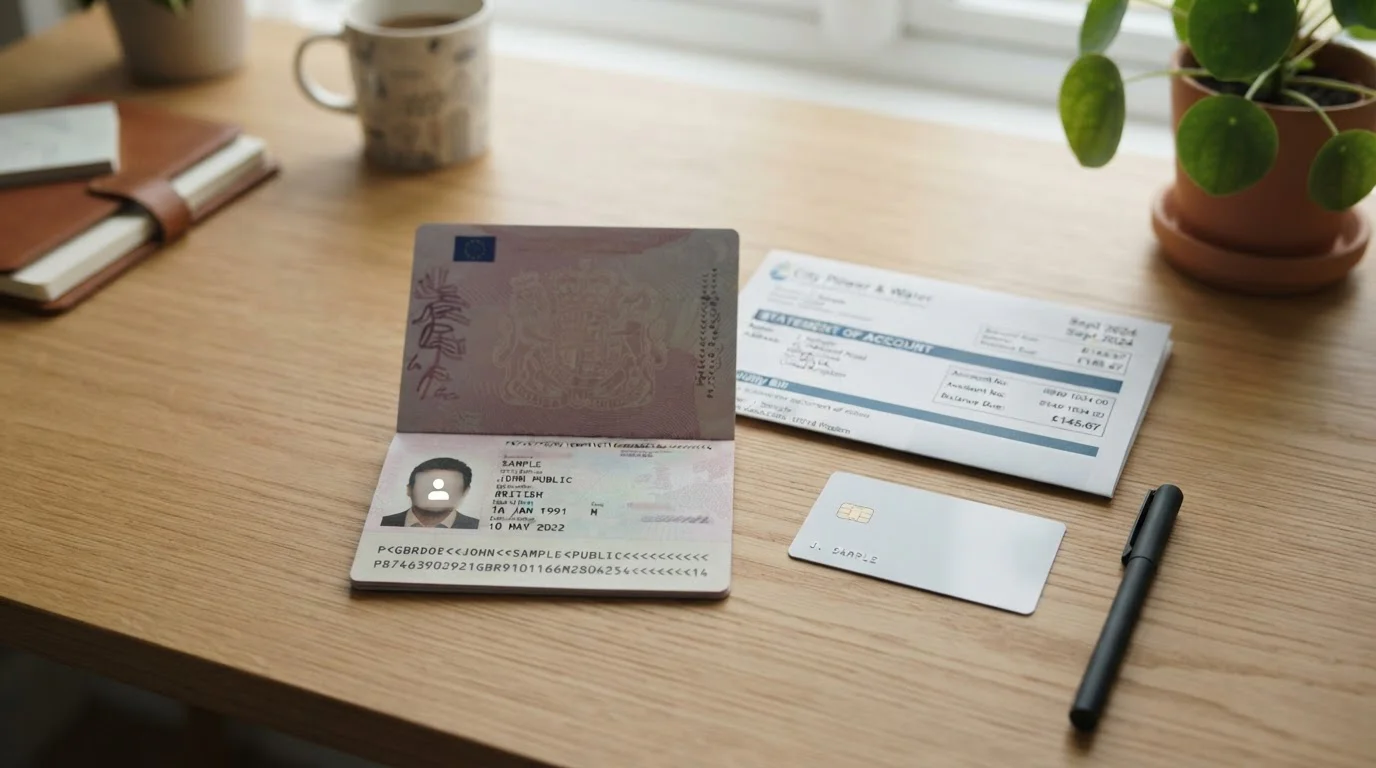
Risk-based KYC triggers include large withdrawals (thresholds vary but often sit around $2,000 to $10,000 equivalent), sudden win spikes (you deposit 0.1 BCH and try to withdraw 5 BCH an hour later), patterns that flag anti-money-laundering checks (rapid deposits and withdrawals with minimal play), and random compliance audits. If your account is flagged, the casino emails a KYC request: upload a government-issued ID (passport, driver’s license) and proof of address (utility bill, bank statement dated within three months). You’re also asked to verify your crypto wallet by signing a message or making a small deposit from the wallet you’re withdrawing to.
The verification process takes 24 to 72 hours depending on the casino’s compliance team workload. Fast operators (Stake, Cloudbet) review documents within a day. Slower operators can drag it to three or four days. If your documents are rejected (photo too blurry, address doesn’t match the account details, ID is expired), you re-submit and wait again. Ignoring a KYC request doesn’t make it go away — your withdrawal stays pending indefinitely, and most casinos will eventually close the account and forfeit the balance if you don’t comply.
Some players object to KYC on privacy grounds. A Curaçao-licensed operator has no obligation to protect your personal data under Australian privacy law, and offshore operators have been hacked or sold databases in the past. If you submit documents to five different offshore casinos, your passport and address are now held by five companies outside your jurisdiction with varying data security standards. That’s a real privacy cost. The alternative — only playing at true no-KYC casinos — limits you to operators with no gaming license and no dispute resolution mechanism, which is a different kind of risk.
Do I need to verify my identity (KYC) at Bitcoin Cash casinos?
Most BCH casinos let you deposit and play without upfront verification, but they trigger KYC at withdrawal under certain conditions: large wins (often $2,000-10,000+), red-flag patterns, or random compliance checks. Expect a government ID and proof of address request; the withdrawal stays pending until you comply. Only rare no-license operators like Betpanda run true no-KYC.
Risks, Taxes and Responsible Gambling
Playing at offshore Bitcoin Cash casinos combines the usual gambling risks with crypto-specific risks and tax obligations most players don’t plan for. The baseline gambling risk is standard: the house always has an edge, slots are negative-expectancy games over the long run, and chasing losses accelerates bankroll death. Those risks apply whether you’re playing at Crown Melbourne or an offshore crypto casino. The offshore-specific risks layer on top: no local regulatory protection, no compensation scheme, no enforceable dispute resolution, and the possibility that the operator folds or exit-scams with your balance inside.
ATO Tax Obligations on BCH Gambling
The Australian Taxation Office treats gambling winnings as assessable income, and cryptocurrency adds a second tax layer. If you win 2 BCH at a casino, that win is assessable income at the AUD equivalent value when you won it. If you then hold the BCH and its value increases before you cash out, the appreciation is a capital gain. If the value drops, it’s a capital loss. The first tax event is the gambling win; the second is the crypto price movement. Both are reportable.
Capital gains tax applies when you dispose of a crypto asset — sell it, spend it, or exchange it for another crypto. If you buy 1 BCH for $300 AUD and later cash it out for $350 AUD, the $50 gain is a taxable capital gain. If you bought at $300 and cashed out at $250, the $50 loss is a capital loss that can offset other capital gains. The tax applies whether you cash out to AUD or swap BCH for BTC inside a casino cashier. Every crypto-to-crypto trade is a disposal event under ATO rules.
Gambling losses are not deductible for recreational players. If you deposit 2 BCH and lose it all, you cannot write off that loss on your tax return. Professional gamblers (a narrow category that requires proving gambling is your primary income source) can deduct expenses and losses, but the ATO’s bar for “professional gambler” status is high and requires consistent, sustained income from gambling as a business rather than a recreational activity. For most players, wins are taxable and losses are not deductible.
Record-keeping is mandatory. The ATO expects you to track every crypto transaction: the date, the AUD value at the time, the purpose (deposit, withdrawal, trade, sale), and the wallet addresses involved. Crypto exchanges provide transaction histories, but casino cashiers often don’t, so you need to manually log BCH deposits and withdrawals if you want to calculate your cost base and capital gains accurately. Failing to report crypto income or gains is tax evasion, and the ATO has been increasing its crypto enforcement since 2020.
Do I have to pay tax on Bitcoin Cash casino winnings in Australia?
Yes. The ATO treats gambling winnings as assessable income, so a Bitcoin Cash win is taxable at the AUD value on the day you won. If the BCH price then moves before you cash out, that shift is a separate capital gain or loss. Losses are not deductible for recreational players.
Crypto Volatility Risk
Bitcoin Cash’s price fluctuates, sometimes violently. If you deposit 1 BCH when it’s worth $300 AUD and withdraw 1.5 BCH a week later when it’s worth $250 AUD, you won 50% more BCH but lost money in AUD terms. The reverse also happens: deposit at $250, win, cash out at $300, and your 20% gambling win becomes a 40% AUD gain because the coin appreciated. Crypto volatility adds an unpredictable variable to gambling outcomes that fiat deposits don’t have.
Some casinos let you lock in AUD or USD equivalent balances to avoid volatility exposure. Stake.com, 7Bit and FortuneJack offer fiat account modes where you deposit BCH, the casino converts it to AUD at the current rate, and your balance displays in AUD. When you withdraw, the casino converts AUD back to BCH at the current rate. That shifts volatility risk to the operator during the session, but you still eat the conversion spread (the difference between the buy and sell rate), and you’re still exposed to price movement if you hold BCH in your wallet before depositing or after withdrawing.
Pure crypto accounts (mBit, BC.Game, Cloudbet in crypto mode) display your balance in BCH, and you win or lose in BCH terms regardless of the AUD exchange rate. That works well if you think in crypto terms and don’t care about AUD volatility, but it makes bankroll management harder if you’re budgeting in AUD. A 0.1 BCH loss might be $30 one week and $25 the next, depending on the exchange rate. For players who want stable AUD exposure, fiat casino accounts funded via card or bank transfer eliminate crypto volatility — but they also lose the deposit speed and banking-friction benefits that drew people to crypto casinos in the first place.
No Chargeback Protection
Blockchain transactions are irreversible. If you send 0.5 BCH to a casino deposit address, that transfer is final once it’s in a block. There is no chargeback mechanism, no dispute process with the network, no way to cancel the transaction if you change your mind or realize you sent to the wrong address. That finality is a feature for the operator (no chargeback fraud) and a risk for the player (no recourse if something goes wrong).
Credit card deposits at fiat casinos offer chargeback protection — you can dispute a charge with your bank if the service wasn’t delivered or the charge was fraudulent. Crypto eliminates that safety net. If an offshore casino takes your BCH deposit and then closes your account without explanation, you have no payment-level recourse. The blockchain shows the transfer completed, and the casino has your funds. Your only avenue is the casino’s own support system and, if you get nowhere, public complaints on forums and review sites. No regulator will claw the funds back on your behalf.
That finality also means you need to triple-check wallet addresses before sending. One wrong character in the address sends your BCH to an unrecoverable wallet. The Bitcoin Cash network has checksum validation that catches most typos, but it’s not foolproof. If you accidentally send BCH to a BTC address or vice versa, the funds are lost. The casino cannot retrieve them, and no support team can reverse the transaction. Copy-paste addresses, use QR codes, and send a small test transaction first if you’re moving a large amount.
Responsible Gambling Tools
Offshore casinos are not required to offer the responsible gambling protections mandated by Australian state and territory regulators for licensed venues. Crown Melbourne and Star Sydney offer self-exclusion programs, deposit limits, reality checks and access to counseling services because they operate under local licenses that require those features. Offshore crypto casinos have no such obligation, and most offer limited tools if any.
Some operators (Stake, Cloudbet, BC.Game) provide deposit limits, loss limits, session timers and self-exclusion options in account settings. These are usually self-imposed and self-managed — you set a daily deposit limit of $100, and the system blocks further deposits once you hit it. The limit resets automatically the next day. Self-exclusion periods range from 24 hours to permanent, but enforcement depends entirely on the operator. A self-excluded player can often create a new account with a different email address and resume play, because offshore operators don’t link accounts across a jurisdiction-wide exclusion database the way Australian licensed venues do.
If you’re struggling with gambling, the offshore casino is not where you’ll find effective intervention. Contact Gambling Help Online (1800 858 858, available 24/7) or visit gamblinghelponline.org.au for free counseling and support services in Australia. Self-exclusion at the casino level is a speed bump, not a barrier. Blocking access at the wallet level (delete the casino bookmark, remove saved passwords, ask a trusted person to control your crypto wallet) is more effective than relying on the casino’s self-exclusion honor system.
What happens to my Bitcoin Cash if the casino closes?
If an offshore casino closes or exit-scams, your BCH balance is likely gone. Offshore operators sit outside Australian deposit insurance and compensation schemes. There is no regulator to claw funds back and no guarantee the operator honours withdrawals before shutting down. Stick to long-track-record brands and withdraw winnings often rather than leaving big balances.
Bitcoin Cash gives Australian players a practical way to access offshore casinos when traditional banking fails and ACMA domain blocks proliferate. It’s cheaper and faster than Bitcoin for frequent deposits and withdrawals, and the larger block size means fees stay low even when the network is busy. The eight operators covered here span the offshore spectrum from decade-old brands with Curaçao licenses to newer platforms with Anjouan permits or no license at all. Confirmed Bitcoin Cash support is strongest at mBit, BC.Game, Stake and Cloudbet; the others require live cashier verification.
The offshore reality hasn’t changed. No Australian regulator licenses these operators, no local law protects players when disputes arise, and the legal gray zone means you’re gambling at your own risk in every sense. Crypto doesn’t fix that — it just bypasses the banking friction that makes offshore gambling harder with AUD. If you’re going to play, stick with operators that have long track records, withdraw regularly so you’re not holding large balances in an account you don’t control, and understand that “instant BCH withdrawals” marketing usually means instant blockchain settlement, not instant operator approval. The blockchain keeps its promises. Offshore casinos are hit or miss.
Crypto Casinos Australia 2026 — Bitcoin, Ethereum, USDT, Solana
Content created by the «Payment Methods Online» team