
Casinos That Accept Litecoin in Australia: The Honest Offshore Map for 2026
 Available in AU
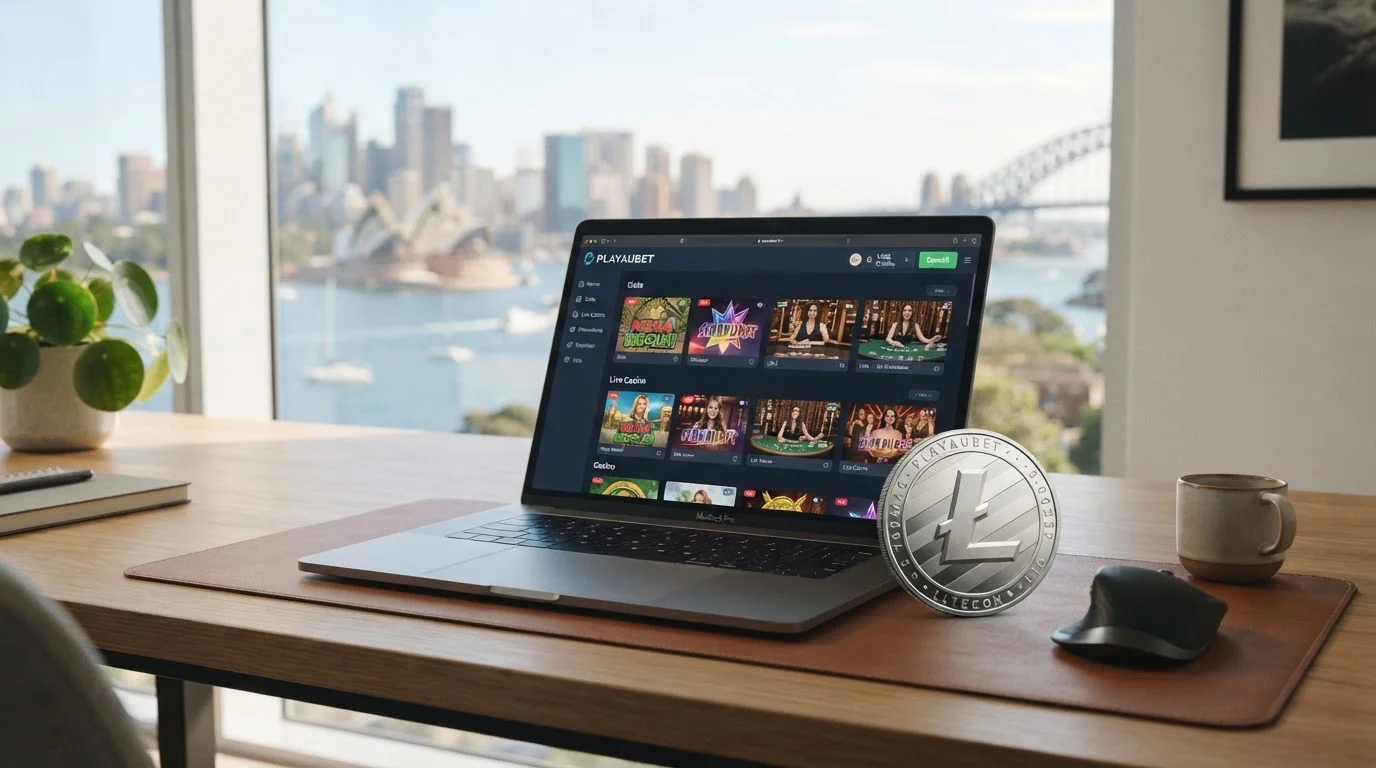
No Australian-licensed online casino exists. That sentence opens this guide because it opens the Australian gambling market. The Interactive Gambling Act 2001 prohibits anyone from providing online casino services to people in Australia, and no state or territory has carved out an exception. ACMA does not issue licenses. No white-list operates. The only casinos that take your Litecoin are offshore platforms — Curaçao, Anjouan, occasionally Malta — and every one operates outside Australian law.
The legal grey zone is not an oversight. Enforcement under the IGA targets operators, not players. ACMA has directed ISPs to block over 1,700 offshore gambling sites since 2019, issued formal warnings to operators serving the Australian market, and watched 225 services withdraw voluntarily. But no prosecution of an individual Australian player for using an offshore casino is on public record. From January 1, 2027, banks gain statutory authority to block transactions to ACMA-identified operators, tightening the noose around payment rails rather than punters.
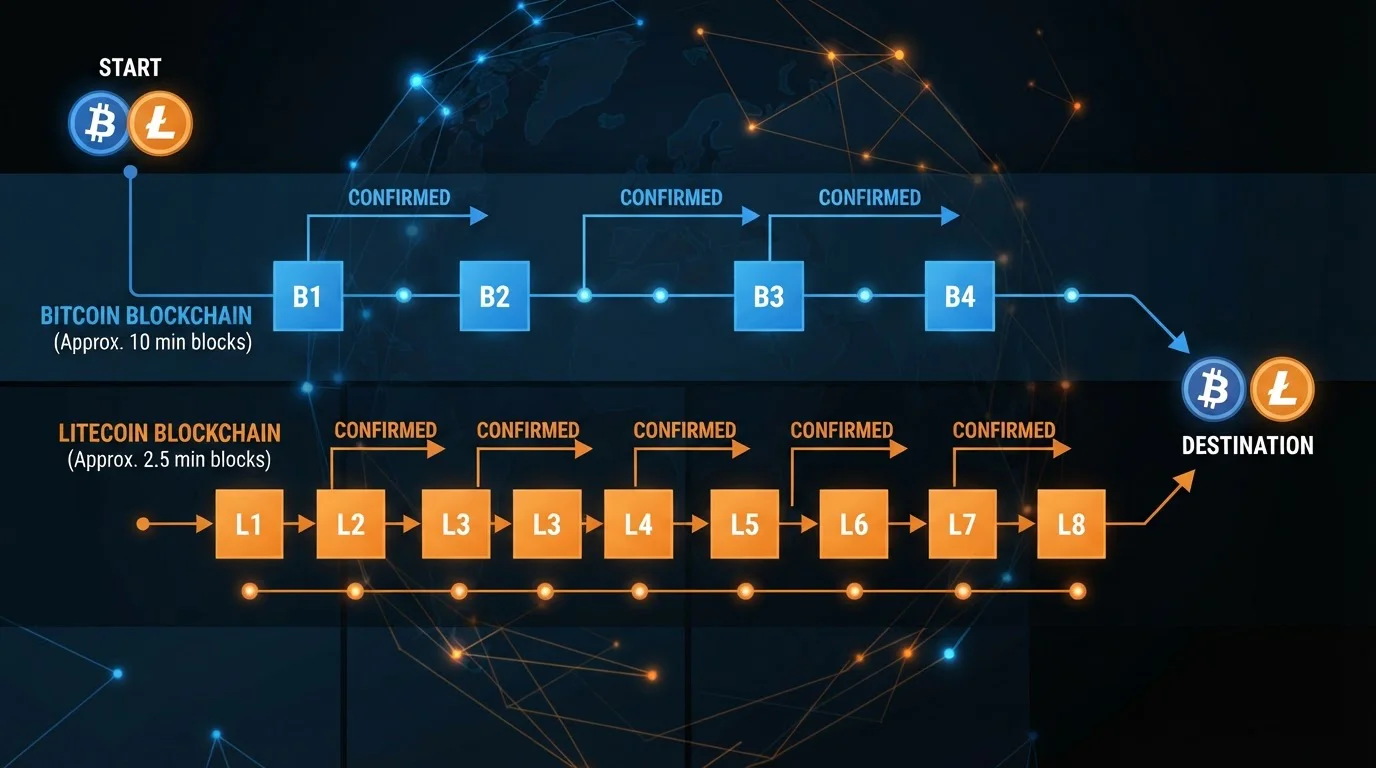
Litecoin entered this offshore landscape as the practical alternative to Bitcoin. Blocks confirm every 2.5 minutes instead of 10. Fees sit below three cents. Deposits clear in under eight minutes at most casinos, withdrawals process faster than Bitcoin once the operator releases funds, and the technical overhead is lighter for players who move money regularly in smaller amounts rather than parking a single large sum. For Australian players weighing offshore options in a market with zero domestic alternatives, Litecoin delivers speed without the gas-fee lottery Ethereum brings.
This article maps which offshore casinos accept Litecoin for Australian players as of September 2026, how LTC deposits and withdrawals actually work from an Australian exchange to a casino wallet and back, what the bonus structures look like, where the KYC tripwires sit, and what the tax implications are when you dispose of crypto to gamble. The five operators broken down below have verifiable Curaçao or Anjouan licenses, public operational histories, and confirmed LTC support. Others appear in affiliate lists but lack the transparency worth recommending.
What Is a Litecoin Casino and Why Use LTC for Gambling
A Litecoin casino is an offshore gambling platform that accepts LTC as a deposit and withdrawal method, processing transactions on the Litecoin blockchain rather than through traditional payment rails. Launched in October 2011 by Charlie Lee as a Bitcoin fork optimized for payments, Litecoin ranks third globally for crypto casino deposits behind Bitcoin and stablecoins. That position is not accidental. The technical difference is a 2.5-minute block time versus Bitcoin’s 10 minutes, which translates to faster deposit confirmations and quicker withdrawal finality once the casino releases funds.
For Australian players, the practical advantage shows up in three places. Deposits confirm in 3 to 7.5 minutes at casinos requiring one to three blockchain confirmations, compared to Bitcoin’s 20 to 60 minutes for two to six confirmations. Network fees average one to three cents per transaction as of mid-2026, a fraction of Bitcoin’s variable fees and orders of magnitude below Ethereum’s gas costs during network congestion. Withdrawals benefit from the same speed differential: once the casino processes your payout request — typically 24 to 48 hours for offshore platforms — the blockchain confirmation adds 2.5 to 7.5 minutes instead of the 10 to 60 minutes Bitcoin adds on top of operator processing time.
The technical setup behind these advantages starts with Scrypt hashing, which Litecoin uses instead of Bitcoin’s SHA-256. Scrypt was chosen to resist ASIC mining centralisation early in Litecoin’s history, though ASICs eventually arrived. Litecoin adopted SegWit (Segregated Witness) in 2017, reducing transaction size and enabling lower fees, and supports Lightning Network for instant micropayments, though casinos rarely implement Lightning as of 2026. Total supply caps at 84 million LTC versus Bitcoin’s 21 million, and the network has maintained 100% uptime since its 2011 launch.
Ethereum offers a different trade-off. It clears transactions faster than Bitcoin but introduces variable gas fees that spike during network congestion, sometimes reaching tens of dollars per transaction. Litecoin avoids that volatility. Bitcoin brings the deepest liquidity and widest casino acceptance but sacrifices speed. Stablecoins like USDT eliminate price volatility but often face stricter KYC thresholds at casinos due to AML compliance pressure. Fiat deposits via bank transfer or card work at some offshore casinos targeting Australians but introduce chargeback risk for the operator, which casinos mitigate by disallowing fiat withdrawals or imposing longer processing delays.
The comparison surfaces cleanly when the same variables sit side by side rather than scattered across five paragraphs. The grid below aggregates confirmation windows, typical network fees, and the specific trade Australian players take when choosing each rail over Litecoin.
| Rail | Avg Confirmation | Typical Network Fee | Trade-off vs LTC |
|---|---|---|---|
| Litecoin | 3–7.5 min | $0.01–$0.03 | Baseline — cheap, fast, third-tier casino coverage |
| Bitcoin | 20–60 min | $0.50–$5 | Widest acceptance, 6–8x slower, 50x fee premium |
| Ethereum | 1–5 min | $2–$50 (gas) | Faster blocks, gas fees spike unpredictably |
| USDT (stablecoin) | 1–5 min | $1–$30 | Zero AUD volatility, tighter casino KYC thresholds |
| PayID (fiat AUD) | Under 60 sec | Nil to bank fee | Native AUD onramp, exchange KYC required first |
| Card deposit | Instant | 1–3% surcharge | Chargeback rights, longest withdrawal wait |
For a player depositing weekly rather than parking a single large sum, the fee and confirmation columns compound quickly. Litecoin’s advantage over Bitcoin is minor on a single transaction and material across fifty of them in a year.
What are the fees for using Litecoin at online casinos compared to Bitcoin?
Litecoin transaction fees average $0.01 to $0.03 per transfer as of September 2026, versus Bitcoin’s $0.50 to $5 depending on congestion. Casinos typically add no extra fee on top of the blockchain cost for LTC deposits, though some operators deduct 0.5% to 2% on withdrawals to cover their own processing overhead.
The distinction matters for players who deposit and withdraw frequently in smaller amounts. A player depositing A$100 worth of LTC five times and withdrawing three times over a month pays roughly $0.24 in blockchain fees (eight transactions at $0.03 each), plus perhaps A$6 in casino withdrawal fees if the operator charges 2%. The same activity with Bitcoin might cost $8 in blockchain fees (eight transactions at $1 each) plus the same casino percentage, and with Ethereum during congestion could hit $80 or more in gas fees alone.
Best Litecoin Casinos for Australian Players in 2026
The offshore casino landscape serving Australians fragments into two tiers. The first includes operators with verifiable licenses, public ownership structures, multi-year operational histories, and independent review coverage. The second is a long tail of affiliate-promoted brands that cite Curaçao or Anjouan licensing without displaying verifiable license numbers, operate under opaque corporate structures, and lack independent verification. The five casinos broken down below sit in the first tier. Each accepts Litecoin deposits and withdrawals, holds a confirmed offshore license, and has operated long enough to surface red flags if they existed.
The comparison table aggregates key parameters. Licensing jurisdiction signals regulatory oversight level — Curaçao operates a master-license model with sub-licenses to brands, Anjouan is a lower-tier Comoros jurisdiction with lighter compliance requirements. Withdrawal speed reflects typical processing time once the operator reviews the request; the blockchain confirmation adds 2.5 to 7.5 minutes on top. Minimum deposits set the entry point. Distinguishing features highlight what separates one operator from another in practice, beyond the generic “thousands of games” claim every offshore casino makes.
| Operator | License | LTC Withdrawal Speed | Minimum Deposit | Distinguishing Feature |
|---|---|---|---|---|
| Oshi Casino | Curaçao 8048/JAZ2020-013 | 24–48 hours | A$10 LTC equivalent | Longest track record (2015), crypto-focused platform, Dama N.V. operator |
| Jeetcity Casino | Curaçao OGL/2023/174/0082 | 48 hours | A$10 LTC equivalent | Widest crypto selection (6 coins), AUD localization with PayID for fiat |
| Ignition Casino | No public license display | 24–48 hours | A$10 crypto | Only major poker room serving AU, ACMA warning July 2025 |
| Spinrise Casino | Anjouan ALSI-202509073-FI2 | 24–72 hours | A$30 LTC equivalent | Newer platform (2024–2025), Anjouan jurisdiction, higher minimum deposit |
| RetroBet Casino | Curaçao eGaming | 24–48 hours | Varies by method | Launched 2024, retro theme, ACMA ISP block-listed March 2026 |
Three operators cited in affiliate listings — Boho Casino, Mega Medusa, and Cleobetra Casino — are excluded from detailed breakdown due to insufficient public operational details and unverified licensing during research. If an offshore casino cannot surface a verifiable license number, independent review coverage, or public ownership structure, transparency is already compromised before money moves.
Oshi Casino — Long Track Record and Crypto Focus
Oshi Casino has operated since 2015 under Dama N.V., a Curaçao entity running over 40 casino brands including PlayAmo and the now-reviewed Jeetcity. The license number is 8048/JAZ2020-013, a Dama N.V. master license under Curaçao eGaming authority. Some regions see Anjouan license ALSI-202508056-FI2 or Tobique Gaming Commission E-gaming licence No. 0000002 displayed instead, reflecting Dama N.V.’s multi-jurisdictional licensing strategy. The platform runs on SoftSwiss backend infrastructure, known for robust crypto integration, and supports Litecoin alongside Bitcoin, Ethereum, Tether, and several other cryptocurrencies.
The welcome package spreads across four deposits, totaling A$6,000 plus 200 free spins. The first deposit pulls a 100% match up to A$1,500 with 150 free spins. Subsequent deposits offer diminishing percentages and smaller caps, a structure that rewards initial commitment but tapers off for casual depositors. Game library ranges from 2,200 to 3,000 titles depending on the player’s region, spanning pokies, live dealer tables, crash games, and progressive jackpots. Oshi positions itself as crypto-first rather than fiat-tolerant, a distinction that matters for processing speed and KYC thresholds — crypto-native platforms often defer identity verification longer than fiat-heavy operators.
Litecoin deposits confirm within 3 to 7.5 minutes after one to three blockchain confirmations. Withdrawals enter a 24 to 48-hour review queue, after which funds hit the player’s LTC wallet in under 10 minutes. KYC can be requested during withdrawal review, particularly for amounts above A$2,000 in a single transaction or cumulative withdrawals exceeding A$10,000. The platform does not advertise “no KYC” but defers verification until withdrawal, a common offshore pattern. Players should assume identity documents (government-issued photo ID, proof of address, selfie holding ID) will eventually be required if winnings are material.
Oshi suits players prioritising operational longevity over bleeding-edge features. A casino running since 2015 has survived multiple regulatory tightening cycles, payment processor upheavals, and the 2017–2018 crypto winter. That track record does not guarantee future solvency but suggests the operator has navigated the offshore landscape longer than most. The crypto focus also means Oshi is less likely to route LTC deposits through instant conversion to stablecoins, preserving the speed advantage Litecoin offers.
Jeetcity Casino — Wide Crypto Selection and AUD Localization
Jeetcity Casino launched in 2022 or early 2023 under Dama N.V., the same operator behind Oshi. The license is Curaçao Gaming Control Board OGL/2023/174/0082, with some sources also citing the Dama N.V. master license 8048/JAZ2020-013 and Tobique Gaming Commission E-gaming licence No. 0000002. The inconsistency in license display across jurisdictions is typical of Dama N.V.’s multi-brand approach but muddies transparency. Corporate registration is listed as 152125 in Curaçao, with some affiliate sites also referencing Novatrix SRL in Costa Rica. Game library spans 5,000 to 6,000 titles, and the platform supports six cryptocurrencies: Litecoin, Bitcoin, Ethereum, Dogecoin, Ripple, and Tether.
What distinguishes Jeetcity from Oshi is AUD localization. The cashier displays Australian dollars, supports PayID for fiat deposits, and structures bonuses in AUD rather than generic USD or EUR. The welcome bonus reaches A$7,500 plus 100 free spins, though some sources cite lower caps (A$296 to A$400), suggesting multiple bonus tiers or regional variations. Minimum withdrawal is A$75, higher than Oshi’s effective minimum, and the review period stretches to 48 hours. Players withdrawing Litecoin should expect the casino to process the request within two days, after which blockchain confirmation adds another 2.5 to 7.5 minutes.
The trade-off for wider crypto selection and AUD integration is a lower transparency score. Casino Guru assigned Jeetcity a Safety Index of 3.4 out of 10, flagging missing public Terms & Conditions and opaque corporate structure. ACMA has not publicly listed Jeetcity on ISP block notices as of mid-2026, unlike RetroBet or Ignition, but the low independent rating suggests caution. Players should verify Terms are accessible before depositing, read withdrawal conditions carefully, and document every transaction in case a dispute arises.
Jeetcity works for players who value crypto variety and prefer seeing balances in Australian dollars rather than converting USD mentally on every bet. The PayID integration also offers a fiat onramp if Litecoin price volatility becomes a concern, though fiat deposits reintroduce the chargeback risk and longer processing times crypto eliminates. The platform is newer and less transparent than Oshi but benefits from the same Dama N.V. operational backbone, which handles payment processing and game aggregation across dozens of brands.
Ignition Casino — Poker-First Platform with LTC Support
Ignition Casino entered the Australian market around 2016 after PokerStars withdrew from Australia, positioning itself as the last major poker room serving Australian players. Operated by Bamboo Media, which also runs Bovada, Slots.lv, and Café Casino, Ignition does not prominently display a gaming license on its site. Historical references to Kahnawake Gaming Commission licensing appear for the Bovada family, but Ignition’s own license status remains opaque. ACMA issued a formal warning to Bamboo Media in July 2025 for providing prohibited interactive gambling services to Australians under IGA subsection 15(2A), escalating enforcement risk above other operators on this list.
The platform splits between poker and casino. Poker offerings include cash games, daily tournaments, and anonymous tables where player screen names are hidden, a feature designed to level the playing field against professional grinders tracking recreational players. Casino side covers pokies, table games, and live dealer options, though the game library is smaller than pure casino brands like Oshi or Jeetcity. The welcome bonus reaches A$3,000, split between casino and poker deposits, and requires separate opt-ins depending on which side the player funds first.
Litecoin support sits alongside Bitcoin, Ethereum, and Tether on the crypto menu. Minimum deposit is A$10 for crypto, A$20 for fiat cards. Withdrawals cap at A$4,500 per day, lower than some offshore competitors, and processing time is advertised as “sub-1-hour” for crypto but more commonly lands in the 24 to 48-hour range based on player reports. KYC is not required at signup but can be triggered during withdrawal review, particularly for amounts above A$2,000 or when account activity flags automated compliance checks.
Ignition suits poker players willing to accept higher regulatory scrutiny in exchange for access to the only major poker room left serving Australia. The July 2025 ACMA warning did not result in ISP blocking as of mid-2026, but Bamboo Media is on ACMA’s radar, and future enforcement could include site blocks or payment rail disruption. Casino-only players have less reason to choose Ignition over Oshi or Jeetcity unless anonymous poker tables are a draw. The daily withdrawal cap and opaque licensing also weigh against it for players moving large sums.
The poker angle is both Ignition’s strength and its Achilles heel. Poker generates consistent rake revenue, which stabilises the operator’s business model and reduces reliance on casino hold. But poker also attracts regulatory attention because it involves player-versus-player wagering, which some jurisdictions classify differently from house-banked casino games. ACMA’s July 2025 warning targeted the entire service, not just poker, but Ignition’s poker prominence likely elevated its priority on the enforcement list.
Spinrise Casino — Newer Platform with Anjouan Licensing
Spinrise Casino launched in 2024 or early 2025, operated by Metlait SRL, a legal entity with limited public footprint. The license is Anjouan ALSI-202509073-FI2, issued by the Comoros offshore jurisdiction. Anjouan licenses cost operators significantly less than Curaçao eGaming licenses — roughly US$10,000 to US$20,000 annually versus Curaçao’s US$20,000 to US$50,000 — and carry lighter compliance requirements. Some regions also see Tobique Gaming Commission licence No. 0000002 displayed, another emerging alternative to Caribbean jurisdictions that surfaced in 2023–2024.
The game library exceeds 3,000 titles, covering pokies, live dealer tables, and table games from multiple providers. The welcome bonus is advertised as 111% up to A$777 plus 111 free spins, though some affiliate sources cite 400% structures, suggesting tiered or regional bonus variations. Minimum deposit is A$30, higher than Oshi’s A$10 or Ignition’s A$10, which narrows the platform’s appeal to players comfortable starting with larger amounts. Withdrawal processing takes 24 to 72 hours, the longest review window among the five operators reviewed here, though blockchain confirmation after approval still adds only 2.5 to 7.5 minutes for Litecoin.
Spinrise’s newness is both a neutrality and a risk. Newer platforms often integrate the latest payment rails and game providers, but they lack the operational history that surfaces red flags. A casino operating for two years has processed thousands of withdrawals and navigated multiple compliance cycles. A casino operating for six months has not. Anjouan licensing compounds the transparency concern — Anjouan’s regulatory framework is lighter than Curaçao’s, which itself is lighter than Malta or Gibraltar. Players depositing at Spinrise should treat it as a higher-risk option than Oshi or Jeetcity, document every transaction, and withdraw winnings promptly rather than letting balances accumulate.
The higher minimum deposit and longer withdrawal processing time position Spinrise as a secondary option unless its specific game selection or bonus structure aligns with a player’s preferences. Players prioritising speed and transparency have better options. Players willing to trade some operational certainty for a newer platform’s bonus terms may find value, but the risk-reward calculation tilts unfavourably compared to Oshi’s 2015 track record or even Jeetcity’s Dama N.V. backing.
RetroBet Casino — Retro Theme with Multi-Crypto Support
RetroBet Casino launched in 2024 under Hollycorn N.V., a Curaçao entity, holding a Curaçao eGaming license. The platform markets a retro visual theme — classic fruit machine aesthetics, 1980s colour palettes, nostalgic UI flourishes — as a differentiation point in a market saturated with neon-heavy modern interfaces. Game library is cited as 3,000 to 7,000 titles depending on the source, with the higher counts likely including game variations or regional availability differences. RetroBet supports six cryptocurrencies including Litecoin, Bitcoin, Ethereum, Dogecoin, Ripple, and Tether, matching Jeetcity’s crypto breadth.
The critical data point is ACMA’s ISP block-listing. On March 18, 2026, ACMA directed internet service providers to block access to RetroBet as an illegal online gambling site under the IGA. ISP compliance varies — some Australian ISPs implement blocks promptly, others lag, and VPN usage bypasses blocks entirely. But the ISP block signals active enforcement, raises the risk of future payment rail disruption under the January 1, 2027 bank blocking authority, and suggests ACMA identified RetroBet as actively targeting Australian customers in violation of the IGA.
The welcome bonus is structured as 100% up to A$1,000 plus 100 free spins, middle-of-the-pack compared to Oshi’s A$6,000 package or Jeetcity’s A$7,500 ceiling. Withdrawal processing follows the standard 24 to 48-hour offshore review window. Minimum deposits vary by payment method, with crypto generally requiring lower minimums than fiat options. RetroBet’s newness — launched in 2024 — means less than two years of operational history as of mid-2026, insufficient time to establish a reliability track record.
RetroBet suits players who value visual design over operational transparency and are comfortable using a VPN to bypass ISP blocks. The ACMA block-listing elevates risk above Oshi, Jeetcity, or even Spinrise. Players accessing RetroBet should expect the site may become harder to reach as ISPs implement blocks, payment rails may tighten under the 2027 bank blocking measures, and withdrawal delays could stretch if ACMA escalates enforcement. The retro theme is a cosmetic differentiator, not a functional advantage.
Which casinos accept Litecoin deposits and withdrawals for Australian players?
Five offshore casinos with verified licenses accept Litecoin as of September 2026: Oshi (Curaçao, operating since 2015), Jeetcity (Curaçao, launched 2022-2023 with AUD localisation), Ignition (poker-focused, ACMA warning July 2025), Spinrise (Anjouan, launched 2024-2025), and RetroBet (Curaçao, launched 2024, ACMA ISP block-listed March 2026). All handle LTC deposits and withdrawals.

The Legal Reality — Online Casinos and the IGA in Australia
The Interactive Gambling Act 2001 prohibits anyone from providing online casino games, online pokies, or in-play sports betting to a person physically present in Australia. Section 15(1) and subsection 15(2A) target providers, not players. No state or territory issues licenses for online casinos. No Australian casino white-list exists. ACMA, the Australian Communications and Media Authority, enforces the IGA by directing ISPs to block offshore gambling sites and issuing warnings to operators serving the Australian market, but individual player prosecutions are not on record.
Since November 2019, ACMA has directed ISPs to block access to over 1,700 illegal gambling sites. More than 225 offshore services withdrew from the Australian market voluntarily between 2017 and 2026 after receiving ACMA warnings. Formal warnings escalate enforcement — ACMA issued one to Bamboo Media (Ignition Casino’s operator) in July 2025, signaling heightened scrutiny. ISP blocks are uneven in implementation, vary by provider, and are easily bypassed with VPNs, but they mark sites as active enforcement targets.
A credit card and crypto payment ban targeting offshore gambling operators commenced June 11, 2024. The measure aimed to disrupt payment rails but faces technical limits — cryptocurrency transactions route around traditional banking infrastructure by design, and offshore casinos adapted by partnering with crypto payment processors operating outside Australian jurisdiction. The ban tightened fiat onramps but left crypto relatively unaffected.
From January 1, 2027, banks gain statutory authority to block transactions to illegal gambling operators identified by ACMA. This represents a significant escalation beyond ISP-level blocking. Banks will be empowered to freeze or reject transfers to offshore casino payment processors, crypto exchanges known to serve gambling sites, and any financial entity ACMA designates as facilitating illegal gambling services. The practical effect depends on how aggressively banks implement the authority and how quickly offshore operators rotate payment partners, but the 2027 measure targets the financial chokepoints ISP blocks cannot reach.
Advertising restrictions for offshore operators also tighten from January 1, 2027. The specifics are still being defined as of mid-2026, but the aim is to limit offshore casinos’ ability to market to Australian audiences through affiliates, social media, and search advertising. Enforcement will likely focus on Australian-based affiliates and advertising platforms with Australian operations rather than offshore operators themselves, but the cumulative effect narrows the visibility of offshore casinos in Australian search results and social feeds.
Players using offshore casinos forfeit Australian consumer protections. BetStop, the National Self-Exclusion Register, binds only Australian-licensed services, which excludes all online casinos. Australian Consumer Law (ACL) recourse does not extend to offshore operators. The Australian Financial Complaints Authority (AFCA) has no jurisdiction over Curaçao or Anjouan-licensed entities. If a dispute arises — a delayed withdrawal, a confiscated balance, a bonus term interpreted unfavourably — the player’s recourse is limited to the offshore operator’s own complaints process and the licensing jurisdiction’s dispute resolution mechanism, which varies widely in responsiveness and player-friendliness.
Is it legal for Australians to play at Litecoin casinos in 2026?
Playing at offshore Litecoin casinos sits in a legal grey zone. The IGA prohibits operators from providing online casino services to Australians, but enforcement targets providers, not players. No individual prosecution is on public record as of September 2026. Players forfeit BetStop coverage and ACL recourse, and banks gain transaction-blocking authority from January 1, 2027.
How to Deposit and Withdraw with Litecoin at Australian Casinos
The workflow for moving Litecoin from an Australian bank account to an offshore casino and back runs through three steps: buy LTC on an AUSTRAC-registered Australian exchange, transfer LTC to the casino wallet, and reverse the process for withdrawals. Each step introduces a delay, a fee, and a point where the transaction can fail if addresses are wrong or confirmations stall. The total time from AUD in a bank account to LTC credited at the casino typically ranges from 10 to 25 minutes for a first deposit, dropping to 5 to 10 minutes for subsequent deposits once the exchange account is funded and verified.
Step 1: Buy LTC on an Australian Exchange
Four AUSTRAC-registered Australian exchanges support Litecoin and integrate with PayID for instant AUD bank transfers: CoinSpot, Swyftx, Independent Reserve, and BTC Markets. AUSTRAC registration means the exchange complies with Australian anti-money laundering and counter-terrorism financing regulations, which requires identity verification for accounts but also provides a legal onramp for Australian residents buying crypto. PayID is the Australian instant bank transfer system that clears transactions in under 60 seconds, faster than BPAY or traditional bank transfers.
CoinSpot and Swyftx are the largest by Australian user base. Account setup requires email, phone number, government-issued photo ID (driver’s license or passport), and proof of address (utility bill or bank statement under three months old). Verification typically completes in 24 to 72 hours for first-time users, faster for subsequent accounts. Once verified, the player links a bank account, initiates a PayID deposit, and receives AUD in the exchange wallet within 60 seconds. CoinSpot charges a flat 1% fee on LTC purchases; Swyftx charges 0.6% on the spread. Both fees are rolled into the buy price rather than itemised separately.
Buying A$100 worth of Litecoin on CoinSpot costs A$101 after fees. The LTC appears in the exchange wallet instantly at the quoted price, and the player can immediately withdraw it to an external wallet or leave it on the exchange. Leaving crypto on an exchange introduces custodial risk — the exchange holds the private keys, not the player, and exchange insolvency or hacks can result in loss of funds. For casino deposits, the player withdraws LTC from the exchange to the casino’s deposit address within minutes of purchase, minimising exchange exposure.
Step 2: Transfer LTC to Your Casino Wallet
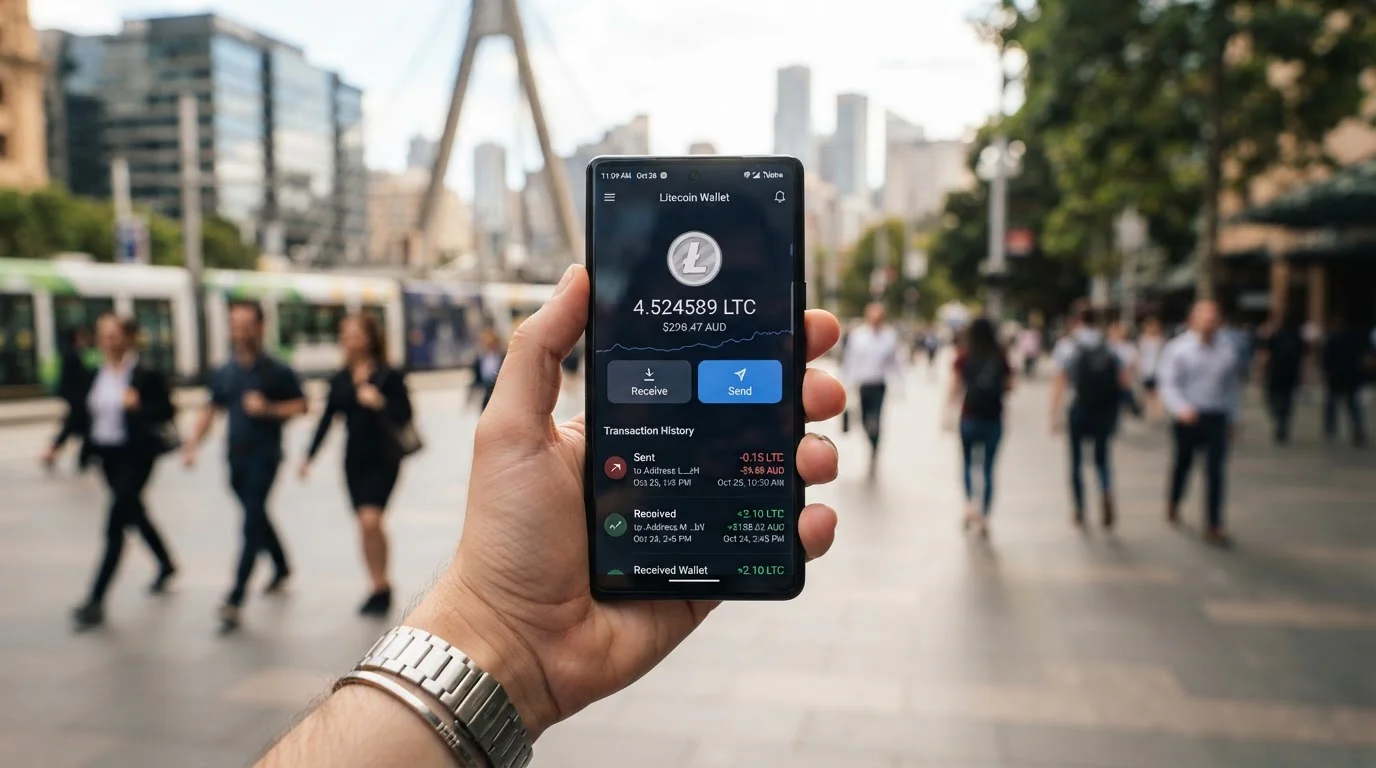
The casino provides a unique LTC deposit address in the cashier, typically a string of 26 to 34 alphanumeric characters beginning with “L” (legacy address format) or “M” (SegWit address format starting with “M” or “ltc1” for Bech32). Players copy this address exactly — one wrong character sends funds to an unrecoverable address or triggers an error. The exchange’s withdrawal screen asks for the destination address, the amount to send, and confirmation. CoinSpot and Swyftx process LTC withdrawals to external addresses in 15 to 30 minutes after the player confirms the transaction and passes any two-factor authentication checks.
Once the LTC leaves the exchange, the blockchain takes over. Litecoin blocks confirm every 2.5 minutes on average, and casinos typically require one to three confirmations before crediting the deposit. One confirmation takes 2.5 minutes, three confirmations take 7.5 minutes. The casino’s cashier displays a pending deposit with a confirmation counter. Once the required confirmations arrive, the LTC balance appears in the casino account, and the player can wager. The entire process from initiating the exchange withdrawal to seeing the balance in the casino account averages 20 to 35 minutes for a first deposit, dropping to 10 to 15 minutes for subsequent deposits when the exchange wallet is already funded.
Network fees for LTC transactions average $0.01 to $0.03 per transfer. CoinSpot and Swyftx absorb this cost for withdrawals in some cases or pass it through as a flat fee. Players should verify the exchange’s LTC withdrawal fee schedule before transferring — some exchanges charge a fixed LTC fee (e.g., 0.001 LTC, roughly $0.05 to $0.10 depending on LTC’s AUD price), others deduct a percentage. The casino itself does not charge a fee for receiving LTC deposits at the operators reviewed here, though some offshore casinos impose deposit fees for certain payment methods.
Step 3: Withdraw LTC Back to Your Exchange
Withdrawals reverse the flow. The player initiates a withdrawal in the casino cashier, enters their exchange LTC deposit address (found in the exchange wallet under “Receive LTC”), specifies the amount, and submits. The casino enters a review period, typically 24 to 48 hours for offshore operators, during which the withdrawal is pending and cannot be cancelled. This review window is where KYC requests surface — if the casino flags the withdrawal for identity verification, the player receives an email requesting documents (photo ID, proof of address, selfie holding ID), and the withdrawal remains pending until verification clears.
Once the casino approves the withdrawal, it broadcasts the LTC transaction to the blockchain. Confirmations take 2.5 to 7.5 minutes depending on the number of confirmations the exchange requires to credit incoming deposits. CoinSpot and Swyftx credit incoming LTC after one or two confirmations, adding 2.5 to 5 minutes to the total withdrawal time. The LTC appears in the exchange wallet, and the player can sell it for AUD, transfer it to a bank account via PayID (instant), or hold it.
The total withdrawal time from clicking “withdraw” in the casino to AUD landing in a bank account is dominated by the casino’s review period, not the blockchain. A 24-hour casino review plus 5 minutes of blockchain confirmations plus 60 seconds of PayID bank transfer means roughly 24 hours and 6 minutes total. Faster casinos processing withdrawals in 12 hours still add the same blockchain delay. Bitcoin adds 10 to 60 minutes of blockchain time instead of LTC’s 2.5 to 7.5 minutes, which compounds annoyance without materially affecting the overall timeline when the casino review stretches to a full day.
How do I buy Litecoin in Australia to deposit at a casino?
Open an account on an AUSTRAC-registered exchange such as CoinSpot or Swyftx, complete identity verification (photo ID and proof of address, 24-72 hours), link a bank account, deposit AUD via PayID, and buy Litecoin. Withdraw the LTC to the casino’s deposit address. First deposit takes 20-35 minutes from AUD to LTC in casino.
How long do Litecoin deposits and withdrawals take at online casinos?
Litecoin deposits confirm in 3 to 7.5 minutes after one to three blockchain confirmations, with the casino crediting immediately upon reaching them. Withdrawals depend on the operator’s review period (24 to 48 hours) plus 2.5 to 7.5 minutes on-chain. The blockchain adds negligible time compared to the review queue.
Litecoin Casino Bonuses — What to Expect
Offshore casinos commonly boost welcome bonuses for crypto deposits by 10 to 25 percentage points above fiat offers. A casino offering a 100% match up to A$500 for card deposits might offer 125% up to A$750 for crypto deposits, or structure the crypto bonus with a higher cap (A$1,000 versus A$500). The rationale is cost — crypto deposits carry lower processing fees than card transactions, no chargeback risk, and faster settlement. Casinos pass some of that cost saving to players as larger bonuses, though the wagering requirements often tighten to offset the generosity.
Typical Litecoin casino welcome bonuses range from 100% to 150% match on the first deposit, with caps between A$1,000 and A$7,500 depending on the operator. Oshi’s four-deposit package totals A$6,000 plus 200 free spins. Jeetcity reaches A$7,500 plus 100 spins. Ignition splits A$3,000 between casino and poker. Spinrise advertises 111% up to A$777, a smaller cap reflecting its newer status and tighter bonus budget. Wagering requirements land between 30x and 50x the bonus amount, meaning a A$100 bonus with 40x wagering requires A$4,000 in total wagers before the bonus converts to withdrawable cash.
Wagering contribution varies by game type. Pokies typically contribute 100% of each bet toward wagering requirements. Table games contribute 10% to 25%, meaning a A$10 blackjack bet counts as A$1 to A$2.50 toward the requirement. Live dealer games often contribute 5% to 10% or are excluded entirely. Progressive jackpot slots are usually excluded. These restrictions funnel bonus players toward high-house-edge pokies, where the casino’s expected return offsets the bonus cost. Players chasing bonuses should verify contribution rates in the Terms before depositing — a A$1,000 bonus with 40x wagering looks attractive until table games contribute only 10%, effectively multiplying the requirement by 10.
Maximum bet limits during wagering are critical. Most offshore casinos cap bets at A$5 to A$10 per spin or hand while a bonus is active. Exceeding the limit voids the bonus and any winnings derived from it, even if the breach was accidental. A player betting A$12 per spin on a pokie with a A$10 cap forfeits the entire bonus balance and any winnings accumulated during that session. Casinos enforce this through automated tracking, and appeals rarely succeed. The safeguard is manual: set bet size to A$5 or less, leave it there until wagering clears, and verify the bonus balance has converted to cash before increasing stakes.
Validity periods add time pressure. Bonuses typically expire 7 to 30 days after activation, and any unmet wagering requirement at expiry forfeits the bonus and associated winnings. A A$500 bonus with 40x wagering (A$20,000 total wagers) expiring in 7 days requires roughly A$2,850 in wagers per day. Players wagering A$5 per pokie spin need 570 spins per day, or roughly 40 spins per hour over a 14-hour gambling session. Compressed timelines push players toward higher-variance slots and longer sessions, increasing the house’s opportunity to grind down the bonus.
A newer trend at some offshore casinos is “no-sticky” or “forfeitable” bonuses. Under this structure, the player can forfeit the bonus at any time and immediately withdraw their deposited funds plus any winnings accumulated, losing only the bonus amount itself. Traditional “sticky” bonuses lock the deposit and bonus together until wagering clears or the bonus expires. No-sticky bonuses offer an escape hatch if wagering requirements prove unattainable or if the player hits a large win early and prefers to cash out rather than risk grinding through requirements. Not all offshore casinos offer no-sticky structures, and Terms vary, but the option is worth checking before depositing.
Reload bonuses and loyalty programs extend beyond the welcome package. Some operators offer daily reload bonuses for Litecoin deposits, typically 25% to 50% match up to A$100 to A$300, claimable once per day. Loyalty programs assign points per dollar wagered, redeemable for cash, free spins, or bonus funds. VIP tiers unlock higher cashback percentages, faster withdrawals, and dedicated account managers. The value of these programs depends on wagering volume — recreational players depositing A$100 monthly see negligible benefit, while high-volume players depositing thousands weekly can extract material cashback.

Anonymous Play and KYC Requirements at LTC Casinos
Offshore casinos advertising “no KYC” or “anonymous play” rarely operate without identity verification in practice. The marketing claim typically means KYC is not required at signup, allowing players to register with only an email address and password. Verification is deferred until withdrawal, triggered by specific thresholds, or reserved for accounts flagged by automated compliance systems. The distinction matters because players depositing without verification may find themselves locked into a multi-day identity verification process when they attempt to withdraw, delaying access to winnings.
Common KYC trigger points for offshore crypto casinos include single withdrawals above A$2,000 to A$5,000, cumulative withdrawals exceeding A$10,000, first withdrawals greater than 10 times the first deposit, and account activity flagged as suspicious by automated systems (rapid deposits and withdrawals, bonus abuse patterns, login from restricted jurisdictions via VPN). Curaçao Gaming Control Board tightened AML requirements in 2024–2025, pressuring licensed operators to implement stricter verification procedures. Anjouan jurisdictions have lighter AML enforcement, but operators still reserve KYC rights in Terms to cover compliance exposure.
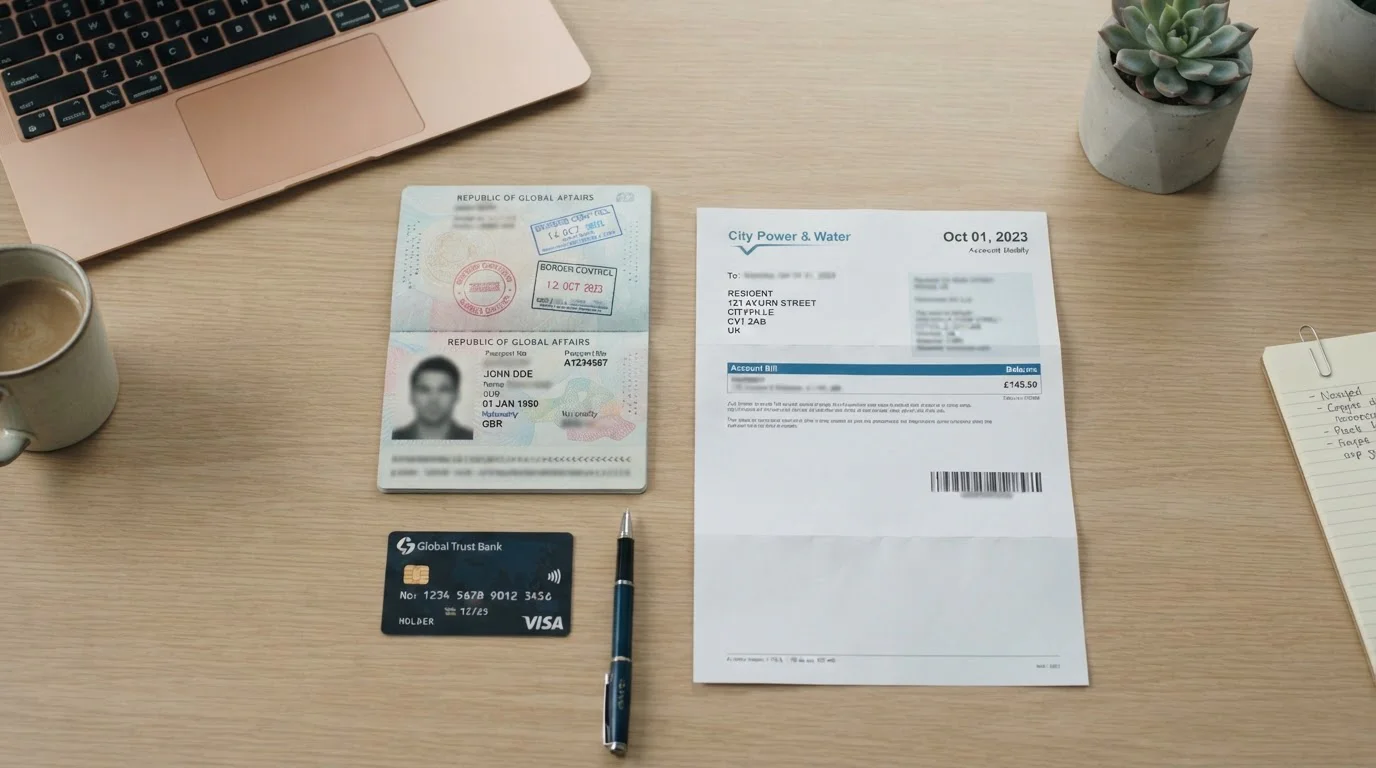
The KYC process at offshore casinos typically requires three documents: government-issued photo ID (driver’s license, passport, or national ID card), proof of address (utility bill, bank statement, or government letter under three months old), and a selfie holding the photo ID with the casino’s name and current date written on paper in the frame. Some casinos also request source-of-funds documentation for large withdrawals, such as payslips, bank statements showing income, or tax returns. Processing takes 24 to 72 hours after all documents are uploaded, longer if documents are rejected for poor image quality or mismatched details.
True “no KYC” casinos — those that never request identity verification regardless of withdrawal amount — are rare as of 2026 and typically operate without any recognized gaming license, elevating the risk of exit scams or payment defaults. Licensed offshore operators, even those with Curaçao or Anjouan licenses, maintain KYC infrastructure to satisfy licensing conditions and banking partners. Players should assume KYC will eventually be required at any licensed offshore casino and prepare documents in advance rather than scrambling during a withdrawal delay.
Anonymous play in the context of offshore casinos usually refers to privacy from other players rather than from the casino itself. Ignition Casino’s anonymous poker tables hide player screen names, preventing opponents from tracking betting patterns across sessions. This anonymity protects recreational players from professional grinders using HUDs (heads-up displays) and databases to exploit tendencies. But the casino still knows the player’s identity once KYC clears, and regulatory authorities with jurisdiction over the casino can compel disclosure. Anonymity from the house does not exist; anonymity from other players is the extent of what offshore operators offer.
Bitcoin and Litecoin deposits offer more transactional privacy than fiat deposits because blockchain transactions do not inherently link to real-world identities. But the privacy evaporates at the exchange onramp and offramp. Australian exchanges require KYC, linking the player’s identity to their exchange wallet address. Once the player transfers LTC from the exchange to the casino, blockchain analysis can trace the flow. Privacy coins like Monero offer stronger anonymity, but few offshore casinos accept Monero due to regulatory pressure and payment processor reluctance. Litecoin provides pseudonymity, not anonymity, and that pseudonymity collapses at regulated touchpoints.
Do I need to verify my identity (KYC) at Litecoin casinos?
Most offshore Litecoin casinos defer KYC until withdrawal, allowing signup with only email. Verification usually triggers when withdrawals exceed A$2,000 to A$5,000 in a single transaction, cumulative withdrawals surpass A$10,000, or account activity flags compliance. Licensed Curaçao and Anjouan operators reserve KYC rights under AML pressure. Prepare photo ID in advance.
Can I play anonymously at Litecoin casinos from Australia?
Offshore casinos offer limited anonymity. Most allow signup without KYC, deferring verification until withdrawal, but licensed operators enforce checks once specific thresholds cross. Blockchain transactions are pseudonymous, not anonymous, and Australian exchanges require KYC that links your identity to your LTC wallet. True no-KYC casinos operate without recognized licenses and carry higher payment-default risk.
Game Types Available at Litecoin Casinos
Pokies dominate the game libraries at offshore casinos serving Australians. The term “pokies” is Australian slang for slot machines, and offshore operators targeting the AU market prioritize pokie selections over table games or live dealer offerings. Typical libraries range from 2,000 to 6,000 pokies, sourced from providers like Pragmatic Play, NetEnt, Microgaming, Play’n GO, and smaller studios. Themes span mythology, adventure, fruit classics, branded titles, and Megaways mechanics, which replace fixed paylines with dynamic reel structures delivering up to 117,649 ways to win per spin.
RTP (return to player) percentages vary by title, typically ranging from 94% to 97%. Higher RTP means the slot returns more of wagered funds to players over time, though individual sessions can swing wildly above or below theoretical RTP due to variance. Offshore casinos sometimes publish RTP figures in game info screens; when they do not, players can cross-reference RTP data from provider websites or independent databases. Low-RTP slots (below 95%) tilt house edge higher and should be avoided unless the theme or mechanics outweigh the statistical disadvantage.
Live dealer games bring real-time video streams of croupiers dealing cards or spinning roulette wheels, hosted in studios operated by providers like Evolution, Pragmatic Play Live, and Ezugi. Live blackjack, roulette, baccarat, and poker variants are standard. Live game shows (Crazy Time, Monopoly Live, Mega Ball) add gamification layers with bonus rounds and multipliers. Live dealer games typically have higher minimum bets than RNG table games (A$1 to A$5 minimums versus A$0.10 to A$1 for RNG versions) and contribute less toward bonus wagering requirements, making them less attractive for bonus hunters but preferred by players valuing the authenticity of a live dealer over software RNG.
Table games — blackjack, roulette, baccarat, craps, poker variants — appear in RNG versions at most offshore casinos. RNG (random number generator) table games use software to simulate card shuffles and wheel spins, processing bets instantly without waiting for other players or dealer actions. RTP for RNG blackjack with optimal strategy can reach 99.5%, making it the lowest house edge game in most casinos. Roulette RTP depends on the variant — European roulette (single zero) offers 97.3%, American roulette (double zero) drops to 94.74%. Offshore casinos often host both variants, and players should default to European roulette unless American-specific side bets justify the higher house edge.
Mobile and New Casino Considerations
Every offshore casino reviewed here operates as a mobile-responsive website or progressive web app (PWA), eliminating the need for app downloads from Google Play or the Apple App Store. Native apps for offshore gambling platforms are rare in Australia due to app store policies prohibiting real-money gambling apps from unlicensed operators. PWAs deliver app-like functionality — home screen icons, full-screen mode, offline caching — without requiring app store approval. Players access the casino via mobile browser, add the site to the home screen, and launch it as though it were a native app.
Mobile gameplay works identically to desktop for pokies and table games. Live dealer games scale to smaller screens but benefit from larger displays for readability. Depositing and withdrawing Litecoin from mobile follows the same workflow as desktop, though copying LTC addresses from the casino cashier to the exchange app introduces more opportunities for error on smaller touchscreens. Players should double-check address accuracy, enable two-factor authentication on both casino and exchange accounts, and avoid using public Wi-Fi for financial transactions due to man-in-the-middle attack risks.
New casinos launched in 2024 and 2025 — including Spinrise and RetroBet from this review — offer the latest game integrations and payment rail partnerships but lack the operational track record older platforms provide. Newer operators may process withdrawals faster during their customer acquisition phase, hoping to build positive reviews, or slower if cash reserves are thin. The transparency test for new casinos is whether they publish verifiable license numbers, ownership details, and Terms & Conditions upfront. A new casino displaying a vague “licensed and regulated” claim without specifics should be avoided.
Tax Implications — CGT on Crypto Gambling in Australia
Australian taxation of gambling winnings and crypto disposals operates under two separate frameworks that intersect awkwardly when a player uses Litecoin to gamble. Gambling winnings are not taxable income for recreational punters under Income Tax Ruling IT 2655, issued by the Australian Taxation Office in 1991. Whether you win A$100 or A$100,000 at a casino, the ATO does not tax the winnings and does not allow you to deduct losses. But the ATO treats cryptocurrency as a capital gains tax (CGT) asset, and disposing of crypto — including converting it to gamble — triggers a CGT event.
Here is the collision. A player buys A$1,000 worth of Litecoin, holds it for two months while LTC appreciates 20%, then transfers A$1,200 worth of LTC to an offshore casino. The act of transferring LTC to the casino wallet is a disposal for CGT purposes. The player’s cost base is A$1,000, the disposal proceeds are A$1,200, and the capital gain is A$200. That A$200 gain is taxable, added to the player’s assessable income for the year, and taxed at the player’s marginal rate (19% to 45% plus 2% Medicare levy). If the player held the LTC for more than 12 months before disposing, the 50% CGT discount applies, halving the taxable gain to A$100.
Gambling winnings themselves remain untaxed. If the player turns the A$1,200 LTC deposit into A$3,000 at the casino and withdraws A$3,000 worth of LTC, the A$1,800 profit from gambling is not taxable. But when the player sells the A$3,000 LTC back to AUD on an Australian exchange, another CGT event occurs. The cost base for the withdrawn LTC is the AUD value at the time of withdrawal (A$3,000), and the disposal proceeds are the AUD received at sale. If LTC price held steady, the second CGT event produces zero gain or loss. If LTC dropped 10% between withdrawal and sale, the player realises a A$300 capital loss, offsettable against other capital gains but not against ordinary income.
The 50% CGT discount for assets held over 12 months is scheduled to end on July 1, 2027, under the Treasury Laws Amendment (Tax Reform No. 1) Act 2026. After that date, capital gains will be taxed at full marginal rates regardless of holding period, significantly increasing tax liability for long-term crypto holders. Players buying Litecoin in 2026 and disposing of it in 2027 or later will face higher effective tax rates than those disposing before July 1, 2027, assuming they held the LTC for over 12 months.
Record-keeping requirements are strict. The ATO expects taxpayers to track the AUD cost base of every crypto acquisition, the date and AUD value of every disposal, and the resulting capital gain or loss. Players gambling with Litecoin should export transaction histories from their exchange (CoinSpot and Swyftx provide CSV downloads), record the AUD value of LTC at the time of each casino deposit and withdrawal, and calculate CGT events at financial year end. Crypto tax software like Koinly, CryptoTaxCalculator, or CoinTracking can automate tracking by importing exchange and wallet transaction data, though manual verification is advisable.
Capital losses from crypto disposals can offset capital gains but not ordinary income. A player realising a A$500 capital loss from a Litecoin disposal can offset it against a A$1,000 capital gain from selling shares, reducing taxable capital gains to A$500. But if the player has no other capital gains in the same financial year, the loss carries forward to future years and offsets future capital gains, never converting to a deduction against salary or business income.
Are gambling winnings in crypto taxable in Australia?
Gambling winnings themselves are not taxable for recreational punters under IT 2655, whether crypto or fiat. However, disposing of cryptocurrency to gamble is a CGT event. If LTC appreciates before you transfer to a casino, that gain is taxable at your marginal rate. Selling crypto winnings back to AUD triggers another CGT event.

Provably Fair Gaming and Responsible Gambling
Provably fair gaming is a cryptographic verification system allowing players to confirm that game outcomes were not manipulated after bets were placed. It works by hashing a server seed (generated by the casino) and a client seed (provided by the player or generated in the browser) to produce a verifiable result. After the round completes, the casino reveals the seeds, and the player can recompute the hash to verify the outcome matched the seeds. If the hash matches, the result was predetermined and the casino could not have altered it mid-play. If the hash does not match, the casino cheated.
Few offshore casinos implement provably fair across their entire game library because most pokies and table games are sourced from third-party providers (Pragmatic Play, NetEnt, Evolution) that use proprietary RNG systems, not provably fair cryptography. Provably fair is more common at crypto-native casinos offering in-house dice, crash, or plinko games built on blockchain or hash-based RNG. The five operators reviewed here do not emphasise provably fair gaming, relying instead on third-party RNG certification from labs like eCOGRA, iTech Labs, or GLI. RNG certification confirms that the random number generator produces statistically random outcomes but does not allow individual players to verify each spin or hand the way provably fair does.
Responsible gambling tools at offshore casinos lag behind Australian-licensed operators. BetStop, the National Self-Exclusion Register binding Australian-licensed bookmakers and land-based venues, does not extend to offshore casinos. Players cannot self-exclude from offshore platforms through BetStop. Some offshore operators offer deposit limits, loss limits, session time limits, and self-exclusion options in account settings, but enforcement varies. A player setting a A$500 weekly deposit limit at one offshore casino can simply open an account at another offshore casino and deposit another A$500 there. No cross-operator exclusion system exists in the offshore market.
GamCare, Gambling Therapy, and Gamblers Anonymous provide resources for Australian players struggling with gambling harm. GamCare operates a live chat and phone helpline. Gambling Therapy offers online support forums and one-on-one counseling. Gamblers Anonymous runs peer support meetings across Australia. None of these organisations are affiliated with offshore casinos, and offshore operators generally limit responsible gambling support to links to these third-party resources rather than providing direct intervention.
Players concerned about developing gambling problems should set personal limits before depositing, treat gambling as entertainment with a defined budget rather than a revenue source, avoid chasing losses, and recognise warning signs: gambling with money needed for bills, lying to family about gambling activity, borrowing to fund gambling, or feeling compelled to gamble despite negative consequences. Offshore casinos maximise player engagement through bonuses, loyalty programs, and game design that obscures loss rates. The house edge is mathematically guaranteed to grind down player balances over time, and no betting system or strategy overcomes it.
—
This article mapped the offshore Litecoin casino landscape for Australian players in September 2026. Five operators with verified licenses — Oshi, Jeetcity, Ignition, Spinrise, and RetroBet — accept LTC deposits and withdrawals, though transparency, operational history, and enforcement risk vary significantly across them. No Australian-licensed online casino exists, the IGA prohibits operators from serving Australians, and players using offshore platforms forfeit consumer protections while assuming legal grey-zone risk that escalates with the January 2027 bank blocking measures.
Litecoin offers faster confirmations and lower fees than Bitcoin, but the speed advantage is marginal compared to the 24-to-48-hour withdrawal review periods offshore casinos impose. KYC thresholds are opaque, typically triggering around A$2,000 to A$5,000 in single withdrawals, and crypto disposals for gambling generate taxable CGT events even though gambling winnings themselves are untaxed. Players buying LTC on Australian exchanges, depositing at offshore casinos, and withdrawing winnings back to AUD should track every disposal, calculate capital gains, and file accurate tax returns.
The 2027 regulatory tightening — bank blocking authority, advertising restrictions, continued ISP blocks — will narrow the offshore casino market’s accessibility without eliminating it. Operators adapt by rotating payment partners, leveraging crypto’s decentralised infrastructure, and targeting jurisdictions with lighter enforcement. Australian players determined to gamble online will find ways around blocks, but the friction increases, the risk compounds, and the consumer protection vacuum deepens. Transparency, documentation, and disciplined bankroll management are the only safeguards players control in a market designed to separate them from their money as efficiently as possible.
Crypto Casinos Australia 2026 — Bitcoin, Ethereum, USDT, Solana
Content created by the «Payment Methods Online» team