
Anonymous Crypto Casino Australia: Which Offshore Platforms Actually Skip Verification in 2026
 Available in AU

Crypto casinos that actually let you play without uploading a passport scan exist. So do casinos that promise anonymity in the marketing copy but freeze your first decent withdrawal until you send three forms of ID and a selfie holding today’s newspaper.
Australian players chasing privacy-preserving gambling land in a grey zone where federal law bans operators from offering online casino games locally, every accessible platform sits offshore with a Curaçao or Anjouan license, and “no KYC” means different things at different thresholds. Some offshore operators never ask for documents on withdrawals under two grand. Others request verification the moment you cash out, crypto or not.
This guide maps which offshore crypto casinos accept Australian players with genuinely reduced identity checks, which coins move fastest from casino wallet to your own, what the realistic withdrawal-speed and KYC-threshold differences are between operators, and where Australian law actually stands on playing at offshore platforms in 2026. No hype, no affiliate spin dressed as objectivity, and no pretending blockchain gambling makes you invisible when exchange KYC and public ledgers ensure it does not.

What “Anonymous Crypto Casino” Actually Means in 2026
Walk through the door marked “anonymous Bitcoin casino” and you will find a spectrum, not a binary. At one end: platforms requiring only a wallet address to deposit and play, no email, processing small withdrawals without ever requesting a document. At the other: casinos accepting crypto deposits but enforcing full KYC at the first withdrawal regardless of amount, rendering the “anonymous” label pure marketing.
Most offshore crypto casinos landing in Australian search results sit somewhere between those poles. They operate as pseudonymous rather than truly anonymous. Signup asks for an email address and a password. Deposits arrive via blockchain transactions tied to your wallet address, not your legal name. Withdrawals under a certain threshold—commonly between one and five thousand dollars equivalent—process without identity verification. Above that line, or if the platform’s AML system flags unusual activity, documents get requested.
Blockchain transactions themselves are not anonymous. Bitcoin, Ethereum, Tether, and most altcoins record every transfer on public ledgers visible to anyone. Your wallet address acts as a pseudonym, but linking that address to your real identity happens at predictable choke points. If you bought crypto through a KYC exchange like CoinSpot or Binance Australia, that exchange already connected your wallet to your passport and bank account. The casino might not know who you are by name when you deposit, but the exchange does, and regulatory agencies can connect those dots under AML obligations that came into force across Australian crypto infrastructure in mid-2026.
Privacy in crypto gambling is layered reduction, not total anonymity. You minimize data shared directly with the casino. You avoid linking your bank account to the gambling transaction. You keep the casino from building a profile tying your legal identity to your play history. What you do not do is disappear. The myth that Bitcoin gambling operates off-grid died the moment centralized exchanges became the primary on-ramp for retail crypto buyers.
Three practical tiers exist in the offshore crypto-casino market:
Truly no-KYC casinos request no email, no documents, wallet-address-only signup, and process all withdrawals automatically up to very high limits or indefinitely. Rare. Usually smaller operators or platforms with opaque ownership willing to accept the regulatory heat that comes with zero customer identification.
Reduced-KYC casinos ask for email and username at signup but do not verify identity until a withdrawal threshold is crossed—often between $2,000 and $5,000 equivalent in crypto. This is the most common model among Curaçao-licensed offshore platforms in 2026 following the jurisdiction’s LOK regulatory reforms. Casual recreational players withdrawing a few hundred or a couple of thousand dollars at a time may never see a document request. High-rollers cashing out five-figure sums will.
Conditional-KYC casinos accept crypto but treat it as just another payment method. KYC enforcement is discretionary and risk-based, triggered by the operator’s compliance team rather than a published threshold. First withdrawal, large win, payment-method change, account flagged for review—all potential trigger points. These casinos are crypto-friendly in the sense that they process Bitcoin and Ethereum, but they are not privacy-preserving in any meaningful way.
The Curaçao Gaming Authority’s LOK framework, which became fully operational in January 2025 and tightened AML requirements through 2026, pushed many offshore operators toward the reduced-KYC model. Licensees must now demonstrate wallet-screening and transaction-monitoring compliance, making the “we never ask for ID” positioning legally risky. Operators adapted by keeping light-touch onboarding but reserving the right to verify later, shifting KYC enforcement to the withdrawal stage rather than abandoning it entirely.
What does “no KYC” actually mean at a crypto casino?
No KYC means the casino skips identity documents—passport, licence, utility bill—at signup and for smaller cashouts. It still logs your email, IP, device fingerprint, transaction history, wallet addresses, and gameplay. The phrase is shorthand for “no documents required under normal conditions,” not “totally untraceable.”
How anonymous is Bitcoin gambling really?
Bitcoin is pseudonymous, not anonymous. Every transfer sits on a public ledger, and wallet addresses tie back to real identities through exchange KYC and chain analysis. Buy your BTC on CoinSpot or Swyftx and your passport is welded to the wallet the casino sees. Real anonymity needs peer-to-peer trades or Bitcoin ATMs.

Top Anonymous Crypto Casinos for Australian Players
The offshore crypto-casino market serving Australian players in 2026 splits into platforms with documented KYC thresholds you can work around, platforms that enforce verification unpredictably, and platforms you should avoid regardless of their anonymity claims. Eight operators stand out for accepting Aussies, supporting multiple cryptocurrencies, and offering some form of reduced-verification play. Two others—Stake.com and Rollbit—appear on most competitor lists but carry significant disqualifiers.
| Operator | License | KYC Threshold | Withdrawal Speed | Supported Cryptos | Distinguishing Feature |
|---|---|---|---|---|---|
| Shuffle.com | Curaçao (LOK) | No routine KYC documented; discretionary | Under 1 min (90%) | BTC, ETH, SOL, USDT, USDC, LTC, DOGE, SHIB, SHFL | Fastest confirmed payouts; proprietary token; rakeback model |
| Cloudbet | Curaçao OGL/2024/328/0599 | ~$2,200 cumulative | Typically 24 hours | 30+ incl. BTC, ETH, USDT, LTC, XRP | Longest track record (2013); independent arbitration; documented threshold |
| BC.Game | Curaçao (LOK) | ~$5,000+ for verification | 4–10 min small amounts | 100+ cryptocurrencies | Widest coin support; bankruptcy ruling 2024 (risk flag) |
| Duelbits | Curaçao | No hard public threshold | Fast for verified | BTC, ETH, LTC, USDT, 10+ altcoins | Esports focus; provably fair; crypto-only |
| Roobet | Curaçao OGL/2024/687/0427 + Anjouan | Enforced at withdrawal | Standard crypto | BTC, ETH, LTC, major coins | Brand recognition; KYC enforced in practice (not genuinely no-KYC) |
| VegasNow | Curaçao | Typical offshore pattern | Standard | AUD + BTC, crypto | 12,000+ games; AUD support; explicitly targets Aussies |
| Stake.com | Curaçao | Enforced at withdrawal | ~7 min when verified | 20+ cryptocurrencies | ACMA-blocked in Australia; requires VPN; KYC enforced |
| Rollbit | Curaçao | KYC required to deposit | Instant for verified | BTC, ETH, major coins | Not suitable for anonymous play; $123M seizure order; requires documents upfront |
The table ranks operators by realistic anonymity level for small-to-medium Australian players. Shuffle, Cloudbet, and BC.Game offer the clearest paths to playing without documents if you stay under their thresholds. Duelbits sits in a grey middle. Roobet, VegasNow, Stake, and Rollbit either enforce KYC routinely or carry disqualifying factors that override any anonymity benefit.
Shuffle.com — Fastest Crypto Withdrawals
Shuffle launched in 2023 as a crypto-native casino and sportsbook built around speed and a proprietary token ecosystem. Ninety percent of crypto withdrawals clear in under one minute according to operator-published figures, the fastest documented processing in the offshore category. The platform runs on a rakeback reward model instead of traditional sticky welcome bonuses—players receive no-wagering-requirement returns on every bet, scaled by VIP tier, funded by weekly lotteries and airdrops tied to the SHFL token.
Fifteen thousand games sit in the lobby, spanning pokies from major studios and Shuffle’s own provably fair Originals where you can verify every outcome independently via cryptographic seeds. Bitcoin, Ethereum, Solana, Tether (USDT and USDC), Litecoin, Dogecoin, Shiba Inu, and the native SHFL token are all accepted. Deposits process instantly; withdrawals move to the blockchain within seconds of approval, constrained only by network confirmation times rather than casino review queues.
Shuffle operates under a Curaçao Gaming Authority license issued under the post-LOK framework. No routine KYC threshold is publicly documented. The platform does not request identity verification at signup or for standard play, but terms reserve the right to verify for AML compliance or large withdrawals. Anecdotal reports from offshore-casino review aggregators suggest small-to-medium cashouts process without documents, but no hard dollar figure appears in public terms or third-party testing. If you are cashing out five figures regularly, expect a verification request eventually.
The rakeback model suits grinders more than bonus hunters. Sticky welcome packages with high rollover turn “free” money into a long grind. Shuffle’s model returns a percentage of every wager as liquid balance you can withdraw immediately. High-volume players accumulate meaningful rakeback; casual weekend punters see smaller returns. The weekly lottery and SHFL airdrops add another vector for value, but those depend on holding and staking the token, introducing price-volatility risk unrelated to the gambling itself.
Cloudbet — Established Privacy-Focused Platform
Cloudbet has been processing Bitcoin casino wagers since 2013, making it the oldest continuously operating crypto casino in this list. Halcyon Super Holdings B.V. runs the platform under Curaçao Gaming Authority license OGL/2024/328/0599. Longevity in the offshore crypto-gambling space counts for something—Cloudbet survived exchange collapses, regulatory crackdowns, and the 2020-2024 crypto winter while smaller operators folded or exit-scammed.
The casino’s press kit explicitly states “Cloudbet doesn’t require KYCs,” but that claim comes with a documented ceiling. Third-party reviews and blockchain-gambling watchdog sites report Cloudbet requests identity verification above approximately $2,200 in cumulative withdrawals. Below that threshold, small recreational cashouts process without documents. One high-profile case involved a 38 BTC win that was voided following a KYC refusal, illustrating that large wins trigger scrutiny regardless of the marketing copy.
Cloudbet’s terms name eCOGRA as an independent adjudicator whose decisions bind the casino—the only operator on this list offering third-party dispute resolution with actual teeth. That matters when an offshore casino freezes a withdrawal. Most Curaçao-licensed operators handle disputes internally; Cloudbet’s eCOGRA clause provides a realistic escalation path beyond emailing support and hoping for mercy.
Thirty-plus cryptocurrencies are accepted, including Bitcoin, Ethereum, Tether, Litecoin, Ripple, and various altcoins. Withdrawal fees are transparent: the casino passes through blockchain network costs without adding its own cut. Typical processing time is 24 hours from request to blockchain broadcast, slower than Shuffle or BC.Game but predictable. The game library runs to 2,500 titles from established providers, lighter than the mega-lobbies but curated toward proven slots and live dealer tables.
Cloudbet suits small-stakes players prioritizing a clear KYC threshold and independent arbitration over massive game selection or instant payouts. If you are playing with a few hundred dollars at a time and cashing out a grand or two per month, the $2,200 cumulative ceiling gives you room to operate without documents. Cross that line and verification becomes mandatory—factor that into your approach or pick a platform with a higher threshold.
BC.Game — Widest Crypto Support
BC.Game accepts over 100 cryptocurrencies, the broadest coin support in the offshore market. Bitcoin, Ethereum, and Tether are table stakes; BC.Game also processes deposits and withdrawals in obscure altcoins most casinos do not bother listing. The platform launched in 2017 and operates under a Curaçao Gaming Authority license issued under the post-LOK framework. BlockDance B.V. is the legal operator.
Ten thousand games fill the lobby, including BC Originals—provably fair in-house titles where outcomes are cryptographically verifiable. A 300% welcome bonus up to $20,000 headlines the promotions, paired with a native BCD token that unlocks staking rewards and additional perks for holders. Withdrawal speeds for small amounts land in the 4-to-10-minute range based on user reports, faster than Cloudbet’s 24-hour cycle but slower than Shuffle’s sub-minute processing.
The platform carries a significant red flag. In November 2024, a Curaçao court declared BC.Game bankrupt, finding the operator had “ceased to pay” and owed players more than $2.1 million. Court documents revealed assets had been transferred to a new company without the corresponding liabilities—a classic asset-stripping maneuver. Despite the bankruptcy ruling, BC.Game continued operating, obtained a new Curaçao license under the LOK framework, and maintained its public-facing presence as if nothing happened.
That history does not disqualify BC.Game from the list—it operates, it processes withdrawals, it accepts Australians—but it introduces counterparty risk you do not face with Cloudbet or Shuffle. Players who cash out small amounts frequently report no issues. Players who leave large balances on the platform or hit big wins face the risk that a financially troubled operator prioritizes its own solvency over player withdrawals. The 2024 bankruptcy ruling is public record; treat it as a data point, not ancient history.
BC.Game’s KYC policy sits in the reduced-verification category. Small withdrawals process without documents; larger amounts trigger verification. Third-party reports suggest the threshold sits around $5,000, higher than Cloudbet’s $2,200 but not unlimited. If you are rotating crypto through the platform in four-figure chunks, you may never see a document request. If you hit a ten-grand win and try to cash it all at once, expect to upload ID.
Duelbits — Esports and Provably Fair Focus
Duelbits carved out a niche in the crypto-casino space by pairing traditional pokies and live dealer tables with deep esports betting markets. CS:GO, Dota 2, League of Legends, and Valorant all get dedicated coverage alongside mainstream sports. The platform launched in 2020 and holds a Curaçao Gaming Authority license.
Five thousand casino games sit in the lobby, leaning toward high-RTP slots from recognized providers and Duelbits Originals—provably fair instant games where players can verify outcomes using public cryptographic tools. Bitcoin, Ethereum, Litecoin, Tether, and ten-plus altcoins are accepted. The casino is crypto-exclusive; no fiat on-ramps, no credit card deposits, no AUD conversion. That narrows the audience but keeps the platform’s regulatory surface area small.
Duelbits operates a reduced-KYC model. No documents are requested at signup. Verification may be requested for large withdrawals or AML compliance, but no hard public threshold is documented in terms or confirmed by third-party testing. User reports suggest routine small-to-medium cashouts process without documents, but the lack of a published ceiling means you are flying blind above recreational amounts.
The esports angle distinguishes Duelbits from casino-only platforms. If you are betting on tier-two Dota tournaments at 3am and cashing out in Bitcoin, Duelbits is one of the few offshore operators that bothers covering those markets with competitive odds and live in-play options. If esports holds zero interest, the casino offering alone does not stand out enough to overcome the KYC-threshold uncertainty compared to Cloudbet’s documented $2,200 line or BC.Game’s reported $5,000 ceiling.
VIP and rakeback programs reward high-volume players. Casual punters see smaller returns. The platform’s tone skews younger and more crypto-native than the pokies-focused offshore casinos explicitly courting Australian punters. Duelbits does not plaster its homepage with “Aussie players welcome” copy, but Australians are not restricted, and the platform processes AUD-equivalent crypto withdrawals without friction.
Roobet — Brand Recognition with KYC Enforcement
Roobet operates under dual licensing: Curaçao Gaming Authority license OGL/2024/687/0427 and an Anjouan Gaming license from Comoros. Raw Entertainment B.V., registration number 157205, is the legal operator. The platform launched in 2019 and built a high-profile brand through streamer partnerships and gambling-influencer sponsorships, particularly on Twitch and YouTube before those platforms tightened gambling-content policies.
The casino focuses on pokies, live dealer tables, and crash-style instant games including Roobet Originals. Bitcoin, Ethereum, Litecoin, and other major cryptocurrencies are accepted. A VIP rakeback program scales rewards by wagering volume. The game library is solid but not exceptional; the brand’s pull comes from its visibility in online gambling communities rather than a standout product.
Roobet markets itself as crypto-friendly, but in practice it enforces KYC at withdrawal for most users despite accepting only cryptocurrency deposits. Player reports across offshore-casino review sites consistently note that first-withdrawal requests trigger identity verification regardless of amount. The “anonymous” label does not fit. Roobet is a crypto-accepting casino, not a no-KYC casino.
That does not make Roobet a scam. It processes withdrawals. It holds valid licenses. It has brand recognition and a functional product. But if your goal is minimizing identity disclosure, Roobet fails the test. You will deposit anonymously, play pseudonymously, and verify your identity with documents before cashing out. Cloudbet, Shuffle, BC.Game, and Duelbits all offer more credible reduced-verification pathways at comparable or better withdrawal speeds and game selections.
VegasNow — AUD-Friendly Offshore Giant
VegasNow targets Australian players explicitly, accepting both Australian dollars and cryptocurrency across a 12,000-game lobby sourced from 60-plus providers including Pragmatic Play, BGaming, and NetEnt. The platform operates under a Curaçao eGaming license, though whether it transitioned to a post-LOK license is unclear from public records. Multiple mirror domains exist, a common pattern for offshore casinos managing DNS blocks and affiliate traffic.
A four-deposit welcome package reaches AU$8,000 plus 500 free spins with 40x wagering requirements. High-deposit players get a 60-day trial of Diamond Club VIP status, combining the largest bonus ceiling with early access to top-tier loyalty perks. The game library is massive, skewed heavily toward pokies with a serviceable selection of live dealer tables and a thin sportsbook.
VegasNow’s KYC policy is not publicly documented beyond standard offshore terms reserving the right to verify. The typical offshore pattern applies: small withdrawals likely process without documents, larger amounts or first cashouts may trigger verification. No specific threshold is confirmed by third-party testing or user consensus, so treat VegasNow as conditional-KYC with unpredictable enforcement.
The platform’s appeal for Australians is practical rather than privacy-preserving. AUD currency support eliminates conversion friction. Local payment methods like POLi and bank transfer sit alongside crypto options. The game library is enormous. But if anonymity is the priority, VegasNow offers no documented advantage over Cloudbet’s transparent $2,200 threshold or Shuffle’s sub-minute withdrawals. The crypto support exists as an option, not as the platform’s identity.
Stake.com — Blocked in Australia but Accessible via VPN
Stake.com is one of the largest crypto casinos globally by wagering volume. Medium Rare N.V. operates the platform under a Curaçao Gaming Authority license. Six thousand games, 20-plus cryptocurrencies, Stake Originals including Plinko, Crash, and Mines, and massive brand visibility through UFC sponsorships, Premier League partnerships, and a high-profile association with rapper Drake have made Stake a household name in crypto gambling.
Stake is also officially blocked in Australia. The Australian Communications and Media Authority ordered ISP-level domain blocks on Stake.com in 2024 and 2025 for violating the Interactive Gambling Act by offering online casino games to Australian residents. Accessing the site from an Australian IP address without a VPN results in a block page or redirect.
VPN access bypasses the block. Mirror domains occasionally circulate. The platform does not geo-restrict accounts once created, so Australians who register via VPN can deposit, play, and withdraw. But ACMA’s enforcement action signals that Stake’s Australian player base operates in a legal grey zone where the operator is explicitly prohibited from targeting the market, even if individual players face no criminal liability for accessing the site.
Stake enforces KYC at withdrawal despite being crypto-only. User reports across review aggregators consistently note that first cashouts and large withdrawals trigger identity verification. Median withdrawal speed is approximately seven minutes for verified accounts, fast by offshore standards but slower than Shuffle’s sub-minute processing. The platform’s appeal lies in its game selection, brand trust, and provably fair Originals, not in anonymity or reduced verification.
If you are chasing no-KYC play, Stake does not deliver. If you prioritize game variety and brand recognition over privacy, and you are willing to use a VPN to bypass the ACMA block, Stake’s product is competitive. But pairing an ISP-level domain block with mandatory KYC at withdrawal makes Stake a poor fit for the “anonymous crypto casino” use case.
Rollbit — High Risk, Not Recommended
Rollbit combines a crypto casino, sportsbook, NFT marketplace, and leveraged crypto futures trading (up to 1000x) under one account. Bull Gaming N.V. operates the platform under a Curaçao Gaming Authority license. The product is ambitious; the reputation is checkered.
Rollbit requires KYC to deposit, an unusual inversion of the typical offshore flow where operators verify at withdrawal. That alone disqualifies it from the no-KYC category. You cannot play without uploading identity documents first, rendering any discussion of anonymity moot.
The platform carries significant risk flags. A Ukrainian court issued a $123 million money-laundering seizure order against Rollbit in 2023. The operator has been accused of showing fake balances to gambling influencers to manufacture viral “big win” content. Rollbit refuses third-party complaint mediation, handling all disputes internally. The platform is banned in 23 countries and six territories.
Rollbit’s instant crypto withdrawals and 8,000-game lobby are genuine strengths. The combination of casino gambling and high-leverage crypto trading appeals to a specific risk-tolerant audience. But for Australian players seeking anonymous or reduced-verification play, Rollbit is the worst option on this list. Mandatory KYC upfront, a $123 million court seizure, influencer-fakery allegations, and a refusal to submit disputes to independent arbitration add up to counterparty risk that outweighs any product features.
Cryptocurrencies and Withdrawal Speed: What to Expect
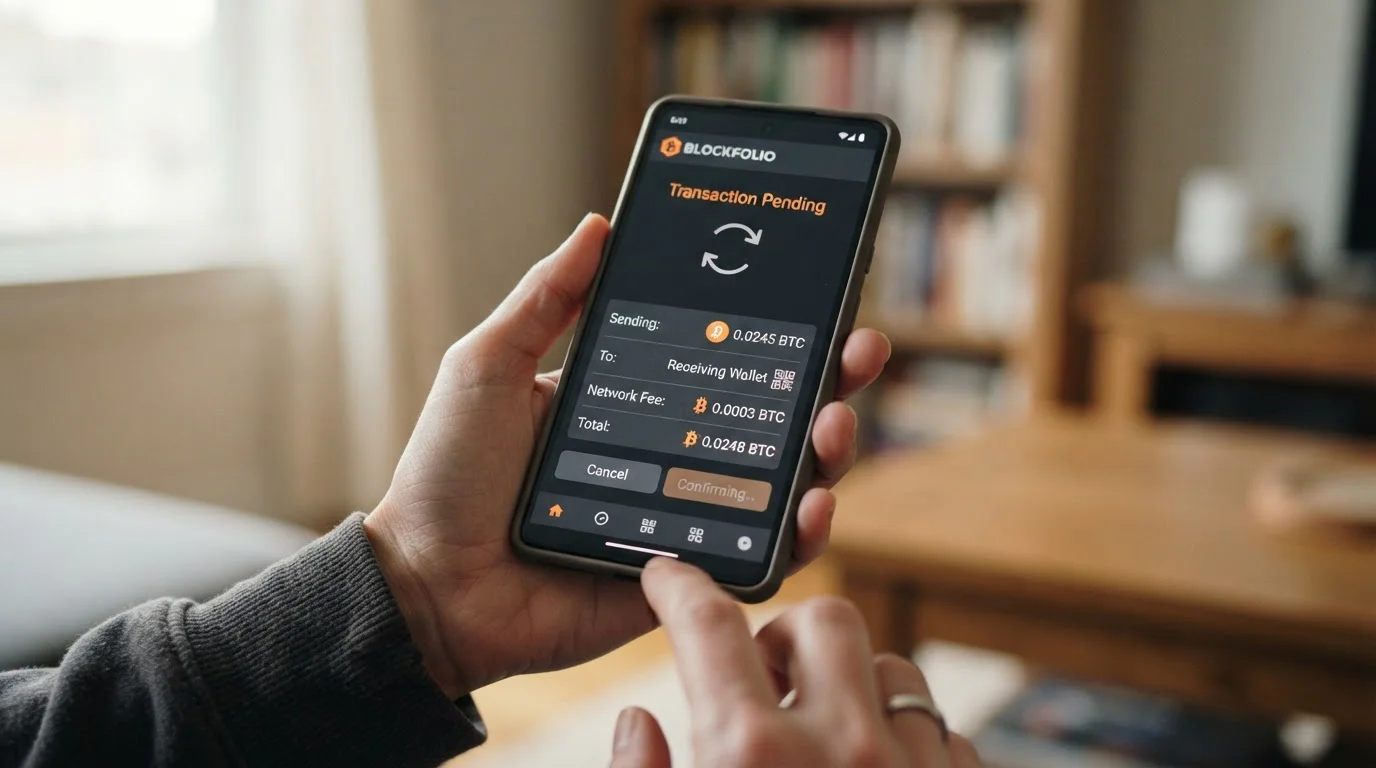
Offshore casinos marketing “instant crypto withdrawals” are describing casino approval speed, not blockchain confirmation time. Shuffle can push your cashout to the blockchain in under 60 seconds, but if you chose Bitcoin on-chain, you are waiting 30 to 60 minutes for three network confirmations before the funds show as spendable in your wallet. Pick USDT on the Tron network (TRC20) and that same Shuffle withdrawal confirms in three to five minutes. The casino’s speed is only half the equation.
Bitcoin on-chain remains the most recognized cryptocurrency for gambling, but it is also the slowest. The Bitcoin network targets ten-minute block times; three confirmations for finality means 30 minutes under ideal conditions, longer during network congestion. Transaction fees fluctuate with demand, ranging from one to five dollars for standard priority. Lightning Network—a second-layer solution for Bitcoin—reduces confirmation to seconds and fees to fractions of a cent, but adoption among offshore casinos is patchy. Cloudbet and a handful of smaller operators support Lightning deposits and withdrawals; most do not.
Tether (USDT) on the Tron network has become the de facto standard for fast, low-cost crypto gambling. TRC20 transactions confirm in three to five minutes with fees around one dollar. USDT on Ethereum (ERC20) is slower and more expensive due to Ethereum’s variable gas fees, which can spike to $10 or $20 during network congestion. Casinos that accept “USDT” often support both networks; check which one you are using before withdrawing. TRC20 is almost always faster and cheaper.
Ethereum processes transactions in 10 to 20 minutes depending on gas fees and network load. Fees vary wildly—two dollars during quiet periods, twenty dollars during NFT mints or DeFi activity spikes. Ethereum’s appeal for gambling is marginal; it is slower and more expensive than USDT-TRC20, and it does not offer meaningfully better privacy or adoption than Bitcoin. Most players picking Ethereum do so because they already hold ETH, not because it is the optimal coin for casino transactions.
Litecoin confirms in roughly 2.5 minutes per block, making it faster than Bitcoin on-chain but slower than USDT-TRC20. Fees are low, typically under 50 cents. Litecoin is a solid middle option if you want a “pure” cryptocurrency rather than a stablecoin, but it does not outperform USDT-TRC20 on speed or cost, and adoption is narrower.
Solana transactions finalize in seconds with fees under a cent. A handful of newer crypto casinos—Shuffle among them—support SOL deposits and withdrawals. Solana’s speed is unmatched, but network stability has been a recurring issue; the blockchain has experienced multiple outages since 2021, and while uptime improved through 2024-2026, the risk of a validator cascade failure freezing transactions for hours remains higher than with Bitcoin or Ethereum.
Dogecoin and Shiba Inu exist on casino payment menus mostly for novelty and community appeal. Confirmation times and fees are reasonable, but liquidity outside of gambling is thin, and holding either coin for any length of time introduces price volatility that a stablecoin like USDT avoids.
| Coin / Network | Confirmation Time | Typical Fee | Anonymity Level |
|---|---|---|---|
| BTC (on-chain) | 30–60 min (3 confirmations) | $1–$5 | Pseudonymous; public ledger; traceable with analysis |
| BTC (Lightning) | Seconds to minutes | <$0.01 | Same as on-chain; fewer visible hops |
| USDT (TRC20) | 3–5 min | ~$1 | Pseudonymous; centralized stablecoin; issuer can freeze tokens |
| USDT (ERC20) | 10–20 min | $2–$20 (gas dependent) | Same as TRC20; higher fees |
| ETH | 10–20 min | $2–$20 (gas dependent) | Pseudonymous; public ledger |
| LTC | ~2.5 min per block | <$0.50 | Pseudonymous; public ledger |
| SOL | Seconds | <$0.01 | Pseudonymous; public ledger; network-stability risk |
The “anonymity level” column is deliberately uniform: every coin listed is pseudonymous and recorded on a public blockchain. Differences in traceability depend on how you acquired the coin and whether you are mixing or coinjoin techniques to obscure transaction history, not on the coin itself. Monero and Zcash offer stronger privacy through cryptographic shielding, but offshore casinos serving Australians rarely support them due to the regulatory heat privacy coins attract.
Which cryptocurrency is best for anonymous casino play in Australia?
USDT on Tron (TRC20) balances speed, cost, and stability best: three-to-five-minute confirmations, roughly one-dollar fees, and no volatility between deposit and withdrawal. Bitcoin on-chain is slower and pricier but easier to buy without KYC via peer-to-peer or ATMs. Solana is fastest where supported. Skip Ethereum—costlier than TRC20 with no upside.
How long do crypto withdrawals take at no-KYC casinos?
Two stages: casino approval and blockchain confirmation. Approval ranges from under a minute (Shuffle) to 24 hours (Cloudbet), longer if compliance flags the cashout. Confirmation adds three to five minutes for USDT-TRC20, 10 to 20 for Ethereum, 30 to 60 for Bitcoin, seconds for Solana or Lightning. “Instant” refers only to approval.
Bonuses and Promotions at No-KYC Casinos
Offshore crypto casinos lean heavily on welcome bonuses to capture new players. The numbers look generous—200% match, 300% match, packages reaching $10,000 or $20,000 across multiple deposits—but the structure follows a familiar pattern: high percentage, high ceiling, brutal wagering requirements that turn the “free” money into a long grind or an outright trap.
A 300% match to $20,000 sounds like a $20,000 gift until you read the fine print: 40x rollover on deposit plus bonus, maximum bet $5 per spin while clearing, selected games only, 30-day expiry. Deposit $5,000, receive $15,000 bonus, wager $800,000 ($20,000 times 40) within a month while staying under the bet cap and avoiding excluded games. Hit a big win mid-rollover and the bonus terms let the casino void the lot if you broke a rule you did not notice.
Rakeback models—returning a percentage of every wager as liquid balance with no rollover—offer better value for regular players. Shuffle’s no-wagering rakeback scales by VIP tier and pays out weekly. You lose the big-number headline of a $20,000 bonus, but you get real returns you can withdraw immediately. Duelbits and BC.Game offer similar structures. Cloudbet skews more traditional with deposit matches, but the rollover terms are transparent and the independent eCOGRA arbitration means disputes have a realistic resolution path.
Most players chasing anonymity at offshore crypto casinos are not bonus hunting. The KYC-trigger risk increases with large balances and big wins, both of which bonus play amplifies. If you deposit $1,000, claim a $3,000 bonus, and hit a $10,000 win while clearing rollover, that withdrawal crosses every reasonable KYC threshold on every platform. The bonus adds ammunition to the compliance team’s decision to verify.
Play bonuses if you understand the terms and accept the rollover grind. Skip them if you prioritize clean, fast withdrawals and minimal account scrutiny. The “free” money at offshore casinos is never free; it is a marketing expense the operator recoups through rollover friction, bet caps, and forfeiture traps.

Legal Status in Australia and Offshore Reality
The Interactive Gambling Act 2001 prohibits operators from offering online casino games—pokies, blackjack, roulette, baccarat, live dealer tables—to Australian residents. No Australian federal, state, or territory regulator issues licenses for real-money online casino play. The Northern Territory licenses sports wagering (bookmakers like Sportsbet and Bet365), but its jurisdiction does not extend to casino games. Every online casino accessible to Australians in 2026 is an offshore operator licensed in Curaçao, Anjouan, Costa Rica, or operating without a license at all.
The Interactive Gambling Act targets operators, not players. Australian law does not criminalize individuals for gambling at offshore casinos. No Australian has been prosecuted for depositing at an offshore crypto casino, spinning pokies, or cashing out. The legal risk sits with the operator offering the service, not the player accessing it. That does not make offshore gambling consequence-free. Banks may block deposits to known gambling domains. Payment processors can freeze accounts tied to offshore casino transactions. The lack of Australian regulatory oversight means player protections are limited to whatever the offshore license requires, and Curaçao’s enforcement track record is notoriously weak.
The Australian Communications and Media Authority enforces the Interactive Gambling Act by ordering ISP-level domain blocks on offshore operators that actively target Australian players. Stake.com, as noted, was blocked in 2024-2025. Hundreds of other offshore casino domains have been blocked over the past decade. Blocks are trivially bypassed with a VPN, and operators respond by spinning up mirror domains faster than ACMA can block them. The game of regulatory whack-a-mole continues, but the blocks do not prevent access; they signal which operators are in ACMA’s crosshairs.
AUSTRAC, the Australian Transaction Reports and Analysis Centre, regulates cryptocurrency exchanges and Virtual Asset Service Providers under AML/CTF laws. Tranche 2 reforms that came into effect in mid-2026 expanded registration requirements to crypto-to-crypto exchanges and custody providers. AUSTRAC tracks large crypto movements and has the authority to investigate suspicious transactions, but its mandate covers the payment infrastructure, not gambling operators. An AUSTRAC-registered exchange like CoinSpot or Binance Australia must comply with AML obligations, but that does not make a casino using those exchanges “locally licensed.” The distinction matters: AUSTRAC registration is about payment-rail compliance, not gambling regulation.
Offshore casinos operate in a grey zone where they are illegal to offer but not illegal to access, unregulated by Australian authorities but still subject to AML scrutiny if transactions touch Australian-registered crypto exchanges. Player funds held offshore lack the protections of Australian financial regulation. Disputes with offshore operators are resolved through the operator’s own complaints process or, in rare cases like Cloudbet, through an independent arbitrator named in terms. No Australian regulator intervenes. No government compensation scheme covers losses from operator insolvency or exit scams.
Are anonymous crypto casinos legal in Australia?
The Interactive Gambling Act 2001 bans operators from offering online casino games to Australians, but it does not criminalise players who access offshore sites. No Australian has been prosecuted for doing so. The legal risk sits with the operator. ACMA blocks offending domains; VPNs bypass them trivially, so access continues either way.
Do I need a VPN to play at offshore crypto casinos from Australia?
A VPN is not legally required. Most offshore operators accept Australian players without geo-restrictions, and Australian law does not prohibit access. A VPN only matters when ACMA has ordered an ISP-level block, as with Stake.com. Some players run one anyway to hide their IP, but crypto acquisition and email accounts still expose them.
How to Choose a Safe Anonymous Casino
Start with the operator’s license. Curaçao Gaming Authority licenses issued under the post-LOK framework (license numbers beginning with OGL/2024/ or OGL/2025/) indicate the operator went through the reformed application process with higher financial and AML standards than the old master-license system. Anjouan Gaming licenses from Comoros are less rigorous but still signal some regulatory structure. Costa Rica registration means the operator filed paperwork with the Costa Rican government but faces no active gambling regulation. Unlicensed operators exist; avoid them.
Check the operator’s track record. Cloudbet launched in 2013 and processed billions in wagers without a major exit scam. BC.Game’s 2024 bankruptcy ruling is public record; factor that into your risk assessment. New platforms launched in the past year carry higher counterparty risk than operators with multi-year operational history. Look for third-party reviews from blockchain-gambling watchdogs, not affiliate sites that earn commissions on referrals. Complaints about withheld withdrawals, voided wins, and sudden KYC requests after big payouts are red flags.
Understand the KYC threshold if one is documented. Cloudbet’s $2,200 cumulative ceiling is transparent; stay under it and you avoid verification, cross it and documents get requested. Platforms that do not publish a threshold or reserve “discretionary” KYC enforcement leave you guessing. If your play style involves frequent small cashouts under $1,000, most reduced-KYC casinos will not bother you. If you are chasing five-figure wins and cashing out in lump sums, expect verification requests regardless of the operator’s anonymity marketing.
Diversify where you hold crypto. Keeping a large balance in an offshore casino wallet exposes you to operator insolvency, exit scams, and account freezes. Deposit what you need for a session, withdraw winnings promptly, and hold the bulk of your crypto in a private wallet where you control the keys. Custodial casino wallets are convenient but not safe for storage.
Read the terms before you deposit. Bonus rollover requirements, maximum bet limits, excluded games, withdrawal caps, and grounds for account closure are all buried in the fine print. A 300% bonus might void your entire balance if you bet $6 on a single spin while $5 was the cap. Terms written in impenetrable legalese or missing key details are warning signs. Operators with clear, specific terms that you can actually parse are less likely to spring surprise “violations” on you when you try to withdraw.
Test the withdrawal process with a small amount before depositing large sums. Deposit $100, play a bit, request a $50 cashout. See how long it takes, whether documents are requested, and whether the operator honors the published terms. If the test withdrawal clears smoothly, you have a data point. If it stalls, triggers unexpected KYC, or gets denied on a technicality, you learned the operator’s behavior with $100 instead of $5,000.
What happens if an offshore crypto casino asks for KYC documents?
Three options: comply and upload passport plus proof of address, refuse and forfeit the balance, or try to negotiate a smaller cashout. Most operators will not release funds without documents. Complying kills the anonymity benefit. Refusing costs the money. Cleanest path: stay under documented thresholds like Cloudbet’s $2,200 so verification never triggers.

Provably Fair Gaming and Transparency
Provably fair systems let you verify that a casino game’s outcome was not manipulated after you placed the bet. The mechanism uses cryptographic hashing: the casino generates a server seed (a random string), you provide a client seed (your own random input or one the platform generates for you), and the game combines those seeds with a nonce (a counter that increments with each bet) to determine the result. Before the round starts, the casino publishes a hashed version of its server seed. After the round, it reveals the unhashed seed. You can then verify that the hash matches and re-run the calculation yourself to confirm the result was generated fairly from the seeds, not altered after the fact.
Provably fair games are common in crypto casinos, particularly for in-house “Originals” like dice, crash, plinko, and mines. Shuffle, Stake, Duelbits, BC.Game, and Roobet all offer provably fair titles with built-in verification tools. Third-party slots from NetEnt, Pragmatic Play, and other major providers do not use provably fair systems; they rely on traditional RNG certification from testing labs like eCOGRA or iTech Labs. The casino cannot manipulate third-party slots because the RNG runs on the provider’s servers, not the casino’s, but you cannot independently verify individual spins the way you can with a provably fair game.
Provably fair systems do not eliminate all trust. You are trusting that the casino’s hashing and seed-combination implementation is correct, that the client seed you provide is genuinely random and not predictable, and that the casino is not running a parallel rig where it generates millions of server seeds in advance to find one that produces a losing outcome for your client seed. Auditing provably fair code requires technical literacy most players lack. The system is a significant transparency improvement over closed-box RNGs, but it is not trustless in the way Bitcoin’s blockchain is trustless.
For slots and live dealer games, provably fair does not apply. Those games use traditional RNG or physical outcomes (roulette wheel, dealt cards) that cannot be cryptographically verified by the player. You are trusting the provider’s RNG certification and the casino’s choice to offer unmodified games. Offshore casinos occasionally get caught offering pirated or altered slots with reduced RTP; player complaints and blockchain-gambling watchdog investigations surface these cases, but detection is reactive, not proactive.
Are provably fair games really trustworthy?
More transparent than closed RNGs because you can verify the outcome came from seeds you saw hashed before the bet, ruling out post-bet manipulation. Not fully trustless: you still trust the casino’s hashing implementation, your client seed’s randomness, and that the operator did not pre-generate server seeds to rig results.
What’s the difference between a crypto casino and a regular online casino?
A crypto casino processes deposits and cashouts in Bitcoin, Ethereum, or Tether instead of AUD via cards or bank transfer. That payment shift enables reduced-KYC onboarding, since blockchain transfers skip the card networks demanding identity checks. Many also offer provably fair games. The pokies, tables, and live dealer lineup is largely identical.

Responsible Gambling and Player Protection
Offshore crypto casinos operate outside Australian consumer-protection frameworks. No government regulator oversees their compliance. No compensation scheme covers player funds if the operator becomes insolvent. Dispute resolution depends on the operator’s internal complaints process or, in rare cases like Cloudbet, a third-party arbitrator named in terms. If an offshore casino refuses to pay a winning withdrawal and you cannot resolve it through support tickets, your realistic options are public complaints on review aggregator sites and gambling forums, hoping the reputational damage pressures the operator into paying. Legal action is prohibitively expensive across international borders for all but the largest disputes.
Gambling at offshore casinos—crypto or otherwise—requires treating the funds you deposit as money you can afford to lose not just to the house edge but also to operator insolvency, exit scams, selective payment, or account closures on technicalities buried in terms. The anonymity and reduced-KYC features that attract players to crypto casinos also strip away consumer protections that regulated markets provide.
Most offshore crypto casinos include responsible-gambling tools in their account settings: deposit limits, loss limits, session time reminders, self-exclusion. These tools are self-imposed; the casino enforces them because you set them, not because a regulator mandates them. Effectiveness depends on your own discipline. A self-exclusion that lets you reverse it by emailing support offers no real barrier. Deposit limits you can raise with a single click are speed bumps, not walls.
Australia’s gambling-harm services operate independently of offshore casino access. Gambling Help Online provides 24/7 phone and webchat support at 1800 858 858. Lifeline offers crisis support at 13 11 14. Both services are free and confidential. If you find yourself chasing losses, gambling beyond your budget, or hiding your play from people who depend on your income, those are signals to step back and seek support. Offshore crypto casinos do not care whether you are gambling responsibly; their business model depends on players losing, and the anonymity that shields you from KYC also shields you from intervention when your behavior becomes harmful.
Set hard limits before you deposit: a dollar amount you can lose without impacting rent, bills, or obligations. Treat that amount as entertainment spend, not investment or income. Withdraw winnings promptly rather than leaving them in your casino balance to fuel more play. Avoid chasing losses; the house edge ensures the casino wins over time, and trying to recover a bad session by depositing more accelerates losses rather than reversing them.
Crypto’s speed and irreversibility amplify gambling harm. A bank transfer to a casino might take two days, giving you time to reconsider. A Bitcoin deposit confirms in 30 minutes and cannot be reversed. That friction is a feature when you are in control; it is a risk multiplier when you are not.
Crypto Casinos Australia 2026 — Bitcoin, Ethereum, USDT, Solana
Content created by the «Payment Methods Online» team