
Which Offshore Casinos Accept Tether in Australia? The Technical Breakdown 2026
 Available in AU

Every crypto casino you can reach from Australia accepts USDT. That sentence should tell you how little “we take Tether” actually means in 2026. The stablecoin pegged to the US dollar has become the default settlement layer for offshore gambling, which means differentiation comes down to something less obvious than whether a site takes your coin. What matters is how well they handle it—which blockchain networks they support, whether they publish withdrawal fees upfront or hide them until you try to cash out, how fast payouts actually move, and whether sending USDT to the wrong network costs you everything or just triggers a support ticket.
For Australian players, there’s a second layer to navigate. No online casino—USDT-accepting or otherwise—holds an Australian license. The Interactive Gambling Act prohibits operators from offering pokies, roulette, blackjack, or live dealer games to anyone in Australia, regardless of where the company is based or what foreign license it carries. That means every accessible option sits offshore, outside Australian consumer protection, and the choice becomes a technical one: you’re comparing cashier mechanics, not regulatory oversight.
This guide ranks the offshore USDT casinos that Australian players actually use in 2026, breaks down the blockchain network question that determines whether your deposit costs one dollar or twenty, and maps the wrong-network transfer problem that’s the single most expensive mistake people make with stablecoin gambling. No locally licensed options exist to recommend. What follows is the applied map of what works offshore and what doesn’t.
What You Need to Know About USDT Casinos in Australia
No Australian state, territory, or Commonwealth regulator issues licenses for online casinos. Not one. The Interactive Gambling Act 2001 draws a bright line: sports and race wagering can be licensed at the state level, lotteries too, but online casino games—pokies, table games, live dealer—are prohibited services under federal law. Providing them to anyone physically in Australia is an offence, and the law targets operators, not players.
Playing at an offshore casino from Australia is not a criminal act. The IGA explicitly focuses enforcement on providers, which is why you won’t find a local prosecution for logging into a crypto casino from Melbourne or Brisbane. But the absence of a criminal penalty for individuals doesn’t create consumer protection. Offshore operators answering to Curaçao or Anjouan regulators have no obligation to Australian law, no local dispute resolution pathway, and no mechanism for clawback if something goes wrong. You’re outside the fence.
The Australian Communications and Media Authority has referred more than 1,700 illegal gambling and affiliate websites for ISP blocking since 2019. Enforcement is real, sites do disappear from Australian IP ranges, but the ecosystem regenerates faster than ACMA can block. Come January 2027, enforcement steps up: banks will be required to block payments to operators on ACMA’s designated list, and ACMA gains direct take-down powers without needing a court order first. That’s tighter than anything in place today, but it still targets the supply side. Crypto deposits bypass the banking blockade entirely, which is why offshore USDT casinos remain accessible regardless of how aggressive the regulatory perimeter becomes.

Is it legal for Australians to play at USDT casinos in 2026?
Playing at offshore casinos is not illegal for Australian individuals under the Interactive Gambling Act. The law prohibits operators from providing these services to Australians, not players from accessing them. No Australian consumer protection applies, and disputes are resolved under the operator’s jurisdiction, typically Curaçao or Costa Rica, with no local recourse.
Are there any Australian-licensed casinos that accept USDT?
No. Australian regulators do not license online casinos. Only sports wagering, race betting, and lotteries can be licensed at the state level. Every USDT casino accessible to Australians operates offshore under foreign or no gaming license, meaning all options sit outside Australian regulatory oversight and consumer protection frameworks.
How USDT Casino Deposits Actually Work: Networks, Fees and Speed
Tether exists on multiple incompatible blockchains. That’s the first thing to understand, and it’s the source of the single most expensive error people make when moving money into a casino. When you deposit USDT, you’re not just sending a stablecoin—you’re sending it on a specific network, and the casino’s deposit address only listens to one network at a time. Send TRC-20 USDT to an address expecting ERC-20, and the funds don’t bounce back. They land in a place the casino’s hot wallet doesn’t monitor, which in most cases means they’re gone.
The cost and speed of moving USDT depend entirely on which blockchain you pick. A TRC-20 transfer on the Tron network confirms in three to five seconds and costs roughly one to three dollars in TRX fees. The same deposit on ERC-20 can wait minutes for Ethereum block confirmation and burn five to twenty dollars in gas, sometimes more when the network is congested. BEP-20 on Binance Smart Chain splits the difference—fast confirmation, fees under a dollar—but fewer casinos support it than the big two.
Half of all circulating USDT supply now lives on Tron. That’s not because Tron does anything revolutionary; it’s because TRC-20 became the default for cross-border payments and offshore gambling where speed and cost matter more than Ethereum’s DeFi ecosystem. If a casino lists multiple USDT networks, TRC-20 is usually the one you want unless you’re already holding USDT on Ethereum for other reasons.
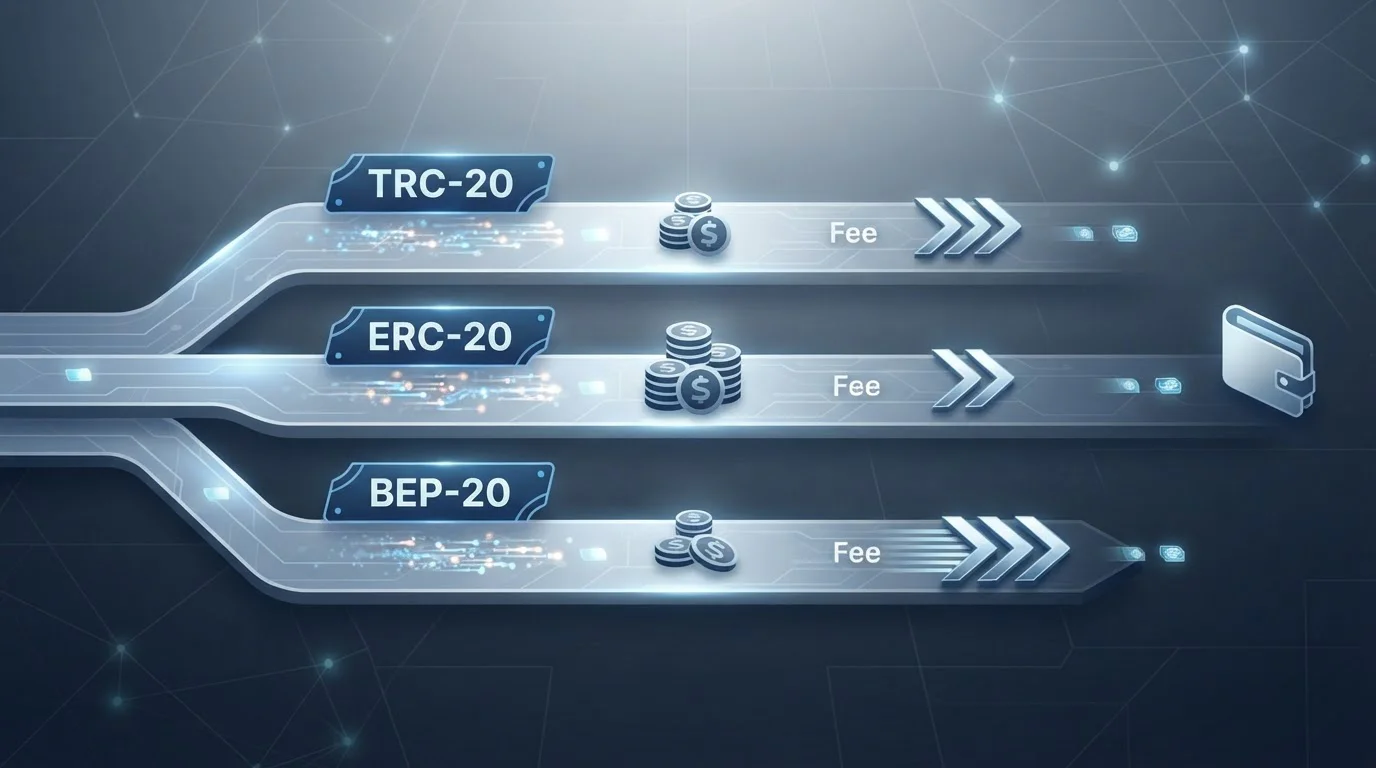
TRC-20: The Fast, Cheap Standard
Tron confirmation averages three to five seconds from send to credited balance. Fee structure on TRC-20 is unusual compared to other chains: instead of a simple gas fee, Tron uses bandwidth and energy, which can be either rented with TRX or burned per transaction. For a typical USDT transfer, you’ll pay between one and three dollars worth of TRX, depending on whether you’ve staked TRX for free energy or you’re paying the spot rate.
For a hundred-dollar deposit, a three-dollar fee is a three percent drag on your bankroll before you’ve placed a bet. For a thousand-dollar deposit, it’s negligible. The speed is what makes TRC-20 the standard: funds hit the casino’s wallet fast enough that most operators credit your account within one confirmation, and you’re playing inside a minute of clicking send.
ERC-20: When You Need Ethereum
Ethereum is the original home of USDT and still the deepest liquidity pool for the stablecoin. If you’re moving USDT out of a DeFi protocol, off a decentralised exchange, or from a wallet that only holds ERC-20 assets, you’re stuck on Ethereum. The fee problem is real: gas fluctuates with network congestion, and a simple USDT transfer can cost anywhere from five dollars on a quiet Sunday morning to over twenty during a market spike.
Confirmation time on Ethereum runs one to three minutes under normal conditions, longer when the mempool is backed up. Some casinos require three confirmations before crediting ERC-20 deposits, which can stretch to ten minutes. For large deposits—anything over a few thousand dollars—the percentage cost of an ERC-20 transfer becomes acceptable, and the deeper on-ramps into USDT via Ethereum make it the practical choice despite the fee hit.
BEP-20 and Alternative Networks
Binance Smart Chain supports USDT as a BEP-20 token, and the fees are consistently low—twenty cents to a dollar—with confirmation speeds comparable to Tron. The catch is adoption: not every casino cashier includes BEP-20 in its network dropdown, and if you’re holding USDT on BSC but the operator only takes TRC-20 or ERC-20, you’re stuck bridging the token to a supported network first. That’s an extra step, another fee, and a place for things to go wrong.
Solana and Polygon have entered the USDT landscape in the past two years. Solana transfers settle for fractions of a cent and confirm almost instantly, but casino support remains thin—Solana is still the new option that shows up on forward-thinking platforms but not yet the mainstream. Polygon runs on an Ethereum sidechain with low fees and decent speed, but again, cashier support lags behind Tron and Ethereum.
The Wrong-Network Problem (How to Avoid It)
Send USDT on the wrong network and it doesn’t reach the casino. It reaches an address the casino’s system doesn’t monitor, on a blockchain the casino’s hot wallet isn’t listening to, and in most cases the funds are unrecoverable. This isn’t a software glitch you can fix with a support ticket. It’s the consequence of blockchain immutability: once the transaction confirms, it’s final, and the receiving address either sees it or it doesn’t. If the casino’s TRC-20 deposit address receives an ERC-20 transfer, the tokens land on Ethereum at a different address that happens to use the same alphanumeric string, but the casino’s Tron wallet will never see them.
Some operators explicitly state in their terms that wrong-network transfers are the user’s responsibility and will not be recovered. 1xBit’s clause 8, Bitz’s clauses 8.1, 9.3, and 11.2—these aren’t edge cases, they’re boilerplate. A twenty-dollar test deposit sent to the wrong network is a cheap lesson. A two-thousand-dollar bankroll sent the same way is gone.
The workflow that prevents this is dead simple: send a test deposit first. Thrill Casino’s zero minimum deposit makes this trivial—send five dollars of USDT on the network you think is correct, wait for it to show up in your casino balance, then send the rest. That five-dollar confirmation costs you nothing functionally, and it guarantees the larger transfer lands where it’s supposed to. Cloudbet’s published fee tables let you check which networks they support and what each costs before you commit, but a test deposit is still the definitive proof.

Which blockchain network should I use for USDT casino deposits — TRC-20, ERC-20, or BEP-20?
TRC-20 is the default for most players: three-to-five-second confirmation, one-to-three-dollar fee, and near-universal casino support. Use ERC-20 if you already hold USDT on Ethereum or you’re depositing amounts large enough to shrug off the five-to-twenty-dollar gas fee. BEP-20 works when the casino explicitly supports it and you’re on BSC. Always verify network compatibility first.
What happens if I send USDT to a casino on the wrong network?
The funds are usually unrecoverable. Blockchain transactions are irreversible, and USDT sent to a TRC-20 address on the ERC-20 network lands on Ethereum at a different address the casino does not control. Many operator terms explicitly state wrong-network transfers are non-recoverable. Send a small test deposit on the intended network first.
What are the fees for depositing USDT at online casinos?
Network fees, not casino fees, drive deposit cost. TRC-20 runs one to three dollars in TRX. ERC-20 costs five to twenty dollars or more in Ethereum gas depending on congestion. BEP-20 sits at twenty cents to a dollar on BSC. Solana and Polygon are under a cent but have limited casino support.
| Network | Typical Fee | Confirmation Time | Best Use Case |
|---|---|---|---|
| TRC-20 (Tron) | $1.00 – $3.50 | 3 – 5 seconds | Default for most deposits; fast, cheap, universally supported |
| ERC-20 (Ethereum) | $5 – $20+ | 1 – 3 minutes | Large deposits, DeFi withdrawals, when already on Ethereum |
| BEP-20 (BSC) | $0.20 – $1.00 | ~5 seconds | When casino supports it and you’re on Binance Smart Chain |
| Solana (SPL) | <$0.01 | <1 second | Cheapest option, but limited casino support as of 2026 |
| Polygon | $0.001 – $0.01 | ~2 seconds | Low-cost Ethereum sidechain, growing but not yet mainstream |
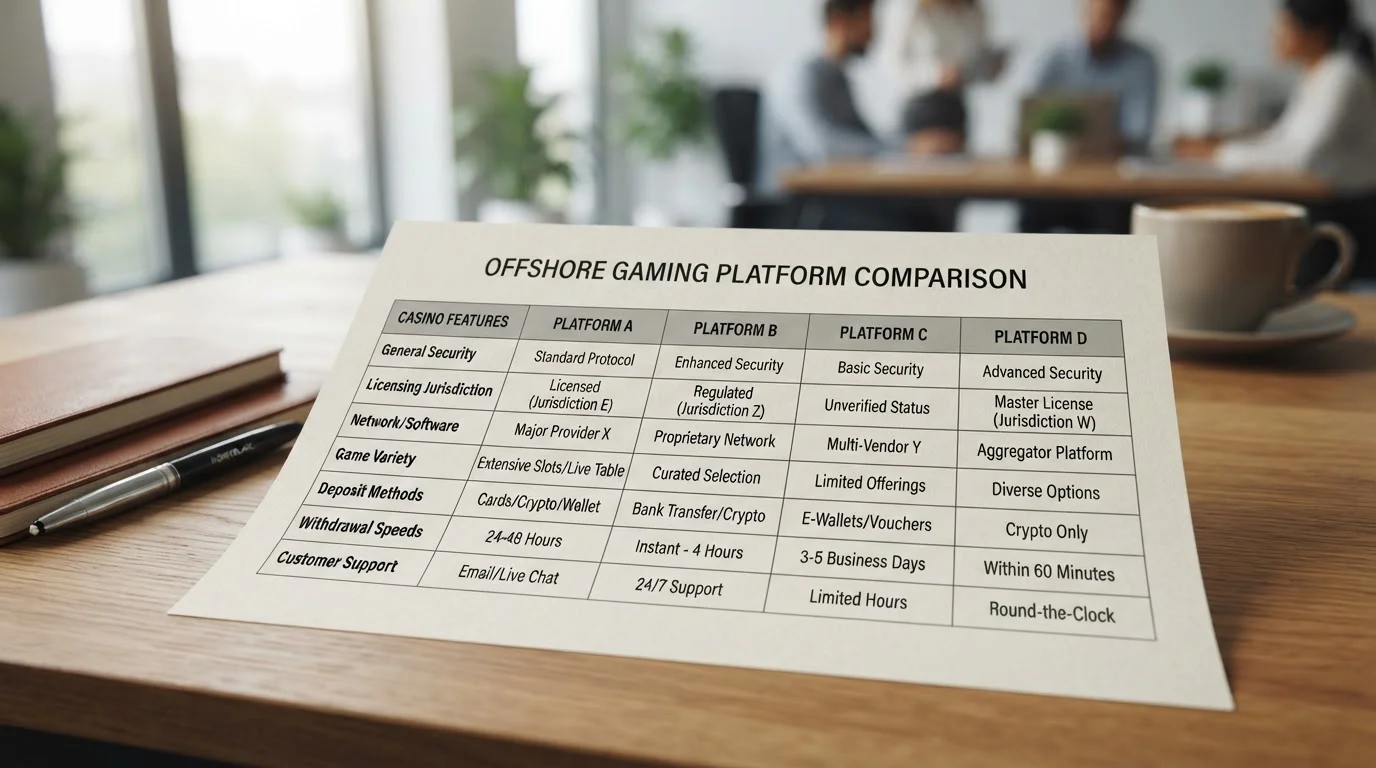
Best Offshore USDT Casinos for Australian Players (2026)
The list below ranks offshore operators on cashier mechanics—network support, published fees, withdrawal speed—not bonus size or game count. Every option operates outside Australian licensing. None offers local consumer protection. What distinguishes them is how transparently they handle USDT deposits and withdrawals, which networks they support, and how fast payouts actually move.
| Operator | License | Network Support | Withdrawal Speed | Min Deposit | Key Feature |
|---|---|---|---|---|---|
| Cloudbet | Curaçao OGL/2024/328/0599 | 7 USDT networks | No cap for verified accounts | Not specified | Publishes per-network fees upfront |
| Stake | Curaçao | TRC-20, ERC-20, BEP-20, others | Under 2 minutes (89% within 6 min) | Not specified | Fastest tested payout speeds 2026 |
| BC.Game | Anjouan / Curaçao disputed | 165 coins, 30+ networks | Minutes to hours | Not specified | Broadest crypto support in industry |
| Thrill | Anjouan ALSI-202506019-FI1 | TRC-20, ERC-20, 13 others | Minutes | Zero | No minimum deposit (test transactions) |
| Cryptorino | None (Costa Rica corporate only) | TRC-20, ERC-20, 9 others | Not disclosed | Not disclosed | Poker bonuses for Tether users |
| CoinCasino | Anjouan ALSI-142311005-FI2 | TRC-20, ERC-20, BEP-20, others | Instant claimed | Not specified | CoinPoker team, dual Curaçao/Anjouan |
| BetPanda | None (Costa Rica corporate only) | TRC-20, ERC-20, others | Not disclosed | Not disclosed | VIP focus, 3 BTC daily cap |
| LuckyRollers | Curaçao claimed, not verified | TRC-20, ERC-20, others | Instant claimed | Not specified | Mixed reviews, transparency concerns |
Cloudbet
Cloudbet has been operating since 2013, which makes it one of the oldest names still standing from the Bitcoin-era casino wave. The operator runs under a Curaçao Gaming Authority license—OGL/2024/328/0599, renewed in 2024—and is owned by Halcyon Super Holdings B.V., a Curaçao-registered entity. The platform pairs a crypto casino with a full sportsbook and esports book, all sharing a single wallet, and the rewards engine runs on cashback rather than the traditional deposit-match structure.
What sets Cloudbet apart is fee transparency. The site publishes a per-coin, per-network fee table before you deposit, covering seven USDT networks. Most operators either don’t publish withdrawal fees at all, or they reveal them only when you try to cash out. Cloudbet puts the numbers on the table upfront, which is the kind of friction-free disclosure that makes the cashier predictable instead of a surprise. Fully verified accounts face no withdrawal ceiling, and the terms name an independent adjudicator—IBAS—whose decisions bind the casino. That’s a rare contractual concession in offshore gambling, where most operators reserve the final say for themselves.
The no-wagering rewards model means you’re not unlocking a deposit bonus by grinding through forty times turnover inside a week. Cashback accrues on play regardless of outcome, and the structure favours repeat use over one-off signup incentive hunting. For players who plan to stick around rather than bonus-chase across twenty sites, that’s a better deal than it looks on a landing page. The main trade-off is speed: Cloudbet’s withdrawal processing isn’t the fastest benchmarked in 2026, though once approved, blockchain confirmation moves at the usual network pace.
Stake
Stake operates at a scale most competitors don’t reach. Six thousand games, support for more than twenty cryptocurrencies including USDT across multiple networks, and a sportsbook that covers everything from Premier League football to tier-three esports. The platform is crypto-native—no fiat on-ramp cluttering the cashier—though in 2026 Stake has added Visa, Mastercard, Apple Pay, and Google Pay deposit options that convert to crypto behind the scenes. The addition doesn’t change the settlement layer; your balance is still denominated in crypto, and withdrawals still move on-chain.
What benchmarks consistently show is that Stake pays out faster than almost anything else in the offshore space. In 2026 testing by multiple reviewers, 89 percent of crypto withdrawals completed within six minutes, with some clearing in under two. That’s not “we process within 24 hours and then it’s on the blockchain” speed; that’s funds-in-wallet speed, where the bottleneck is network confirmation, not internal review queues. For Australian players used to PayID transfers that settle in seconds, Stake’s payout cadence is the closest the offshore crypto world gets to that expectation.
The Originals library—provably fair games with verifiable RNG and some configurations offering zero house edge—appeals to the subset of players who care about cryptographic fairness over slot aesthetics. Rakeback scales up to fifteen percent for VIP tiers, which is real money back on volume rather than a “free” chip with fifty-times rollover attached. The main caveat is that Stake is also the largest crypto casino by volume, and with size comes visibility. KYC requests on withdrawal aren’t universal, but they’re not rare either, and the more you win, the more likely verification lands on your payout.
BC.Game
BC.Game has been live since 2017 and claims the broadest cryptocurrency support in the industry: 165 coins across more than thirty blockchain networks, including every USDT variant you’re likely to encounter. The platform runs 8,500 slots, fifty-plus provably fair Originals, a sportsbook, and integrated poker, all tied to a native token economy where the site’s BCD token can be staked at ten percent APR through VaultPro. It’s a lot of surface area for one operator.
Ownership and licensing are murkier than most. BC.Game was originally operated by BlockDance BV under Curaçao and Anjouan licenses, but in 2026 the business was transferred to Twocent Technology Limited amid insolvency proceedings and regulatory violations that Fintelegram flagged as high-risk. ACMA issued a warning to BlockDance in October 2022 for providing unlicensed online casino services to Australians, and while the site remains accessible, the regulatory trail is messy enough that multiple review sites downgraded their trust scores post-transfer.
For Australian players, the practical question is whether that matters. The platform still processes deposits and withdrawals, the game library is intact, and the cashier supports every USDT network you’d want to use. The risk profile is different from an operator with a clean licensing history, and if you’re depositing four figures at a time, that difference should weigh into the decision. Small-stakes recreational play is one thing; parking serious money at a site with an insolvency cloud and a regulator warning is another.
Thrill
Thrill launched around 2025, which makes it one of the newer entrants in a space where most brands have either been around since the Bitcoin era or launched in the past two years chasing the stablecoin boom. The operator holds an Anjouan license—ALSI-202506019-FI1, verifiable on the Offshore Finance Authority register—and is run by Gravity Unleashed Limitada. The platform stocks 3,220 games from 88 providers, settles in fifteen cryptocurrencies, and has one feature that makes it uniquely useful: no minimum deposit.
Zero minimum deposit isn’t a marketing gimmick; it’s the workaround for the wrong-network transfer problem. Most casinos set a floor—ten dollars, twenty dollars, sometimes fifty—which means your test deposit still carries meaningful cost if you get the network wrong. Thrill lets you send five dollars, one dollar, even fifty cents of USDT to confirm the address is listening on the network you think it is, and once that test deposit shows up in your balance, you know the real transfer will land correctly. That’s worth more than a welcome bonus for anyone who’s ever lost money to a network mismatch.
The platform runs on a rakeback model rather than upfront deposit bonuses. Rakeback scales to seventy percent, with an additional ten percent lossback weekly, which tilts the value toward players who put in volume rather than one-off depositors chasing a match. One-times deposit turnover before withdrawal is the lowest rollover requirement benchmarked across the offshore USDT space; most operators sit at three to five times, and some promotional bonuses run forty times or higher.
Cryptorino
Cryptorino launched in 2024 under Star Bright Media S.R.L., a Costa Rican entity that also operates BetPanda. The platform lists 6,300 games, a full sportsbook, and an unusual selling point: poker bonuses structured specifically for Tether deposits. The site accepts eleven cryptocurrencies including USDT on TRC-20 and ERC-20, and signup requires no KYC upfront, though withdrawal verification is discretionary and can be triggered by payout amount or account behaviour.
The licensing situation is transparent in its absence: Cryptorino holds no gaming license. A search of the Anjouan Gaming Authority register—all 1,486 licenses as of August 31, 2026—and the Curaçao Gaming Authority registry—627 rows—returned no match for cryptorino.io under any company name. The site operates on a Costa Rica corporate registration, which is a business incorporation, not a gaming regulator oversight. The terms explicitly state that services are provided “outside of any national licensing regime” and that players waive the right to request refunds on lost wagers.
For Australian players, that’s not necessarily disqualifying—most offshore crypto casinos operate in low-oversight jurisdictions, and Curaçao licenses aren’t known for rigorous enforcement either—but it does mean there’s no regulator to escalate a dispute to if something goes wrong. The trade-off is speed and privacy: no KYC at signup, and withdrawals that reportedly process without document requests for modest amounts. The weekly cashback structure has no wagering requirement attached, which is one of the few genuinely no-strings promotions in the offshore space.
CoinCasino
CoinCasino launched in 2024 and is operated by Igloo Ventures SRL, the same entity behind CoinPoker, which gives the platform a poker pedigree that shows up in the table-games library. The site holds dual licenses from Curaçao Gaming Control Board and Anjouan Gaming—ALSI-142311005-FI2 on the Anjouan side, verifiable on the public register—and lists 4,000 games from seventy providers, 470 live dealer tables, and a built-in sportsbook.
The cashier supports a wide range of cryptocurrencies beyond USDT, which is useful if you’re holding other tokens and don’t want to swap into Tether just to deposit. Instant crypto withdrawals are the claim; in practice that means the site processes payouts quickly on their end, and then network confirmation determines how fast the funds land in your wallet. Most players report TRC-20 withdrawals hitting within minutes, which tracks with what that network’s speed allows.
KYC is not required for most play, but the terms reserve the right to request verification at withdrawal, and the threshold isn’t disclosed. The dual-license structure—Curaçao and Anjouan—offers slightly more regulatory cover than Costa Rica-only operators, though neither jurisdiction is known for player-friendly dispute resolution. The poker angle is the differentiator: if you’re splitting time between cash games and slots, CoinCasino consolidates both under one balance instead of forcing you to fragment bankroll across platforms.
BetPanda
BetPanda launched in 2023 under the same Star Bright Media S.R.L. entity that runs Cryptorino, which means the two sites share ownership, back-end infrastructure, and licensing status. That status is no license: BetPanda operates on a Costa Rica corporate registration, with no entry on the Anjouan or Curaçao gaming authority public registers. The terms explicitly state that the service is provided “outside of any national licensing regime,” players waive the right to claim refunds on lost bets, and account closure forfeits any remaining balance. Those are sharp edges, and they’re right there in the contract.
The platform lists 5,000 to 6,000 games depending on provider additions, pulls in titles from Pragmatic Play, Evolution, and Hacksaw Gaming, and runs a full sportsbook alongside the casino. Bitcoin Lightning is supported for near-instant settlement, and the cashier accepts USDT, BTC, ETH, LTC, XRP, SOL, TRX, DOGE, and USDC. No-KYC signup is the pitch, though withdrawal verification applies based on payout size and account history, and the trigger threshold isn’t published.
The VIP program is where BetPanda differentiates itself: the site explicitly markets to high rollers, and the daily withdrawal cap of three BTC reflects that. For context, three BTC at early-2026 prices is over two hundred thousand dollars per day, which is a ceiling most players will never approach. The welcome bonus requires forty times deposit wagering within one week to unlock, and if you don’t hit the rollover inside that window, the bonus and any winnings from it are voided. Weekly cashback comes with no wagering requirement, which is the rare no-strings-attached promotion in this tier of offshore operator.
LuckyRollers
LuckyRollers launched in 2024 and claims a Curaçao license, though as of late 2026 that license hasn’t been verified on the public Curaçao Gaming Authority register. The site lists more than a thousand games powered by Evolution, NetEnt, and other established providers, settles in multiple cryptocurrencies including USDT, and advertises instant crypto withdrawals with no KYC requirement. The operator uses cold storage for reserves and hot wallets for payout processing, which is standard practice across crypto casinos.
Trustpilot reviews paint a different picture. The platform holds a 2.0 out of 5 rating as of 2026, with multiple complaints alleging fund confiscation, lack of transparency, and unresponsive support. That’s not dispositive—disgruntled players are more likely to leave reviews than satisfied ones—but the pattern is consistent enough to warrant caution. LuckyRollers is included here because it appears on multiple offshore casino lists and is accessible to Australians, but the trust indicators are weaker than any other operator on this ranking.
The no-KYC claim is common across unlicensed or weakly licensed operators, and in practice it usually means “no KYC unless we decide to ask for it,” which can happen at withdrawal if the amount is large, if the account shows unusual betting patterns, or for no disclosed reason at all. Cold-storage security is a positive, but it doesn’t address the dispute resolution vacuum that comes with operating outside any recognised gaming jurisdiction. If you’re testing the platform, keep the deposit small.
How fast are USDT withdrawals from crypto casinos?
Withdrawal speed depends on the operator’s internal processing time and the blockchain network. Stake cleared under two minutes in 2026 testing, with 89% completing within six. Thrill and CoinCasino claim instant processing—minutes in practice. Cloudbet and BC.Game can take hours depending on verification. Once approved, TRC-20 transfers confirm in three to five seconds.
Do USDT casinos require KYC verification for Australian players?
Most offshore USDT casinos skip KYC at signup but reserve the right to request verification at withdrawal. Triggers vary and are rarely disclosed: large payouts, unusual betting patterns, or random compliance checks. Cloudbet, Stake, and BC.Game enforce KYC on withdrawals above certain thresholds. Cryptorino, BetPanda, and Thrill market no-KYC play but still apply verification selectively.
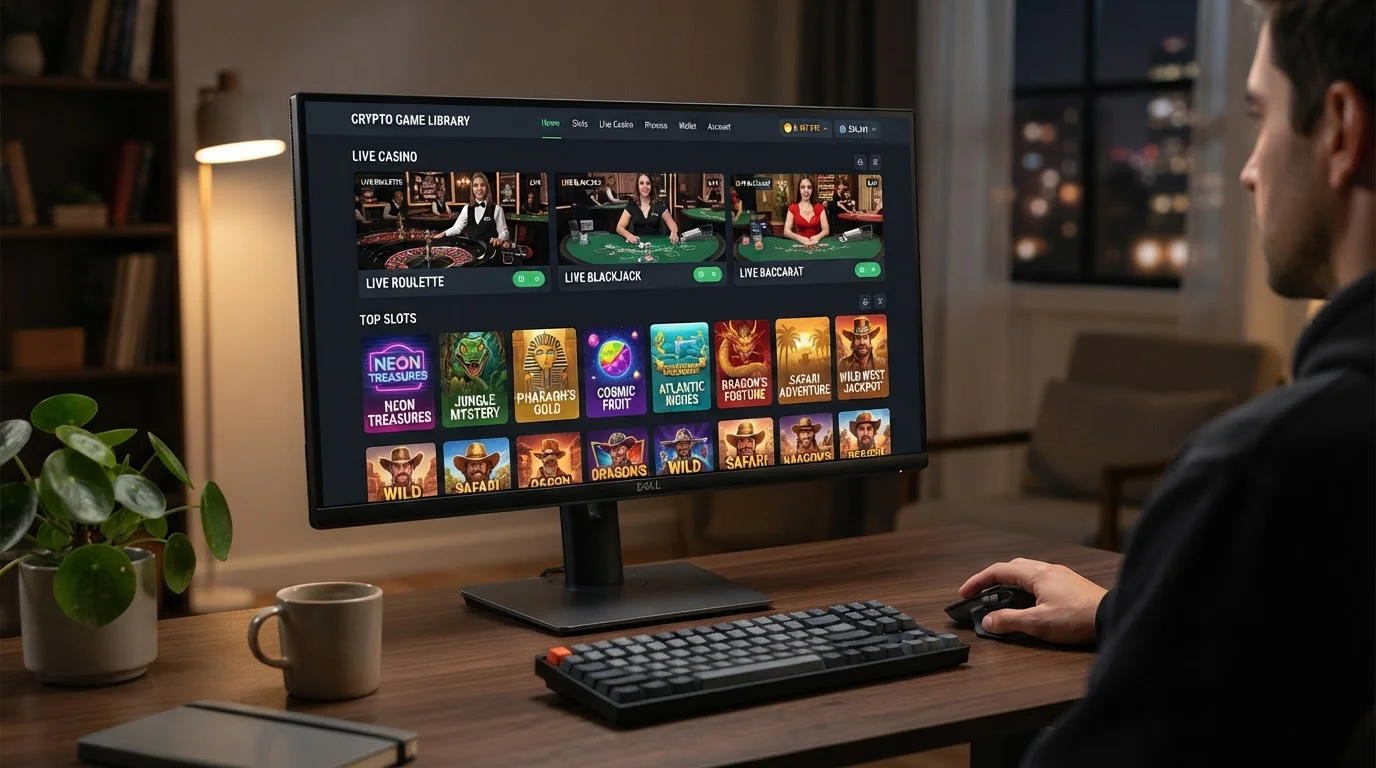
What You Can Play with USDT: Games and Live Dealer Options
Game selection across offshore USDT casinos converges around the same provider roster. Pragmatic Play, Evolution Gaming, NetEnt, Hacksaw Gaming—these studios supply hundreds of operators, which means the slot and live-dealer libraries at Cloudbet, Stake, and BC.Game overlap more than they differ. What varies is how deep each category goes and whether the platform runs its own Originals.
Slots are the bread and butter. Most operators stock between 3,000 and 8,500 titles depending on how many providers they’ve onboarded, and nearly all of them accept USDT bets with the same limits you’d see on fiat-denominated accounts. High-volatility slots like Gates of Olympus, Dog House Megaways, and Wanted Dead or a Wild show up everywhere, and if you’ve played pokies at an Australian pub, the mechanics here won’t surprise you: spin, hit a feature, chase the multiplier, repeat.
Live dealer games run through Evolution Gaming on most platforms, with some operators adding Pragmatic Play Live and Ezugi tables for variety. Blackjack, roulette, baccarat, and poker variants stream from studios in Malta, Latvia, or Georgia, and the betting limits span micro-stakes tables at one dollar per hand up to VIP rooms where the cap runs into five figures. The experience is identical whether you’re betting in USDT, Bitcoin, or Ethereum; the only difference is settlement speed when you cash out.
Provably fair games are the category unique to crypto casinos. Crash, Plinko, Dice, Mines, Limbo—these are instant-result games where the outcome is generated by a cryptographic hash you can verify before the bet resolves. Stake and BC.Game both run large Originals libraries with provably fair mechanics, and some configurations offer zero house edge, meaning the RTP sits at exactly 100 percent and the only drag on your bankroll over infinite trials is variance. Whether you trust the cryptographic proof more than a third-party RNG audit from a traditional slot is a personal call, but the math is transparent in a way pokies never are.
USDT Casino Bonuses: What to Expect
Deposit bonuses at offshore USDT casinos follow the same structure you’d find at fiat operators, with one adjustment: the bonus is denominated in USDT rather than dollars, which eliminates exchange-rate slippage but doesn’t change the underlying terms. A 100 percent match up to 1,000 USDT still carries wagering requirements—usually twenty-five to forty times the bonus amount—and those requirements need to clear before the bonus and any winnings convert to withdrawable balance.
The “free” money isn’t free. A thousand-USDT bonus with forty-times wagering means you need to put 40,000 USDT in total bets through the casino before you can withdraw. At a 96 percent RTP slot, the house edge chews through roughly 1,600 USDT over that volume, which means you’re paying for the bonus with expected loss, and the promotion only makes sense if you were planning to play that volume anyway.
Cashback and rakeback promotions are more transparent. Stake’s fifteen percent rakeback on VIP tiers gives you real money back on every bet, win or lose, with no additional rollover to unlock it. Thrill’s seventy percent rakeback and ten percent weekly lossback follow the same model: you play, the percentage comes back to your balance, and you can withdraw it immediately or play it through once, depending on the operator’s terms. That’s a better deal for high-volume players than a one-time deposit match that locks up your balance until you grind through the wagering requirement.
No-wagering bonuses do exist, but they’re rare and usually small. Cryptorino and BetPanda both claim weekly cashback with zero rollover, which if true is the cleanest promotional structure in the offshore space. The catch is that both operators have no gaming license, which means the bonus is only as good as the operator’s willingness to honour it, and there’s no regulator to escalate a dispute to if they don’t.
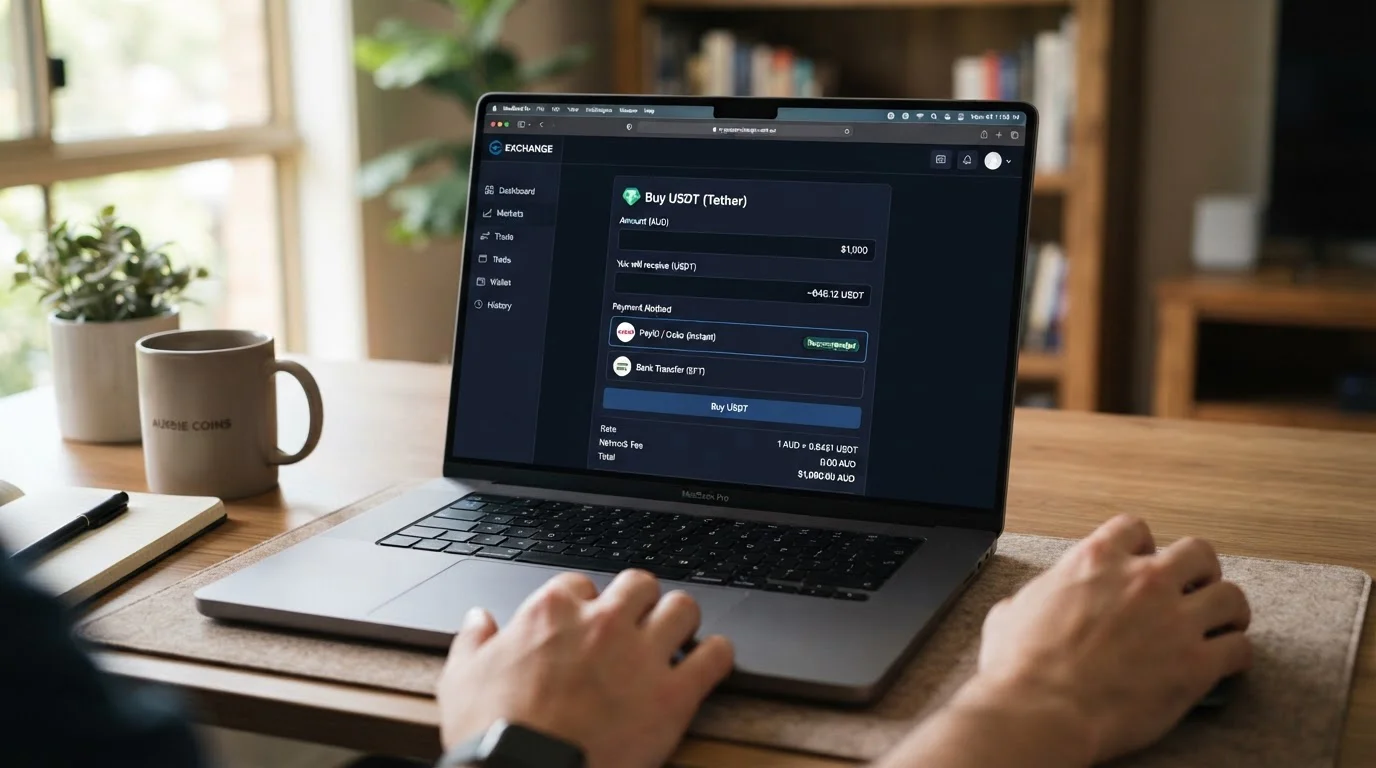
Getting USDT in Australia: Where to Buy
Most offshore casinos don’t ask where you got your USDT, but you still need to acquire it somewhere, and the Australian regulatory environment shapes that pathway. AUSTRAC—the Australian Transaction Reports and Analysis Centre—requires cryptocurrency exchanges operating in Australia to register as digital currency exchanges, which creates a tier of compliant on-ramps that connect directly to Australian bank accounts via PayID or Osko.
CoinSpot and Swyftx are the two largest AUSTRAC-registered exchanges serving Australian retail customers. Both support USDT purchases with AUD, settle via instant bank transfer, and handle the AUD-to-USDT conversion at the spot rate plus a small spread. Kraken operates in Australia through Bit Trade Pty Ltd, another AUSTRAC-registered entity, and runs a native USDT/AUD market, which gives you direct price discovery rather than routing through a BTC or ETH pair first.
Once you’ve bought USDT on an exchange, withdrawing it to your own wallet costs a network fee—TRC-20 is cheapest, usually one to three dollars—and then you control the tokens outside the exchange’s custody. From there, sending USDT to a casino is a peer-to-peer transfer: you paste the casino’s deposit address into your wallet, select the correct network, and broadcast the transaction. The exchange never sees where the funds went, and the casino never sees where they came from, which is the privacy layer that makes crypto deposits different from a bank wire with your name attached.
How do I buy USDT in Australia to use at crypto casinos?
Use an AUSTRAC-registered exchange like CoinSpot, Swyftx, or Kraken (via Bit Trade Pty Ltd). Fund via PayID or Osko instant bank transfer, buy USDT at spot, and withdraw it to a personal wallet. From your wallet, send USDT to the casino’s deposit address on the correct network—TRC-20 for lowest fees.
Privacy and Verification: The No-KYC Reality
Most offshore USDT casinos let you sign up, deposit, and play without identity verification. That’s the pitch: no passport scan, no proof of address, no selfie holding your driver’s license next to today’s newspaper. You generate a username, set a password, paste a deposit address, and you’re playing inside two minutes. The privacy appeal is obvious, and for small-stakes recreational gamblers, that flow often holds all the way through withdrawal.
It breaks down when you win. KYC requests typically fire on the payout side, not the deposit side, and the trigger can be payout amount, account behaviour, or something the operator’s compliance team flags internally. Stake, Cloudbet, and BC.Game all have documented histories of requesting verification on withdrawals above certain thresholds, though those thresholds aren’t published and seem to vary by account. A five-hundred-dollar payout might clear instantly; a five-thousand-dollar payout might sit pending while the operator asks for documents.
The operators marketing as no-KYC—BetPanda, Cryptorino, LuckyRollers—are better understood as reduced-verification: they don’t require documents upfront, but their terms explicitly reserve the right to request them later, and there’s no binding commitment not to. That’s not deceptive; it’s standard risk management for offshore operators who need flexibility to respond to large withdrawals, suspicious betting patterns, or compliance pressure from payment processors. The difference is that these platforms tend to verify less aggressively than the larger, more visible operators like Stake.
Licensing correlates weakly with KYC enforcement. Curaçao and Anjouan licenses nominally require operators to maintain AML and KYC procedures, but enforcement in practice is light, and small operators can go years without a regulator audit. Unlicensed operators running on Costa Rica corporate registrations have even less oversight, which cuts both ways: less KYC friction for small payouts, but also no external pressure to process withdrawals fairly when a dispute arises.
How We Ranked These Casinos
Rankings here prioritise cashier mechanics over promotional noise. Network support, published withdrawal fees, payout speed, and minimum deposit thresholds matter more than welcome bonus size because those variables determine the actual cost and friction of moving USDT in and out. Cloudbet ranks first not because it has the biggest game library—it doesn’t—but because it publishes per-network fee tables before you deposit, which is the kind of transparency that prevents surprises at withdrawal.
Stake’s position reflects benchmarked withdrawal speeds: 89 percent of crypto payouts completing within six minutes in 2026 testing is a measurable performance edge, and speed is the variable Australian players cite most often when comparing offshore platforms. BC.Game’s broad cryptocurrency support—165 coins across thirty-plus networks—earns it a spot despite the messy ownership transfer, because cashier flexibility has practical value when you’re holding tokens on different chains.
Operators without verifiable licenses rank lower. Cryptorino and BetPanda both operate under Costa Rica corporate registrations with no gaming regulator oversight, and LuckyRollers’ claimed Curaçao license doesn’t appear on the public register as of late 2026. That’s not disqualifying for small-stakes play, but it shifts the risk profile, and the rankings reflect that. License status doesn’t guarantee good behaviour—plenty of Curaçao operators have terrible payout records—but it does create a nominal compliance checkpoint and a public dispute trail.
Game library size, bonus structure, and VIP perks are secondary considerations. They matter if you’re choosing between two operators with equivalent cashier setups, but they don’t override network support or withdrawal speed. The offshore USDT casino market in 2026 is big enough that players can optimise for technical payment quality without sacrificing access to major game providers, and that’s the logic the rankings follow.
The absence of Australian-licensed alternatives shapes every decision here. When local regulation prohibits legal operators from serving the market, players default to offshore platforms where licensing varies from legitimate-but-lightly-regulated Curaçao and Anjouan jurisdictions to no license at all. That reality makes cashier transparency more important, not less. You can’t escalate a withdrawal dispute to an Australian regulator or financial ombudsman, so knowing upfront what moving your money will cost, which networks the operator supports, and how fast withdrawals actually process becomes the primary risk-mitigation tool available.
The test-deposit workflow recommended earlier—send a small amount first to verify network compatibility—applies equally to operator vetting. A twenty-dollar deposit and immediate five-dollar withdrawal tells you more about an operator’s payout reliability than any Trustpilot rating or affiliate testimonial. If the five-dollar withdrawal processes in minutes with no verification friction, the operator’s cashier works as advertised. If it sits pending for twelve hours or triggers a KYC request on a trivial amount, that’s predictive of what happens when real money is on the line.
Offshore casino rankings from affiliate sites often prioritise operators paying the highest commission per signup, which inverts the incentive structure. A site paying forty percent revenue share to affiliates needs to extract that margin somewhere, and it usually comes from opaque fee structures, slow payouts, or aggressive bonus terms that lock up deposits. The operators ranked here were selected based on cashier performance data from independent testing in 2026, public license verification where applicable, and transparent fee disclosure. None of them are perfect, but they’re the platforms where moving USDT in and out works predictably, which is the baseline requirement for offshore gambling.
Responsible gambling practices matter even more in unregulated environments. Australian-licensed operators are required to offer BetStop integration, reality checks, deposit limits, and self-exclusion tools enforced across all state-licensed platforms. Offshore operators have no such requirements. Some offer voluntary deposit limits or cooling-off periods, but enforcement is discretionary, and there’s no external audit to verify the tools work as claimed. The lack of mandatory safeguards means setting your own limits—both on deposit amounts and session duration—becomes a personal discipline task rather than a systemic protection.
The January 2027 bank payment-blocking measures will make fiat deposits to offshore operators harder for Australians, but crypto bypasses that chokepoint entirely. AUSTRAC-registered exchanges let you convert AUD to USDT through legitimate, regulated pathways, and once the USDT is in your wallet, sending it to a casino is a peer-to-peer blockchain transaction that no bank can see or block. That’s why the offshore USDT casino market will remain accessible to Australian players regardless of how aggressive ACMA’s enforcement becomes. The regulatory gap isn’t closing; it’s just shifting the friction point from bank transfers to crypto on-ramps, and those on-ramps are already established and compliant with Australian financial law.
Crypto Casinos Australia 2026 — Bitcoin, Ethereum, USDT, Solana
Content created by the «Payment Methods Online» team