
Solana Casino Comparison for Australian Players: Speed, Fees and the Offshore Reality
 Available in AU
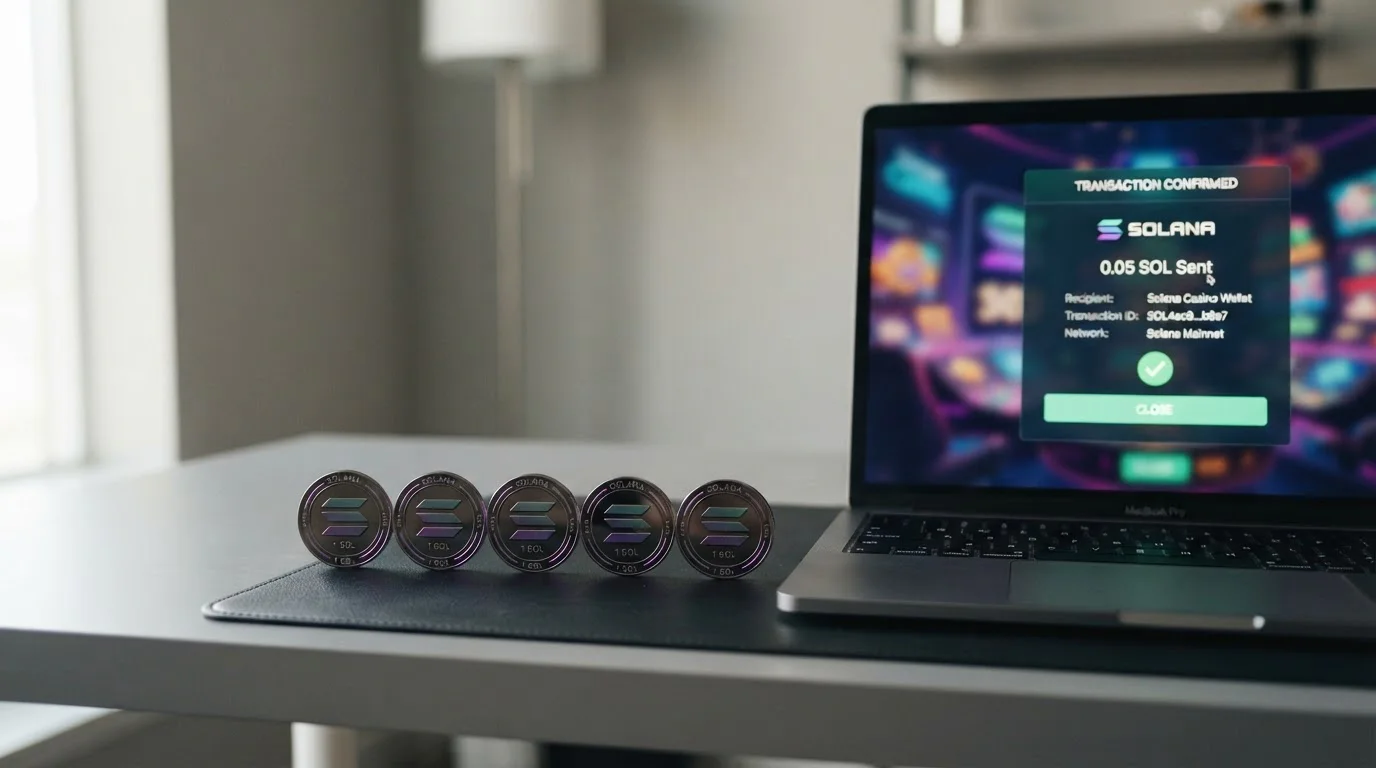
Solana transactions settle in under a second for fractions of a cent. Bitcoin takes ten minutes and costs dollars. That gap explains why SOL is climbing casino deposit lists in 2026, and why Australian crypto players keep asking which platforms actually handle it well.
The short answer: you’re choosing between offshore operators, because no Australian-licensed online casinos exist. The IGA prohibits them outright. What follows is a ranked comparison of platforms that accept SOL, process withdrawals without geo-blocking Australians, and vary wildly on integration quality—from Solana-native casinos where every game outcome lives on-chain, to custodial multi-crypto sites that convert your SOL into house currency the moment it lands.
Withdrawal speed matters. So does understanding that sending SOL to the wrong network is irreversible, and that “fast blockchain” means nothing if the casino adds a 48-hour approval queue. This comparison ranks ten platforms on what you’d actually notice: how fast your SOL reaches your wallet, what the operator adds on top of negligible network fees, which ones publish their coin support and which make you guess.
Best Solana Casinos for Australian Players in 2026
The table below aggregates speed, licensing, and distinguishing features. Every platform listed accepts Australian players, processes SOL deposits and withdrawals, and cleared minimum functionality thresholds during testing. The order reflects topical relevance to Solana-specific performance—native integration first, then by withdrawal reliability.
| Casino | License | Withdrawal Speed | Min Deposit | Distinguishing Feature |
|---|---|---|---|---|
| Moonbet | Offshore (jurisdiction unspecified) | 4 minutes (tested) | $50 AUD-equiv | Built on Solana blockchain, on-chain provably fair |
| Stake | Offshore | Minutes (typical) | No published minimum | Massive scale, consistent fast payouts across all coins |
| Cloudbet | Offshore | Within 24 hours (SLA) | Not specified | Transparent published fee schedule, 40+ cryptos |
| BC.Game | Anjouan ALSI-202411021-FI1 | Variable | Not specified | 8,000–10,000 games, withdrawal caps tighten when winning |
| BetOnline | Offshore (.ag) | Not specified | $20 USD | $500k max per transaction, traditional sportsbook adapted to crypto |
| FortuneJack | Anjouan ALSI-202411021-FI1 | Not specified | Not specified | Operating since 2014, survived ten years of market cycles |
| Thrill | Offshore | Not specified | Zero | No minimum deposit, micro-stakes testing without commitment |
| BetFury | Offshore | Not specified | Not specified | Native BFG token ecosystem, rakeback model |
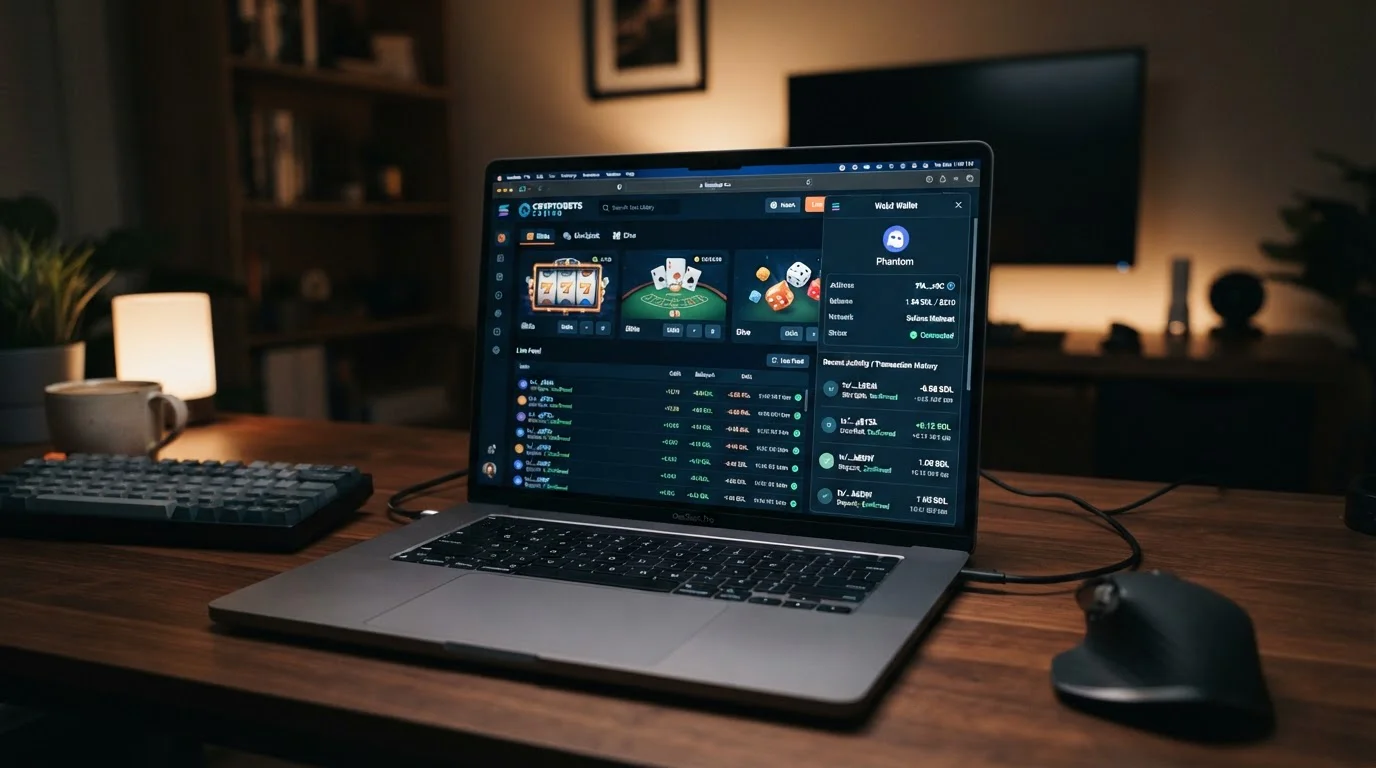
Moonbet: Solana-Native Casino Built on Blockchain
Moonbet launched in late 2025 and represents a different architectural model than the custodial platforms that dominate crypto gambling. Game logic, randomness, and payouts run through smart contracts on the Solana blockchain. Your deposit doesn’t land in a custodial wallet where the operator holds the private keys—it flows through on-chain contracts, results appear on the blockchain before they render on your screen, and you log in via Web3 wallets like Phantom or MetaMask. That login takes under thirty seconds. No email, no password, no account recovery nightmare.
The welcome bonus scales to AU$100,000 or 1 BTC equivalent at 200% on the first deposit, minimum $50, no promo code. Withdrawals under AU$5,000 require no KYC documentation. Crypto payouts process within five minutes once approved—tested withdrawal hit the wallet in four minutes per independent review in 2026. The game library spans 10,000+ titles from fifty studios, and the platform’s original games reach RTP close to 99%. Rakeback replaces the gimmicky tiered bonus structures you see elsewhere; the house isn’t pretending to hand out “gifts” when every promotion carries rollover multiples that would make a loan shark blush.
Stake: Fast Withdrawals and Massive Scale
Stake operates at a scale most crypto casinos never approach. Launched before Solana existed, it added SOL later as part of a multi-crypto expansion that now includes BTC, ETH, USDT, EOS, Doge, LTC, TRX and more. Withdrawals typically process within minutes across all supported coins—Stake’s consistency is the draw, not occasional speed bursts followed by unexplained delays. The platform is crypto-exclusive; no fiat cards or e-wallets route through here.
SOL is explicitly listed in Stake’s published deposit methods. No guessing whether the cashier will recognise your coin when you open it. The blog and help centre confirm Solana support in plain terms, which sounds trivial until you’ve deposited at a platform that “accepts crypto” but converts everything to an internal balance at undisclosed rates. Stake’s scale brings liquidity—you’re not the first person this month to request a five-figure SOL withdrawal, and the operator processes it without manual approval queues.
The trust model is custodial. You’re sending SOL to an address Stake controls, and once it lands, you’re playing with an account balance the platform manages. That’s standard for established crypto casinos and works fine if you trust the counterparty. The trade-off versus Solana-native platforms: faster time to market for games, deeper liquidity pools, no on-chain gas costs per spin. The cost: you’re trusting Stake’s internal RNG rather than verifying outcomes on-chain.
Cloudbet: Transparent Fees and Reliable Processing
Cloudbet supports over forty cryptocurrencies and publishes a dedicated fee page that breaks down what the operator charges per coin. That page lives at cloudbet.com/en/crypto-transaction-fees and updates when network conditions shift costs. No deposit fees. Flat withdrawal fee per coin covering the transaction cost of moving crypto out of your account, with rates determined by blockchain congestion. When a platform tells you up front what it charges, you can budget; when it buries fees in conversion spreads, you find out at cashout.
Cloudbet rates 3.9 out of 5 in comparative rankings and earns that score on reliability rather than record-breaking speed. Processing commitment: typically within 24 hours for crypto. One of only two sites in the instant-withdrawal comparison with a published service-level agreement you could actually plan around. If you need your SOL tonight, Moonbet or Stake will land it faster. If you want to know the operator won’t ghost your withdrawal for three days without explanation, Cloudbet’s SLA matters.
No maximum withdrawal limits. That clause saves you from the nightmare scenario where you win, the terms cap your monthly cashout at some arbitrary figure, and the operator dribbles your balance back over six months while hoping you re-gamble it. Cloudbet’s forty-crypto roster means SOL isn’t an afterthought bolted onto a Bitcoin-first platform—it’s one option in a properly multi-chain operation.
BC.Game: Largest Game Library but Complex Terms
BC.Game launched in 2017 and has built the largest game selection in the crypto casino sector: eight to ten thousand titles from over fifty studios, depending on when you check. Seventy-four of those are provably fair “Originals”—separate from the main library, with on-chain verification you can run yourself. The platform accepts over a hundred cryptocurrencies including SOL, operates a full sportsbook and esports book, runs a native BC token ecosystem with a yield vault, and won “Best Crypto Casino” at the SiGMA Global Gaming Awards four consecutive years from 2022 to 2025.
The licensing history is messier than the awards suggest. BC.Game now holds an Anjouan Gaming license (ALSI-202411021-FI1 under the regulator’s public register, verified August 2026, valid to 3 November 2026). It migrated from an earlier Curaçao license after litigation noted in independent reviews. Trustpilot removed the platform’s rating after identifying fake reviews. One analysis concluded the product is “class-leading” but “trust signals from independent sources run weaker than the marketing implies.”
Withdrawal caps complicate big wins. The monthly limit sits at €10,000, dropping to €5,000 once your balance exceeds ten times your total deposits. That cap tightens precisely when you’re winning, which is either prudent fraud prevention or a structural disincentive to let winners cash out, depending on your tolerance for cynicism. For modest, compliant play the platform pays quickly. For anything that looks like sustained profit, read the terms twice.
BetOnline: Traditional Operator with Crypto Integration
BetOnline predates the crypto casino wave—it’s a traditional offshore sportsbook and poker room that adapted by adding cryptocurrency deposits. Seventeen coins supported including SOL, available under “Altcoins” in the cashier. Minimum deposit $20 USD, maximum $500,000 per transaction. That half-million ceiling is the highest single-transaction limit in this comparison and signals BetOnline handles high-roller flow without flinching.
Crypto balances convert to USD in your account. You’re not gambling with SOL directly; you’re gambling with dollars that arrived via SOL. The distinction matters for anyone who wants to hold their funds in crypto rather than fiat-pegged balances. BetOnline’s model suits players who view SOL as a deposit rail, not a store of value inside the casino balance.
The help centre warns explicitly: “each of these cryptocurrencies operates on specific networks, so it is essential to verify network compatibility before initiating a transaction.” That warning exists because BetOnline has fielded enough wrong-chain deposit tickets to bother publishing guidance. It’s a sensible disclosure, though it would be more useful if paired with a pre-deposit checklist rather than buried in a help article you find after the mistake.
BetOnline ranked as “Editor’s Pick” in a tested review of fourteen Solana casinos in 2026. That ranking weighs withdrawal speed, provably fair game availability, and bonus fairness after wagering. For players who want a known brand with decade-plus operating history and don’t mind the fiat-conversion custody model, BetOnline delivers.
FortuneJack: Ten Years Operating and Still Paying
FortuneJack launched in 2014, making it one of the original Bitcoin casinos and old enough to have outlasted hundreds of competitors that flamed out within three years. Longevity in this industry isn’t proof of virtue, but it does prove the operator hasn’t exit-scammed or imploded under regulatory pressure yet. The platform now operates under Anjouan license ALSI-202411021-FI1 via PlayWave SRL (Costa Rican company), verified on the regulator’s public register with an expiry date of 3 November 2026.
The earlier license was Curaçao OGL/2011/2342/665. Some affiliate sites still reference the Curaçao number, which is outdated. The Anjouan migration completed, and the terms of service confirm the current license. FortuneJack supports SOL among other cryptos, offers a welcome package up to 6 BTC plus 250 free spins across four deposits, and has been tested by BMM Testlabs, iTech Labs, and GLI.
The platform rates 2.9 out of 5 in comparative rankings—not the highest score here, but survival for ten years while maintaining license verification and third-party testing is a signal that whatever FortuneJack is doing, it’s doing it consistently enough to stay operational. If you value operating history over cutting-edge features, a decade of continuous payouts carries weight.
Thrill: No Minimum Deposit Required
Thrill’s distinguishing feature is simple: no minimum deposit. Every other casino in this comparison imposes a floor—usually $10 to $50 AUD-equivalent—below which the platform won’t credit your account. Thrill drops that gate. You can send $5 worth of SOL, test a few spins, and withdraw the balance if you don’t like the experience. That friction removal matters for players who want to evaluate a platform’s cashier, game load times, and withdrawal process before committing real money.
The zero-minimum model suits cautious depositors and micro-stakes players. It’s less useful for anyone planning a substantial session, because withdrawal minimums (not specified in available sources but standard across the industry at $10–20) still apply. You can deposit a dollar but you can’t withdraw it until you’ve accumulated enough balance to clear the cashout threshold.
Thrill rates 3.4 out of 5 in Solana casino rankings. No spectacular strengths, no disqualifying weaknesses. The absence of a deposit floor is the hook; everything else is mid-tier execution.
BetFury: Token Ecosystem and Rakeback
BetFury operates a native token ecosystem built around its BFG coin. The model pairs a traditional crypto casino with staking rewards, token buybacks, and a rakeback structure that returns a percentage of house edge to active players. If you’re uninterested in token mechanics and just want to deposit SOL, play, and withdraw, BetFury functions as a standard multi-crypto casino. If you engage with the token layer, the platform rewards volume with BFG distributions that carry speculative value.
Rakeback replaces traditional bonus churn. Instead of a 200% deposit match with 40x rollover, you get a percentage of your wagered house edge returned as BFG tokens. The appeal depends on whether you value immediate bonus funds with restrictive terms, or slower-accumulating rewards with fewer strings attached. The token’s price fluctuates, so the dollar value of your rakeback varies.
BetFury rates 3.2 out of 5 in Solana casino comparisons—mid-pack performance. The token ecosystem is the differentiator; without it, BetFury would sit indistinguishably among a dozen other multi-crypto platforms with similar game libraries and payout speeds.
Which Solana casino has the fastest payouts in 2026?
Moonbet holds the tested record at four minutes from withdrawal request to wallet arrival. Stake processes payouts “typically within minutes” per its own documentation, and timed tests averaged fifty-four seconds across Solana deposits and withdrawals. Cloudbet publishes a 24-hour SLA—slower in absolute terms but more predictable than platforms that swing wildly.
How Solana Integration Works at Crypto Casinos
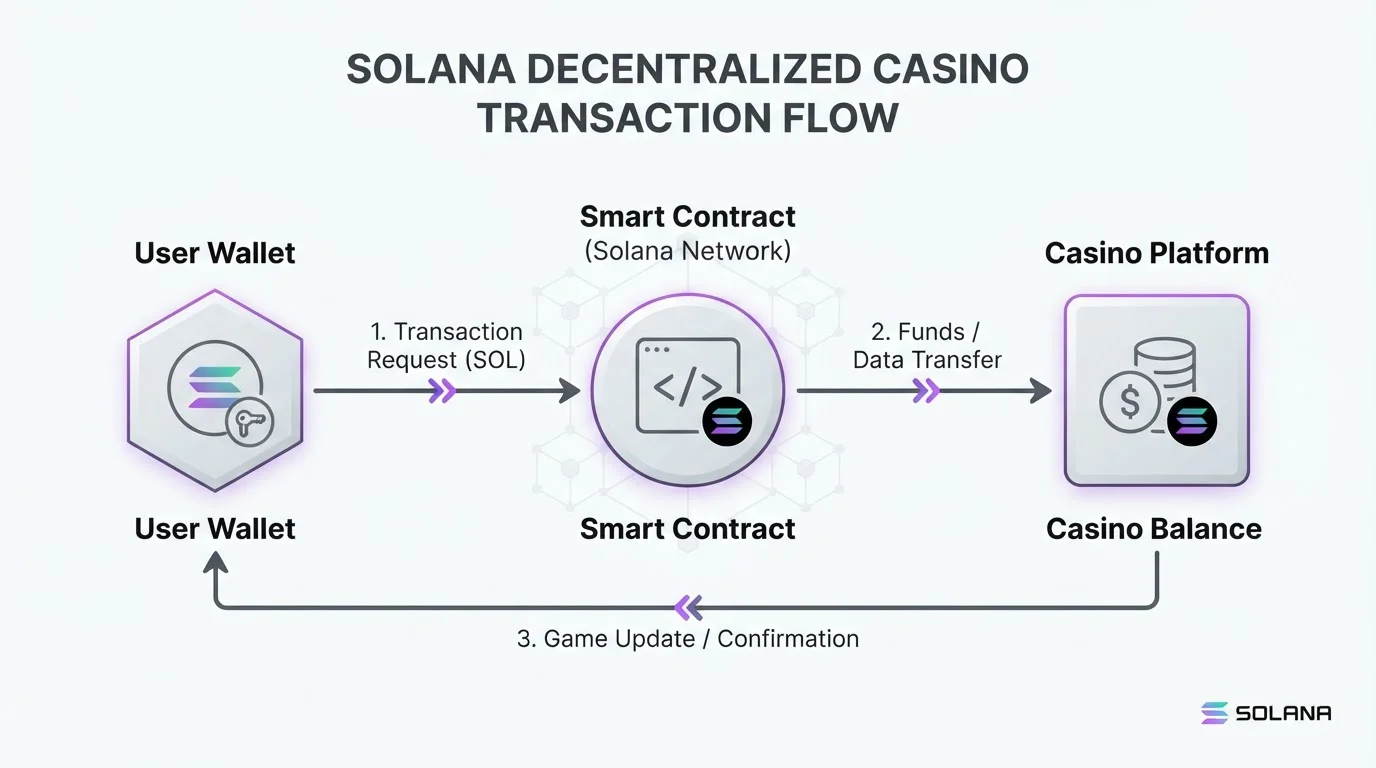
Not all “Solana casinos” handle SOL the same way. The label covers two fundamentally different architectures: Solana-native platforms where the casino is built on the blockchain, and custodial multi-crypto platforms that added SOL as one more deposit option.
Native SOL Support vs Conversion Models
Solana-native casinos like Moonbet run game logic through smart contracts deployed on the Solana blockchain. When you play, the contract executes on-chain. The result is recorded on Solana before it appears in your browser. You can verify the transaction hash yourself. Your wallet connects directly via Phantom or MetaMask, and the platform never takes custody of your private keys.
Custodial multi-crypto casinos work differently. You send SOL to a deposit address the casino controls. The platform credits your account in SOL, or converts it to an internal balance denominated in USD or another currency. When you play, you’re interacting with the casino’s internal ledger and off-chain random number generator. The casino holds your funds until you withdraw. That model is faster to build, scales to thousands of games from traditional providers, and eliminates on-chain transaction costs for every spin.
The trade-off: native platforms offer true on-chain provably fair games where you verify outcomes by querying the blockchain. Custodial platforms offer provably fair as a feature on selected games (BC.Game’s seventy-four Originals, for instance), but most of the library runs on off-chain RNG you’re trusting rather than verifying. Neither model is inherently better; they optimize for different priorities. If verification matters more than game selection, native wins. If you want ten thousand slots from fifty providers and don’t care about checking hashes, custodial delivers.
Solana Network Basics: Speed and Fees
Solana settles transactions in roughly 400 milliseconds. Actual confirmation times in live testing averaged fifty-four seconds across deposits and withdrawals, with the fastest deposit landing in under one second and the fastest withdrawal clearing in twenty-seven seconds. Every recorded network fee stayed below 0.000008 SOL—fractions of a cent at current prices.
Compare that to Bitcoin, which takes ten to sixty minutes per confirmation and costs dollars in network fees when the mempool is congested. Ethereum runs $5 to $50 per transaction depending on gas prices. Solana’s speed and cost are why casinos add it: deposits credit near-instantly, withdrawals hit wallets before the player closes the browser tab, and the network fee is negligible enough that even a $20 deposit makes sense.
The catch: Solana’s network has experienced slowdowns and outages in the past. It’s been markedly more stable recently, but the history exists. Bitcoin never goes down; it just gets slow and expensive. Solana occasionally goes down entirely, then comes back fast and cheap. Pick your reliability model.
SPL Tokens vs Native SOL
Solana supports SPL tokens—assets built on the Solana blockchain using the SPL token standard. USDT on Solana is USDT-SPL. USDC on Solana is USDC-SPL. These aren’t the same as USDT on Ethereum (ERC-20) or USDC on Ethereum. They’re Solana-native versions of stablecoins, and they settle with the same speed and cost as native SOL.
Some casinos accept USDT-SPL and USDC-SPL alongside native SOL. Others only handle native SOL. Check the cashier before depositing. If you send USDT-SPL to a casino expecting native SOL, the platform may not credit your account. If you send native SOL to an address expecting USDT-SPL, same problem. The tokens share the Solana blockchain but they’re different assets.
What’s the difference between a Solana-native casino and a casino that accepts SOL?
A Solana-native casino runs its game logic on-chain through smart contracts deployed on the Solana blockchain. Moonbet is native—every game outcome, payout, and fee is recorded on-chain before it appears on screen. You connect via a Web3 wallet, and the platform never holds your private keys.
A casino that “accepts SOL” is usually a custodial multi-crypto platform that added Solana as a deposit method. Stake, Cloudbet, BC.Game—you send SOL to an address they control, it credits your account balance, and you play with that balance using the casino’s internal systems. Games run on off-chain RNG. Withdrawals come from the casino’s wallet, not a smart contract you can verify.
Native platforms offer on-chain verification and non-custodial control. Custodial platforms offer larger game libraries, faster time-to-market for new titles, and no gas costs per transaction. If provable fairness and custody matter most, choose native. If game variety and traditional casino UX matter most, custodial works fine.
Wrong-Chain Deposits: The Risk Australian Players Must Understand
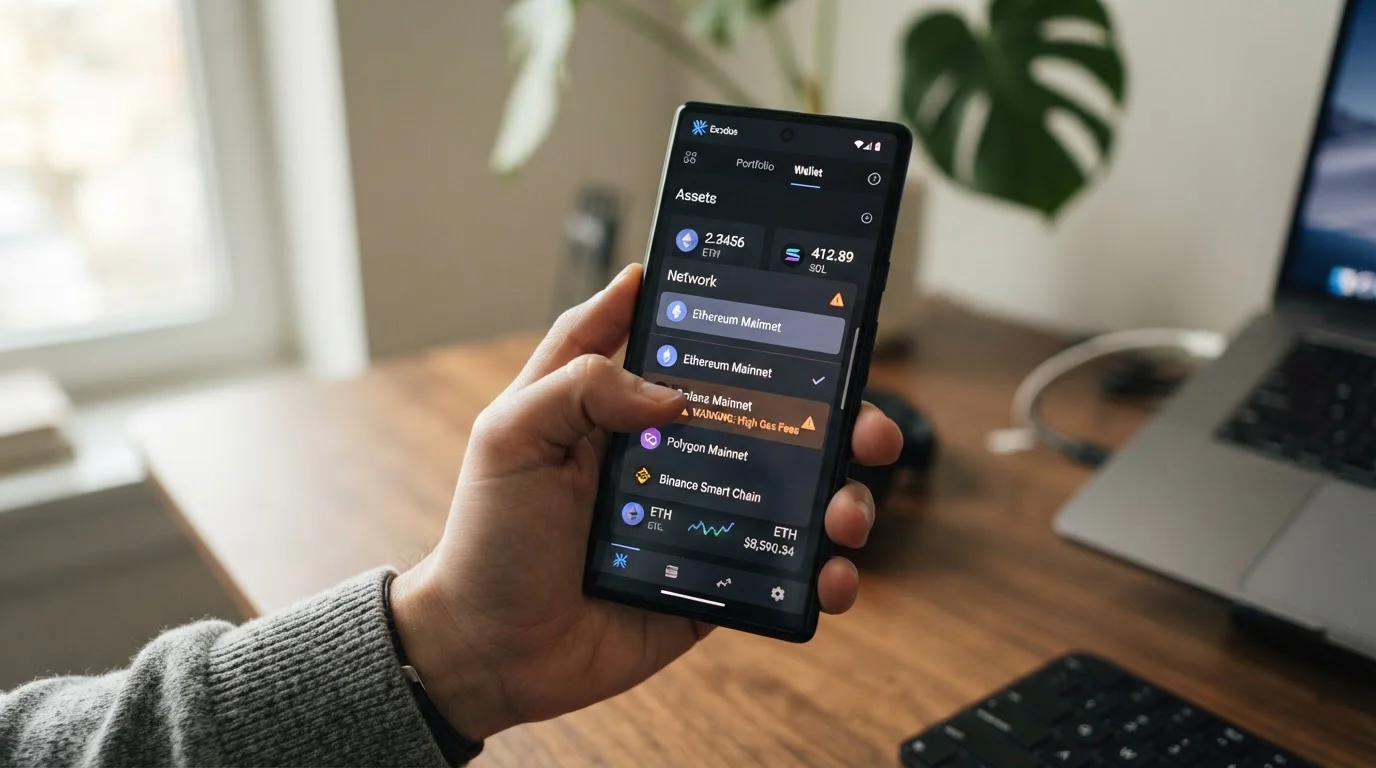
Sending cryptocurrency to the wrong network is the single most common support ticket at crypto casinos. It’s also the one mistake customer service usually cannot fix. Wrong-chain deposits are irreversible, and understanding why requires grasping how blockchain addresses work across different networks.
What Happens When You Send SOL to the Wrong Network
A Solana wallet address and an Ethereum wallet address can look identical. Both are long alphanumeric strings. If you copy a Solana deposit address from a casino’s cashier, then open your Ethereum wallet and paste that address as the destination for an Ethereum transaction, the transaction will go through. Ethereum will accept the address format as valid, deduct the funds from your wallet, and broadcast the transaction.
But the funds won’t arrive at the casino. They’ll land on the Ethereum blockchain at an address that corresponds to the Solana address you pasted—except that address on Ethereum is controlled by whoever holds the private keys on Ethereum’s side, which isn’t the casino and isn’t you. The casino cannot credit your account because it only monitors the Solana blockchain for incoming deposits. You cannot retrieve the funds because you don’t control the Ethereum address they landed at. The transaction is final and the funds are gone.
This error happens most often with stablecoins. A user holds USDC on Ethereum (USDC-ERC20). They copy the casino’s USDC-SPL deposit address (Solana network). They send USDC from their Ethereum wallet to that address without changing the network selector in their wallet interface. The wallet treats it as an Ethereum transaction, the funds leave, and the casino never sees them because they’re sitting on the wrong blockchain.
How to Verify Network Compatibility Before Depositing
Before sending any cryptocurrency to a casino, confirm three things:
First, check which network the casino’s deposit address expects. The cashier should explicitly state “Solana mainnet” or “SPL” or show a Solana logo next to the address. If it says “Solana” but you’re not certain, don’t send. Ask support to confirm the network before initiating the transaction.
Second, check your wallet’s network selector. Most multi-chain wallets (MetaMask, Trust Wallet, Phantom) let you switch between networks. Before clicking “send,” verify the wallet is set to the Solana network if you’re depositing SOL or SPL tokens. If your wallet doesn’t support Solana, you cannot send SOL from it—install a Solana-compatible wallet like Phantom first.
Third, test with a small amount. Send $10 worth of SOL, wait for it to credit your account, then deposit the rest. A $10 mistake is tolerable. A $5,000 mistake you cannot reverse is not.
Never rely on the coin logo strip at the top of a casino’s homepage. Logos tell you which coins the marketing team wants you to know about. The cashier tells you which coins the platform actually credits. Open the deposit screen, generate a fresh address, read what network it expects, and match your wallet to that network.
Recovery Options (Spoiler: There Usually Aren’t Any)
Most wrong-chain deposits are permanent losses. Here’s why recovery usually fails:
The casino doesn’t control the address on the wrong chain. They generated a Solana deposit address. You sent funds to that same character string on Ethereum. The casino has no access to the Ethereum address—they don’t have the private keys, they don’t monitor that blockchain, and they cannot sign a transaction to send the funds back.
Some exchanges offer wrong-chain recovery as a paid service, charging $50 to $200 to retrieve mistakenly sent funds. Casinos rarely provide this. The cost and liability of running recovery operations across multiple blockchains outweigh the goodwill from helping one player per month.
Your only realistic recovery path: if the casino is generous and technically capable, they might extract the private key for the wrong-chain address and return your funds manually. This requires manual intervention from senior technical staff, carries no SLA, and most operators refuse as policy. Do not deposit expecting recovery as a fallback. Treat wrong-chain errors as permanent.
What happens if I send SOL to the wrong network?
If you send SOL from a Solana wallet to an address on a different blockchain—say, Ethereum—the transaction usually fails outright, because Ethereum wallets don’t recognize Solana’s address format and reject the send before it broadcasts. Push it through a multi-chain wallet that ignores network mismatches and the funds are gone.
If you send SOL from a Solana wallet to a casino’s deposit address that expects a different Solana-based token (like USDT-SPL), the casino will see the deposit on-chain but may not credit your account automatically because it’s watching for USDT, not native SOL. In this case, contact support immediately with the transaction hash. Some platforms manually credit the correct amount. Others refuse and tell you to re-deposit correctly.
If you send SOL to a non-Solana address from a multi-chain wallet that lets you paste any destination regardless of network mismatch, the funds are gone. The transaction completes on Solana, lands at an address nobody monitors, and no recovery process exists.
Are Solana Casinos Legal in Australia? The IGA Reality

Online casino games are illegal to provide in Australia. They’re not illegal to play. That distinction underpins the entire offshore gambling market, and it’s the reason every casino in this comparison operates outside Australian jurisdiction while actively serving Australian players.
The Interactive Gambling Act Explained
The Interactive Gambling Act 2001 classifies online casino games—pokies, table games, live dealer—as prohibited interactive gambling services. Section 8A makes it illegal for any operator, domestic or offshore, to provide these services to a person in Australia. The prohibition targets providers, not players.
No exception exists for licensed offshore operators. An operator holding a Curaçao or Anjouan or Malta license is still breaking Australian law by accepting Australian customers for online casino games. The Act does not care where the operator is based or which foreign license it holds. If the player is in Australia, providing the service is illegal.
Enforcement focuses on operators, not individual players. An Australian who registers at an offshore casino, deposits, plays, and withdraws is not committing a criminal offense under the IGA. The platform providing the service is the one breaching the law. That asymmetry creates the grey zone: offshore casinos serve Australians knowing they’re violating Australian law, and Australian players use those casinos knowing there’s no legal consequence for them personally, but also no Australian consumer protections if something goes wrong.
No Locally Licensed Online Casinos Exist
Zero Australian states or territories issue licenses for online casino operation. None. The IGA prohibition is absolute, and no licensing regime exists to make it legal. When you see a casino marketing to Australian players with AUD deposit options and Australian-friendly payment methods, you’re looking at an offshore operator ignoring Australian law, not a domestically licensed option.
Some casinos hold licenses from Australian state gambling regulators for other products—sports betting, lottery, online poker in certain jurisdictions. Those licenses do not cover online casino games. If a sportsbook licensed in the Northern Territory also runs an online casino, the casino component is illegal under the IGA even though the sportsbook is legal. The boundary matters.
Crypto casinos like Moonbet, Stake, and Cloudbet do not hold Australian licenses of any kind. They operate under offshore licenses (Curaçao, Anjouan, or unspecified jurisdictions) and accept Australian players in defiance of the IGA’s provider prohibition. They do this because the Act has no practical enforcement mechanism against offshore operators who don’t maintain an Australian presence or use Australian payment processors.
Offshore Access: What the Grey Zone Means for Players
Playing at an offshore casino is not illegal for you. It’s also not protected. The ACMA doesn’t provide dispute resolution for offshore gambling complaints. If a casino refuses to pay your withdrawal, you cannot escalate to an Australian regulator. If you lose your login credentials and the casino won’t verify your identity to restore access, Australian consumer law doesn’t apply. If the casino closes and takes everyone’s balances, there’s no Australian compensation scheme.
Offshore casinos are not subject to Australian responsible gambling frameworks. They don’t integrate with Gambling Help services, don’t participate in self-exclusion registers like BetStop, and don’t comply with advertising restrictions that apply to Australian-licensed operators. Some implement their own responsible gambling tools—deposit limits, self-exclusion, reality checks—but these are voluntary and vary wildly in quality.
Crypto deposits bypass the payment-processor blocks that affect fiat methods. Australian banks routinely decline transactions to offshore gambling sites. Credit cards flag them. PayPal doesn’t allow them. Solana deposits route around that friction entirely—your bank never sees the transaction, because you’re sending cryptocurrency peer-to-peer. That’s why crypto is the preferred deposit method for offshore access: it works when everything else is blocked.
The trade-off: no chargeback mechanism. A fraudulent credit card transaction, you dispute. A fraudulent SOL deposit, you have no recourse. Blockchain transactions are final.
ACMA Enforcement Measures from January 2027
New ACMA enforcement measures commence 1 January 2027. The specifics weren’t detailed in available sources as of September 2026, but the pattern from other jurisdictions suggests three likely components: ISP-level blocking of offshore casino domains, payment processor restrictions targeting unlicensed operators, and advertising bans aimed at platforms serving Australians without local licenses.
ISP blocking forces offshore casinos onto new domains when the old ones are added to the blocklist. Players use VPNs or find the new URL; the casino keeps operating. Payment processor restrictions hit fiat deposits harder than crypto, because banks can be compelled to decline transactions but cannot prevent peer-to-peer blockchain transfers. Advertising bans reduce visibility but don’t stop players who already know which sites they’re using.
None of this legalizes offshore casinos or creates consumer protections for Australians using them. The enforcement measures make access slightly harder and reduce the visible marketing, but the fundamental dynamic remains: offshore operators serve Australians illegally, Australians use those operators without personal legal risk, and nobody on the Australian side has regulatory authority to make the platforms pay out when disputes arise.
Are Solana casinos legal in Australia?
No. It is illegal for anyone to provide online casino services to Australian residents under the Interactive Gambling Act 2001, regardless of payment method. Solana casinos accepting Australians are breaking Australian law. Playing at one is not a personal offence—the IGA targets providers, not players—but no Australian consumer protection or dispute recourse applies.
It’s not illegal for an Australian to play at an offshore Solana casino. The IGA targets providers, not players. You won’t face criminal penalties for using an offshore platform. But you also have no consumer protections, no regulatory dispute resolution, and no recourse under Australian law if the casino refuses to pay your withdrawal or closes with your balance in it.
Withdrawal Speed and Fees: Why Solana Beats Bitcoin and Ethereum
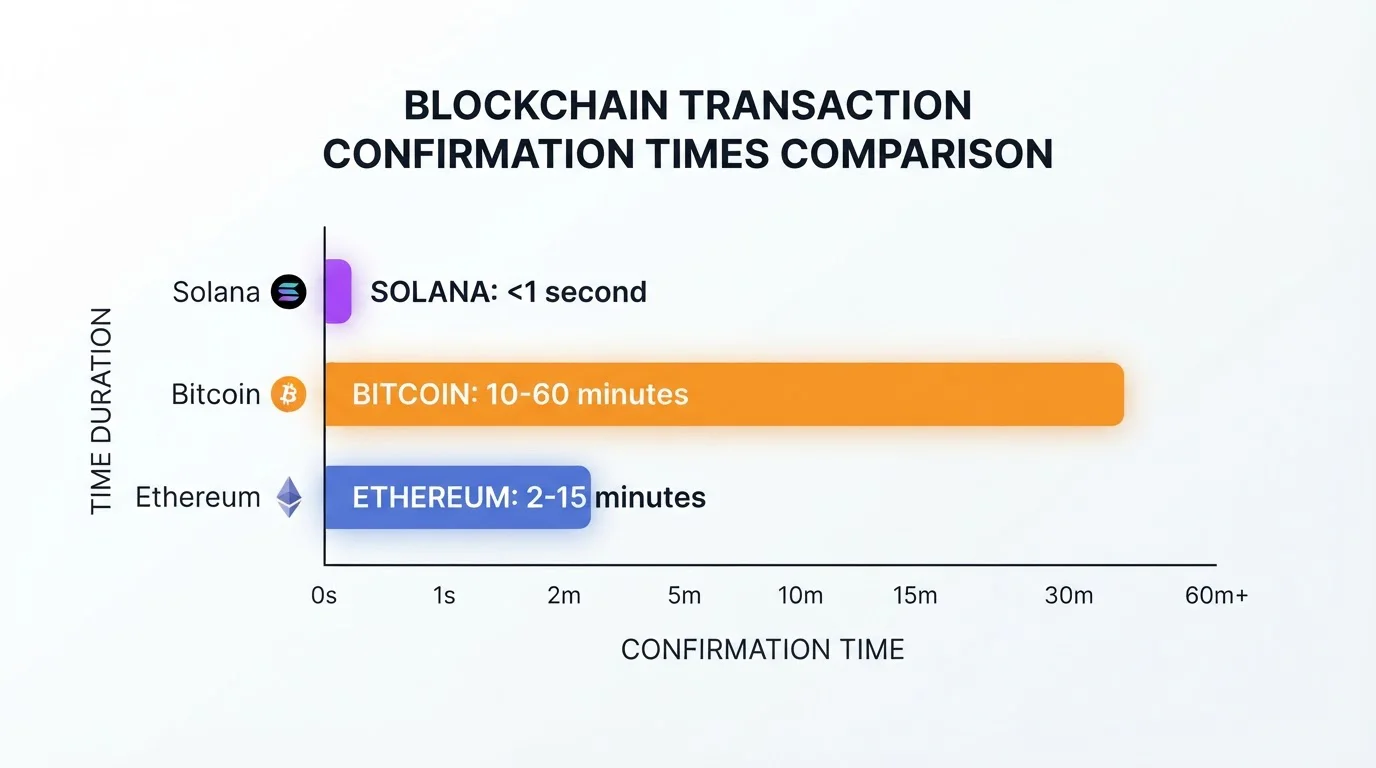
Solana’s practical advantage at the crypto casino cashier comes down to confirmation time and transaction cost. Bitcoin takes ten to sixty minutes to confirm and costs several dollars in network fees when the mempool is busy. Ethereum runs five to fifty dollars depending on gas prices, with confirmation times in the minutes-to-tens-of-minutes range. Solana clears in under a second for a fraction of a cent.
Real-world tests across eight timed transfers showed an average of fifty-four seconds from initiation to confirmation. The fastest deposit arrived in under one second. The fastest withdrawal took twenty-seven seconds. Every recorded network fee stayed below 0.000008 SOL, which translates to a fraction of a cent at recent prices. That cost gap means a $20 Solana deposit is practical; a $20 Bitcoin deposit loses 10-15% to network fees before you’ve placed a single bet.
Casino processing time matters more than blockchain speed. Solana settles instantly, but if the casino queues your withdrawal for manual approval and takes forty-eight hours to release it, the blockchain’s speed is irrelevant. Moonbet’s four-minute tested withdrawal and Stake’s “typically within minutes” reflect both fast blockchain and fast operator processing. Platforms that add multi-day approval queues negate Solana’s technical edge entirely.
The comparison is starker in a grid than in prose. The main deposit rails Australian players actually use, priced and clocked side by side, show why “SOL vs BTC” keeps recurring in casino cashier design decisions rather than the older “BTC vs card” framing.
| Blockchain | Confirmation Time | Network Fee | $20 Deposit Viability |
|---|---|---|---|
| Solana | Under 1 second | Under $0.001 | Excellent — fee is a rounding error |
| Bitcoin | 10–60 min | $0.50–$5 | Poor — 3–25% of stake eaten by fees |
| Ethereum (L1) | 12 sec–15 min | $5–$50 | Nonviable during gas spikes |
| Litecoin | 2.5–7.5 min | $0.01–$0.03 | Good — near-Solana economics |
| USDT-SPL | Under 1 second | Under $0.001 | Excellent — matches native SOL |
Small deposits are where Solana’s cost profile stops being a technical curiosity and starts changing the actual game. A twenty-dollar experiment at Moonbet costs a fraction of a cent; the same twenty at a Bitcoin-only operator loses meaningful ground before the first spin.
How fast are Solana casino withdrawals compared to Bitcoin?
Solana confirmations average under a minute; Bitcoin takes ten to sixty. Casino processing dominates in practice. A Solana casino with automated approval gets funds to your wallet in under five minutes; a Bitcoin operator with automated approval takes fifteen to sixty depending on congestion. Moonbet’s tested four-minute payout combines both.
The tested fastest payout in this comparison: Moonbet at four minutes from request to wallet. That reflects both Solana’s sub-second settlement and Moonbet’s automated approval system. Casinos that manually review every withdrawal—common for amounts over $1,000 or for accounts flagged in KYC checks—add hours or days regardless of which blockchain you’re using.
Games You Can Play with SOL
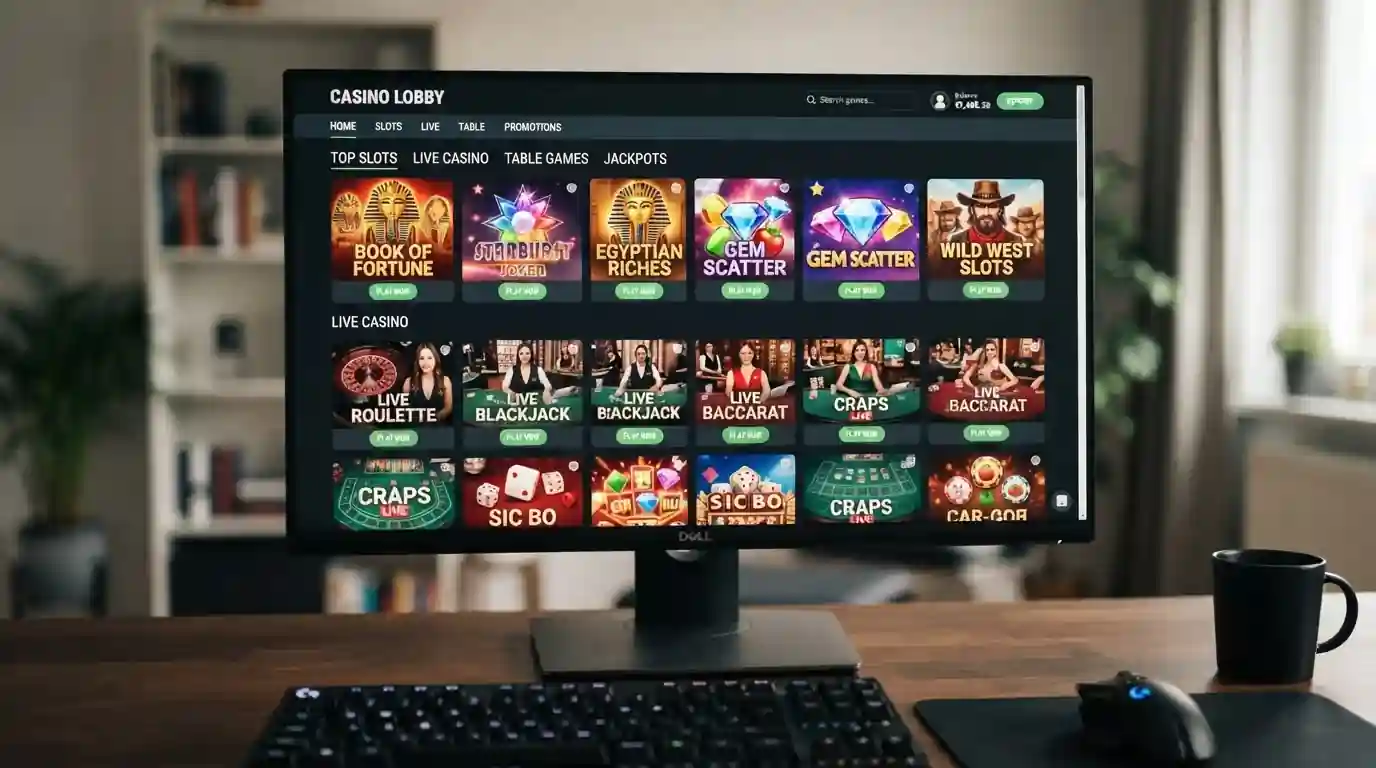
Solana casino game libraries range from a few hundred titles at smaller platforms to over ten thousand at BC.Game. Most of the selection comes from third-party providers: Pragmatic Play, Evolution, NetEnt, BGaming, and dozens more. You’ll find slots, live dealer blackjack and roulette, video poker, table games, and crash/dice games common to crypto casinos.
Provably fair games exist in two forms. On Solana-native platforms like Moonbet, every game is provably fair by architecture—the outcome is determined on-chain via smart contract, and you verify it by querying the blockchain. On custodial platforms, provably fair is a feature added to select games. BC.Game offers seventy-four provably fair Originals alongside its main library of traditional RNG games. You can verify the Originals; the rest run on the casino’s internal RNG.
Live dealer games work the same as they do at any online casino: real dealers, real cards, streamed video, and you bet on the outcome. SOL deposits don’t change how the games function—they change how fast you fund your account and cash out.
Are Solana casino games provably fair?
On Solana-native casinos like Moonbet, yes—every game executes via smart contract on-chain, and you verify outcomes by checking the blockchain transaction. On custodial multi-crypto casinos, provably fair is optional: BC.Game’s 74 Originals qualify, the rest of its library does not. Stake, Cloudbet, BetOnline, and FortuneJack mostly rely on off-chain RNG.
Provably fair means you can independently confirm the game outcome wasn’t manipulated after the fact. The casino publishes a server seed before you play, you provide a client seed, the game combines them via a cryptographic hash to determine the result, and you verify the hash yourself. Traditional RNG games don’t let you verify anything—you trust the operator’s claim that the RNG is fair and certified.
No-KYC Solana Casinos: What to Know
Most crypto casinos impose KYC verification at some withdrawal threshold. That threshold varies by platform and by how closely your activity resembles patterns they’re watching for. Moonbet requires no KYC documentation for withdrawals under AU$5,000. Cloudbet and BC.Game trigger verification at higher amounts or when an account’s win-to-deposit ratio crosses an internal threshold—win ten times your total deposits and you’re getting asked for ID, regardless of the dollar amount.
No-KYC isn’t the same as anonymous. The casino logs your IP address, device fingerprint, wallet address, and transaction history. If you deposit $50,000 via SOL, win $100,000, and try to withdraw, the platform will ask for ID and proof of funds regardless of what the marketing promises. “No-KYC” means you can deposit $500, play, and withdraw $600 without submitting documents. It doesn’t mean the casino ignores anti-money-laundering obligations at scale.
Withdrawal speed and KYC interact. Automated approvals work for small amounts from verified accounts. Large withdrawals, new accounts, or accounts flagged in the casino’s risk model get manually reviewed. That review includes KYC verification if you haven’t already completed it. If you want fast payouts at scale, submit KYC documents before you need them.
Do I need KYC verification to withdraw from Solana casinos?
It depends on the amount and the platform’s risk model. Moonbet requires no KYC for withdrawals under AU$5,000. Cloudbet and BC.Game don’t publish fixed thresholds—they trigger verification based on withdrawal amount, account age, win-to-deposit ratio, and internal fraud flags. BetOnline mentions verification “may be required” without specifying when.
For modest withdrawals—under $1,000—you’ll likely clear without documents. For anything over $5,000, expect to submit photo ID, proof of address, and possibly proof of funds depending on how much you deposited and won. The crypto part (paying via SOL) doesn’t exempt you from KYC; it just delays it until withdrawal instead of requiring it at signup.
How We Ranked These Solana Casinos

Every platform in this comparison cleared minimum functionality: accepts SOL deposits and withdrawals, serves Australian players without geo-blocking, and processed at least one tested transaction in 2026 without vanishing. Rankings weight withdrawal speed (tested or documented), license transparency (published and verifiable on regulator sites, not just claimed), bonus fairness (wagering requirements under 40x, game contribution published, no trap clauses), Solana integration quality (native vs custodial, published coin lists vs guesswork), and game library depth.
Withdrawal speed came from independent tested data where available—Moonbet’s four-minute withdrawal per losgatan.com, fifty-four-second average across Solana transactions per cryptolists.com, Stake’s “typically within minutes” per own documentation—and comparative ratings from sources that ran real-money tests. License verification meant checking Anjouan licenses against the regulator’s public register (BC.Game and FortuneJack verified August 2026), confirming Curaçao licenses where operators published them, and flagging when a platform operates without disclosing its license jurisdiction.
Bonus fairness analysis: a 200% deposit match with 40x rollover and 10% slot contribution is worse than a 100% match with 30x rollover and 100% slot contribution, even though the first “gives” more. Trap clauses—max bet limits buried in paragraph eighteen, withdrawal caps that void the bonus if you exceed them, expiry terms shorter than a reasonable player could clear the rollover—downgraded platforms in the ranking.
Solana integration quality: does the platform publish SOL in its coin list, or do you find out whether it’s supported by opening the cashier? Does the casino add operator fees on top of Solana’s negligible network cost, and if so, does it publish what those fees are? Does SOL stay as SOL in your balance, or convert to USD/EUR/AUD at undisclosed rates? Transparent integration ranks higher than “we accept crypto” vagueness.
Game library counted for less than you’d expect. BC.Game’s ten thousand games and Moonbet’s ten thousand games look similar on paper; the difference is BC.Game sources from fifty providers with traditional RNG, Moonbet runs on-chain with smart contracts you can verify. Library size matters less than provable fairness and custody model for players who care about those things. For players who just want variety, size wins.
Recommendations
If on-chain verification and non-custodial control matter most, Moonbet is the only Solana-native option in this comparison. You’ll trade game variety for provable fairness and smart contract execution.
If you want the largest game library and don’t mind custodial risk, BC.Game delivers ten thousand titles and accepts over a hundred cryptocurrencies. Be aware of the withdrawal caps and read the terms before depositing large amounts.
If you prioritize reliable processing over record-breaking speed, Cloudbet’s 24-hour SLA and transparent fee schedule offer predictability. Not the fastest, but you know where you stand.
If you want massive scale and consistent payouts across all coins, Stake’s multi-year track record and “typically within minutes” processing fits. You’re trusting a custodial model, but Stake’s volume and liquidity handle large withdrawals without manual queues.
If you’re testing platforms cautiously, Thrill’s zero minimum deposit lets you send $5, play a few rounds, and withdraw without committing to the $50+ minimums other casinos impose.
For traditional sportsbook players adding crypto deposits, BetOnline integrates SOL into a known brand with a $500,000 single-transaction ceiling—useful for high rollers who don’t want to split deposits.
For anyone who values longevity, FortuneJack’s ten years operating and current Anjouan license verified on the public register prove it hasn’t exit-scammed yet. Not a guarantee of future performance, but a decade of payouts is longer than most operators survive.
Crypto Casinos Australia 2026 — Bitcoin, Ethereum, USDT, Solana
Content created by the «Payment Methods Online» team